



















On his way back to Kyiv from Washington, Volodymyr Zelensky stopped in Lublin to meet Polish Prime Minister Donald Tusk. Their conversation unfolded between two political realities: Ukraine is searching for protection from Russian ballistic missiles, while Poland is trying to preserve support for its neighbor amid historical disputes and growing fatigue with the war.
Lublin was a symbolic setting. The city lies close to the Ukrainian border and has become a passageway for military supplies, humanitarian aid and millions of people who sought safety in Poland after the invasion. Here, foreign policy is never far removed from ordinary human experience.
Zelensky briefed Tusk on his talks with Donald Trump, including the prospect of producing Patriot interceptors and reviving diplomatic contacts with Russia. The Polish prime minister was interested not only in the outcome of the visit, but in how American decisions would affect the security of Europe’s entire eastern flank.
In Daycom’s assessment, the meeting marked a new phase in Polish-Ukrainian relations. Warsaw and Kyiv can no longer afford to treat defense, historical memory and the status of refugees as separate subjects. Each now directly affects the other two.
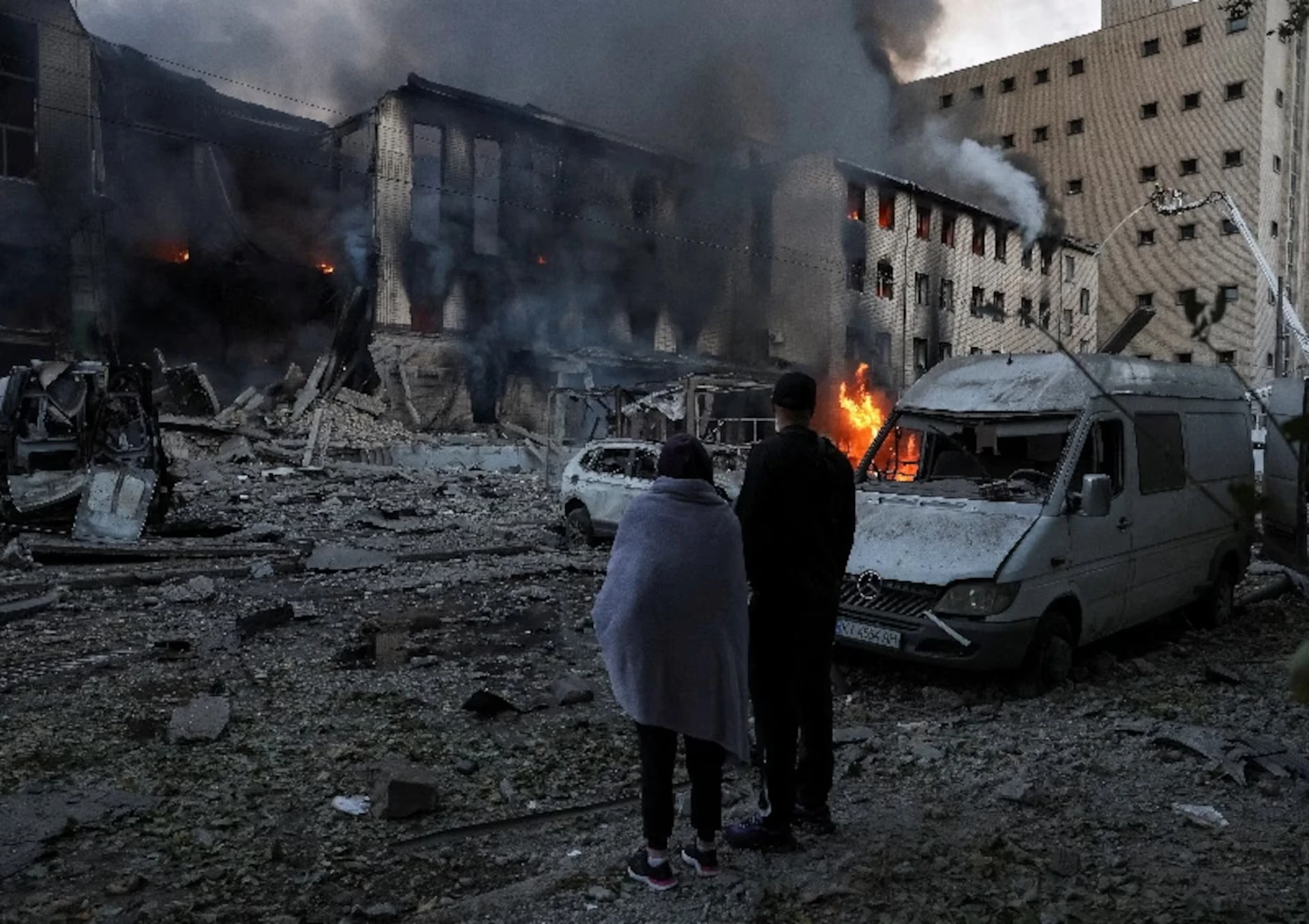
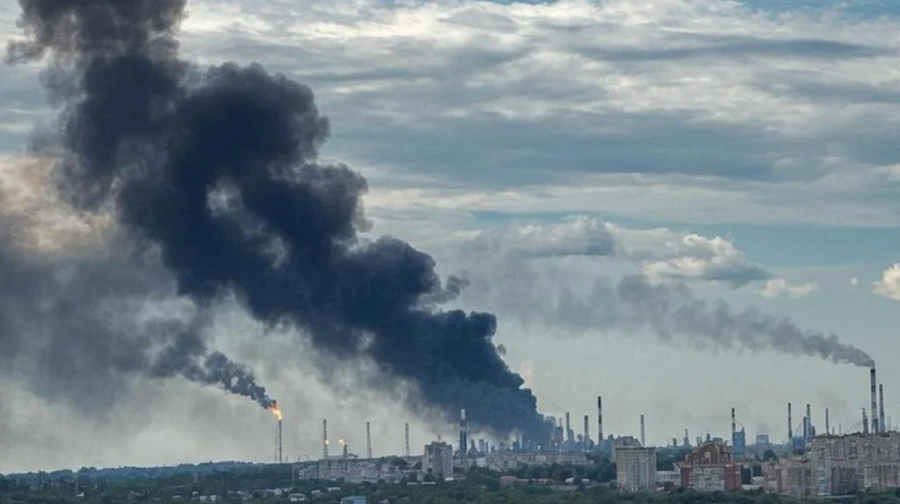
The most urgent practical issue was missile defense. Ukraine needs systems capable of intercepting ballistic weapons, while Poland increasingly scrambles fighter jets during major Russian attacks near its border.
For Warsaw, Ukrainian air defense is part of Poland’s own protection. The more missiles Ukraine destroys over its territory, the lower the risk that debris, damaged weapons or missiles knocked off course will fall inside Poland and trigger a crisis within NATO.
Polish support for Kyiv is therefore not merely an expression of solidarity. It serves the direct interest of a country bordering the war and recognizing that Russia’s air campaign does not stop at the administrative boundary of the European Union.
The possibility of licensed Patriot production also matters to Poland. If Ukraine builds domestic or joint manufacturing capacity, NATO’s eastern flank would gain another source of interceptors and a technological center located closer to the threat.
That prospect still belongs to the future. Ukraine remains short of ready-made missiles, while Poland must react to every large Russian barrage. The gap between long-term plans and immediate danger remains one of the central weaknesses of European defense.
The historical dialogue was no less difficult. Relations have worsened in recent months over conflicting interpretations of the Ukrainian Insurgent Army and the mass killing of Polish civilians during the Second World War.
In Ukraine, the UPA is often remembered primarily as a force that fought both Nazi and Soviet rule. In Poland, it is inseparable from the murder of Polish civilians. Both memories exist at the same time, but they produce morally opposite narratives of the past.
The dispute intensified after a Ukrainian military unit was named after the UPA. For Kyiv, the decision extended a tradition of armed resistance. For Warsaw, it appeared to disregard a trauma that remains deeply embedded in Polish national consciousness.
In June, Polish President Karol Nawrocki stripped Zelensky of Poland’s highest honor. The gesture showed that historical conflict had moved beyond archives and academic debate and was now shaping interstate politics directly.
Zelensky later pledged to expand investigations into wartime killings. For Poland, access to burial sites, exhumations, identification of victims and public acknowledgment of crimes remain essential. Without those steps, formulas of reconciliation are likely to be viewed as diplomatic avoidance.
Ukraine sees a different danger. Russia has spent years exploiting the darkest episodes of the Ukrainian national movement to portray the entire struggle for independence as criminal. Kyiv fears that unilateral concessions in the historical dispute could be repurposed by Russian propaganda.
The only viable path is to separate acknowledgment of crimes from denial of the right to resist occupation. Ukraine can honor those who fought for statehood without concealing the murder of civilians. Poland can defend the memory of its victims without equating contemporary Ukraine with the worst events of the past.
Tusk and Zelensky need that distinction for more than academic reasons. Historical grievances are becoming instruments of domestic politics, where compromise can easily be branded betrayal and any symbol turned into evidence of a neighboring state’s hostility.
The third subject concerned Ukrainians who found refuge in Poland. After the full-scale invasion, Polish society became one of the largest sources of support for displaced Ukrainians. Families opened their homes, municipalities expanded schools and hospitals, and volunteers built transportation and humanitarian networks.
Over time, the original solidarity has come to coexist with exhaustion. Large refugee communities place pressure on housing, education, healthcare and the labor market. Economic frustration also makes Ukrainians convenient targets for populists and far-right groups.
Attacks on Ukrainians have become more visible in Polish cities. A video from Wroclaw showing three men assaulting a Ukrainian man and his girlfriend provoked particular outrage. Two suspects were detained, and Tusk publicly called for an end to xenophobic violence.
Such crimes do not define Polish society, but their political effect is disproportionately large. Each attack spreads fear among refugees, anger in Ukraine and a new wave of hostility across social media.
The Polish authorities must prevent war fatigue from hardening into ethnic hatred. Criticism of migration policy, public spending or integration failures is legitimate. Violence against people because of their nationality is not.
Ukraine must also speak honestly to those who fled. Some will remain in Poland long after the war ends. The issue is therefore no longer limited to temporary protection, but includes children’s education, employment, housing and full participation in Polish society.
Managed well, that process can benefit both countries. Ukrainians fill labor shortages, pay taxes, create businesses and build lasting human ties. Managed poorly, the same changes can intensify competition and deepen perceptions of unfairness.
This is where defense, history and migration converge into a single political structure. Russia benefits from any deterioration in Polish-Ukrainian relations because every dispute over the past or refugees weakens the cooperation on which arms deliveries and NATO’s border security depend.
Kyiv cannot answer every Polish grievance simply by invoking the common Russian threat. Warsaw, in turn, cannot allow historical resentment to destroy an alliance with the country currently holding Russian forces east of the Polish border.
Tusk faces a difficult domestic balance. He must protect Ukrainians from xenophobia without dismissing the concerns of Polish citizens; support Kyiv without abandoning Polish historical memory; strengthen defense without creating a sense of endless war.
Zelensky faces a parallel dilemma. He must preserve the alliance with Poland without allowing Ukrainian historical policy to be dictated entirely from abroad. He must ask for protection while demonstrating that Kyiv is listening to Polish society.
The meeting in Lublin could not resolve all these contradictions. It mattered because the two governments continued to discuss them without allowing disagreement to become a public rupture. In today’s Europe, dialogue between allies is increasingly a political achievement in itself.
The next test will be whether the conversation produces mechanisms: joint defense projects, cooperation among historians and investigators, stronger protection for refugees, punishment for hate crimes and honest communication with both societies.
Poland and Ukraine remain deeply interdependent. Kyiv needs Polish transport routes, weapons and political backing. Warsaw needs a strong Ukraine capable of containing Russia. Yet strategic necessity does not erase resentment, fear or domestic conflict.
That is why the Lublin meeting was more than a protocol stop on the road home from Washington. It showed that the strongest alliances are not those without disputes, but those capable of preventing them from destroying a shared security interest.