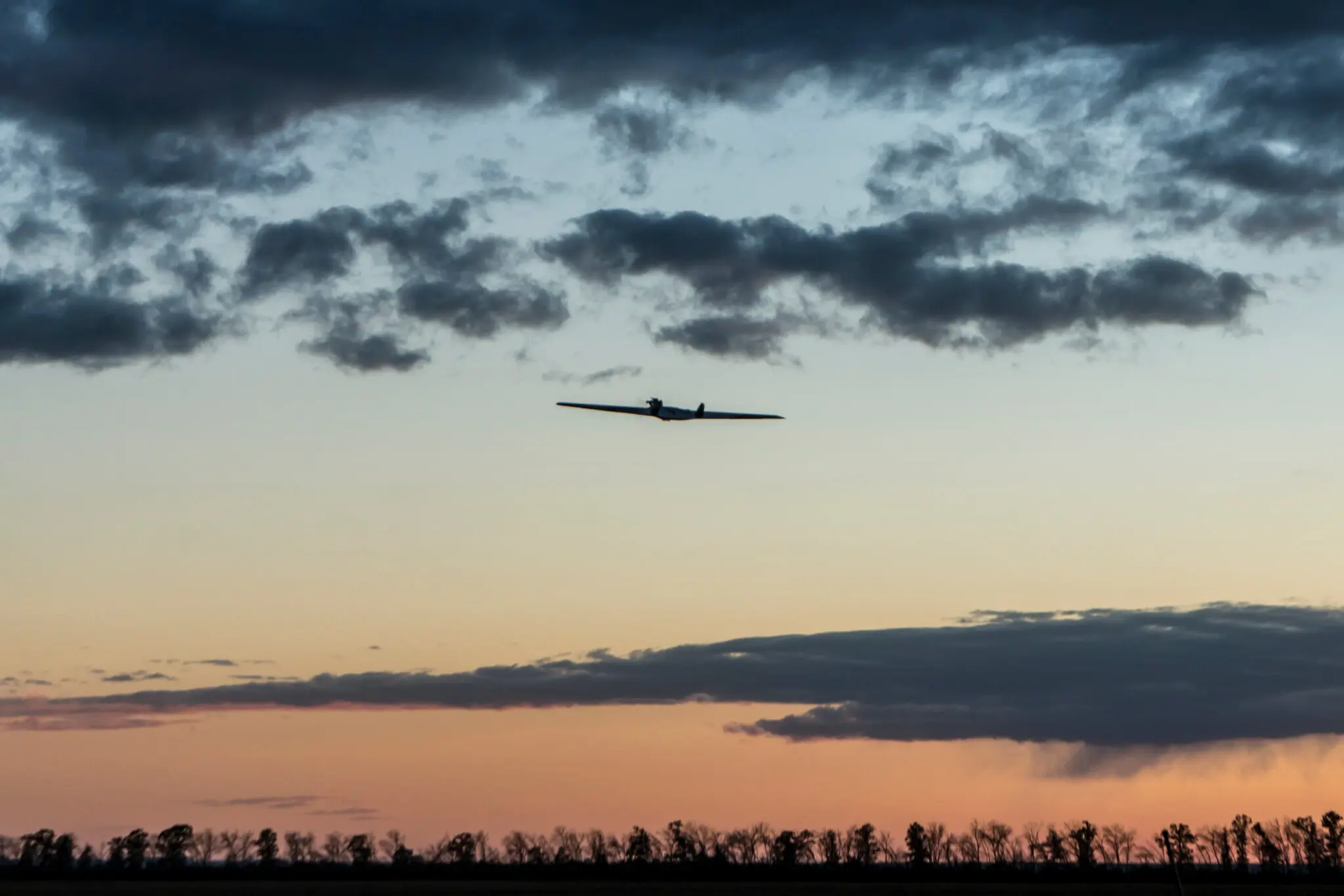





















Russia’s oil system has acquired another pressure point — this time not at a refinery, but at the point where crude leaves the country for the global market. On Friday, the Sheskharis terminal in Novorossiysk suspended oil loadings after a drone attack.
Sheskharis is Russia’s main crude export terminal on the Black Sea. It handles roughly 700,000 barrels a day, while total crude loadings from Novorossiysk approached 1 million barrels a day in July. Even a short interruption therefore carries far greater significance than the temporary shutdown of an isolated industrial site.
The mechanics of the disruption were especially revealing. A tanker scheduled to load crude moved out to open sea after an attempted attack. Port operations were suspended, and the terminal then stopped accepting additional oil because its storage tanks had reached capacity.
As Daycom has previously assessed, that sequence explains the strategic value of pressure on export infrastructure. A terminal does not need to be destroyed to disrupt the flow. It may be enough to force ships away from berths, interrupt loading and break the rhythm of a system designed to operate continuously.
Oil logistics function like a conveyor belt. Crude arrives through pipelines, enters storage tanks, moves to loading facilities and finally onto tankers. When the final stage stops, storage fills quickly and the terminal eventually has to restrict incoming supply as well.
At that point, the disruption begins to move backward through the system.
A port problem becomes a constraint for pipelines, storage operators and producers whose shipments had been planned according to a tightly coordinated schedule.
That is why Novorossiysk is a more sensitive target than a photograph of one damaged tanker or berth might suggest.
Large oil ports operate on extremely narrow timing. A tanker arrives during a designated window, takes a berth, loads its cargo and departs so that the next vessel can move in. Even a relatively brief suspension can create a queue.
If the threat becomes recurrent, the consequences deepen. Shipowners may wait farther offshore, captains may delay entry during air-raid alerts, insurers may reassess risk, and terminal operators may build larger buffers into schedules.
All of this reduces effective capacity even if the core loading infrastructure remains technically intact.
Novorossiysk matters because several important grades pass through it, including Russia’s flagship Urals crude, Siberian Light and Kazakhstan’s KEBCO blend.
That makes the port part of a broader regional energy network, not merely a Russian export facility.
A prolonged disruption can therefore affect not only Russian sellers but also buyers expecting Black Sea cargoes on specific delivery schedules.
The recent volumes underline the importance of the route. Crude loadings from Novorossiysk were close to 1 million barrels a day in July and around 800,000 barrels a day in June.
The port has therefore been operating as one of Russia’s most important oil-export arteries at a time when other parts of the energy system are already under pressure.
Ukrainian strikes on refineries have reduced processing capacity and contributed to shortages of some fuels. Diesel exports have fallen to multiyear lows. Now another line of pressure is reaching the facilities that allow Russia to move crude directly onto the world market.
These are different vulnerabilities, but they are connected.
A refinery strike reduces Russia’s ability to process crude domestically. A port disruption complicates the obvious alternative — exporting more unprocessed oil instead.
When pressure is applied at both points, the system loses flexibility.
Moscow still has substantial room to adapt. It can redirect flows to other ports, adjust schedules, increase storage and make greater use of alternative export routes. But every such adjustment carries a cost.
Oil that cannot be loaded today is not necessarily lost. Yet it has to be stored, rerouted or held back somewhere in the pipeline network. A tanker that leaves the loading area has to return. Another cargo may have to be shifted in the schedule.
This is how logistical friction accumulates.
In peacetime, it is measured in additional hours and operating costs. During a war, it also includes the risk that another strike will come before the system has fully returned to normal.
Novorossiysk has already experienced that pattern.
Last month, drone strikes temporarily halted loadings at the Caspian Pipeline Consortium terminal nearby, reducing exports of CPC Blend and affecting buyers including Turkey.
Now Sheskharis has been disrupted as well.
Taken together, these incidents suggest that Russia’s Black Sea oil coast is no longer functioning as deep rear-area infrastructure where the main operational concerns are weather, maintenance and tanker scheduling.
It is becoming an active risk zone.
That matters for insurance as well.
A commercial tanker does not have to be a military target for risk calculations to change. If it repeatedly enters a port exposed to drone and missile attacks, the danger to crew, hull and cargo becomes part of the commercial equation.
The more frequent the incidents, the more expensive it becomes simply to operate in the area.
Even a relatively small rise in insurance premiums can become significant when applied to hundreds of thousands of barrels moving every day.
For Russia, this is particularly sensitive because oil exports remain one of the most important sources of foreign currency and budget revenue.
Every barrel that waits longer for loading, every extra day of charter time and every additional insurance surcharge reduces the net economic efficiency of the trade.
The objective of such pressure does not have to be a complete halt in Russian exports.
For a wartime economy, it may be enough to make those exports slower, more expensive and less predictable.
That logic is already visible in Russian refining. Drone strikes have not stopped the entire sector, but they have forced Moscow to restrict diesel exports, shift fuel between regions and reorganize production.
A similar principle is now beginning to apply to export terminals.
The port does not have to be destroyed. Its operating rhythm only has to be interrupted often enough.
At Sheskharis, the sequence was unusually clear: loading stopped, a tanker moved away, storage filled, and the terminal had to stop accepting additional crude.
Four consecutive links in one disruption.
That sequence matters more than the visible scale of physical damage.
If the terminal resumes operations quickly, Russia can recover some of the lost time. But if such incidents become recurrent, operators will have to build the threat itself into export planning.
At that point, nominal capacity of 700,000 barrels a day will no longer be the same as usable capacity.
The terminal may remain technically capable of handling that volume, while actual throughput is reduced by alerts, suspensions, queues and the caution of shipowners.
That is the longer-term risk for Novorossiysk.
Large export hubs are extraordinarily efficient when they operate reliably. The same concentration becomes a weakness when the surrounding area is repeatedly exposed to attack.
Hundreds of thousands of barrels pass through a single port. A significant share of Black Sea oil traffic depends on a limited number of berths, tanks and loading systems.
That concentration makes the infrastructure productive.
It also makes every hour of downtime expensive.
For the global oil market, the impact of one temporary suspension should not be exaggerated. Russian crude has not disappeared from world supply, and Moscow retains alternative routes.
But the accumulation of disruptions matters more than any single incident.
When refining falls, diesel exports shrink, internal transport costs rise and Black Sea terminals are periodically forced to stop loading, the result is no longer a collection of unrelated operational problems.
It becomes a system of additional costs.
That is how economic attrition works.
Not through one strike that makes an entire oil industry disappear, but through dozens of smaller decisions Moscow has to make every day: where to redirect crude, where to find storage, which tanker to delay, which route to change and how much more to pay for risk.
Each decision is manageable on its own.
Together, they raise the cost of war.
Sheskharis therefore matters not merely because it can handle roughly 700,000 barrels a day.
It shows that Ukrainian long-range strikes are reaching deeper into the mechanism of Russian oil exports — from refineries and domestic fuel markets to storage tanks, loading berths and tankers.
Russia can still produce oil.
The increasingly important question is how continuously, cheaply and safely it can deliver that oil to a buyer.
And if the answer depends more and more often on whether an air-raid alert is sounding in Novorossiysk, then Russia’s Black Sea export system is gradually ceasing to be a secure artery and becoming another front in a war of economic attrition.