






















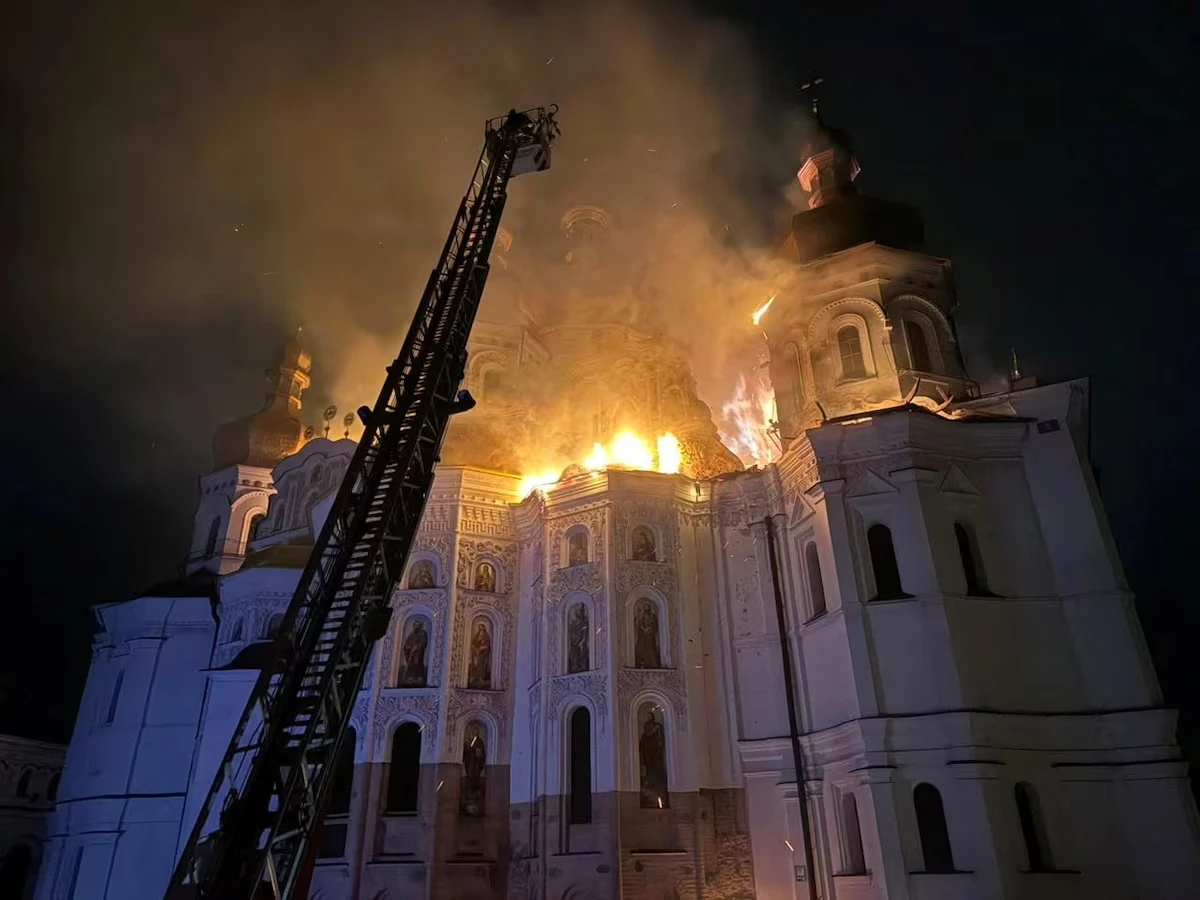
In Kyiv after the overnight attack of June 15, it was not merely the roof of an ancient church that burned. Smoke over the Kyiv Pechersk Lavra became one of those images of war in which military statistics suddenly harden into historical judgment. The strike touched a place where Ukrainian memory is older than most modern states.
Founded in the 11th century, the Kyiv Pechersk Lavra is not only a monastic complex and a world heritage site. It is one of the centers of Orthodox tradition, Ukrainian culture and political symbolism. Damage to the Dormition Cathedral therefore reaches far beyond architecture.
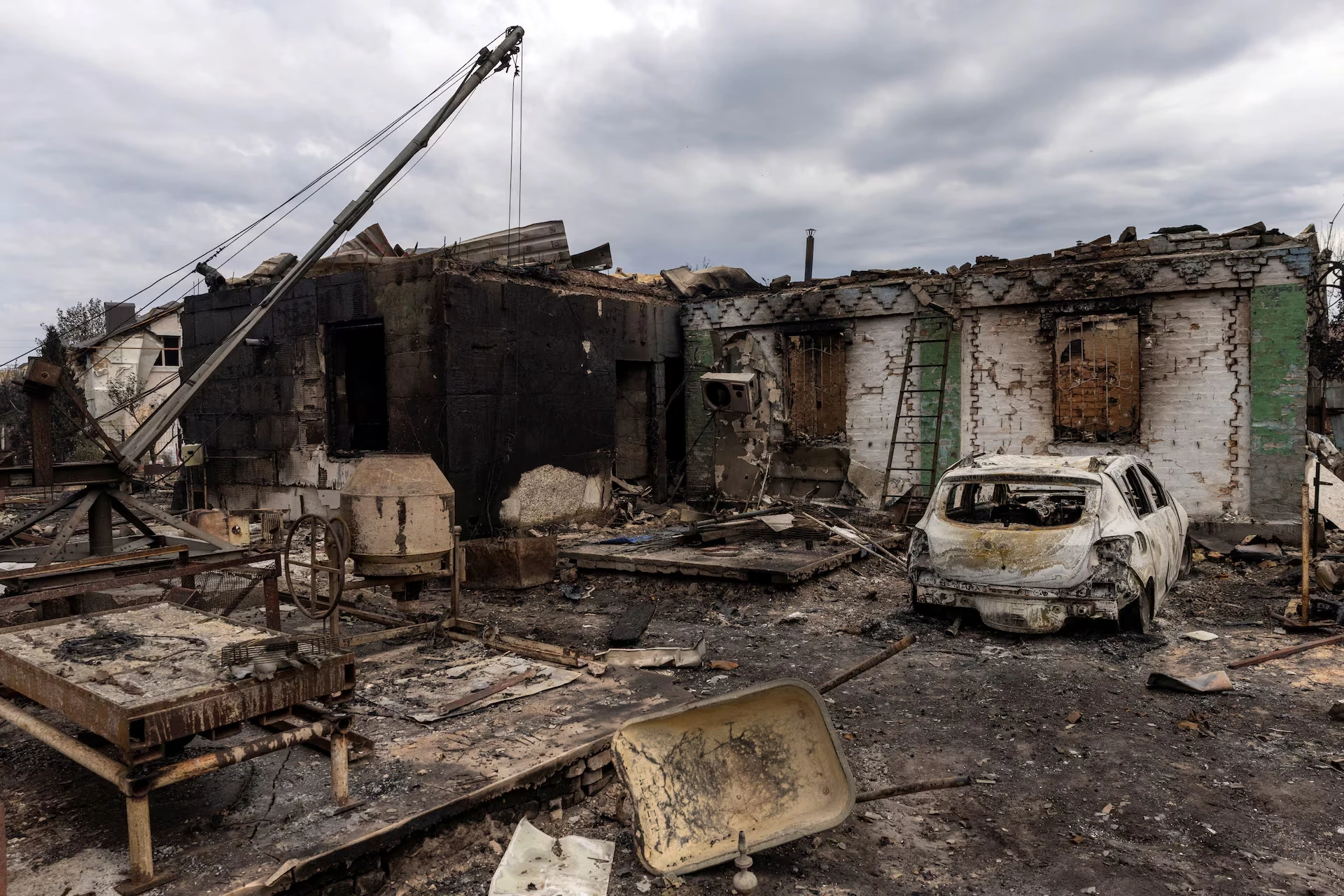
During the night, Russia launched dozens of missiles of various types and hundreds of drones. Ukrainian air defenses intercepted or suppressed most of the targets, but some ballistic missiles and strike drones reached their destinations. Across the country, at least 11 people were killed and dozens more were wounded.
For Daycom, this episode matters not only as another sign of Russian escalation. It shows that the war against Ukraine is increasingly being fought on three levels at once: against civilian infrastructure, against the air-defense system and against the cultural continuity that makes Ukraine a distinct political community.
President Volodymyr Zelensky arrived at the Lavra after firefighters had brought the flames under control. Emergency crews worked for hours, with personnel and equipment deployed across the site. Fires also broke out near Mystetskyi Arsenal, another cultural space where the war struck not only buildings, but the capital’s broader cultural environment.
The Dormition Cathedral survived, but the fact that fire reached its grounds became a political message in itself. Russia has long tried to frame the war in the language of “protecting Orthodoxy” and “historical unity.” Yet strikes near the Lavra dismantle that rhetoric more effectively than any diplomatic statement.
Moscow rejected the accusations and tried to shift responsibility onto Ukraine’s air-defense system. Kyiv said the area around the Lavra and Mystetskyi Arsenal had been hit by Russian drones. In this contested account, the fragments matter — but so does the scale of an attack that once again placed civilian and cultural sites under fire.

Ukraine’s central problem remains unchanged: ballistic missiles. They are the hardest to intercept and turn every mass attack into a test of the country’s entire defense system. During the June 15 strike, dozens of such missiles were recorded, and only some of them were destroyed.
That is why Kyiv continues to ask its allies for additional Patriot systems and interceptor missiles. For Ukraine, this is no longer simply a question of military aid. It is a question of whether the country can protect capitals, hospitals, energy facilities, museums, monasteries and civilians from attacks Russia launches in waves.
The attack came at a moment when diplomacy was again trying to catch up with the war. The day before, Zelensky had spoken with U.S. President Donald Trump about possible steps toward peace, while the G7 summit was approaching. Ukraine expected to use that forum to press for air defenses, sanctions and real pressure on the Kremlin.
That is why the strike on the Lavra does not look like accidental background noise. It fits a broader political logic. Moscow strikes when the world is discussing negotiations. It shows that it is prepared to raise the cost of war even on days when the public language is filled with talk of peace.
Europe’s reaction was sharp. The attack on a world heritage site was compared to a strike on Europe’s best-known sacred landmarks. That comparison matters not as an emotional flourish, but as a translation of Ukraine’s experience into a language Western societies understand: when the Lavra burns, it is not a local Eastern European tragedy, but an assault on the continent’s shared cultural memory.
For Ukraine, the Lavra carries another meaning as well. It is a place where religion, politics, imperial legacy and the struggle for church independence have intersected for years. Since 2022, the question of the Lavra has ceased to be merely ecclesiastical. It has become part of Ukraine’s broader separation from the Russian historical narrative.

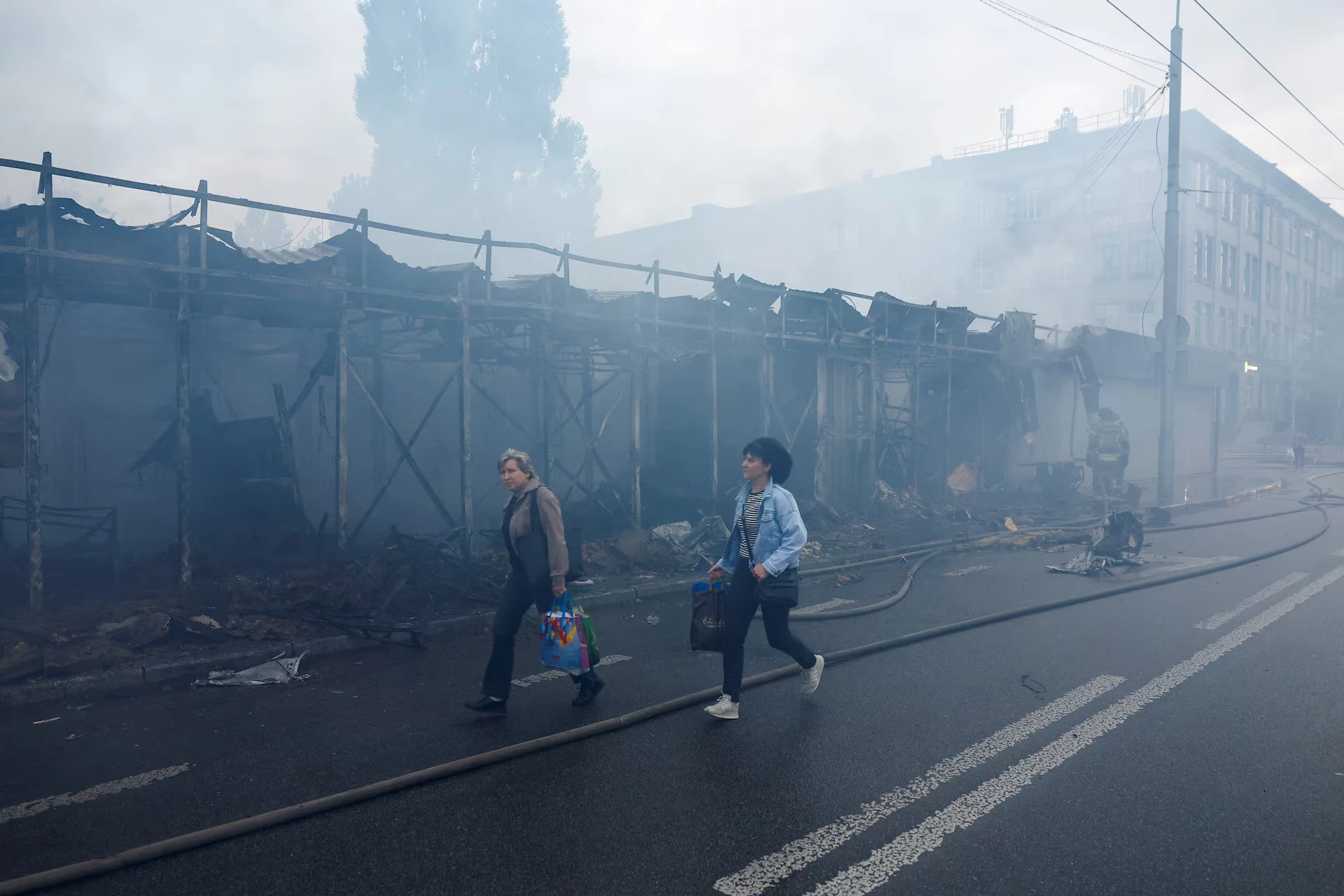 Жінки проходять повз ринок, який постраждав під час російських ракетних і безпілотних ударів у рамках російської агресії проти України, у Києві, Україна, 15 червня 2026 року — Валентин Огіренко
That is why damage to the Dormition Cathedral is felt so painfully inside the country. The Russian attack struck a place Moscow long tried to claim symbolically. Now it has become evidence of the opposite: what the Kremlin once called “shared heritage” it is ready to burn if that heritage is no longer under its control.
The war against cultural heritage did not begin that night. By mid-June, hundreds of cultural sites in Ukraine had already been damaged: religious buildings, historic structures, museums, monuments, libraries, archaeological sites and archives. The Lavra has become the loudest episode in this destruction, but not an isolated one.
Such attacks carry both military and psychological intent. Mass strikes exhaust air defenses, force Ukraine to spend expensive interceptors, spread fear among civilians and test the political response of allies. Russia watches to see whether another wave of outrage will turn into new protection systems, sanctions and long-term decisions.
For Kyiv, the answer to this strike cannot be limited to restoration. The roof will be repaired, the frescoes examined, and the territory reopened after safety work is complete. But the real response will be measured not by restored tiles, but by whether the Lavra becomes an argument for strengthening Ukraine’s sky.
This is where cultural memory and military policy meet. Without sufficient missile defense, Ukraine’s power plants and bridges are not the only targets at risk. So are archives, cathedrals, museums, monuments, city centers and everything that allows a country to recognize itself.
The strike on the Lavra did not change the course of the war overnight. But it changed its symbolic frame. After attacks like this, it becomes harder to speak of “Ukraine fatigue” as a neutral political condition. In this war, allied fatigue creates space for new strikes — against people, cities and memory.
Russia may deny involvement, change its wording and shift blame. But the night of June 15 left behind a simpler reality: people were killed, a sacred site burned in the capital, and Ukraine once again asked not for sympathy, but for protection. Cultural heritage does not survive because of statements. It survives when there is a sky above it capable of stopping missiles.