















The G7 summit in Évian-les-Bains, France, began as a rare moment of Western alignment. After months of friction, the leaders of the world’s major democracies tried to show that they could still speak with one voice: support Ukraine, welcome the preliminary U.S.-Iran deal and reduce the risk of a wider regional war.
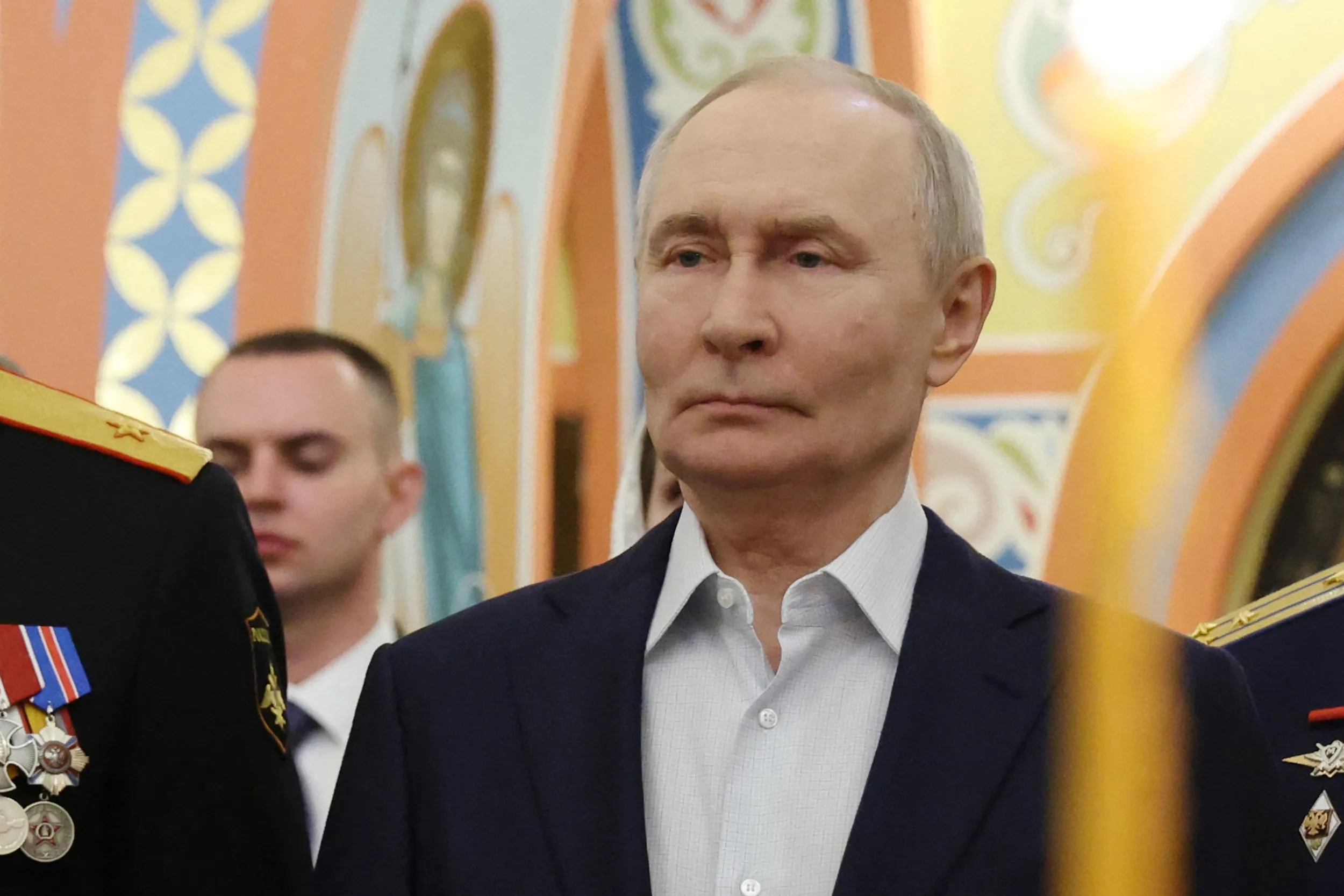
For Europe, the main achievement was the joint statement on Ukraine. After a long period of uncertainty, Washington signed on to a formula of “unwavering support” for Kyiv in its war against Russia. It was meant to send Vladimir Putin a clear signal: the trans-Atlantic front had not collapsed, even if cracks had accumulated inside it.
The Iran deal also looked like a diplomatic breakthrough. It was supposed to reopen the Strait of Hormuz, ease pressure on energy markets and create a path toward broader negotiations with Tehran. But on the summit’s final day, Donald Trump showed how fragile any structure built around his political style can be.
According to Daycom’s assessment, the G7 meeting in France was not only a gathering of allies, but a lesson in the limits of European influence over an American president. European leaders can offer ceremonies, joint statements, a dinner at Versailles and the language of strategic unity, but they cannot fully contain Trump’s improvisation.
At first, the U.S. president was selling his Iran arrangement as a strong result. Then he suddenly warned that he could tear up the final deal and resume bombing Iran if he was dissatisfied with Tehran’s behavior. His language about being ready to drop bombs again immediately pierced the thin surface of diplomatic harmony.
This was not merely a harsh remark. It was a signal that even after signing a preliminary framework, Washington reserves the right to return to force without a long procedure. For allies, that creates a double challenge: they are expected to support a peace process that its own author can publicly call into doubt.
Trump spoke about deals the way he often speaks about politics: as an unstable game in which everything can change in a day. His line that crazy things happen with deals was effectively not a joke, but a method of governance. For diplomats who build documents on precise wording, that is almost an anti-language.
That is Europe’s problem. An international summit moves according to the rhythm of prepared texts, compromises, signals and restrained formulas. Trump operates in another rhythm — one of personal impulse, theatrical effect and the constant possibility of revising what has already been said.
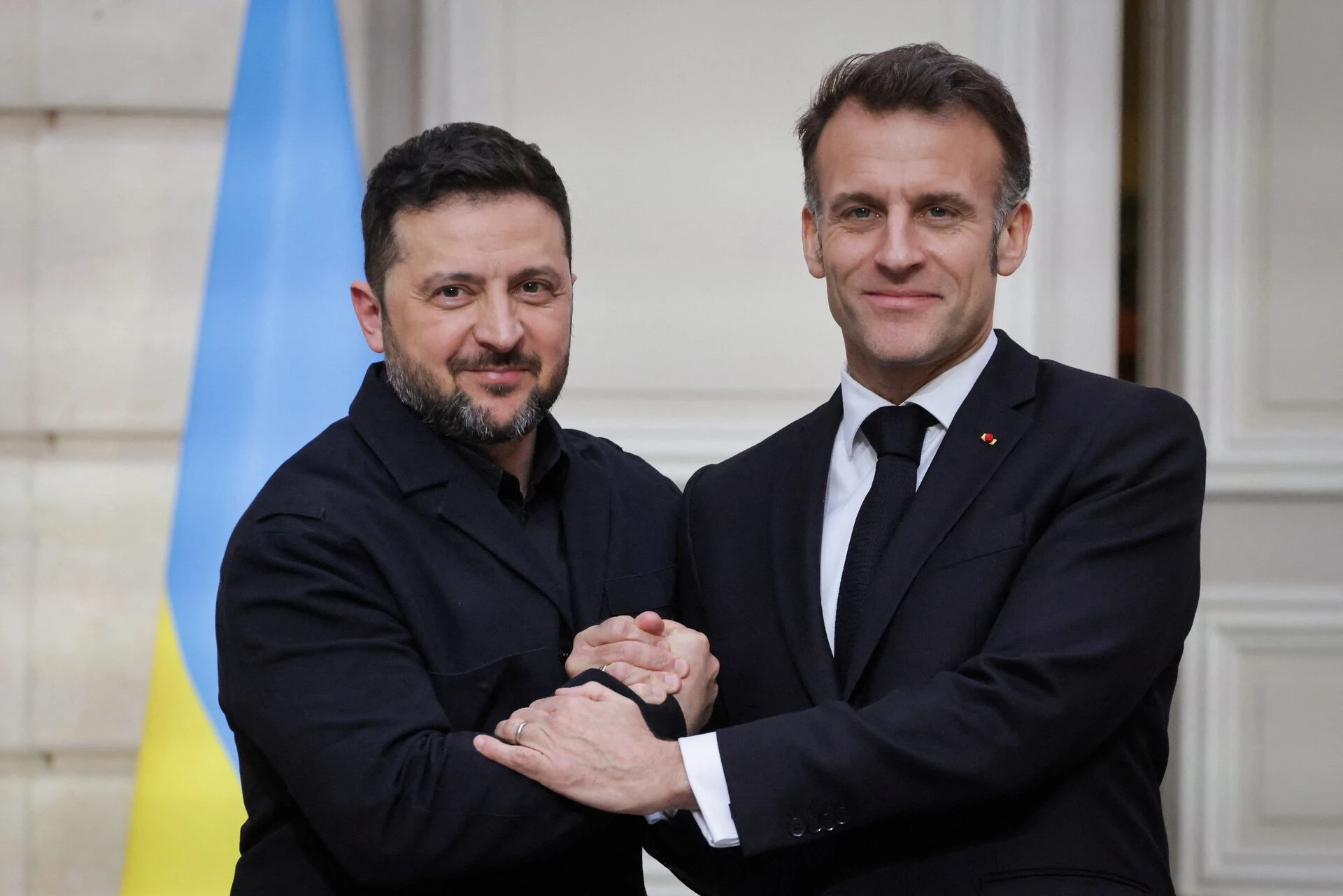
Emmanuel Macron tried to hold on to the positive outcome. He emphasized that the United States had agreed to a strong joint statement on Ukraine and described it as a shift in the American approach. For Paris, that mattered: the summit was meant to show that Europe can still tie Washington to a common position.
Friedrich Merz also spoke of a new tone in trans-Atlantic relations. For Berlin, the G7 statement on Ukraine showed that allies could increase pressure on Moscow, including through new sanctions. But the optimism remained cautious, because everyone understood that one joint statement does not erase the volatility of the American line.
It was already considered a success that Trump stayed until the end of the summit. For European capitals, that may sound almost absurd, but in today’s diplomacy with Washington, even a president remaining until the final day has become a political achievement. Macron used the full arsenal of French soft power to secure it, from personal attention to a symbolic dinner at Versailles.
That tactic has logic, but also limits. France can host, flatter, emphasize historic friendship and still speak firmly about Ukraine, Denmark or Greenland. But soft power works only when the partner accepts the weight of ritual. Trump accepts ritual, but he does not always allow it to restrain him.
The summit exposed another feature of the moment: European leaders are constantly forced to translate Trump’s improvisation into the language of diplomatic results. When he speaks sharply about Iran, they explain it as leverage. When he signs a statement on Ukraine, they frame it as a strategic pivot. When he mentions Greenland, everyone again begins searching for a hidden signal.
Such episodes can look theatrical, but they carry real weight. Greenland became one of the most painful issues between the United States and its European allies because it touched the principle of territorial integrity inside the Western camp itself. Even a brief hint from Trump on the subject revives an old anxiety.
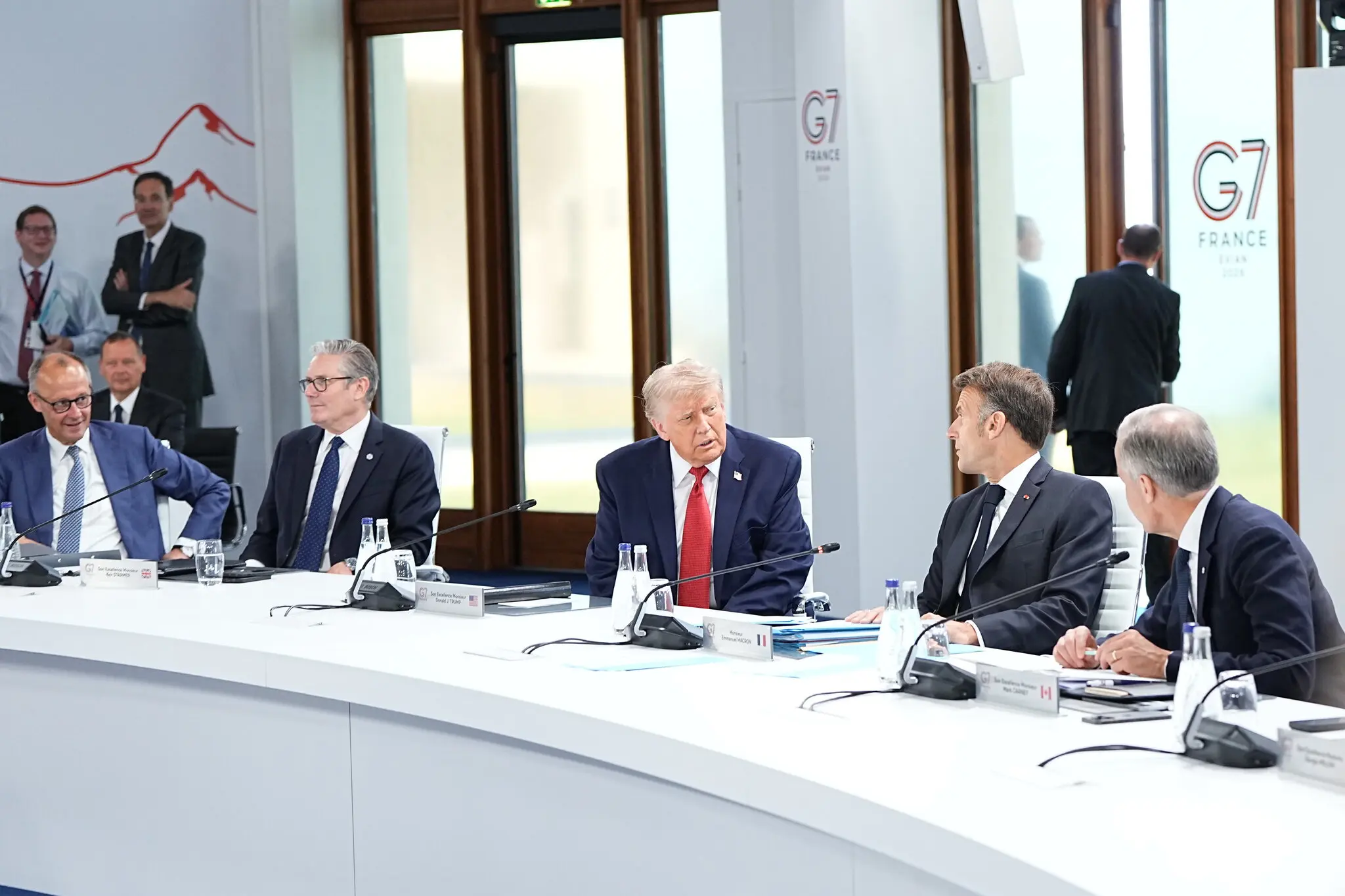 Президент Трамп та інші лідери під час робочої зустрічі в середу — Хайюнь Цзян
The Italian line also showed the complexity of the moment. Giorgia Meloni, who had distanced herself from Trump after the outbreak of the Iran war, displayed a friendly tone at the summit. European leaders seemed to want to convince themselves that the trans-Atlantic family was functioning again. But behind the smiles remained the question: is this unity, or only a temporary stage set?
For Ukraine, the summit’s outcome is mixed but important. The G7 joint statement gives Kyiv political support, especially amid Russian strikes and discussions about future negotiations. If the United States really supports stronger pressure on Moscow, it strengthens Ukraine’s position ahead of any diplomatic phase.
But Kyiv also sees the risk. If the American president can change his tone on Iran in a single day, he can just as quickly change the frame on Russia. That is why it is critical for Ukraine that support be anchored not only in a leader’s words, but in sanctions, weapons, financing, production contracts and European integration.
For Iran, the situation is different. Trump is simultaneously offering Tehran an economic window and threatening a return to bombing. That may be a tactic of coercion, but it can also undermine trust in negotiations. If Iran’s leadership concludes that any arrangement depends on the mood of the White House, a final deal will become far harder.
The summit in France revealed the paradox of the current West. Formally, the G7 achieved more than expected: a statement on Ukraine, a framework on Iran and an attempt to restore the trans-Atlantic tone. Politically, however, all of it remains tied to a leader who can change the atmosphere of an entire meeting with a single appearance.
European leaders left Évian with a partial result and a full memory of the risk. They secured the U.S. signature under support for Ukraine, but saw that a signature does not always mean predictability. They welcomed the Iran deal, but heard that the war could return at any moment.
That is the central lesson of the summit. Europe has learned to work with Trump as a political force of nature: carefully, flexibly, through symbols and personal gestures. But a force of nature cannot be fully placed inside a protocol. It can only be temporarily directed — with the constant awareness that the next wave may move in another direction.
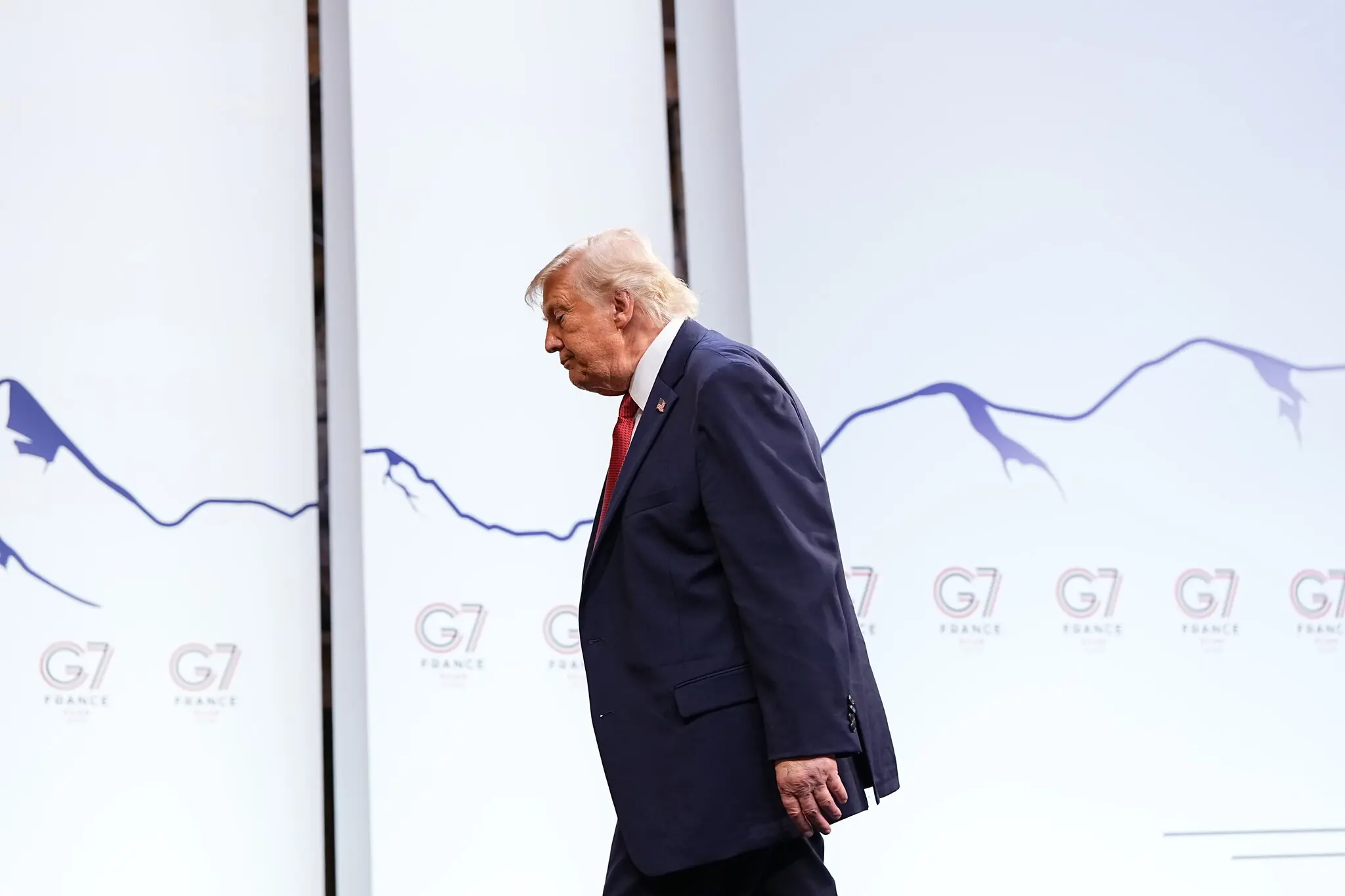 Президент США Трамп на саміті G7 в Евіан-ле-Бен, Франція, у середу — Хайюнь Цзян