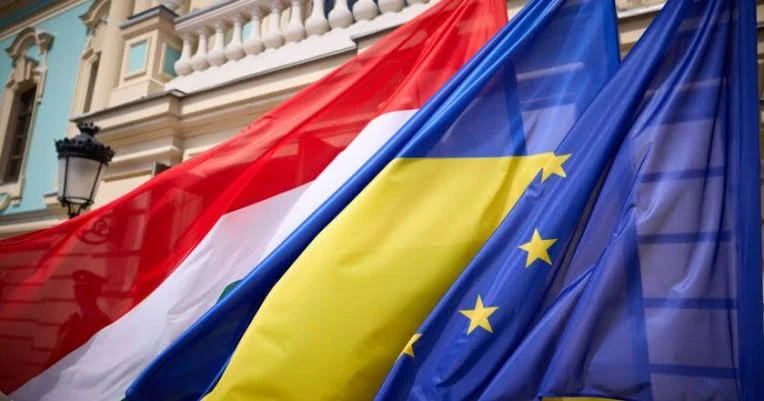






















The final Median poll, conducted just days before Hungary’s vote, was not merely another late-campaign data point. It was, in effect, a preface to the collapse of the Orbán era. By projecting 135 seats for Péter Magyar’s Tisza in the 199-seat parliament, it raised a far larger question than whether Orbán had weakened. It asked whether the system he built could survive the electoral cycle at all.
In a country where people had long doubted not so much the government’s ratings as the very possibility of defeating it at the ballot box, that number carried more than statistical weight. It struck at the core psychological mechanism of Fidesz: the belief that power might wobble, but could not truly fall. Once voters stop believing a regime is inevitable, even the most carefully assembled political machine begins to lose discipline.
Median mattered especially because it had long been regarded as one of Hungary’s most credible polling firms. Its estimate went well beyond an ordinary opposition lead and pointed toward a possible two-thirds majority for Tisza, a scenario that only months earlier would have seemed close to political fantasy. As Daycom argued in earlier analysis, there are moments when polling stops being a simple measure of public mood and becomes a signal that the old political gravity is breaking down.
The crucial point was not only the margin itself, but the parliamentary logic behind it. Hungary’s electoral system had long been designed in ways that made a national lead no guarantee of parliamentary control. Single-member districts, regional vote distribution, and an architecture repeatedly reshaped under Orbán had all worked to Fidesz’s advantage. That is why a projection of 135 seats sounded almost like a sentence rather than a forecast. It implied that the public wave might be stronger than the very structure meant to preserve the government.

This mattered all the more because, until the final stretch, Hungary seemed to contain two competing polling realities. Independent or opposition-leaning pollsters showed Tisza ahead, while government-friendly firms often painted a far softer picture and left Fidesz room for a plausible victory. The final Median poll became the moment when one reality began to displace the other in full view.
What makes that survey so striking in retrospect is how close it came to capturing the political truth of the moment. On election day itself, record turnout confirmed that not only the government’s loyal base had appeared at the polls, but also a broader mass of voters determined to move the system by force of participation. Early evening returns placed Tisza almost exactly in the zone Median had anticipated. The turning point, then, was not a media illusion. It was a real political wave.
At the same time, the poll also showed the limits of even the best political sociology. Median suggested that the far-right Mi Hazánk might fail to cross the 5 percent threshold for entering parliament, while early returns indicated that the party could still achieve representation. That is an important reminder. Even when a poll grasps the central direction of a political moment, it can still miss smaller but structurally meaningful details of the final parliamentary map.
The deeper political meaning of the survey lay elsewhere. It removed Orbán’s last comforting argument. Until numbers like these appeared, the government could still tell itself that the campaign was merely tense but manageable turbulence. After them, it became much harder to pretend that the problem was only a dip in support. What was now visible was the possible breakdown of the governing formula itself: media dominance, culture war mobilization, anti-European rhetoric, and the politics of fear were no longer enough to guarantee obedience.

For Europe, that final poll mattered almost as much as it did for Hungary. For the first time, it seriously suggested that one of the most famous symbols of “illiberal democracy” could be defeated not by elite rupture, not by foreign pressure, but by an ordinary democratic vote. For Ukraine, too, the implications were direct. If a country that had long acted as an internal brake inside the European Union on sanctions, aid to Kyiv, and policy toward Moscow was entering a genuine phase of political turnover, then the wider regional balance would inevitably begin to shift.
That is why Median’s final poll should not be read simply as an accurate pre-election survey. It captured the moment when Hungary had already ceased, internally, to be a country of guaranteed Orbán rule, even if the government itself had not yet admitted it. And when the prime minister was later forced to call the result “painful but clear,” it became obvious that polling had recognized the end of an era before the central figure of that era was ready to do so himself.