






















Ukraine’s campaign in occupied Crimea is entering a new phase. Its logic is moving beyond isolated strikes on depots, airfields or fuel facilities. The broader objective is to make the peninsula progressively less usable as a staging ground for Russian forces.
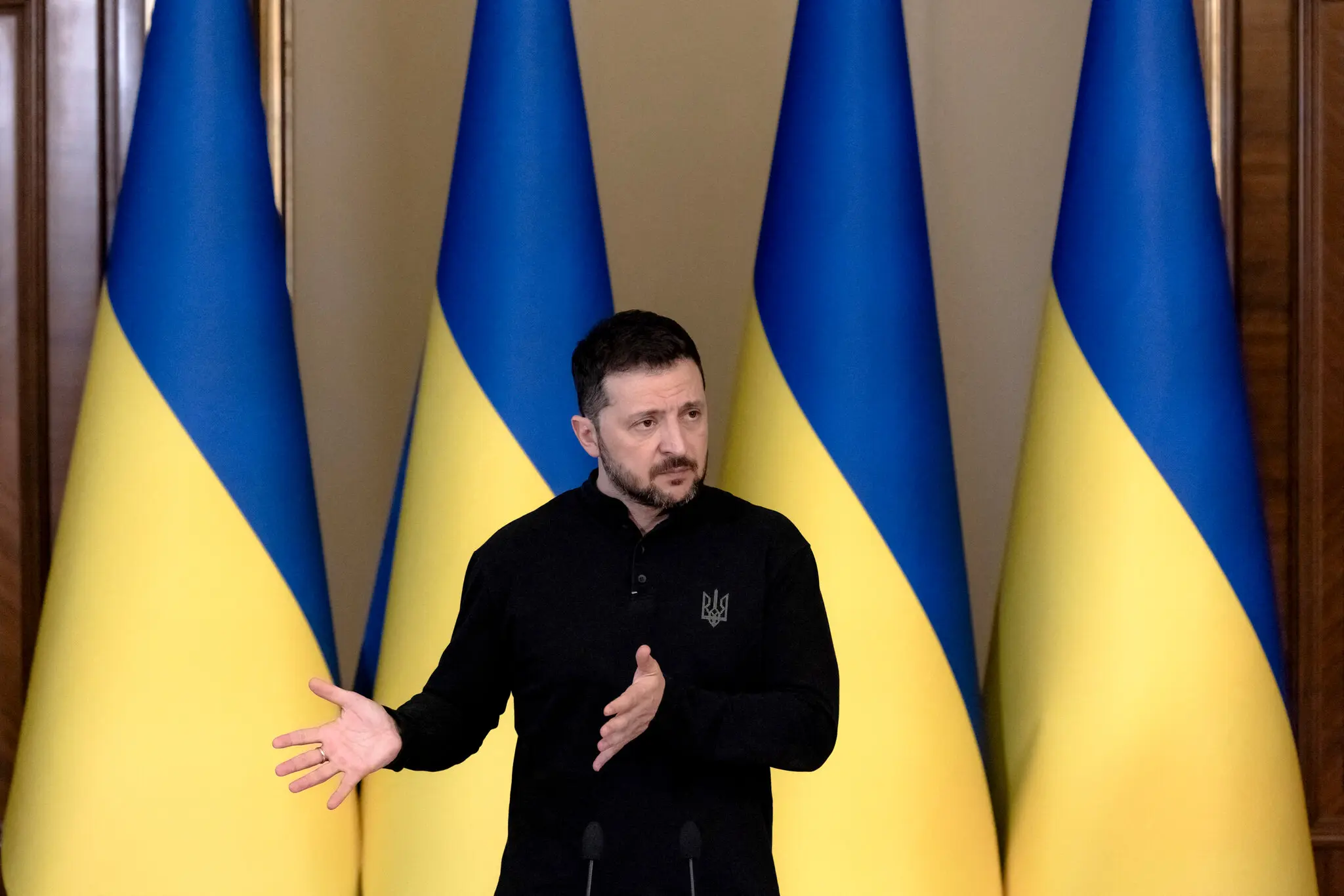
Robert “Madyar” Brovdi, commander of Ukraine’s Unmanned Systems Forces, describes Crimea as one of the central elements in Kyiv’s strategy for changing the course of the war. The campaign targets Russian air defenses, radar networks, electronic-warfare systems, energy infrastructure and transport links.
By Brovdi’s estimate, the operation is currently running at only about 14% of its potential capacity. Ukrainian units could strike roughly seven times more military targets if pledged Western funding arrived faster.
As Daycom has previously noted, Crimea matters to Russia not simply as a territorial symbol but as an integrated military system. The peninsula combines air bases, missile positions, ports, depots, radar stations, rail links and logistics that support operations across southern Ukraine.
That is why Ukraine’s strategy increasingly resembles the dismantling of a system rather than the destruction of individual targets. First, Russian air defenses must be weakened. Then corridors can be opened for long-range drones. Only after that do more complex and valuable targets become easier to reach.
Brovdi says Ukrainian forces have destroyed more than 300 elements of Russia’s air-defense network in Crimea in recent months, ranging from surface-to-air systems to radar installations and electronic-warfare equipment.
That figure is difficult to independently verify, but the operational logic is clear. A drone approaching a heavily defended base has far lower odds of success while radars, jammers and layered air defenses remain intact. Degrading that network makes subsequent strikes cheaper and more effective.
The advantage can accumulate. A destroyed radar improves the chances of the next attack. A disabled air-defense battery opens another corridor for incoming drones. Damage to the electrical grid can, in turn, disrupt parts of Russia’s defensive architecture.
That is one reason Crimea’s power infrastructure has also entered the military equation. Some Russian systems depend on fixed electricity supplies, and outages can temporarily reduce the effectiveness of radar and other defensive assets.
The approach carries an obvious cost for civilians. Brovdi has acknowledged that power disruptions have affected residents of the occupied peninsula and has publicly apologized for those consequences. It is one of the hardest aspects of the campaign because civilian and military infrastructure are often physically intertwined.
Ukrainian forces are also tailoring munitions to specific targets. A bridge pier requires one type of warhead, a fuel truck another and a moving train something different again. That illustrates a broader change in drone warfare: precision increasingly depends not only on navigation, but on matching the platform and payload to the target.
Brovdi says that in parts of Crimea where Starlink connectivity remains available, his units can destroy even heavily defended targets with an average of about three drones. If accurate, that would point to a strikingly favorable cost ratio for Ukraine.
Russia, however, is adapting. Electronic-warfare systems are being deployed across the peninsula on a larger scale in an effort to degrade satellite connectivity and disrupt Ukrainian drone navigation. The technological advantage is therefore temporary by nature: every successful method quickly generates a countermeasure.
Crimea also remains an important platform for Russian missile operations. Brovdi links the degradation of Russian air defenses and supporting infrastructure to a decline in the number of missiles launched from the peninsula during some recent large-scale attacks on Ukraine.
For Kyiv, that effect is particularly valuable. Ukraine’s air-defense network increasingly depends on limited stocks of expensive interceptors, especially against ballistic missiles. Every missile that Russia cannot launch because a depot, launcher or support facility has been destroyed is one fewer weapon that must be intercepted over a Ukrainian city.
Long-range strikes therefore become part of air defense itself. The logic is straightforward: if Ukraine cannot guarantee that every incoming missile will be destroyed in the air, it must reduce the number Russia can launch in the first place by targeting production, logistics, airfields and launch infrastructure.
The threat is still growing. Brovdi estimates that Russia can currently launch about 77 cruise and ballistic missiles in a simultaneous salvo and believes Moscow intends to raise that figure toward 200.
Even reaching part of that capacity would place enormous pressure on Ukrainian air defenses. That is why the contest over Crimea is connected not only to the peninsula’s future, but to the defense of Kyiv, Dnipro, Odesa and other cities from future mass attacks.
Another front is maritime infrastructure. Ukraine has already constrained the freedom of action of Russia’s Black Sea Fleet, forcing some ships away from traditional bases. The next phase is aimed at further reducing the military value of Crimean ports.
If aircraft, missiles, ships, radars and logistics centers can no longer operate safely from the peninsula, Crimea begins to lose the very function that makes it strategically valuable to Russia’s military.
Brovdi also says that shortly after the summer campaign began, Russian authorities ordered parts of the military command structure, security services, secret archives and other sensitive assets to move off the peninsula. Those claims have not been publicly confirmed, but they reveal the kind of effect Kyiv wants the campaign to produce.
Ukraine does not necessarily need to destroy every base. It may be enough to make their continued use so dangerous, costly and unpredictable that Russia decides to move critical assets farther away.
In that sense, Crimea is becoming a testing ground for a new model of warfare. Ukraine cannot match Russia in the number of aircraft or ships, so it is trying to create an advantage through cheaper unmanned systems, intelligence, a faster targeting cycle and the cumulative erosion of enemy defenses.
Brovdi says Ukraine’s main constraint is not industrial capacity. Domestic manufacturers, he argues, can produce far more drones than are currently being purchased. The bottleneck is financing and the speed at which pledged money becomes usable contracts.
That is one of the paradoxes of the current war. Ukraine has built an industry capable of scaling relatively inexpensive long-range systems quickly, while Western budget and procurement processes often move more slowly than the technology itself.
In drone warfare, those delays matter immediately. Additional funding can be converted into hundreds of systems within a relatively short period. Money that arrives late does not represent some abstract future shortfall; it means specific targets that remain untouched today.
Ukraine’s strategy also extends far beyond Crimea. Strikes on missile production, logistics hubs and facilities deep inside Russia serve the same broader purpose: to move the costs of war into places Moscow long considered protected from its direct consequences.
That makes the contest increasingly complex both politically and technologically. Russia is expanding defenses, improving jamming systems, increasing weapons production and looking for new ways to overwhelm Ukrainian air defenses. Ukraine is responding by trying to reduce the number of launchers, platforms and missiles Russia can bring to bear.
Crimea is becoming the central proving ground for that approach. If Ukraine can systematically degrade the peninsula’s air defenses, logistics, energy support and military bases, it could gradually strip Crimea of its value as a secure rear area for Russian forces.
The real measure of success would then not be the number of explosions or even the number of destroyed facilities. It would be whether Russia is forced to move aircraft, ships, command centers, depots and air-defense systems farther away from the peninsula.
That is the core logic of Ukraine’s evolving drone war. Territory does not necessarily have to be captured to lose much of its military value. And if the current strikes are indeed only the first phase, the battle for Crimea may increasingly be decided not by the front line on the ground, but by who can control and exploit the space above it.