




















Ukraine is taking a step that would have seemed impossible only a few years ago: it is opening wartime exports from its own defense sector. This is not a return to an ordinary arms market, but a controlled mechanism in which foreign contracts are meant to finance the war at home.
The new framework will allow Ukrainian manufacturers to export finished defense goods and components if they can simultaneously fulfill orders for the Ukrainian army. Part of the revenue will go into a state defense fund: 20 percent from sales of finished products and 30 percent from components.
This is an attempt to solve one of the central contradictions of Ukraine’s wartime economy. The defense industry has grown rapidly since Russia’s full-scale invasion, but further expansion requires money, markets, research, engineers, equipment and long production cycles. State orders alone are no longer enough.
According to Daycom’s earlier analysis, Ukraine is entering a new phase of defense policy: it is no longer only asking allies for weapons, but building its own industrial model of war. Exports are not a retreat from the needs of the front, but a way to increase the resources the front will receive tomorrow.
That is why the state is keeping strict safeguards. Manufacturers will not be able to sell abroad what is critically needed by Ukraine’s defense forces. Such items will remain restricted, while export permits will depend on a company’s ability to avoid disrupting domestic contracts.
It is a delicate balance. If exports are opened without control, the best systems could go where payment is faster or contracts are easier. If the ban remains absolute, manufacturers lose room to grow, investors lose motivation, and the state loses additional money for procurement and modernization.
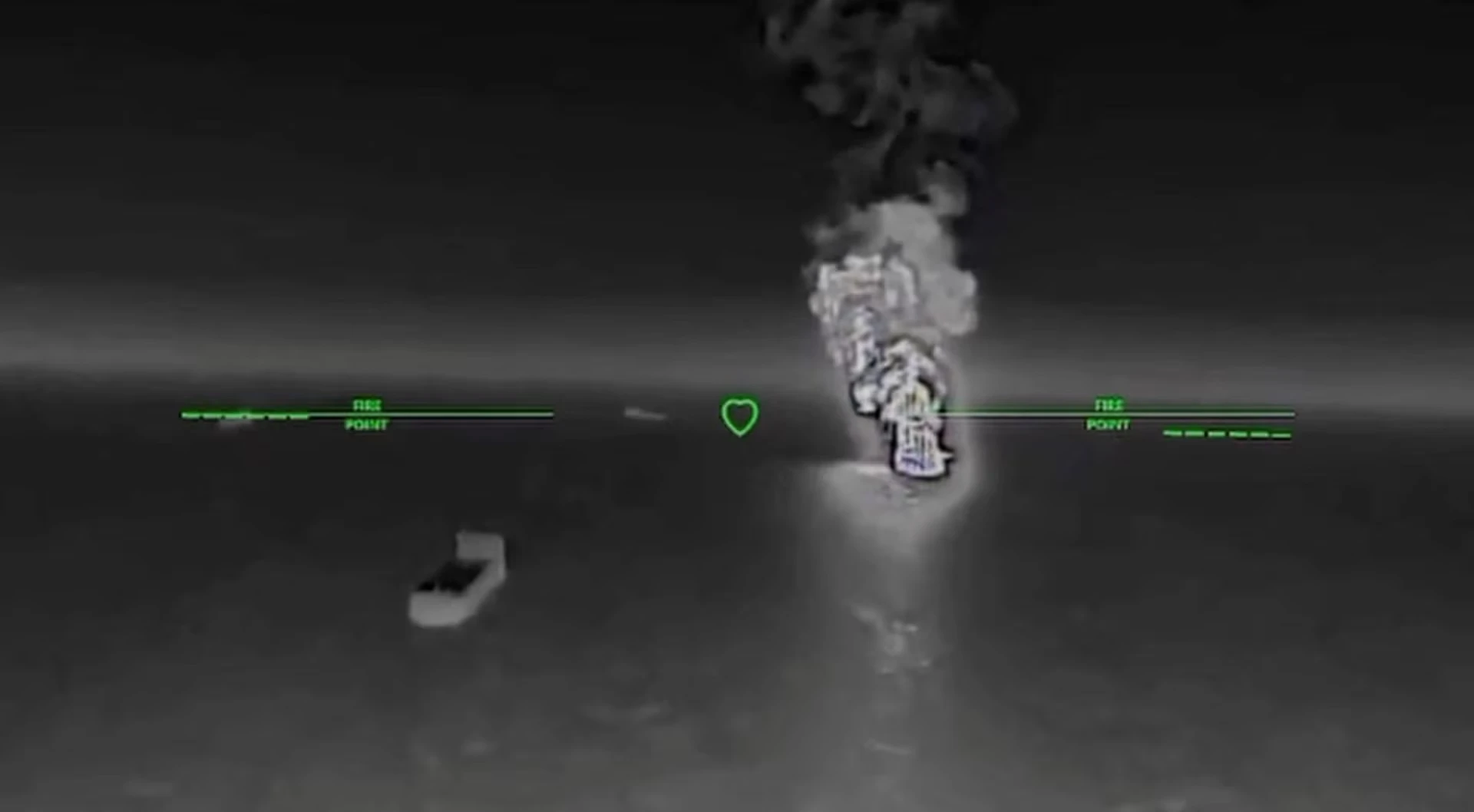
Ukraine’s defense industry has already become one of the most dynamic parts of the economy. It produces drones, electronic warfare systems, ammunition, components, ground systems, naval drones and other critical technologies. More than half of the weapons used by Ukraine on the battlefield are now domestically produced.
That figure changes the political psychology of the war. Ukraine is no longer only a recipient of aid. It is becoming a producer of technologies shaped in real combat conditions, rapidly adjusted after feedback from the front and valuable to partners preparing for a new era of drone warfare themselves.
Drones occupy a special place in the new framework. Ukraine has already been striking bilateral “drone deals” with European and Middle Eastern states and is seeking to expand such arrangements, including with the United States. This is not simply the export of hardware. It is an exchange of experience, industrial capacity and access to production scale.
Drone warfare has become a laboratory in which Ukrainian companies move through a cycle that can take peacetime armies years: idea, prototype, testing, combat use, failure, upgrade and serial production. This tempo is what makes Ukrainian technologies attractive to foreign markets.
At the same time, the government is keeping control over intellectual property. Technologies can be transferred without assigning ownership rights and will remain subject to rules on use and re-export. This is essential: the country must not lose what it has created under the pressure of war and through costly battlefield experience.
The issue of re-export is especially sensitive. Weapons and components leaving Ukraine must not end up in gray chains or in the hands of those who could transfer them onward without Kyiv’s consent. For a state at war with Russia, end-use control is not bureaucracy. It is national security.
The new mechanism will operate for the duration of martial law. That means Ukraine is not opening the market completely, but creating a temporary wartime model. Its logic is simple: every contract abroad must strengthen the defense base inside the country and deliver more weapons to the Ukrainian army.
The fund that will receive part of export revenues could become an important instrument. If it works transparently and quickly, it can finance new procurement, research, production modernization, scaling of successful models and support for companies that have already proved effective at the front.
The risks, however, are clear. Wartime arms exports require precise rules, fast permits, anti-corruption safeguards and manufacturers’ trust in the state. If the mechanism turns into a queue for approvals, discretionary privileges or a political filter, it will lose the main thing defense innovation needs: speed.
For companies, this is also a test of maturity. They receive a chance to enter foreign markets, but at the same time must prove they will not weaken the front. In a wartime economy, a manufacturer’s reputation is defined not by an exhibition booth, but by whether its products reach units on time, in the necessary quantity and with working quality.
For Ukraine’s partners, the new system opens another format of cooperation. Buying Ukrainian drones or components means more than financially supporting Kyiv. It means connecting to a defense ecosystem already tested by Russia’s war, mass attacks, electronic warfare and the enemy’s constant adaptation.
For Russia, this is an unwelcome signal. Moscow expects Ukraine’s defense industry to remain permanently underfunded, dependent on grants and Western deliveries. The export framework creates a different scenario: Ukrainian technologies begin to earn money for their own expansion.
This is where the strategic effect appears. If a Ukrainian manufacturer sells part of its production to an ally, channels a percentage into the state fund, keeps intellectual property rights and scales production, the benefits go beyond the company and the buyer. The front gains a broader industrial base.
Ukraine will have to constantly hold the line between exports and the army’s needs. That line cannot be static. What is surplus or available for sale today may become critical tomorrow after a new Russian attack, a shift in battlefield tactics or a shortage of components.
The success of the new system will therefore depend on flexible management. Ukraine needs updated lists of critical goods, constant contact with the military, rapid assessment of production capacity and a state that can avoid suffocating entrepreneurs with control while still maintaining strategic discipline.
Wartime arms exports are not the cynical commercialization of war. For Ukraine, they are a way to turn its defense ingenuity into a resource for survival. When a state does not have the luxury of an unlimited budget, it must make industry not only produce, but partly finance its own growth.
This is the central change. Ukrainian weapons are becoming not only a battlefield necessity, but an instrument of economic resilience. They can generate revenue, open markets, create partnerships, support engineers and accelerate technologies that will later return to the battlefield.
If the new framework works precisely, it will give Ukraine what it lacks most in a long war: not a one-time tranche, but self-reproducing defense capacity. Weapons sold abroad under state control should return home as funding, production, technology and new batches for the army.
That is how Ukraine is trying to build a model in which exports do not compete with the front, but feed it. In a war where victory is increasingly defined by the speed of production, such a model may become no less important than a single air defense battery or a batch of drones. It gives the country a chance to fight for the long term, intelligently and with its own industrial strength.