



















Recent months have revealed a new map of Russian vulnerability: oil refineries, gas processing plants, pumping stations, export terminals, and Baltic and Black Sea ports. Where Moscow once saw rear territory, Ukraine increasingly sees military logistics.
The campaign is unfolding against the backdrop of stalled peace efforts and continued Russian strikes on Ukraine’s energy system. Kyiv is not responding symmetrically, but structurally: targeting what gives the Kremlin fuel, foreign currency, export revenue and the ability to sustain the war.
According to Daycom’s assessment, the central purpose of these strikes is to change the cost of Russian aggression. If Russian missiles and drones have spent years destroying Ukrainian power plants, substations, ports and cities, then Russia’s fuel infrastructure can no longer remain outside the zone of risk.
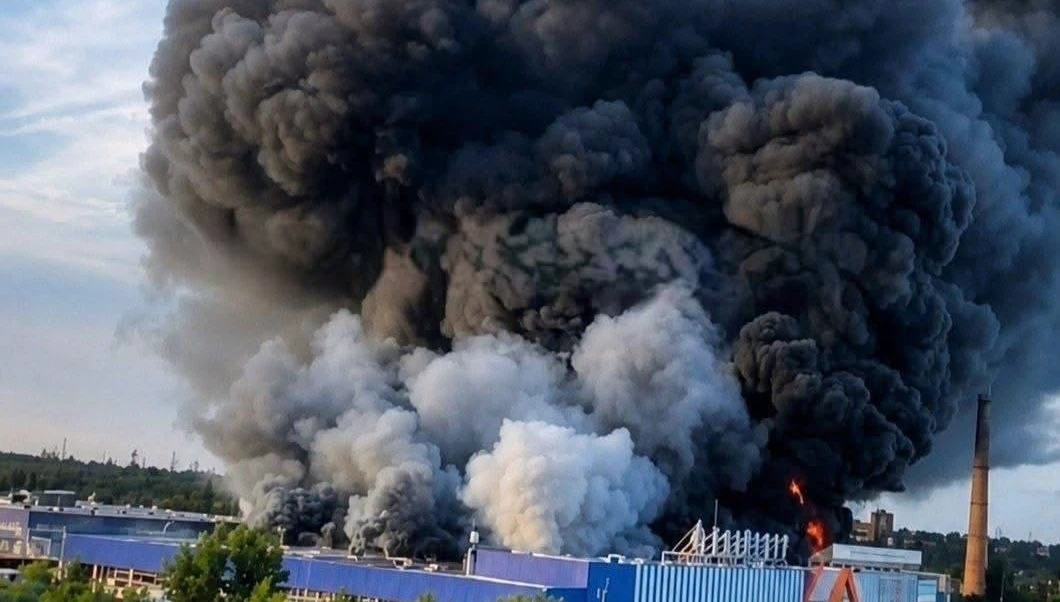
The first layer of this campaign is oil refining. The Moscow refinery in Kapotnya, one of Russia’s most compact refineries, has a capacity of about 11 million tons of oil per year. After strikes near its entrance, people were wounded and residential buildings were damaged, although Russian officials said the technological part of the facility was not affected.
Even if production was not halted, the appearance of drones near a Moscow oil refinery carries political weight. An energy facility in the capital is no longer just an industrial site. It becomes a symbol: the war is reaching infrastructure that until recently seemed protected.
In southern Russia, the Astrakhan gas processing plant near the Caspian Sea was also hit. Its annual capacity is about 12 billion cubic meters of gas and 3 million tons of stable gas condensate. The plant also produces gasoline, diesel and liquefied petroleum gases.
That makes it different from a strike on a simple fuel depot. A gas processing plant is a more complex node: it connects extraction, processing, petrochemicals, the fuel market and export logic. A fire at such a facility creates not only local damage, but risk for wider production chains.
The Perm refinery halted processing after a May 7 attack caused a fire and damaged equipment. In 2024, it processed about 12.6 million tons of oil, or roughly 250,000 barrels per day, producing gasoline, diesel, coke and fuel oil.
For the Russian economy, such facilities are not peripheral. They are part of the system that supplies the domestic market, the army, industry and the budget. Every refinery shutdown means not only repairs, but the rerouting of flows, pressure on reserves and additional strain on other plants.
Tuapse, on the Black Sea, is another important node. Its refinery can process about 12 million tons of oil a year and is largely oriented toward export products: naphtha, diesel, fuel oil and vacuum gas oil. After April strikes, the facility halted operations, and another attack caused a major fire.
Tuapse matters not only as a refinery, but as a port and export point. A strike there hits the link between Russian processing and foreign markets. For a country financing war through energy revenues, that is more painful than a single report of a fire may suggest.
In the Samara region, the Syzran and Novokuibyshevsk refineries have also come under attack. The Syzran plant has a capacity of about 8.5 million tons per year, while Novokuibyshevsk processed 5.74 million tons of crude oil in 2024. Both are tied into Russia’s broader oil system.
These are not random targets. The Samara cluster is part of a deep fuel network where extraction, refining, pipelines, rail routes and military demand intersect. When attacks are repeated, they create not a one-off disruption, but a sense of chronic vulnerability.
An even more serious signal came from strikes on NORSI, one of Russia’s largest refineries. It can process about 16 million tons of oil per year and is one of the country’s key gasoline producers. A shutdown at such a facility is no longer a local incident, but a factor in the national fuel balance.
Ufa became a separate marker of range. The strike on the Bashneft-Novoil refinery took place more than 1,400 kilometers from the Ukrainian-Russian border. The plant can process more than 7 million tons of oil per year, and the distance itself shows that Ukrainian drones are forcing Russia to think about defense far beyond border regions.
In the northwest, the Kirishi refinery became another major target. In 2024, the complex produced 2 million tons of gasoline, 7.1 million tons of diesel, 6.1 million tons of fuel oil and 600,000 tons of bitumen. It is a large industrial node whose disruption affects both fuel and construction logistics.
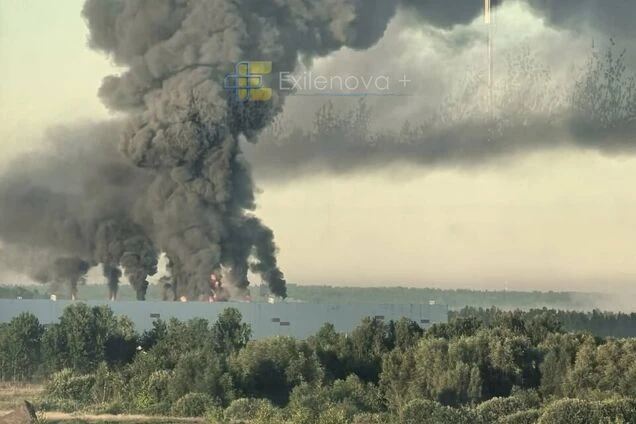
Another direction is Ust-Luga. Its gas condensate complex, with three units of 3 million tons a year each, processes stable gas condensate into naphtha, jet fuel, ship fuel oil and gas oil. After drone attacks, processing and export loadings were suspended.
The site is especially sensitive because it is connected to the Baltic Sea and external trade. A strike on Ust-Luga is not only a fire at a plant. It is a signal to traders, insurers, shipping companies and buyers of Russian energy: risk is now built into the route itself.
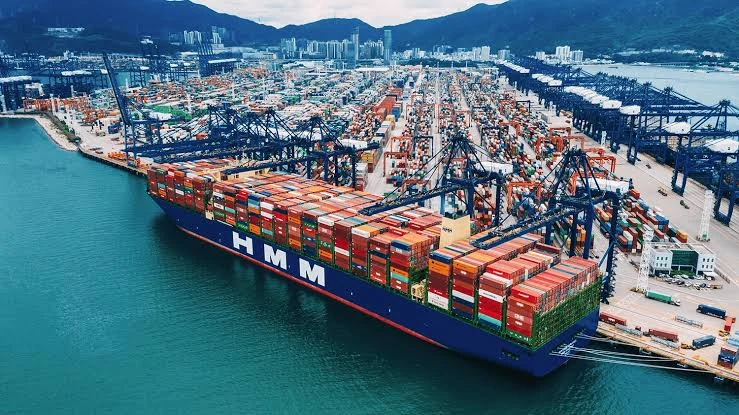
Ports have become the third line of the campaign. Primorsk, one of Russia’s largest export gateways, can handle about 1 million barrels per day. Strikes on pumping stations, oil terminals, tankers and port infrastructure target what matters most to the Kremlin: the ability to turn oil into currency.
This is where military and economic logic merge. Sanctions limit Russian revenue, but do not fully cut it off. Long-range strikes add physical risk to financial pressure: even if a product can be sold, it still has to be refined, transported, loaded and insured.
Russian air defenses can shoot down many drones, but Moscow’s problem lies elsewhere. The territory is too large, the energy system too dispersed and Ukrainian attacks too repetitive for every refinery, port, terminal and pumping station to live in complete safety.
For Ukraine, this campaign does not replace the need for air defense, artillery, missiles and support from partners. But it creates a second layer of defense: the ability to reach the sources of Russian pressure. If Russia wages war through energy, fuel and export income, then those resources become military targets.
The map of strikes on Russian energy facilities shows not a random series of fires, but a new phase of the war. Ukraine is trying not merely to respond to attacks, but to change the economics of the conflict. The longer the Kremlin continues the war, the more expensive it will become to keep feeding it.