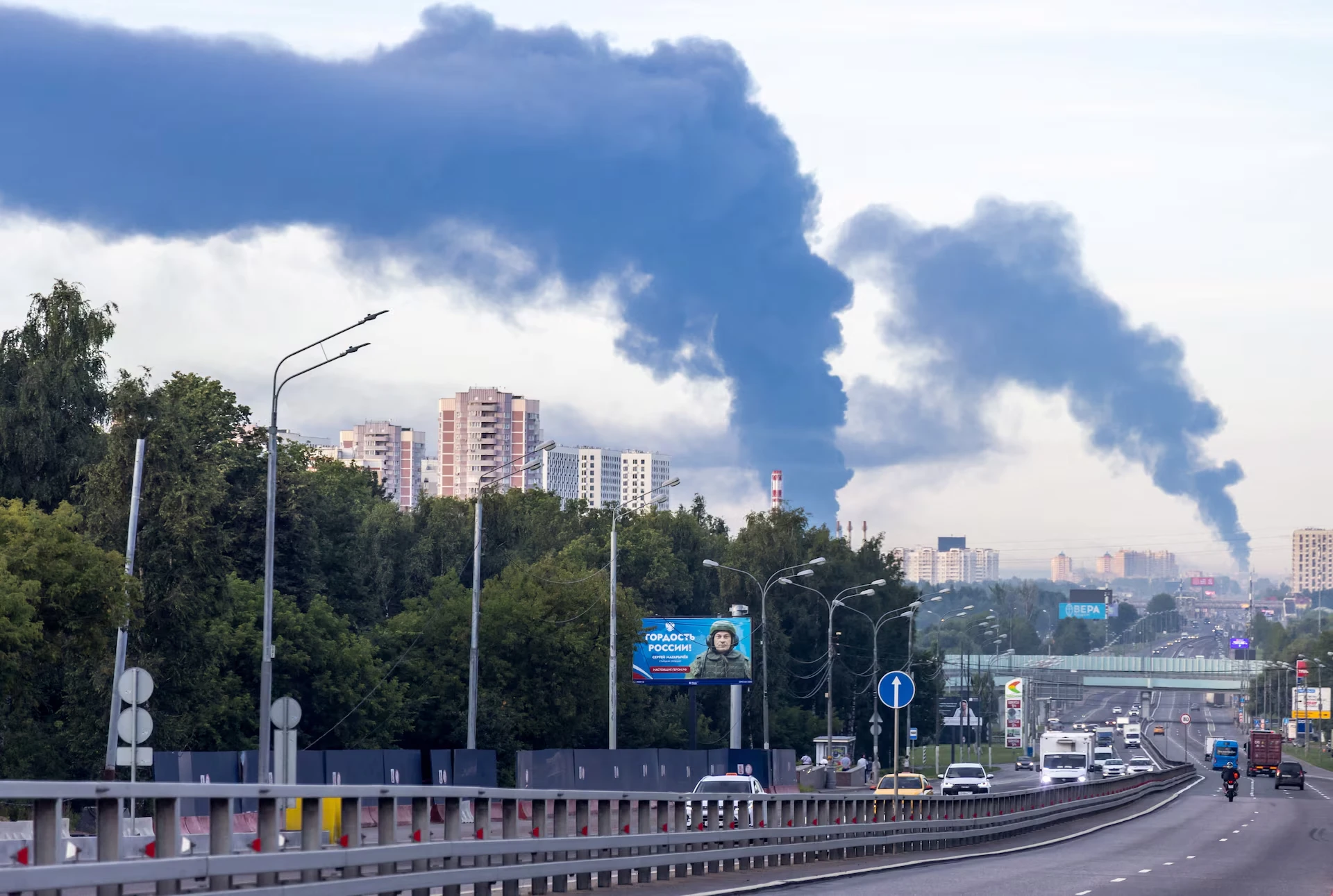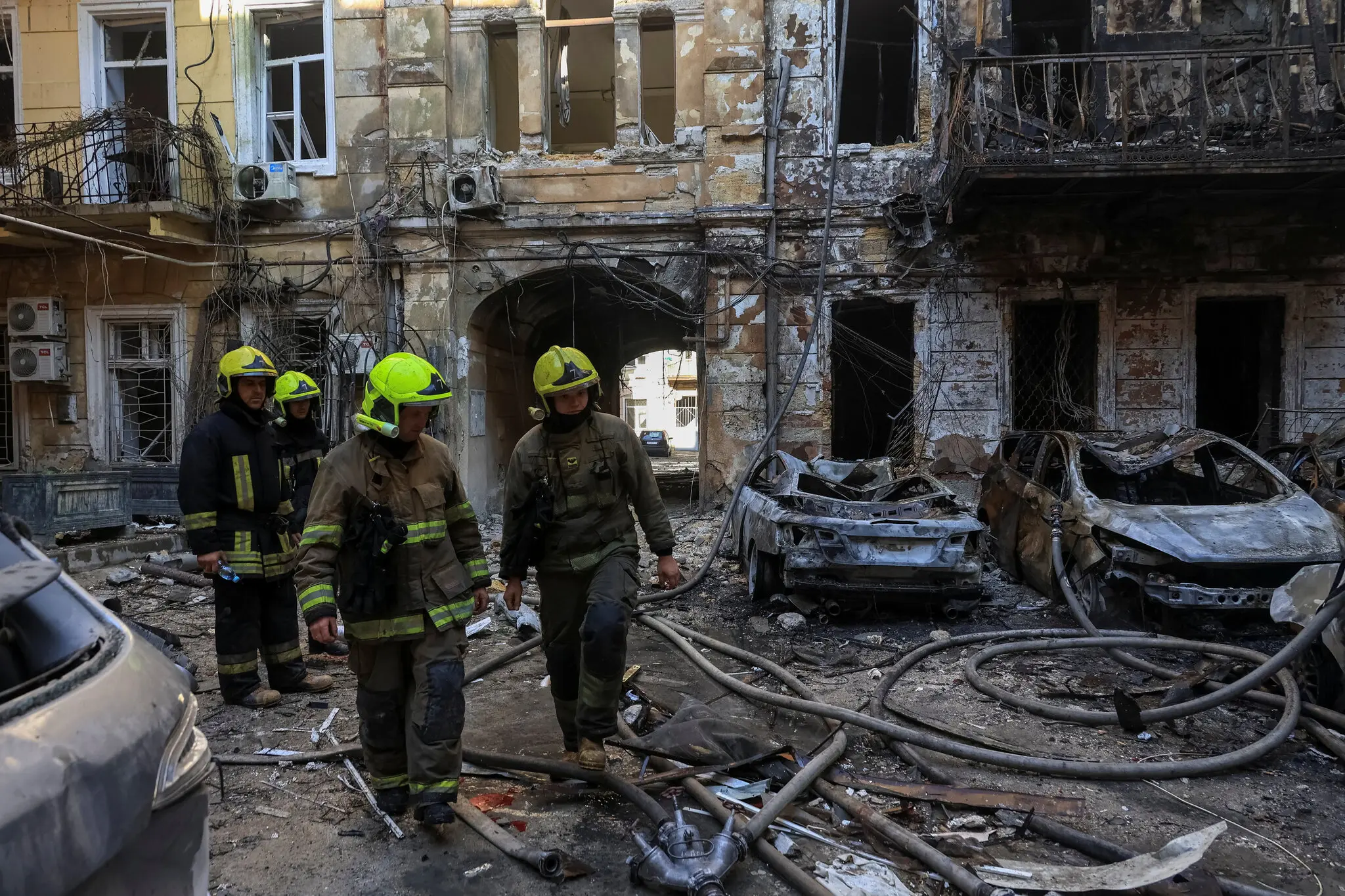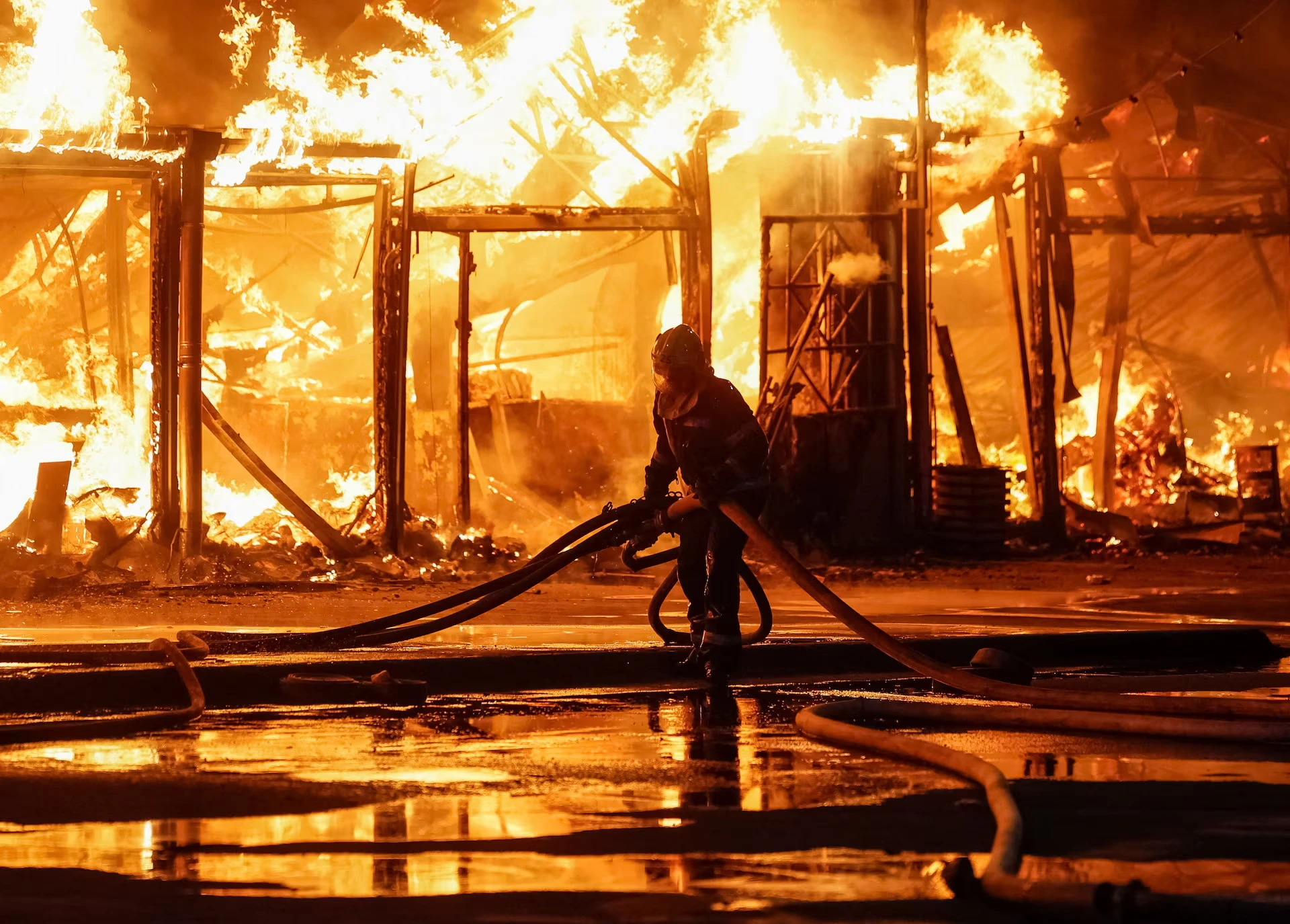



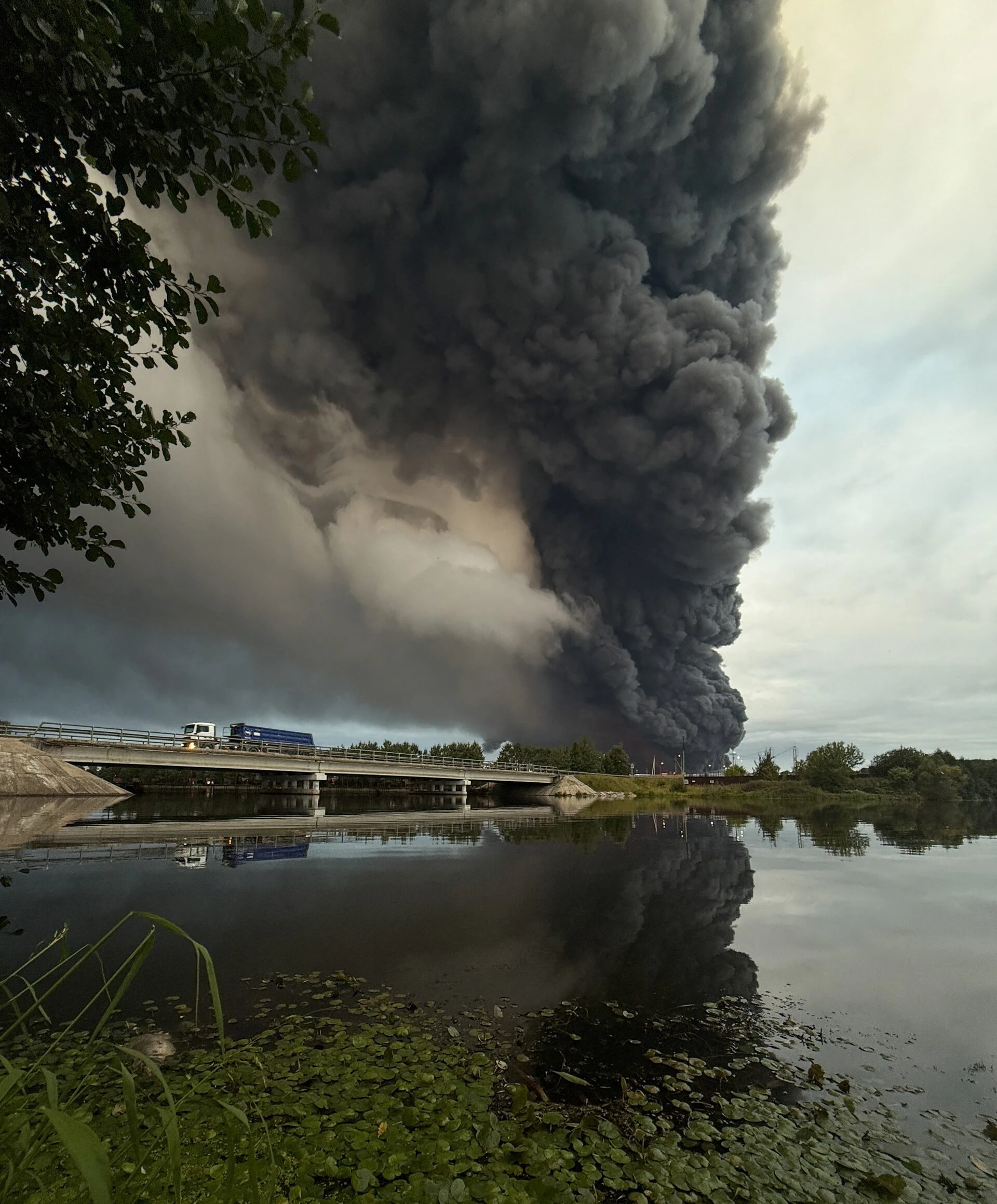



















The Moscow region endured one of its largest drone attacks of the war overnight on August 16. Among the most visible consequences was a major fire at a Wildberries warehouse complex in Koledino near Podolsk, roughly 45 kilometers south of central Moscow.
An 83-year-old man was killed and several other people were injured. Damage was also reported at other sites across the region, including a warehouse near Domodedovo, close to one of Moscow’s principal airports.
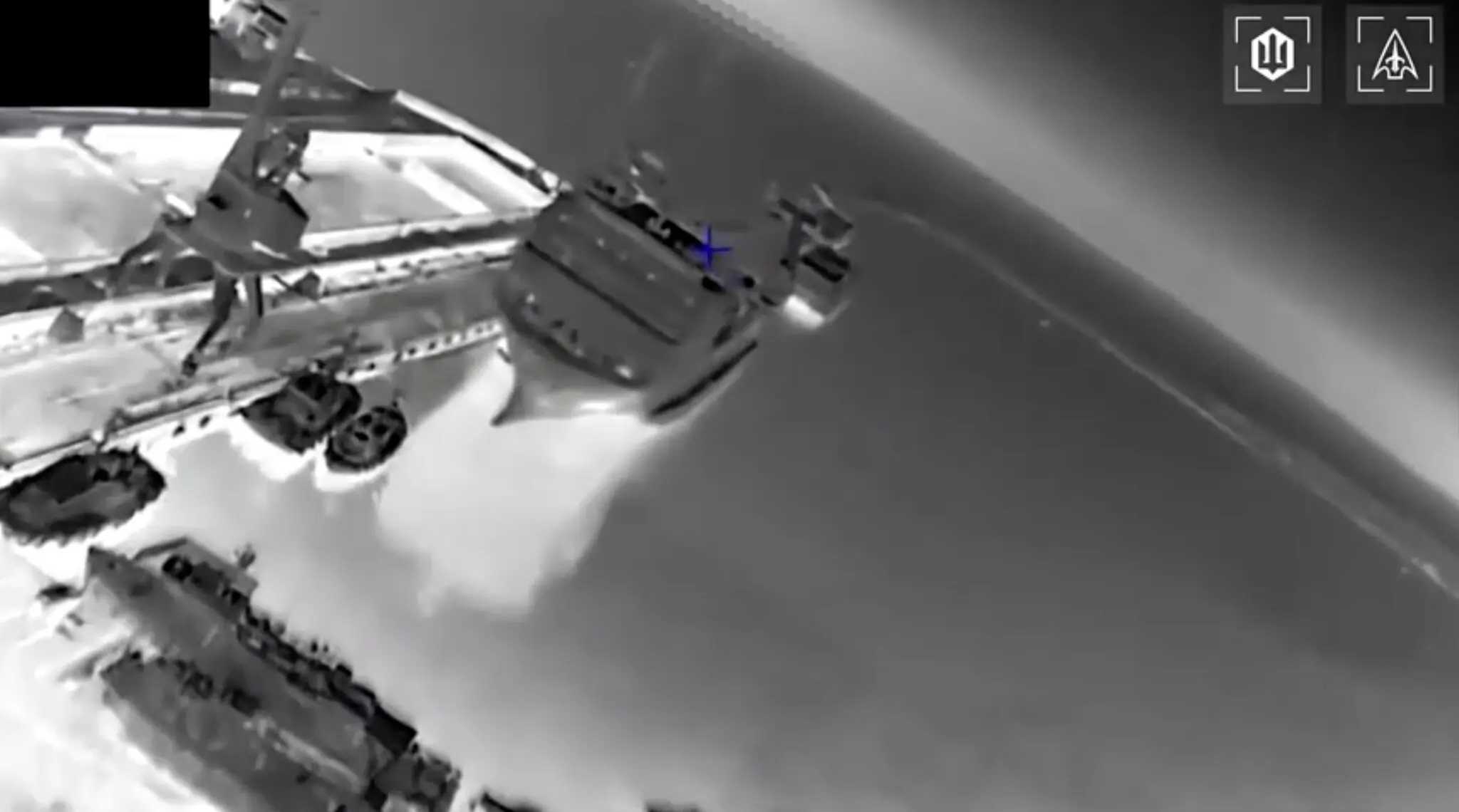
Russia’s Defense Ministry said 822 Ukrainian drones had been intercepted across the country. The full figure cannot be independently verified, but the scale of the reported attack points to a broader reality: long-range drone strikes are becoming a persistent feature of the war rather than an exceptional event.
As Daycom has previously assessed, the significance of these operations is no longer measured simply by how many drones reach their targets. What matters increasingly is the cumulative pressure on Russia’s rear infrastructure — warehouses, fuel depots, industrial sites, transportation networks and logistics chains.
Wildberries fits into this picture in a way that goes beyond its role as Russia’s largest online retailer. Ukraine has increasingly treated parts of the company’s logistics network as infrastructure capable of moving dual-use goods, electronics, equipment and supplies that can support Russian military operations.
That reflects a broader change in how military infrastructure is defined. Modern armies do not depend only on ammunition plants, air bases and barracks. They rely on enormous civilian-looking networks of warehouses, road transport, delivery services, commercial marketplaces and distribution centers.
Those systems can move radios, FPV-drone components, batteries, protective equipment, medical supplies, electronics and thousands of other products that are not weapons themselves but can sustain military operations.
A strike on a major distribution hub therefore does not need to destroy the facility completely to have an effect. A fire can halt operations, force an evacuation, disrupt cargo processing and push companies to reroute shipments through alternative locations.
That creates delays, additional costs and new vulnerabilities. For the state, it also means another category of infrastructure that must be considered in air-defense planning, internal security and emergency response.
This is what makes Ukraine’s expanding drone campaign difficult for Russia to manage. A single drone may cause limited damage. Hundreds launched across several regions at once can force air defenses to protect a vast and increasingly complicated target set.
Moscow remains one of the most heavily defended areas in Russia, but no air-defense network can provide absolute protection. The more sites that require coverage — refineries, factories, power infrastructure, warehouses, airports and government facilities — the harder it becomes to maintain dense defenses everywhere.
Every additional interceptor battery or electronic-warfare system assigned to Moscow or another major industrial center is also a resource unavailable elsewhere, including closer to the Ukrainian border or in Russian-occupied territory.
That asymmetry lies at the heart of drone warfare. Ukraine is attempting to force Russia to spend expensive and finite defensive resources against comparatively inexpensive unmanned aircraft while simultaneously increasing the number of possible attack routes.
Even a high interception rate does not eliminate the problem. Air defenses must detect, track and assess each incoming aircraft. For the attacker, a relatively small number of drones reaching vulnerable targets may be enough to produce fires, shutdowns or significant logistical disruption.
The reported figure of 822 drones is therefore important less as a precise statistic than as a sign of where the war is moving. Mass itself is becoming a weapon — designed not only to destroy specific targets but also to saturate and exhaust Russian air defenses.
Behind that shift is a broader Ukrainian strategy. Russia has spent years using missiles and strike drones against Ukrainian cities, energy infrastructure, industry and transportation networks. Kyiv is increasingly attempting to impose comparable costs on Russian territory.
Ukraine does not possess Russia’s inventory of ballistic and cruise missiles. It is compensating through long-range drones, expanded production and the selection of targets where a relatively small warhead can produce disproportionately large economic consequences.
A refinery does not have to be destroyed to lose output. A warehouse does not have to collapse to disrupt distribution. An airport can be forced to restrict operations simply because drones are approaching its airspace.
The resulting cost is much larger than the value of the physical damage alone. It includes repairs, production losses, disrupted transport, rerouting, additional security, insurance exposure, emergency responses and the need to keep scarce air-defense assets far from the battlefield.
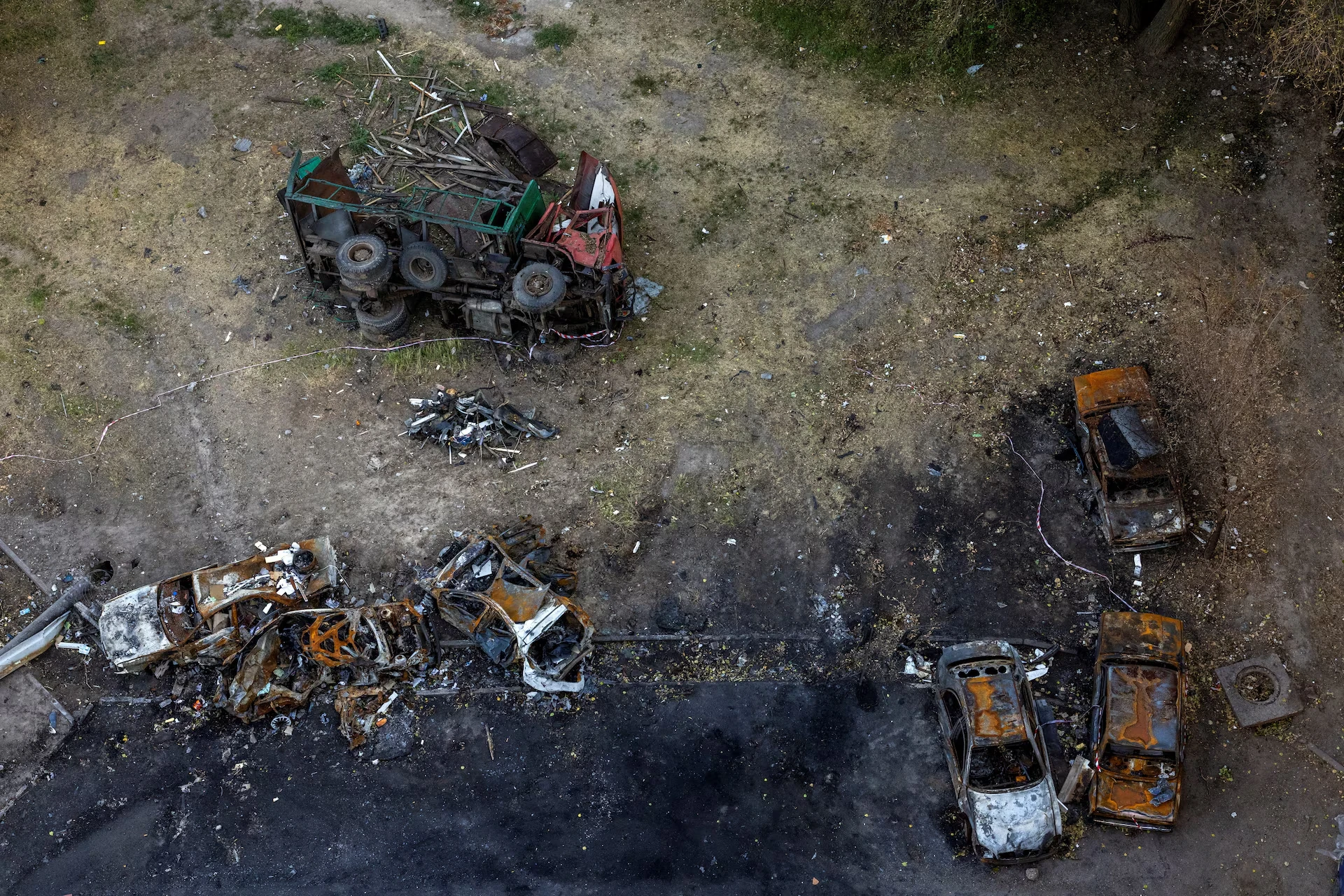
The attack on the Moscow region also exposed the unavoidable danger of this strategy. The deeper drones fly into densely populated areas, the greater the risk to civilians, regardless of the intended target.
The death of the 83-year-old man is part of that reality. Drone warfare blurs the old distinction between front line and rear area, while intercepted aircraft and falling debris can themselves become lethal hazards.
For Russia, that shift carries political weight. For much of the war, millions of people in Moscow and other major cities could experience the conflict as something distant — concentrated in Ukraine, occupied territories and Russian regions along the border.
That distance is shrinking. Air-raid warnings, airport disruptions, warehouse fires and drone debris are gradually transforming the Moscow region from the administrative center of the war into a place increasingly exposed to its direct consequences.
This does not mean Ukraine can paralyze Moscow or cripple the Russian economy through drones alone. Russia’s industrial base is vast, and its air-defense network remains formidable.
But Ukraine does not necessarily need one catastrophic strike. A more sustainable strategy is cumulative pressure: hundreds of smaller disruptions that force Russia to spend money, redistribute defenses, alter logistics and operate under a constant threat of attack.
The Wildberries fire in Koledino is therefore significant beyond the fate of a single warehouse. It illustrates how the war is expanding into the infrastructure of everyday commerce, where civilian supply networks and military logistics increasingly overlap.
For the Kremlin, the problem is that Moscow can no longer function solely as the place from which the war is directed. More resources must now be devoted to shielding the capital and its economic hinterland from the consequences of the conflict itself.
For Ukraine, every such strike is an attempt to change the geography of attrition. If Russia seeks to keep all of Ukraine under permanent threat, Kyiv is increasingly demonstrating that distance from the front no longer guarantees strategic safety inside Russia.