




















Ukrainian drones struck Moscow in the morning in one of the most serious aerial challenges to the Russian capital since the beginning of the full-scale war. The attack reached a city the Kremlin has spent years trying to keep outside the direct experience of the front.
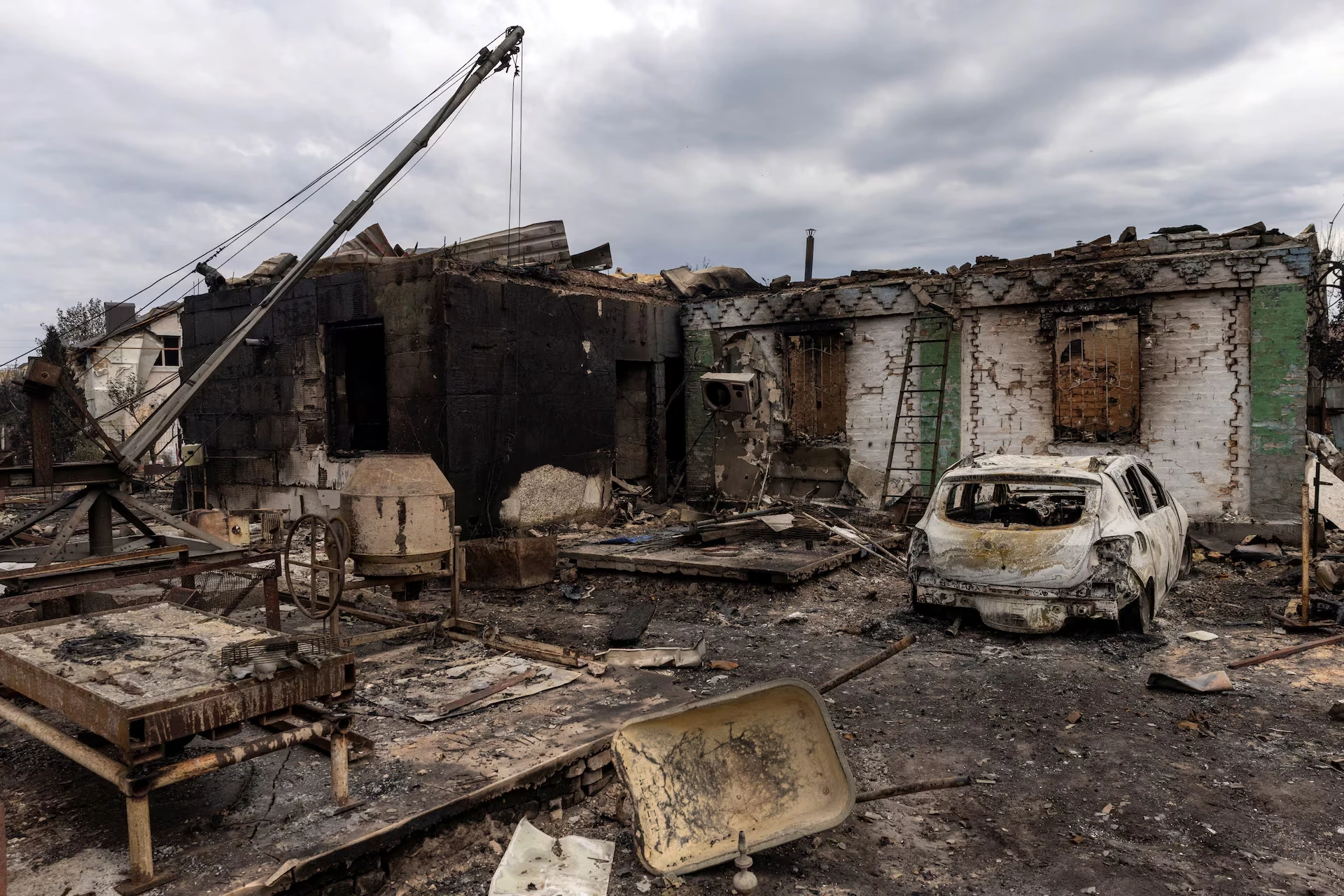
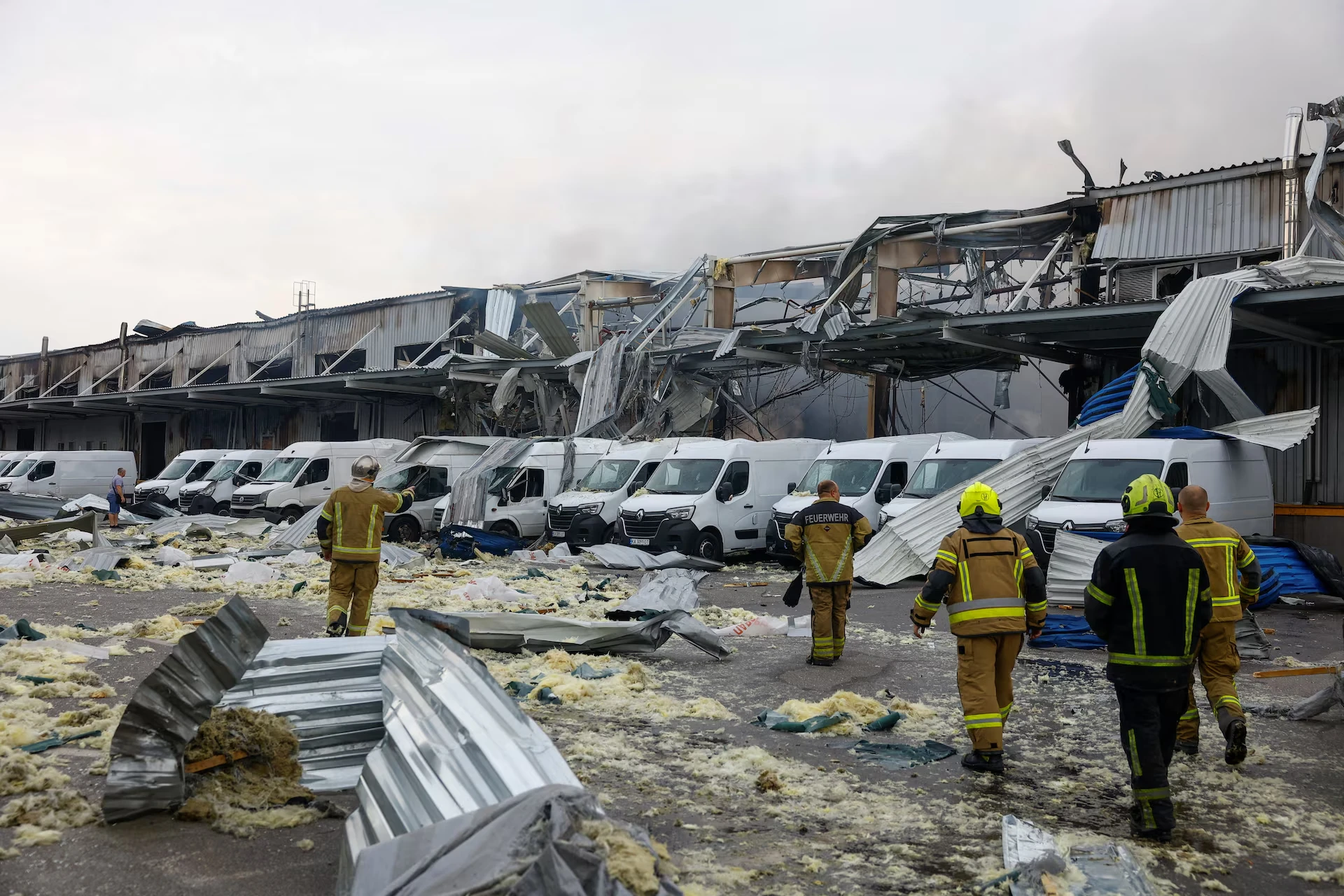
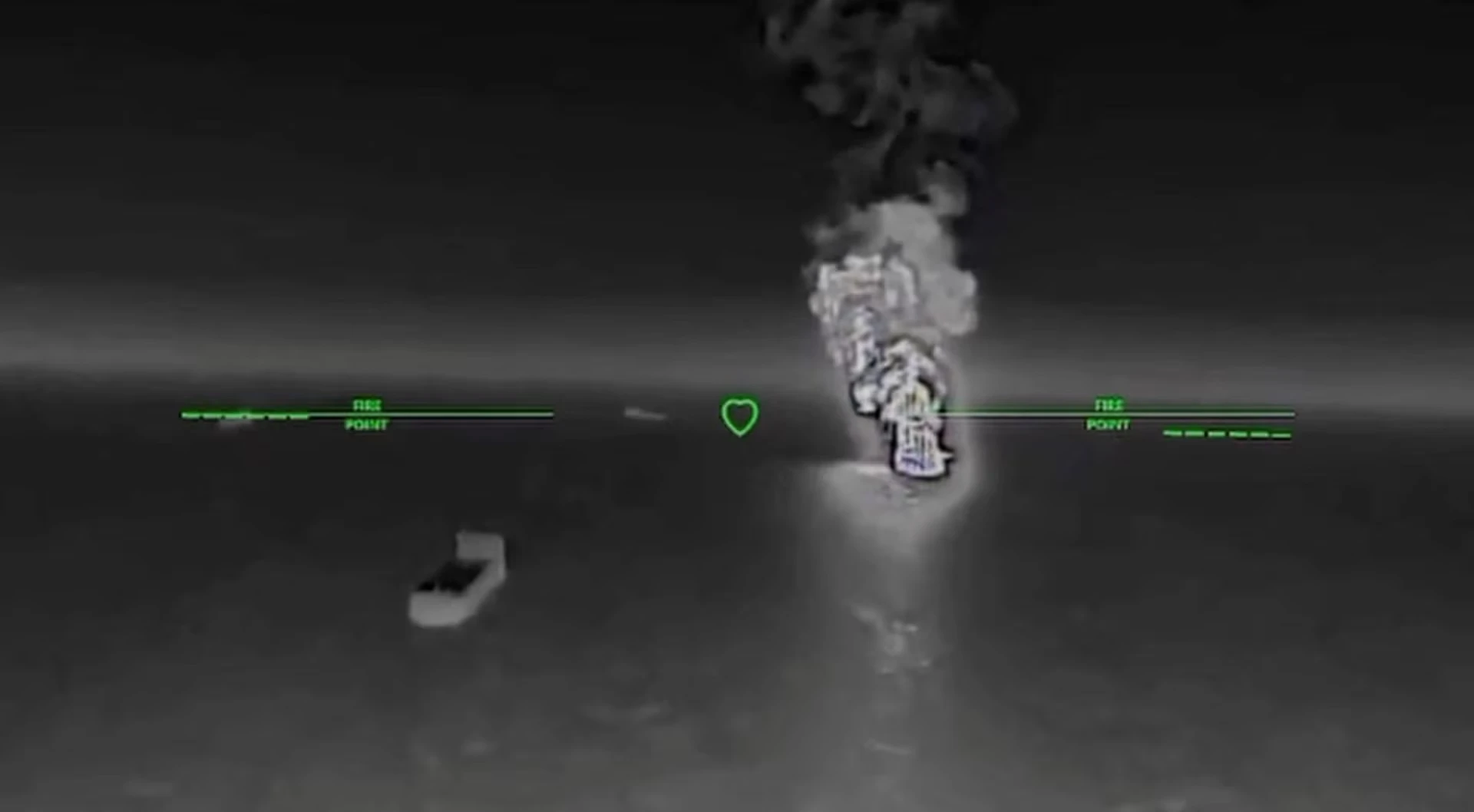
The main target was the Moscow oil refinery in the southeastern part of the capital. Black smoke rose over the industrial zone, fires broke out at the facility, and the city itself spent several hours in a state of transport and security disruption.
Russian authorities said at least 194 drones flying toward Moscow in several waves had been intercepted. Across Russia that morning, according to Russian figures, more than 550 drones were stopped. Even if those numbers are framed in the language of official reassurance, they do not hide the scale of the assault.
According to Daycom’s assessment, the significance of this strike cannot be reduced to damage at one plant. Ukraine showed that it can simultaneously overload Russian air defenses, hit the capital’s energy infrastructure and create the effect of war in a place where the Russian state has long maintained the illusion of normality.
The Moscow refinery had already been targeted before, including in a smaller attack on Tuesday. A second strike two days later carries a particular meaning. This was not a random episode, but part of a sustained campaign against Russian oil refining, one of the key resources of Moscow’s war economy.
The plant supplies a substantial share of Moscow’s gasoline needs. For a metropolis of this size, it is not merely an industrial site, but a node of daily viability: transport, logistics, utilities, business, air travel, official vehicle fleets and security structures.

That is why an attack on the refinery strikes more than equipment. It strikes the sense that the capital can remain separated from the war Russia is waging against Ukraine. Moscow is not becoming a front line, but its rear-area immunity is eroding more quickly.
During the morning, all four Moscow airports suspended operations before gradually resuming flights. This is a separate form of impact: even when a drone does not hit its target, it can force air traffic to stop, delay passengers, alter schedules and reset security protocols.
For the Russian capital, airports are part of the symbolism of an open global city. Their simultaneous closure because of a drone threat shows that the war has moved beyond television images and entered the daily infrastructure of Russia’s urban middle class.
At least 16 people were reported injured in the Moscow region. There was also damage at a large open-air market, one shopping mall was temporarily closed after the attack, and in the suburb of Zhukovsky a drone struck a high-rise residential building.
These episodes show the complexity of long-range drone warfare. Its military objective may be industrial or energy-related, but trajectories, debris, air-defense fire and electronic warfare turn the airspace of a megacity into a zone of unpredictable consequences.
Ukraine’s political logic, however, remains clear. Volodymyr Zelensky described the strikes as a justified response to Russian attacks on Ukrainian cities and communities. In recent days, Moscow has again struck Kyiv with ballistic missiles and drones, damaging cultural sites, including an ancient sacred landmark in the Ukrainian capital.
That is the essential cause-and-effect frame. Ukraine is not seeking a symmetry of terror against civilians. It is trying to shift the costs of war onto the infrastructure that supports Russia’s ability to attack, finance its army and sustain the aggressor’s internal stability.
Oil refining is an almost ideal target in a war of attrition. It is complex, expensive, technologically vulnerable and slow to repair. A single strike rarely stops the whole system, but a series of strikes forces Russia to divert resources, cover facilities with air defenses, change logistics and operate under disruption.
This is already being felt in the fuel sector. Ukrainian attacks on refineries and oil depots in recent months have coincided with supply problems in several regions, lines at gas stations in Crimea and southern Russia, and the first fuel-sale limits by some networks.
The Kremlin can describe these problems as local. But local disruptions repeated in many places create a different picture. The fuel system of a large state does not collapse instantly; it begins to function more expensively, more slowly, more nervously and less predictably.
The strike on the Moscow refinery amplifies this effect precisely because it involves the capital. If a fuel or security problem occurs at a remote refinery, it is easier to hide inside regional statistics. If smoke rises above an industrial zone in Moscow, the psychological effect is harder to conceal.
It is also a strike against Russia’s air-defense system. Moscow is one of the best-protected areas in Russia, yet the mass attack showed that even dense defenses can be overloaded. Not every drone has to get through. It is enough for some to penetrate while the rest force the system to spend resources.
In modern war, quantity becomes quality. Cheaper drones can force an adversary to deploy expensive interceptors, keep duty crews under pressure, suspend airports, close districts and explain to the population why the capital’s security is no longer guaranteed.
For Ukraine, this is the result of several years of accelerated technological adaptation. Kyiv began the war dependent on Western long-range weapons, but gradually built its own drone architecture capable of striking hundreds of kilometers away. It does not fully replace missile capabilities, but it gives Ukraine a tool of pressure Russia cannot ignore.
For a long time, major Russian cities were protected not only by air defenses, but by the political assumption that the war was happening “somewhere else.” That assumption is not destroyed by one attack, but by repetition. Every airport closure, every plume of smoke above a refinery, every disruption at a shopping center narrows the distance between the front and the Russian rear.
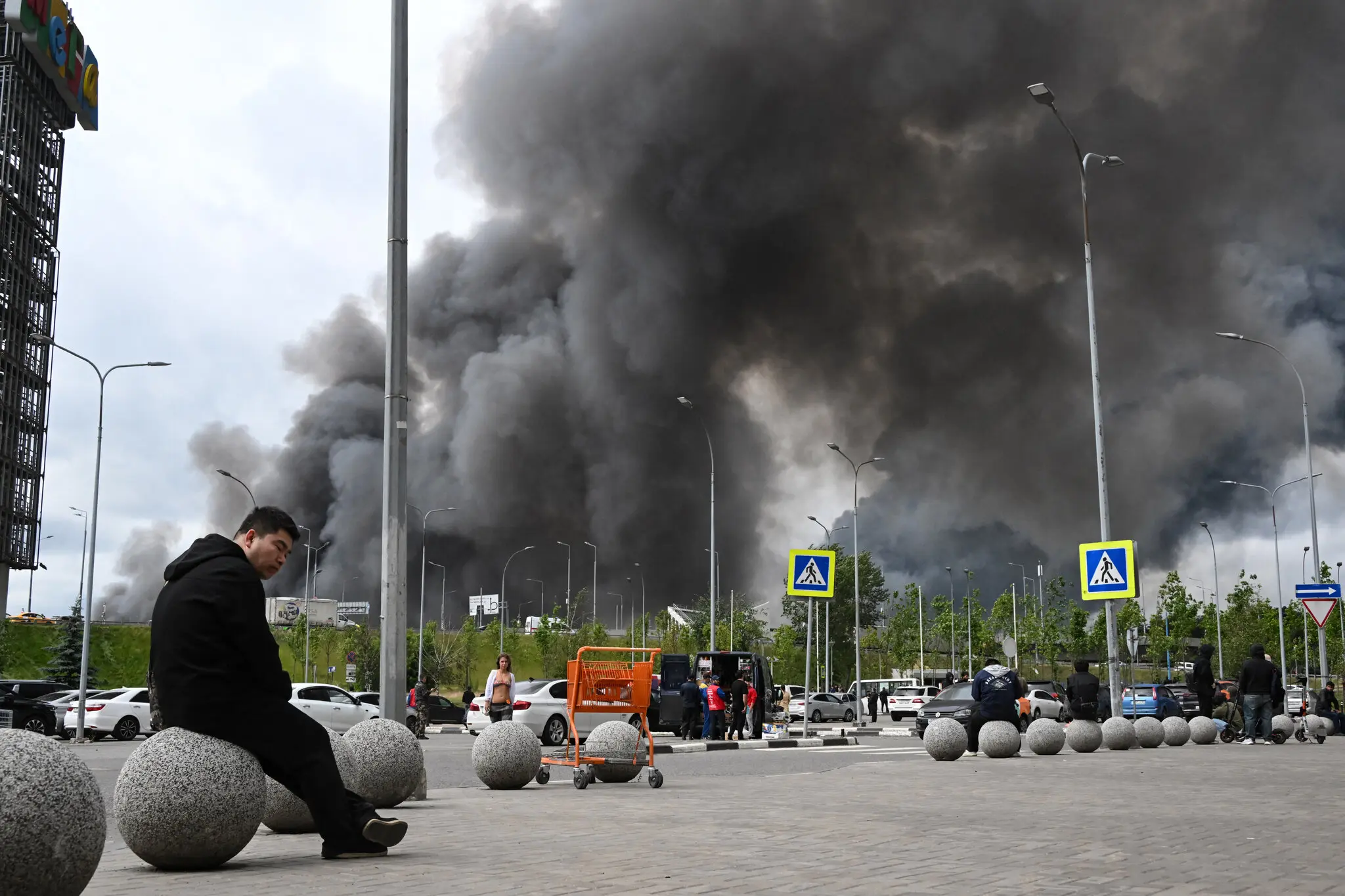 Район на південному сході Москви поблизу нафтопереробного заводу. Україна продемонструвала зростаючу здатність пробивати російські засоби протиповітряної оборони — Агентство Франс-Прес — Getty Images
For Moscow, the most dangerous part is that such attacks are difficult to prevent completely. Russia has enormous territory, many industrial facilities, oil depots, logistics hubs and military enterprises. It cannot cover everything with equal density. Choosing what to defend becomes a strategic problem.
That choice becomes especially painful when Ukraine strikes different types of targets at once: refineries, oil terminals, arsenals, bases, military plants and airfields. Such a campaign does not require one decisive blow. Its strength lies in the accumulation of damage, costs and anxiety.
Russia, for its part, continues mass attacks on Ukraine with drones, cruise missiles and ballistic missiles. But that aggression has created both the political justification and the military necessity for Kyiv to strike deep into Russian infrastructure. The longer Moscow bombards Ukrainian cities, the wider the map of Ukraine’s response becomes.
The consequences of one day should not be exaggerated. Moscow has not lost its ability to function, and Russia’s oil system still has reserves, inertia and redistribution capacity. But wars of attrition rarely consist of instant collapses. They are built from repeated blows after which every return to normal becomes more expensive.
That is why the attack on the Moscow refinery matters not only as a military operation. It is a signal that the psychology of the war is changing. Ukraine is no longer only defending itself from missiles over Kyiv, Kharkiv or Odesa. It is forcing Russia to spend resources defending Moscow, explaining fires in the capital and counting losses inside its own energy system.
This is not the end of Russia’s war machine. But it is the beginning of a different cost for keeping it running. If Ukrainian drones can regularly reach Moscow’s oil refining infrastructure, the Kremlin will have to live with a new reality: the war it brought to Ukraine is increasingly returning to Russia as smoke over factories, closed airports and a question with no convenient answer — whether the state can protect its own rear.