












Two men entered Vienna’s Museum of Applied Arts during opening hours, smashed a display case and stole a platinum-and-diamond necklace once owned by Egypt’s Queen Nazli. Police are hunting the suspects as Europe confronts a new kind of museum theft: fast, violent and focused on objects that can be dismantled for their materials.
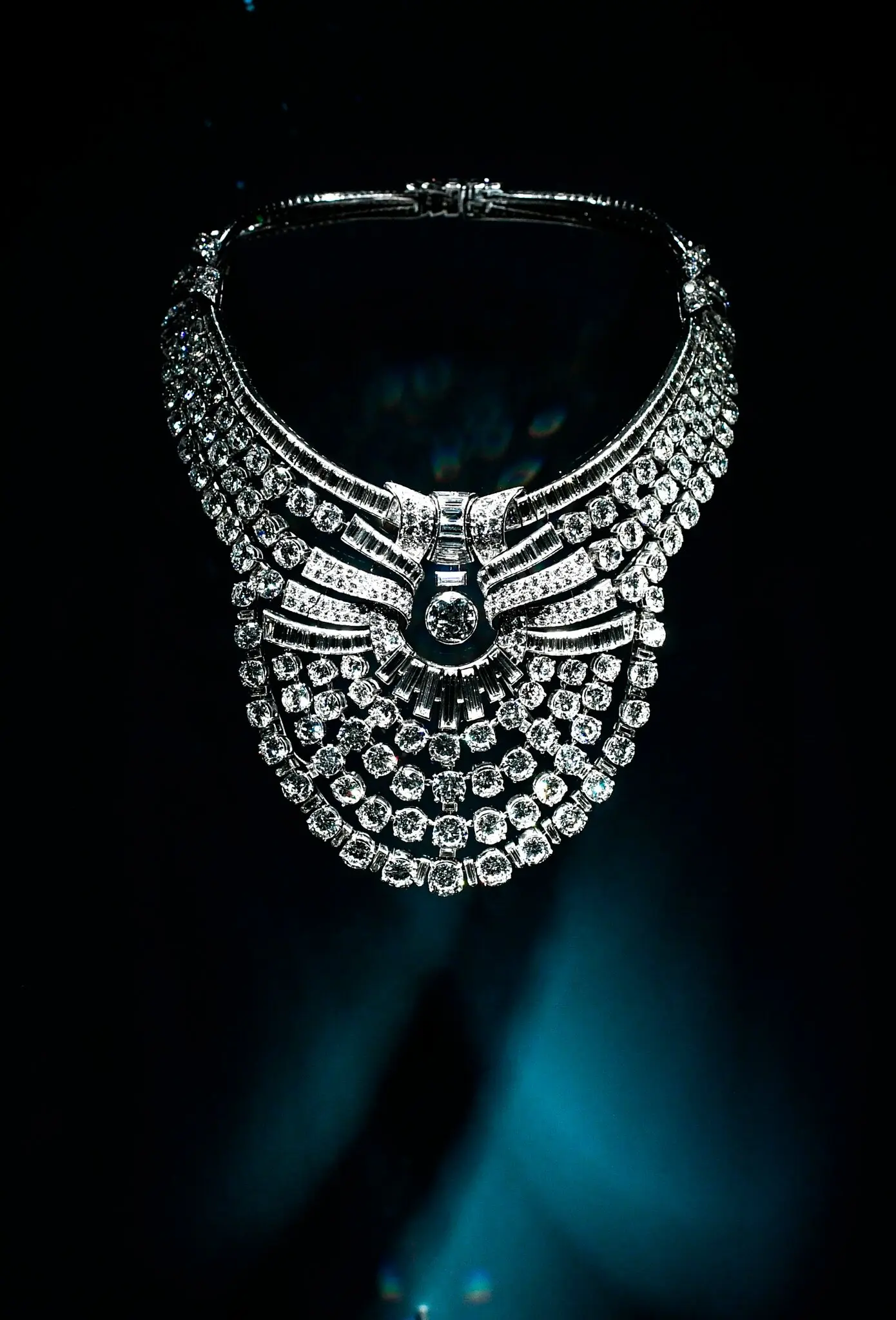
Two men walked into Vienna’s Museum of Applied Arts on Thursday afternoon like ordinary visitors. They bought tickets, moved through the galleries and approached one of the centrepieces of a Van Cleef & Arpels exhibition: a spectacular diamond necklace once owned by Queen Nazli of Egypt.
Within minutes, the visit had become a robbery. One man smashed the display case and took the necklace. Police said the second appeared to be carrying what investigators believe was a real firearm. The weapon was not used, and no visitor or member of staff was injured during the theft.
The pair fled on foot toward the nearby Stadtpark. Museum surveillance cameras captured them clearly enough for Austrian police to release images and descriptions: two slim, dark-haired men with short beards. By the end of August, no arrests had been publicly announced.
Investigators are now reconstructing the escape route through museum cameras, street surveillance and transport footage. But the more urgent question may concern the necklace itself. A globally documented jewel can be almost impossible to sell intact — yet highly attractive if broken into stones and metal.
According to Daycom’s analysis of verified public reporting, that is what makes the Vienna museum heist more than another spectacular art crime. It shows how the economics of museum theft are shifting away from secretly reselling famous objects and toward destroying their identity in order to monetise their components.
The necklace gives criminals an obvious material incentive. Made by Van Cleef & Arpels in 1939, it is set in platinum and contains more than 200 carats of diamonds, including a central stone of roughly six carats and a dense arrangement of round and baguette-cut stones.
Sotheby’s cataloguing records describe 118 larger round diamonds weighing about 134 carats, alongside smaller round stones and roughly 50 carats of baguette diamonds. Even stripped of its royal history, the piece would rank as an exceptionally valuable work of high jewellery.
Its provenance, however, makes it far more significant. The necklace belonged to Queen Nazli, wife of King Fuad I and mother of King Farouk, the last ruling monarch of Egypt. It emerged from a period when European jewellery houses supplied extraordinary commissions to royal courts across the Middle East.
The piece was connected to the wedding of Nazli’s daughter, Princess Fawzia, to Iran’s crown prince Mohammad Reza Pahlavi, who later became shah. That history places the necklace at the intersection of two dynasties and a vanishing world of royal patronage.
Nazli’s own life later took a dramatic turn. After falling out with her son Farouk, she lost her royal status and lived in the United States. Mounting debts gradually forced the former queen to sell parts of a jewellery collection once associated with extraordinary wealth.
Her jewels eventually entered the auction market, and the necklace resurfaced at Sotheby’s in 2015. It was estimated at between $3.6 million and $4.6 million and sold for more than $4.2 million before later returning to the Van Cleef & Arpels collection.
That history makes the necklace highly visible. Its photographs, dimensions, diamond arrangement and provenance have circulated publicly for decades. Any attempt to sell the complete piece through a reputable auction house or dealer would almost certainly trigger immediate scrutiny.
Yet recognisability is no longer the protection it once seemed to be. A jewel can be dismantled. Diamonds can be removed from their original setting, platinum can be melted down, and individual stones can be moved into entirely different markets.
Once that happens, the object’s history begins to disappear. The physical materials survive, but the necklace as a coherent historical artefact does not. Its connection to Queen Nazli, Egyptian monarchy and Van Cleef & Arpels becomes infinitely harder to recover once the original design is broken apart.
That possibility distinguishes jewellery theft from many traditional art crimes. A stolen Renoir or Matisse may remain hidden for decades and still return as the same painting. A necklace dispersed into hundreds of separate diamonds can effectively cease to exist even if police later identify those responsible.
European law-enforcement agencies have been warning about precisely this development. Europol said in an August report that museum attacks were becoming more direct and more violent, with offenders increasingly targeting precious metals, gems and other materials that can be converted quickly into cash.
The methods have changed as well. Europol has documented the use of sledgehammers, axes, crowbars, explosives and, in some cases, firearms. The contemporary museum thief can resemble a high-speed commercial robber more than the elegant art specialist of popular mythology.
Speed becomes central to the model. If the object can be reached quickly and broken apart later, there is little need for a sophisticated plan to introduce it into the legitimate art market. The thief only needs to create enough time to seize the material and escape.
Vienna is especially troubling because the attack happened during normal museum hours. The suspects did not need to bypass an empty building at night or defeat the entire external security perimeter. They exploited the basic openness on which a public museum depends.
That creates a much harder security problem. Protecting a closed museum overnight is largely a question of sensors, locks, alarms and response times. Protecting a jewel from someone who has legally entered the gallery and is standing only a few metres away is fundamentally different.
MAK director Lilli Hollein said the museum had already reviewed its security arrangements in light of recent thefts at major European institutions. But she also acknowledged an uncomfortable reality: no museum can completely eliminate the possibility of a targeted armed attack during public opening hours.
The Vienna case has already prompted tighter controls. Museums faced with comparable risks are likely to look again at bag searches, metal detection, physical distance from displays, guard numbers and the construction of high-value jewellery cases.
But stronger security carries costs. Turning every museum entrance into an airport-style checkpoint changes the visitor experience and imposes significant staffing and infrastructure expenses. Large institutions may absorb them. Smaller museums may struggle.
There is also a limit to what stronger glass can achieve. A case only has to resist long enough for staff or police to intervene. If criminals design an attack around a few seconds of overwhelming force, museums have to think not merely about preventing entry but about stopping an assault almost immediately after it begins.
The presence of an apparent firearm raises an even broader issue. If a visitor can bring a weapon into a gallery holding high-value jewellery, the risk is no longer confined to property. The same security breach creates a potential threat to everyone in the room.
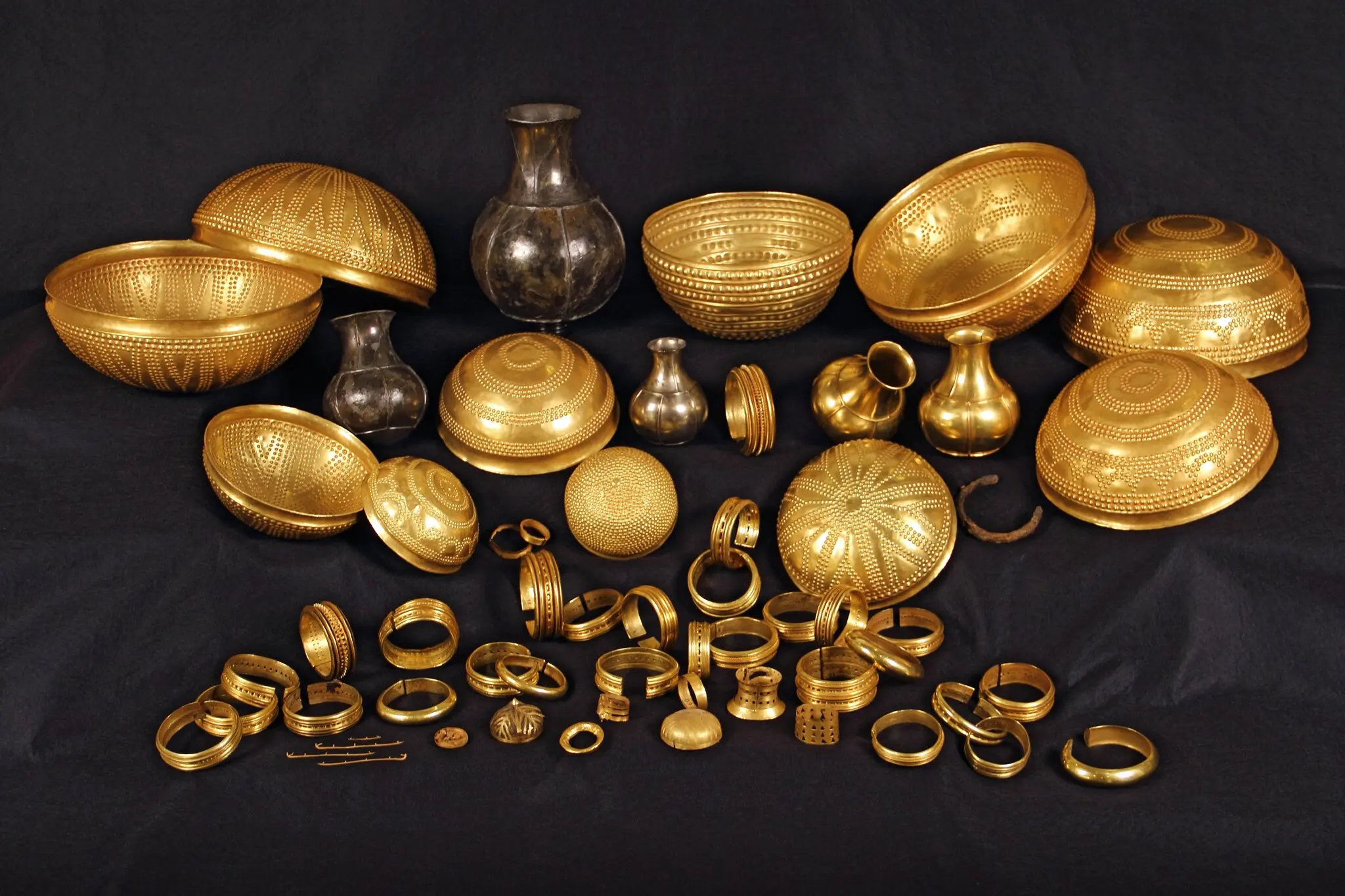
That is why the Vienna robbery resonates so strongly with a string of recent cases across Europe. The Louvre heist, museum thefts in Italy and the robbery of the Treasure of Villena in Spain have pushed authorities to view these incidents less as isolated curiosities and more as a changing pattern of organised property crime.
The details differ from case to case, and there is no evidence that all the attacks involve a single network. What they increasingly share is a preference for portable objects with very high intrinsic or material value, combined with fast, forceful methods.
The Vienna necklace is almost a perfect example. As a historical jewel, it is too famous to move easily. As a collection of diamonds and platinum, it is potentially much more liquid. The very qualities that make it priceless to a museum can make its destruction financially attractive to a criminal.
For Van Cleef & Arpels, the loss is therefore archival as well as monetary. The necklace documents a period when major European jewellery houses created extraordinary bespoke pieces for royal families whose political worlds would soon disappear.
For historians, the object links jewellery design, monarchy, exile and financial decline in a single physical artefact. Its survival across almost nine decades gave those layers of history a tangible form that no photograph or catalogue description can fully replace.
For investigators, however, the immediate task is less romantic. They need to identify the two men, establish whether they had accomplices, reconstruct how they left the area and determine whether the necklace has already entered a criminal supply chain.
Those are ordinary police questions. The extraordinary part is the second clock running alongside them: how long the necklace will remain intact.
Every day that it remains whole preserves the possibility of complete recovery. Every day that it remains in criminal hands also increases the incentive to remove stones, alter settings and strip away the features that make it traceable.
That is the central danger of the new museum-heist economy. A famous object can become safer to sell only after it has been destroyed as a famous object.
Queen Nazli’s necklace has already survived monarchy, exile, debt, bankruptcy sales, private ownership and the passage of generations. Its most precarious chapter may now be the period after a few minutes of violence in a Vienna gallery.
If police recover it intact, the theft will become another dramatic episode in its long history. If the necklace is dismantled, the loss will be of a different order: the diamonds may still exist, the platinum may still circulate, but the object itself — and the history held together by its design — will be gone.