


















Viktor Orbán is one of those political figures whose life cannot be read as an ordinary career. His story has the arc of a political novel: from a young anti-communist rebel to the European Union’s longest-serving head of government, from a symbol of Hungary’s democratic opening to a leader his opponents describe as the engineer of managed democracy. He is no longer simply Hungary’s prime minister. He is the central figure in a larger argument over whether democracy can be rewritten from within while still keeping its name.
The paradox of Orbán is that his current image almost perfectly contradicts his beginnings. He entered public life as one of the sharpest anti-Soviet voices of late socialism. In the final years of communist rule, he demanded free elections and the departure of Soviet troops from Hungarian soil. Fidesz, the movement he helped found, began as a liberal, pro-European youth force, not as the national-conservative machine of power it later became.
That is why the question of Orbán remains so persistent: what changed more profoundly — the politician himself or the country around him. His shift to the right was not sudden. It was a long movement from liberal reformer to a man who increasingly stopped seeing power as a competitive mechanism and started seeing it as a fortress that had to be taken completely. According to Daycom’s earlier assessment, Orbán proved to be more than a survivor. He became one of the few European leaders able to turn ideology into a durable institutional system.
His return to office in 2010 was not merely a comeback after earlier defeat. It was the moment when electoral victory became a project of state redesign. With a constitutional majority behind him, his camp did not simply govern. It began changing the rules of governance themselves: redistributing influence, recasting the centers of decision-making and reshaping political life so that it increasingly worked to reproduce one dominant force.
From that point on, Orbán became the politician Europe now knows. His model was built not around a single slogan or a single campaign, but around an architecture of control. Checks and balances were weakened, the judiciary was bent to political logic, the media landscape was disciplined, loyal business circles were cultivated and the electoral field was rearranged. Elections remained, but the environment surrounding them became steadily less neutral.
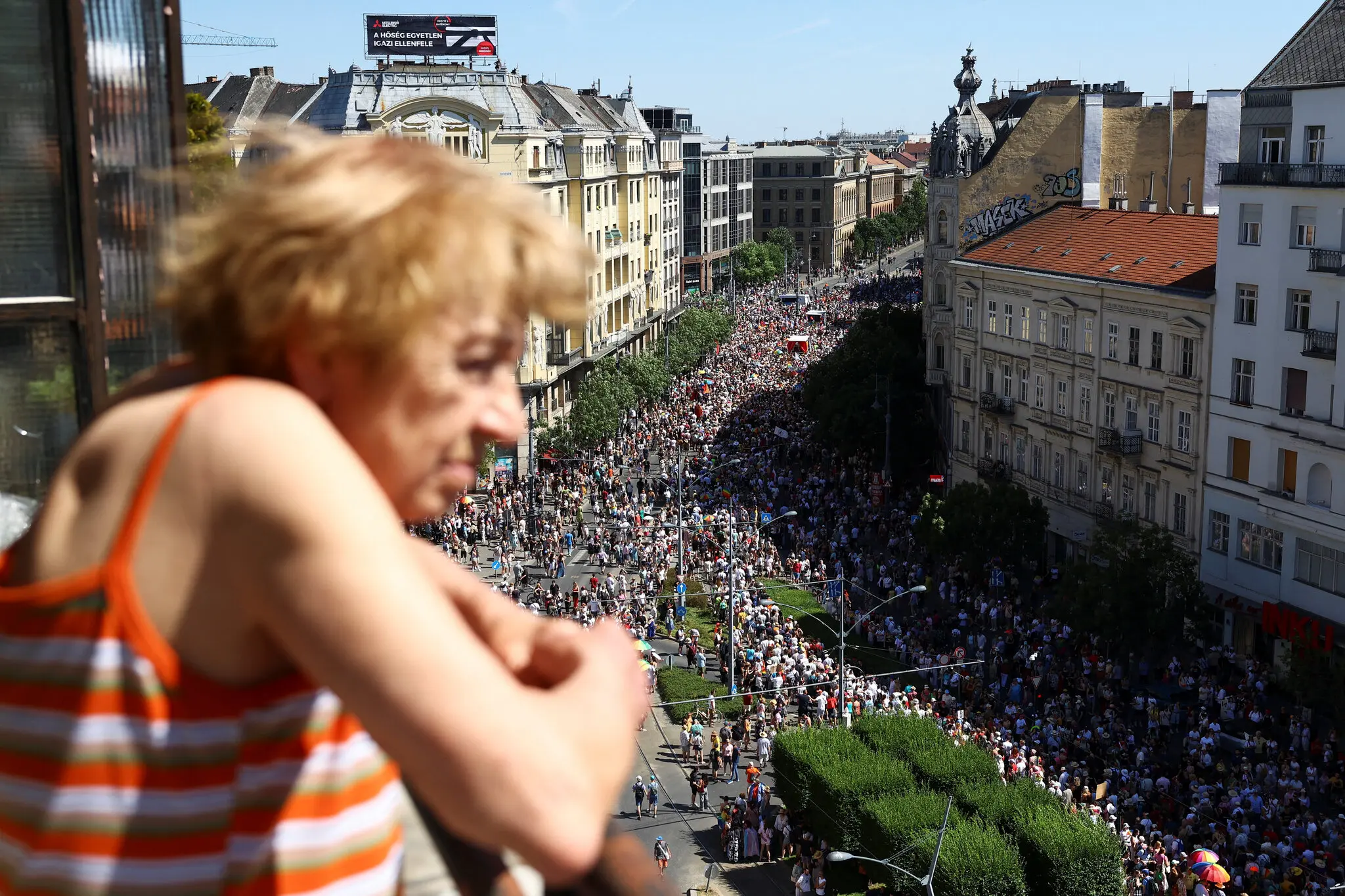
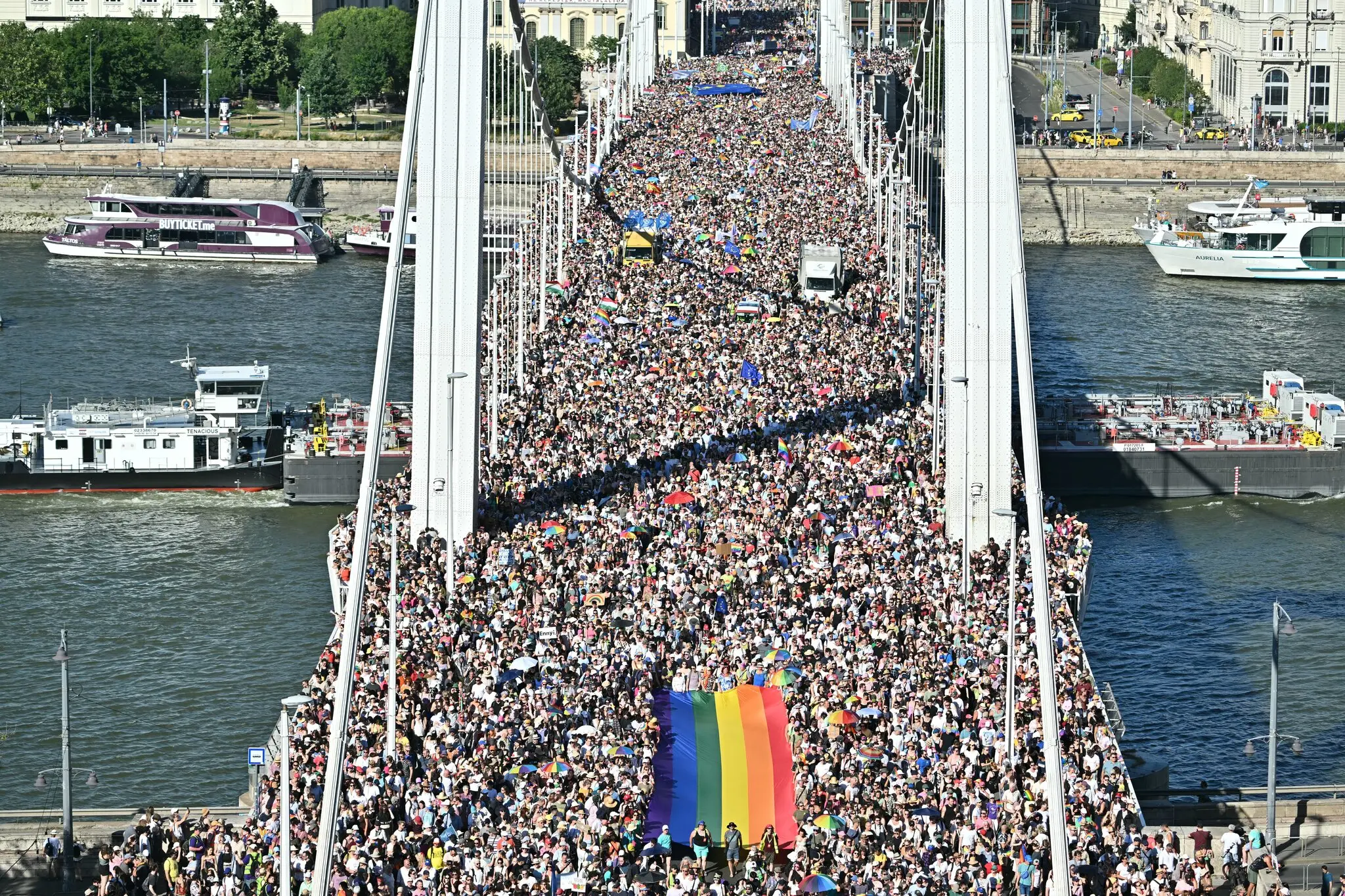
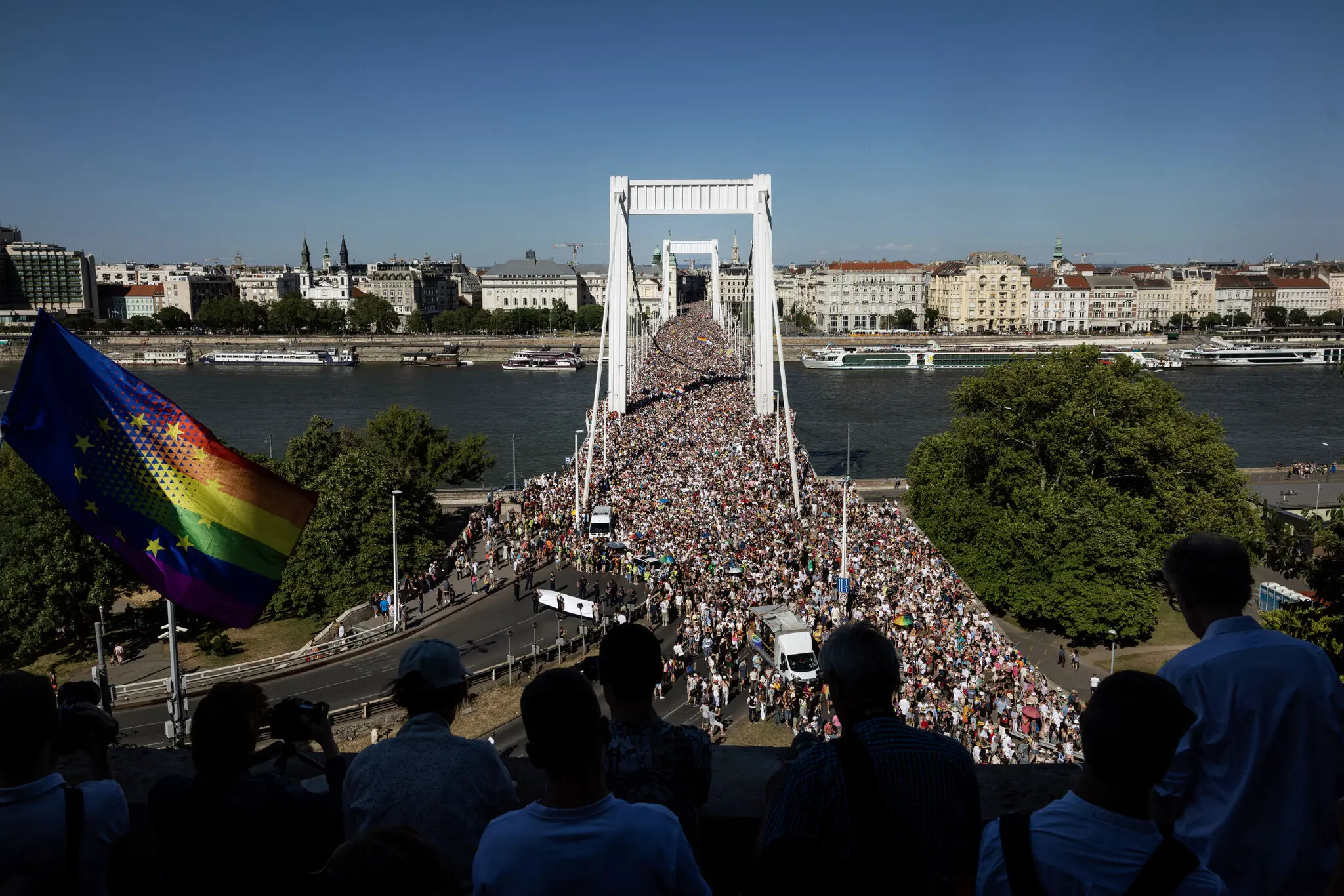 Прайд-парад у Будапешті 2025 року. Уряд пана Орбана намагався заборонити парад того року, але мер переформулював його, і він перетворився на мітинг проти уряду — Янош Куммер
That is why the phrase “illiberal democracy,” which Orbán once used almost as a manifesto, cannot be dismissed as mere provocation. For him it was not an insult, but a declaration of political intent. He argued openly that the Western liberal consensus had exhausted itself, and that the nation-state, strong executive authority, cultural conservatism and resistance to outside influence offered a more viable formula for modern Europe.
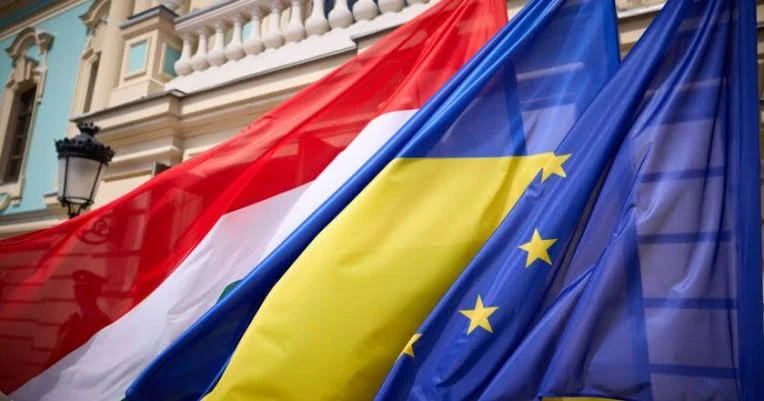
His long conflict with Brussels was therefore never just a dispute over tone or style. It was a clash over the nature of European statehood itself. For the European Union, Hungary became an example of how a member state could enjoy the advantages of the bloc while steadily contesting its political norms. For Orbán, confrontation with Brussels became part of his domestic legitimacy. He sold Hungarians the image of a country punished not for violations, but for refusing submission.
But Orbánism rests on more than institutional control. Its cultural framework has been just as important. Orbán was among the first leaders in Europe to understand that fear of the outside world could be turned into a durable political resource. The migration crisis gave him the perfect narrative: the border under threat, Christian Europe under siege, a strong state refusing to ask permission from liberal capitals. That was the moment his model acquired not only administrative force, but emotional cement.
Later, the same logic spread into other arenas. Minority rights, LGBTQ issues, nongovernmental organizations, universities and independent cultural life were all gradually translated into the language of foreign pressure supposedly threatening traditional Hungary. In this framework, politics became cultural defense, and domestic disagreement could be presented as loyalty to an outside project.
It is especially telling that one of Orbán’s central symbolic enemies became George Soros, the very man whose scholarship once helped him study in the West. The inversion is nearly perfect. A politician formed in liberal anti-communism turned his former benefactor into a symbol of transnational liberal influence. In that turn lies the whole logic of his evolution: he did not merely drift away from his earlier beliefs, he built his new identity on a demonstrative break from them.
And yet Orbán is not only the product of his own will. He is also the expression of Hungary’s fatigue, anxiety and deep suspicion of instability. His longevity cannot be explained only by propaganda or institutional control. For a large part of society, he long remained a figure of order: a man promising protection from migration, cultural upheaval, economic uncertainty and outside dictate. Orbán offered not just power, but a comprehensible map of the world in which Hungary once again had a hard center.
In foreign policy he played much the same role he played at home: a systematic disrupter. Inside the European Union he repeatedly slowed or obstructed common positions, especially on Ukraine, sanctions and relations with Russia. To his supporters, that looked like sovereign defiance from a small country refusing to be reduced to a chorus voice in a larger European script. To his critics, it looked like the transformation of Hungary into an internal brake on the Union and a useful instrument for forces interested in weakening European cohesion.
The deeper test for Orbán now, however, lies less in Brussels than in Hungary itself. His system worked for so long because it could combine ideology, centralized control and the appearance of stability. But any model built on prolonged dominance eventually encounters not only opposition, but fatigue. Economic strain, corruption scandals, the wear of a long-governing elite, the impatience of younger urban voters and the growing monotony of permanent power do not strike all at once. They accumulate.
That is the point at which Orbán ceases to be merely a strong prime minister and becomes a test of the limits of his own construction. Can a system built on cultural polarization, fear of the outside world, loyal media and prolonged political control remain convincing indefinitely? Or does a society, sooner or later, begin to tire not of chaos, but of a power that has become too organized, too closed and too permanent?
That may be the clearest answer to the question of who Viktor Orbán is. He is a politician who understood the weaknesses of post-communist democracy better than most — and used them not to strengthen the liberal system, but to rewrite it under control. He began as a man opening Hungary to the West. He has spent the long final stretch of his era persuading the country that it must be protected from the West. That is why Orbán matters far beyond Budapest. His story shows how democracy can change its skin without changing its name.