























Volodymyr Zelenskyy’s warning did not sound like another routine statement of wartime caution. It was a signal that the scale of the threat may be shifting. Ukrainian intelligence, together with partners in the United States and Europe, has detected signs that Russia is preparing a combined strike on Ukrainian territory, including Kyiv.
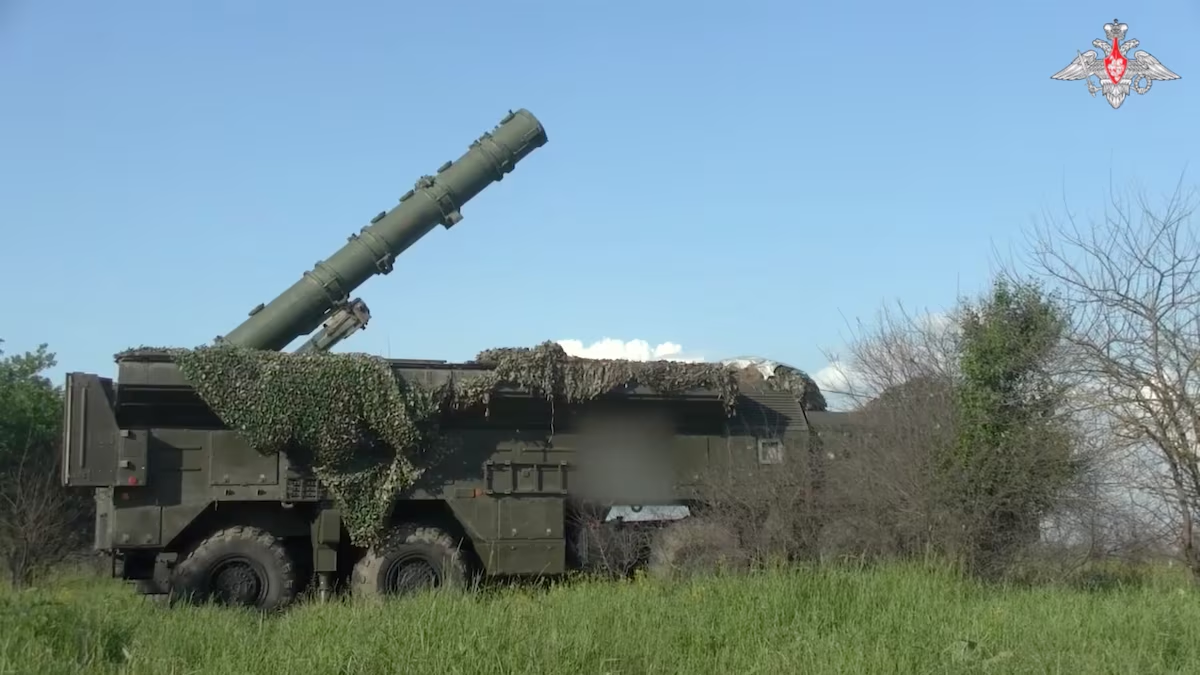
At the center of the warning is Oreshnik — a Russian intermediate-range ballistic missile that Moscow presents as a new-generation hypersonic weapon. Its very mention moves the possible attack beyond the familiar frame of missile bombardment and into the realm of strategic intimidation.
Zelenskyy connected the risk of a new strike to a broader precedent. The issue is not only Ukraine’s security, but the signal sent to other potential aggressors: if the use of such systems becomes routine, the world will face a new norm of coercion, in which intermediate-range missiles become a political instrument.
According to Daycom’s earlier analysis, the core message from Kyiv is the demand to act before the strike, not after it. Ukraine is trying to change the usual diplomatic sequence: first a Russian attack, then condemnation, then renewed promises of assistance. Kyiv is asking its allies to break that cycle.
The danger of Oreshnik lies in the way it combines military and psychological effects. Russia has already used the missile against Ukraine, presenting it as a weapon that is supposedly impossible to intercept because of its reported speed of more than Mach 10. For the Kremlin, this is not only a technological claim, but also a tool of pressure against Ukrainian society.


The first Oreshnik strike on Ukraine took place in November 2024. Moscow described the target as a military facility, while Ukrainian assessments indicated that the missile carried dummy warheads and caused limited damage. Even then, the launch had a political purpose: to show that Russia was prepared to bring new systems into combat use.
The second episode, in January 2026, carried a different meaning. The missile struck the Lviv region in western Ukraine, closer to NATO’s borders. European capitals described the use of Oreshnik as escalatory and unacceptable. Moscow achieved the effect it wanted: the missile became not only a weapon, but also a message to Europe.
Zelenskyy’s latest warning came against the backdrop of renewed Russian rhetoric about “retaliation.” Vladimir Putin had ordered the military to prepare response options after a strike in the occupied part of Ukraine’s Luhansk region. Ukraine rejected accusations that it had attacked a civilian dormitory and said the target was a military site.
This clash of versions matters not as a separate information dispute, but as a mechanism for preparing escalation. Russia increasingly frames large attacks on Ukraine as “responses,” trying to present them as forced reactions. In reality, that formula gives Moscow room to justify almost any level of violence.
That is why Zelenskyy’s emphasis on a preventive response is crucial. Ukraine is not asking only for another round of supportive statements. It is asking for pressure capable of changing the Kremlin’s calculation before launch. In this logic, sanctions, military assistance, political warnings and stronger air defenses must work as deterrence, not compensation after destruction.
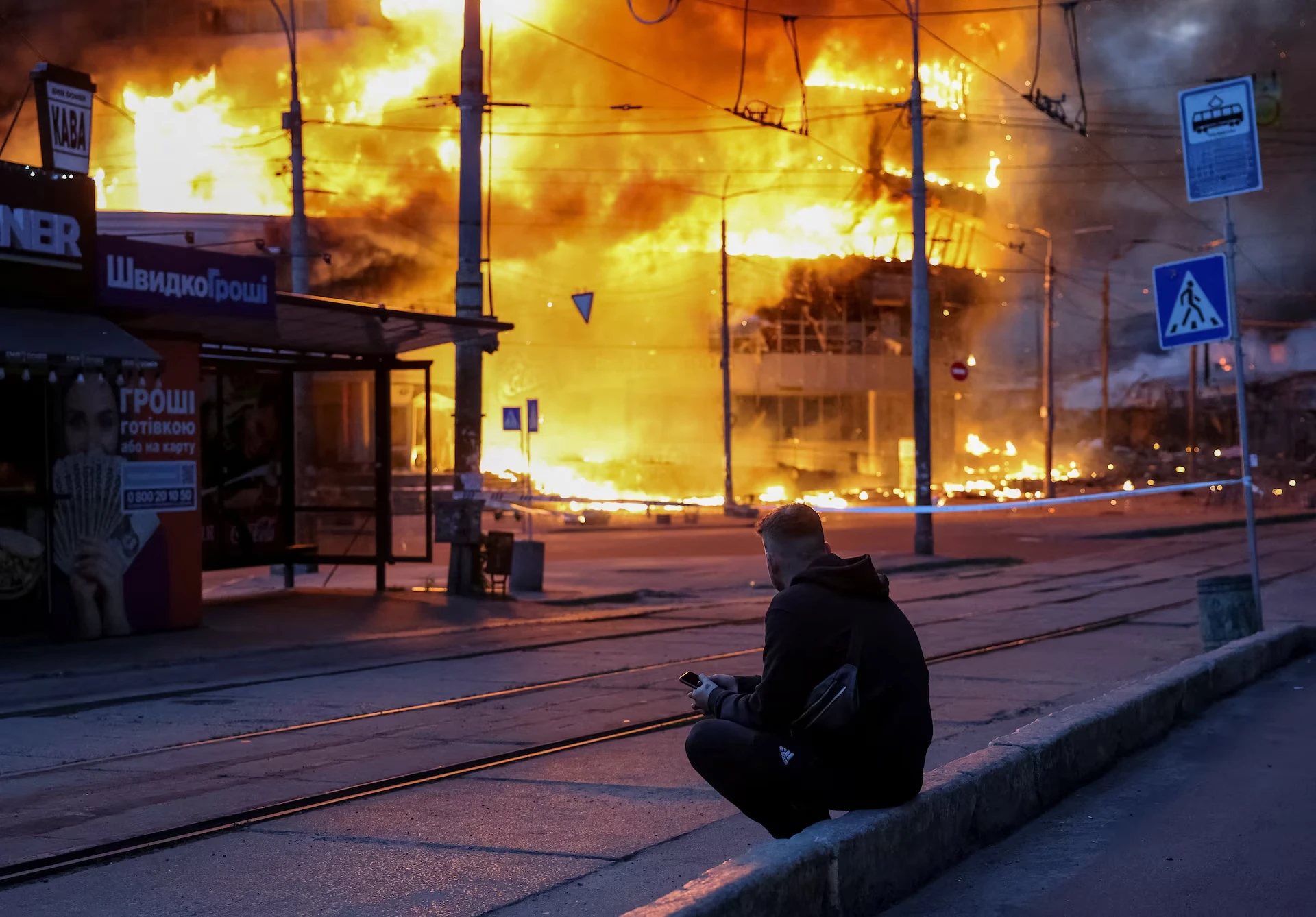
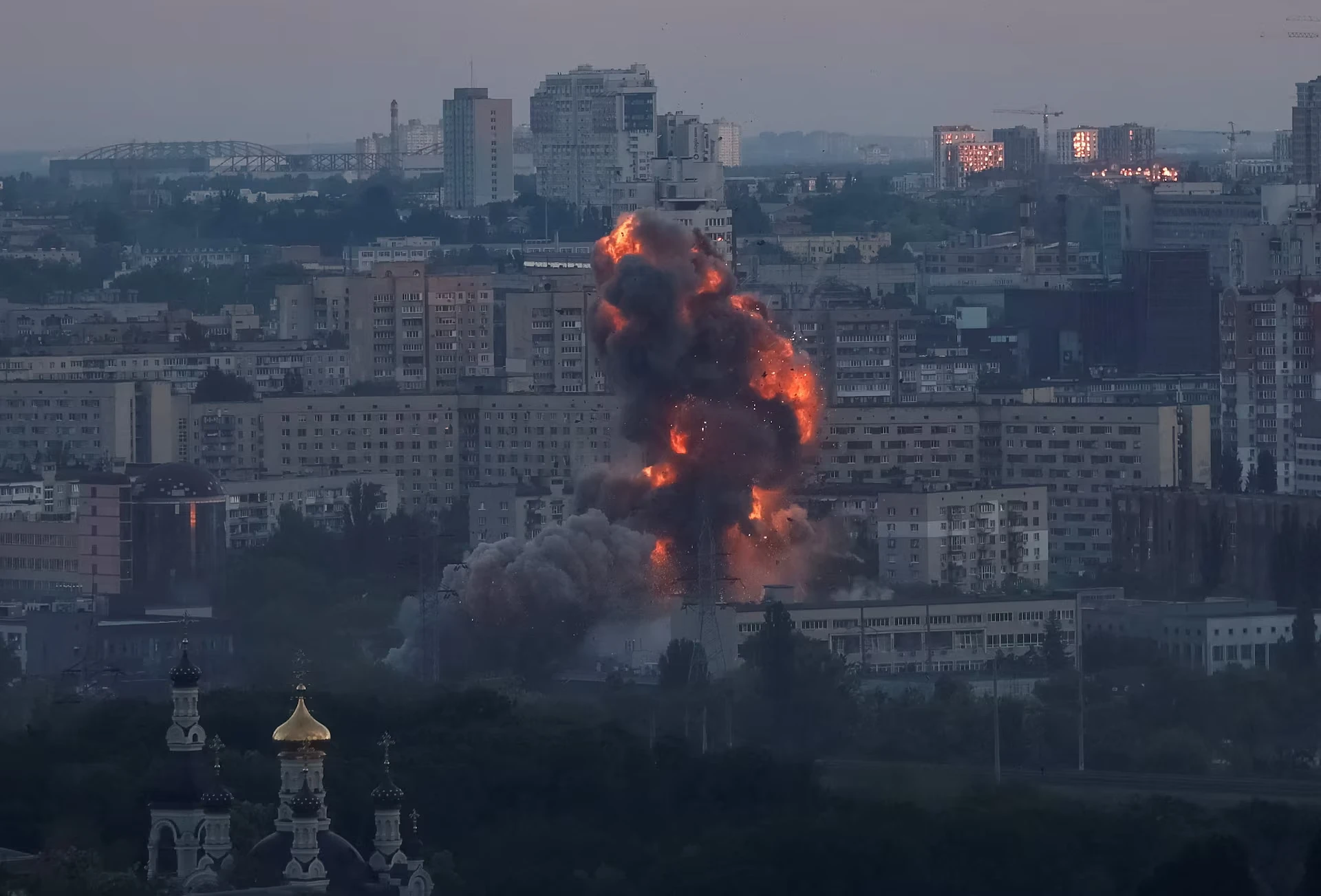 24 травня 2026 року в Києві, Україна, під час російського ракетного та безпілотного удару в рамках російської агресії проти України піднімаються стовпи вогню та диму — Гліб Гаранич
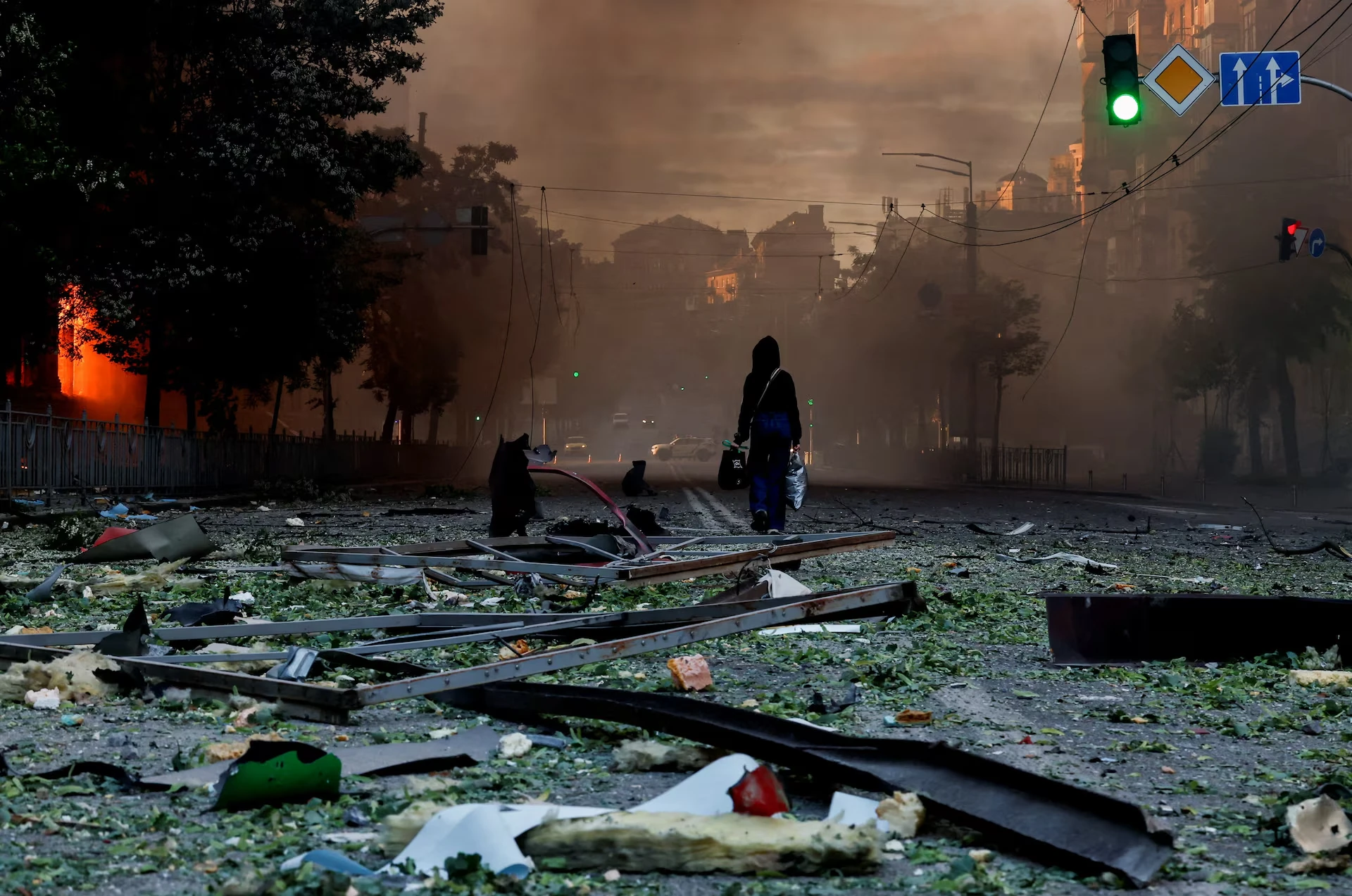 Людина йде вулицею, заваленою уламками, після нічного ракетного та безпілотного удару Росії в рамках російської агресії проти України, Київ, Україна, 24 травня 2026 року — Томас Пітер
For Kyiv, the possible use of Oreshnik means more than the threat of a single impact. A combined strike involving drones, cruise missiles, ballistic missiles and hypersonic systems places extreme pressure on air defense. The aim is to stretch attention, drain interceptors and search for a weak point.
In this sense, Oreshnik becomes part of a wider Russian tactic. Drones force air defenses to work for hours, cruise missiles maneuver and shift routes, while ballistic targets leave only minutes for decisions. Adding an intermediate-range missile with hypersonic speed is meant not only to pierce defenses, but to make civilians live under the expectation of the inevitable.
Yet this is also where Russia meets the limits of its own strategy. Intimidation works only when fear paralyzes. Ukraine’s experience in recent years has shown something different: each new missile threat changes daily life, but it does not erase political will. Cities adapt, the army adjusts, and society understands with growing clarity the nature of Russian pressure.
For the West, this warning should be read without comfortable distance. It is not merely another Ukrainian request for weapons. If missiles such as Oreshnik become a regular instrument of war, they will alter the security architecture of Europe. What is being tested today against Ukrainian cities could tomorrow become the language of ultimatums against other states.
Zelenskyy has effectively framed the dilemma of this phase of the war: wait for a strike and then react, or impose a cost on Moscow high enough to make escalation less attractive. In the first case, the world remains a witness. In the second, it becomes part of deterrence.

Russia is placing Oreshnik at the center of its military demonstration because it wants the name of the missile to sound louder than the actual consequences of its use. Ukraine, by contrast, is trying to return the discussion to the central issue: not the technical novelty of the weapon, but the political responsibility for using it.
That is why Zelenskyy’s warning should not be reduced to an alarming forecast. It is an attempt to seize the initiative before another night siren turns diplomatic formulas into fires, debris and evacuations. In a war where Russia increasingly speaks the language of missiles, a delayed reaction is no longer a reaction. It becomes part of the problem.