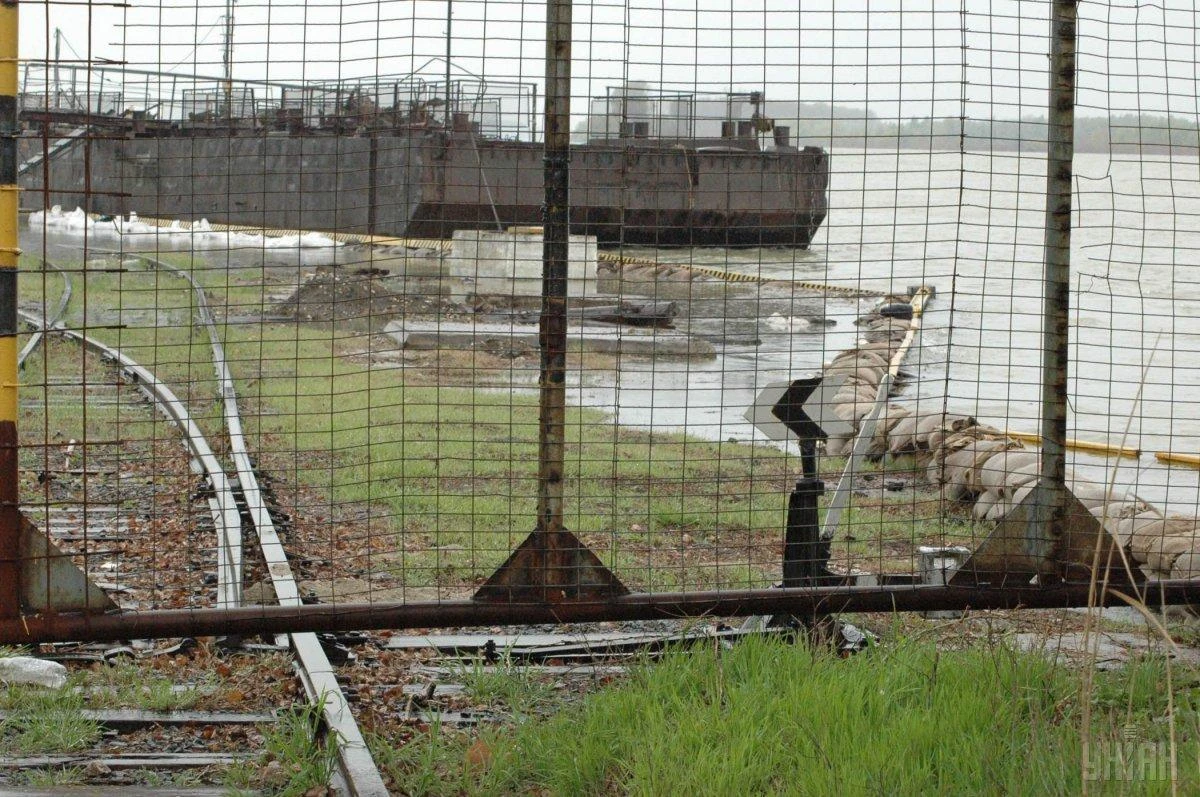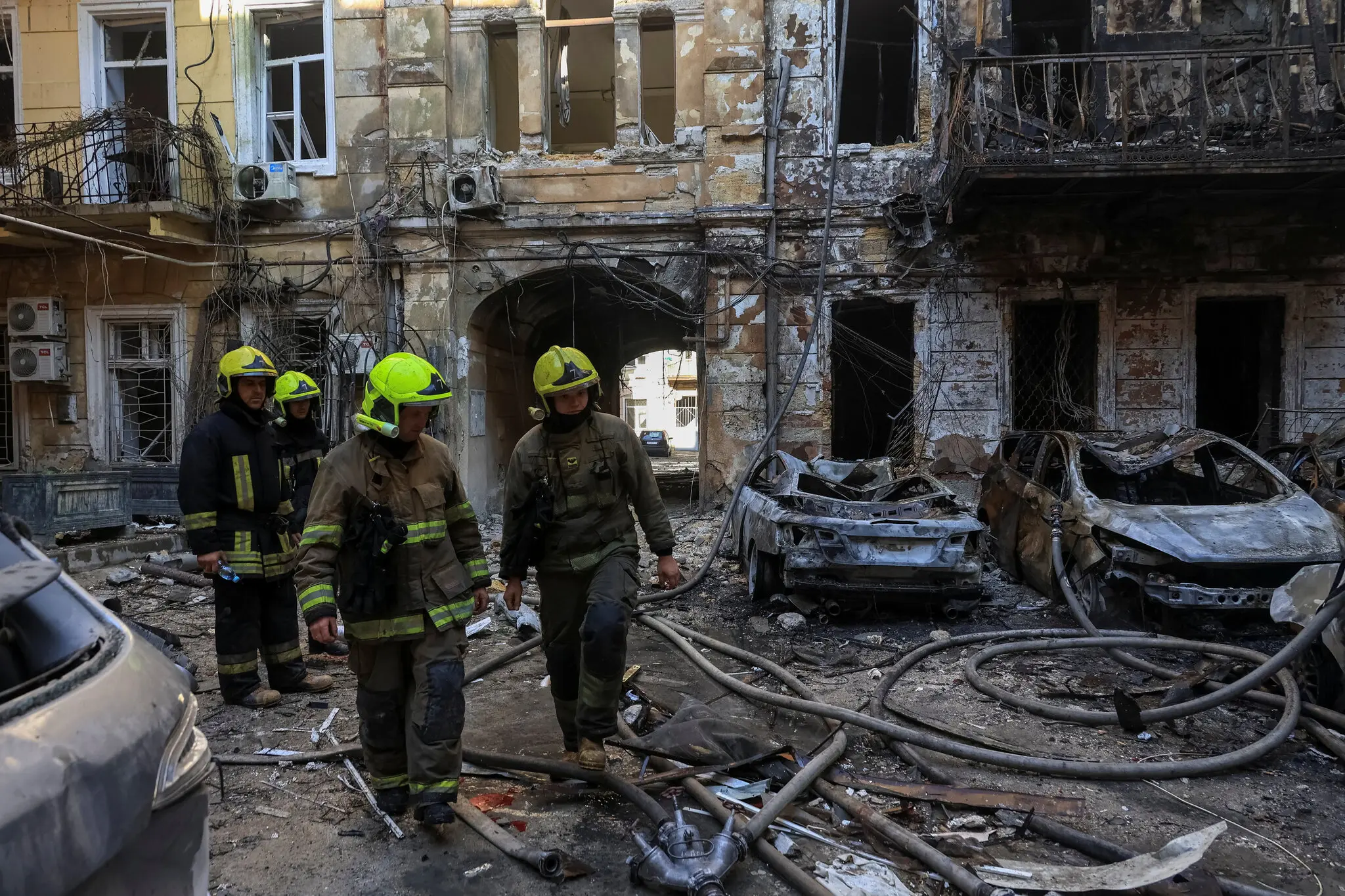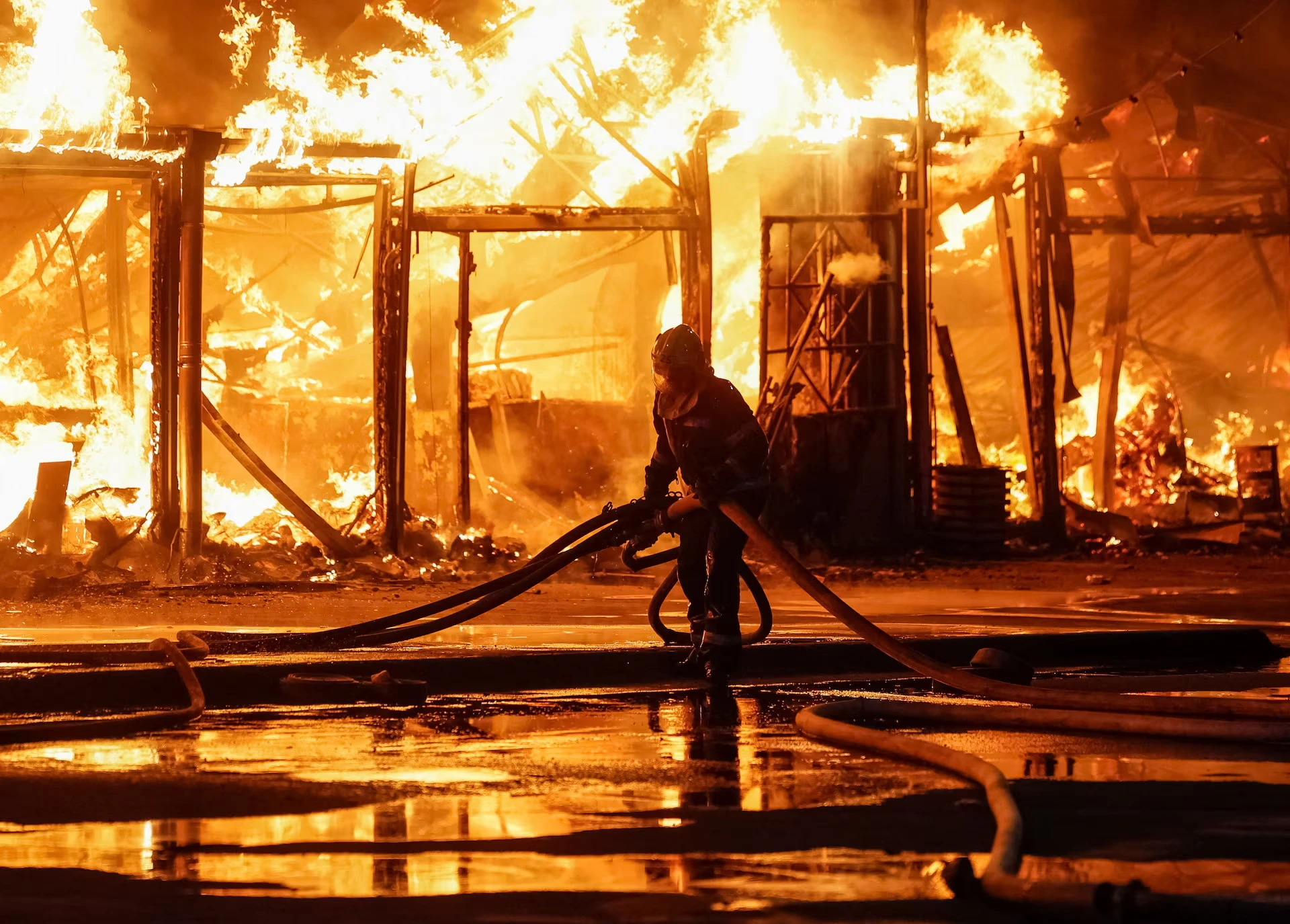


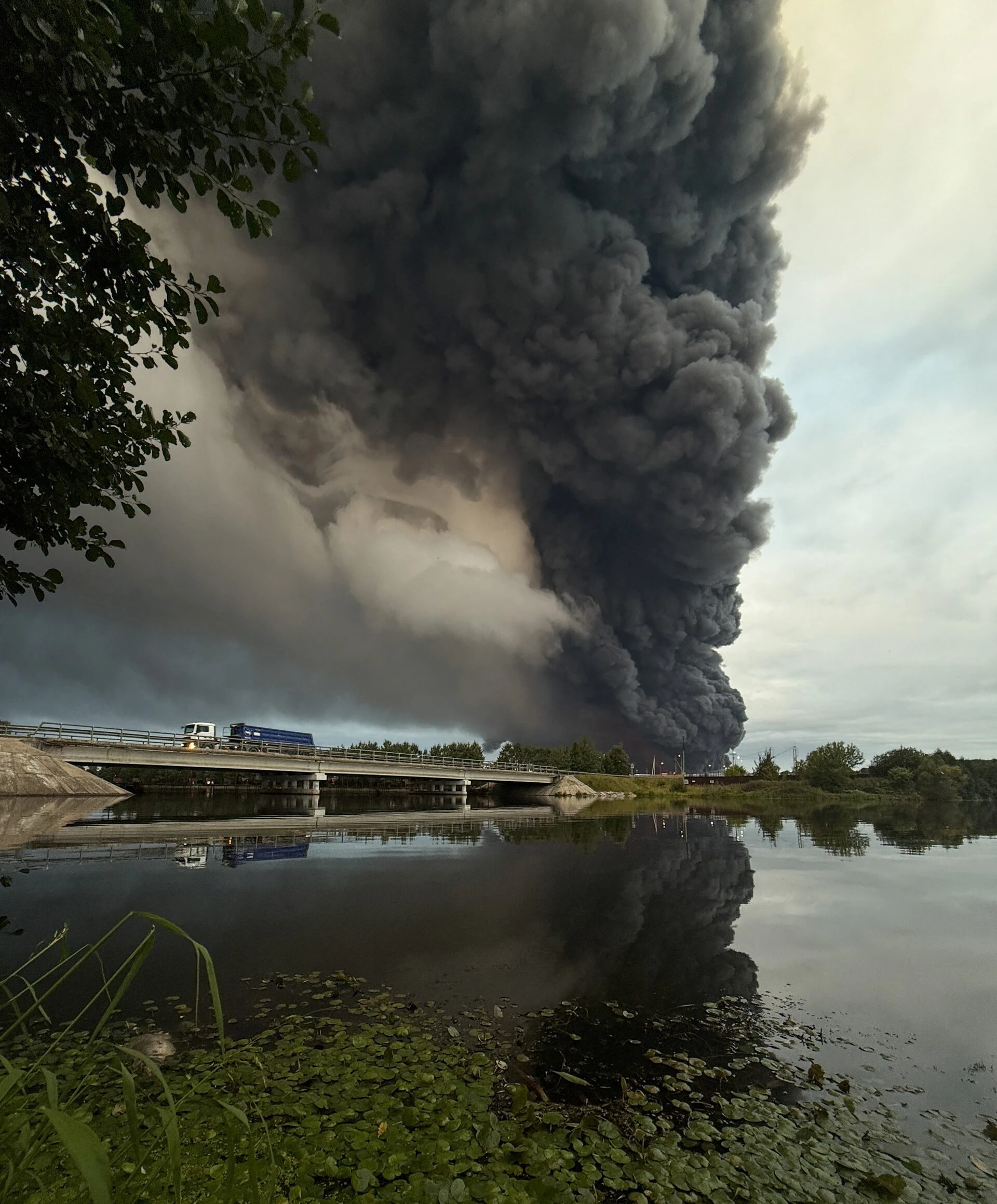





















The USS Abraham Lincoln’s problems did not begin on its flight deck. They began on the first day of the war, when Iranian missiles and attack drones heavily damaged the U.S. naval base in Bahrain — a logistics hub on which American naval operations in the region had depended for decades.
For a carrier strike group, losing such a rear-area hub means far more than a damaged pier or a destroyed warehouse. Aviation fuel, ammunition, spare parts, food, medicine and thousands of smaller supplies must keep moving constantly or the machinery supporting roughly 5,000 sailors and a carrier air wing begins to lose tempo.
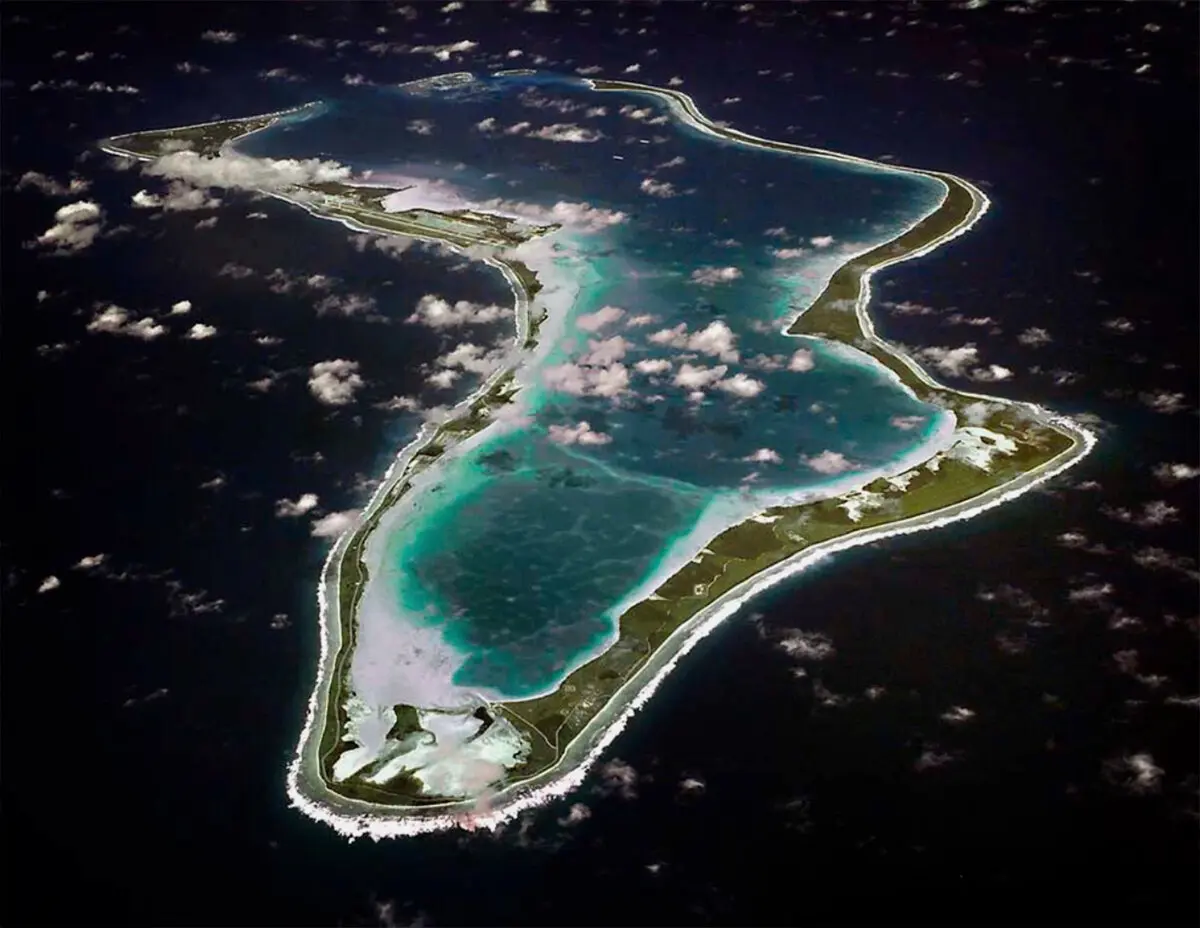
After the Bahrain attack, the Pentagon shifted its main supply point to Diego Garcia, a remote island in the Indian Ocean under British command. The island lies roughly 2,200 miles — more than 3,500 kilometers — from the carrier groups operating around the Gulf of Oman.
As Daycom has previously assessed, that distance explains much of the strain now appearing across the U.S. carrier force. The war has revived an old truth of naval strategy: an aircraft carrier may be the most powerful ship in the world, but its combat value still depends on a far less glamorous network of tankers, transports, bases, warehouses and people.
Diego Garcia became the fallback for a simple reason: other major ports in the region are also within range of Iranian missiles.
For the Navy, that means the entire support architecture has been stretched geographically.
Bahrain had allowed ships to replenish quickly, receive maintenance and give crews at least a short period ashore. Much of that logistical burden has now shifted to an isolated island deep in the Indian Ocean.
The longer the supply route, the more ships and time are required to move the same amount of material.
It is simple but unforgiving arithmetic.
If a transport ship spends several additional days in transit, it returns less frequently with the next load. If a carrier waits longer for ammunition or spare parts, sustaining the same flight tempo becomes harder. If sailors cannot enter a safe port, another resource starts to run down: human endurance.
That is the problem facing the Abraham Lincoln.
The carrier has been at sea for nearly nine months without what the Navy calls a liberty port — a stop where sailors can leave the ship for several days.
For a vessel carrying about 5,000 people, this is not a minor quality-of-life issue.
A carrier at war is a round-the-clock industrial system. Aircraft launch and recovery, engine maintenance, weapons handling, nuclear propulsion, repairs, surveillance, air defense, food service and medical operations do not stop.
In that environment, physical and psychological exhaustion accumulates quickly.
U.S. lawmakers have already raised concerns about shortages of basic supplies and the deteriorating mental health of some sailors aboard the Lincoln.
The Trump administration has responded with striking confidence.
President Donald Trump said the carrier would soon be replaced and dismissed concerns that the deployment had lasted too long, saying it had been “not nearly long enough.”
Defense Secretary Pete Hegseth has taken a similar line, saying the United States can maintain its blockade of the Strait of Hormuz for as long as necessary — even indefinitely.
Militarily, that confidence is understandable.
The United States still fields the world’s most powerful carrier force, a global network of bases and an enormous logistics system.
But the word “indefinitely” in naval warfare almost always collides with very finite resources.
Ships require maintenance.
Aircraft require servicing.
Munitions have to be manufactured and delivered.
Crews have to be rotated.
That is why the strike on Bahrain was strategically more important than the physical damage alone might suggest.
Iran did not destroy the U.S. Navy.
It forced the Navy to operate with a longer and more expensive rear area.
That is classic attritional logic: if sinking the carrier is unrealistic, make it harder to keep the carrier at sea.
The United States is now using several aircraft carriers within the broader campaign against Iran.
The Abraham Lincoln is due to be replaced by the USS George Washington, which was heading west through the Strait of Malacca from its base in Japan.
The USS George H.W. Bush has been operating in the Middle East for months after deploying from Norfolk at the end of March.
The USS Gerald R. Ford, previously used in Washington’s pressure campaign against Venezuela, was also redirected toward the Middle East and employed in strikes against Iran.
That means a significant portion of America’s carrier fleet has become directly or indirectly tied to a single theater.
And that fleet is not limitless.
With the expected retirement of the USS Nimitz, the Navy is set to fall to ten aircraft carriers.
On paper, that is an enormous force.
In practice, some ships are always in maintenance, overhaul, training or workup cycles. The number that can be deployed at any one moment is far smaller than the headline figure.
The longer the Iran war continues, the more it competes with other U.S. strategic priorities for the same ships.
The Pacific has not disappeared.
Neither has China.
European security still requires American resources.
Every carrier spending a ninth month near Iran is a carrier that cannot simultaneously be somewhere else.
That is the strategic cost of extended deployment.
It may not be visible on any single day.
It appears over months through delayed maintenance, exhausted crews, accelerated rotations, disrupted schedules and a thinner reserve for the next crisis.
The U.S. Navy has experienced similar cycles before.
After the September 11 attacks, some carriers spent far longer at sea than the traditional six-month deployment. Several came close to a year.
Yet even during the Vietnam War, carrier groups operating off the coast frequently had access to a relatively close support base in the Philippines.
From Yankee Station to Subic Bay was roughly a two-day transit.
There, ships could take on food, ammunition and other supplies while sailors got a break from continuous flight operations.
Diego Garcia represents a very different geography.
A 2,200-mile logistics leg changes the economics of every resupply mission.
Iran appears to understand the island’s importance.
In March, two medium-range ballistic missiles were launched toward Diego Garcia. One fell into the Indian Ocean before reaching its target. The other was intercepted by a U.S. warship.
The attack itself revealed Tehran’s strategic logic.
If the United States pushes its rear area farther away from Iran, Iran will try to extend the geography of the war after it.
That creates a difficult dilemma for U.S. planners.
A more distant base is safer but less efficient.
A nearby base is more efficient but more vulnerable.
That tension now defines many modern military operations.
Precision weapons have dramatically reduced the number of places that can truly be considered safe rear areas.
A base hundreds of kilometers from combat once might have been treated as effectively untouchable.
Long-range missiles and drones have changed that assumption.
Bahrain illustrates the transition.
It was not simply the headquarters of the U.S. Fifth Fleet or a convenient harbor.
It was infrastructure that allowed American naval power to operate at high intensity across the region.
Once that hub was heavily damaged, the consequences quickly migrated from the shore to the decks of U.S. carriers.
That is why the debate over the Abraham Lincoln is not really only about one ship and one exhausted crew.
It is about the limits of America’s ability to sustain a prolonged maritime war far from home.
Technically, the United States can continue the blockade.
It can replace the Lincoln with the George Washington.
Then replace that carrier with another.
It can increase the volume of shipments through Diego Garcia and move additional forces into the theater.
But every rotation draws on future readiness.
The critical question, therefore, is no longer whether the United States can continue the operation for another month.
Clearly, it can.
The question is how much fleet readiness Washington is prepared to consume if the war lasts another six months — or another year.
That is also what the families of sailors are really asking when they question the mission.
Service members can endure long deployments when they understand where the endpoint lies.
It is harder to sustain morale when the political answer is essentially “for as long as it takes.”
Wars do not exhaust only the weaker side.
They also exhaust the side with the deeper reserves.
Bahrain demonstrated that Iran does not need a navy equal in size to America’s to create serious problems for U.S. sea power.
It only needs to strike the nodes that allow that sea power to remain at sea.
Diego Garcia prevented an immediate logistics crisis.
But it did not eliminate the problem.
It merely moved the supply hub another 2,200 miles away.
And that distance is becoming one of the clearest measures of the real cost of a war Washington says it can sustain for as long as necessary.