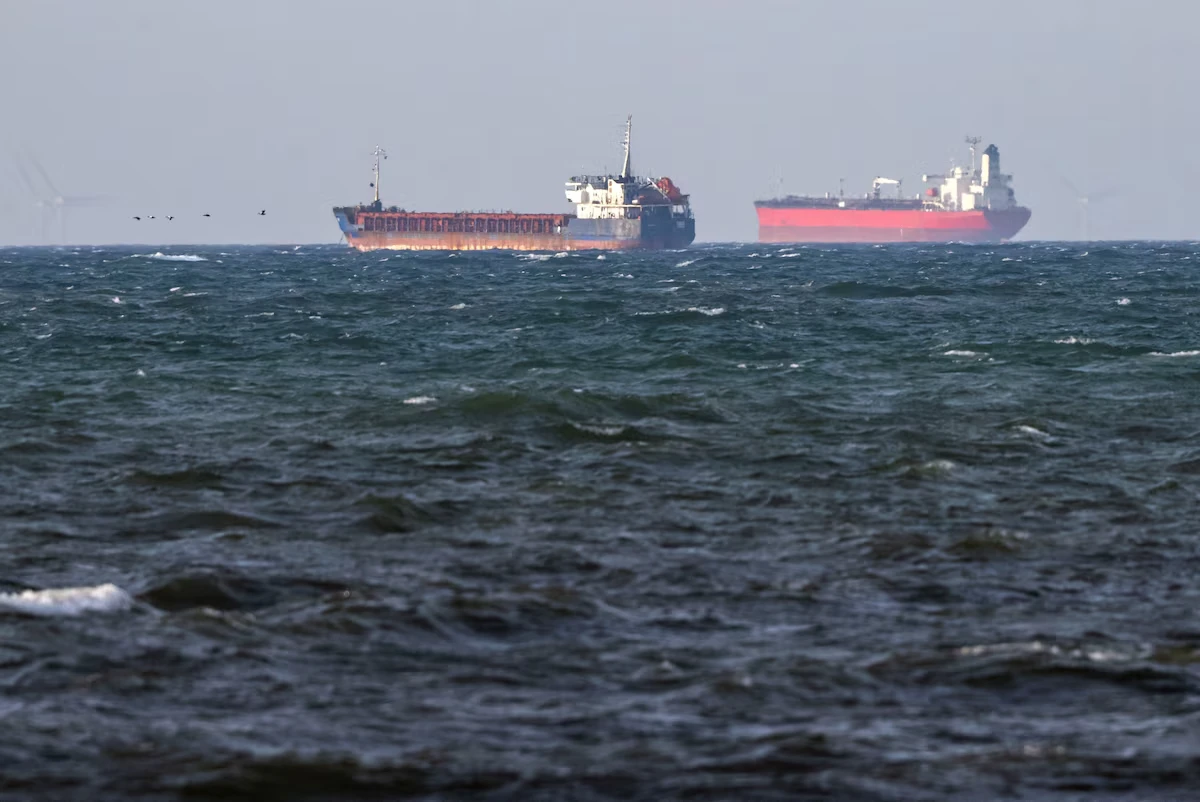
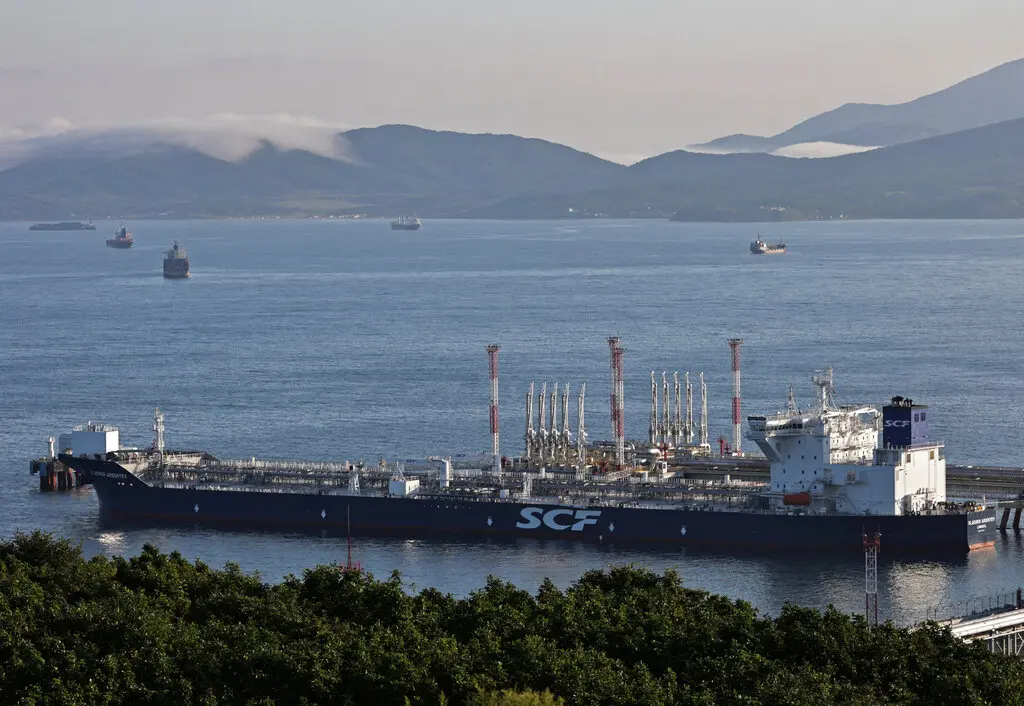





















Another front in the war has opened in the Baltic Sea, and this one is being fought through courts rather than missiles. Sweden’s Supreme Court has upheld a ruling allowing the cargo vessel Caffa, seized off the country’s southern coast this spring, to be transferred to Ukraine.
Kyiv has sought the ship as part of an investigation into the suspected illegal removal of grain from territories occupied by Russia. The case is therefore no longer merely about cargo documentation or maritime violations, but about the possible appropriation of property during war.
Caffa was detained near Trelleborg in March on suspicion of sailing under a false flag, violating maritime regulations and operating despite concerns over seaworthiness. Most of the vessel’s 11 crew members were Russian nationals.
Daycom’s assessment is that the significance of the ruling lies in the way a European legal system is beginning to treat the maritime logistics of occupation not as a peripheral commercial matter, but as a possible component of a war crime.
Swedish lower courts concluded that the alleged appropriation and removal of property from occupied territory could, under certain circumstances, constitute a war crime under Swedish law. The Supreme Court declined to review that conclusion.
The appellate ruling is therefore final. Caffa’s owners have exhausted their opportunity to block the transfer through further appeals in Sweden, while Ukrainian investigators now have a path toward obtaining the vessel and the evidence associated with it.
Legally, this is much more important than the confiscation of a problematic cargo ship. Ukraine has spent years trying to demonstrate that the removal of grain, metals, industrial machinery and other property from occupied regions forms part of the systematic economic exploitation of seized territory.
Occupation has created its own commercial infrastructure. Grain from southern Ukraine can be moved through ports controlled by Russia, mixed with Russian produce, issued new documents and later sold abroad under an origin that becomes increasingly difficult to trace.
Within that chain, a ship is not a neutral carrier. It may hold records of routes, contracts, port calls, cargo owners, shippers and intermediary companies connecting occupied territory with the final buyer.
That is why physical control of Caffa matters to investigators. Navigation data, ship logs, cargo documents, customs records, crew communications and ownership information could help reconstruct the full route by which property was moved.
The case also raises the risks for shipping companies dealing with Russian ports and cargoes of uncertain origin. Previously, their principal concerns were sanctions, insurance restrictions and bans on entering particular ports. Criminal investigations now add another layer of exposure.
Sanctions law and criminal law work differently. Sanctions restrict business activity, access to finance and international trade. A war-crimes investigation asks a more serious question: whether a company or individual participated in the unlawful appropriation of property from occupied territory.
That distinction matters. A company may calculate that sanctions-related costs can be built into freight rates. The possibility that a vessel could be detained, documents seized and its owners drawn into a criminal investigation changes the economics of such voyages far more significantly.
Russia’s system for moving Ukrainian resources relies heavily on opacity. Vessel ownership can change, companies can be registered across several jurisdictions, flags can be switched and routes can be structured to obscure the visible connection between the source of the cargo and its final purchaser.
The Caffa case illustrates the limits of that model. A ship can be re-registered, but its hull, movement history and digital footprint remain. Port calls, AIS transmissions, insurance documents and financial transactions create a trail that investigators can reconstruct.
Sweden’s role in the case is not accidental. The Baltic Sea has become one of the main arenas where Europe encounters opaque Russian maritime activity, from oil shipments to vessels with questionable registration, ownership structures and technical condition.
Since the start of the full-scale war, those risks have grown. Aging ships, complex corporate structures and flags of convenience help operators evade some restrictions, but they also create problems for maritime safety and accountability in the event of an accident.
Caffa drew attention because several factors converged: questions about its flag, concerns about its seaworthiness and a possible connection to property removed from occupied Ukraine. Any one of those issues might have remained an administrative maritime matter. Together they created a criminal dimension.
For Kyiv, the importance of the decision is amplified by the fact that it did not come from a Ukrainian court. The argument that the alleged conduct could constitute a war crime was accepted by an independent European jurisdiction examining legal grounds rather than political expediency.
That could matter in other cases. The ruling does not create an automatic rule for all of Europe, but it points toward a broader possibility: if investigators can link a vessel to the unlawful removal of property from occupied territory, national courts may have grounds to take stronger action.
The principle potentially applies to much more than grain. Metals, coal, industrial equipment, construction materials and other assets have also been removed from occupied regions. Each commodity moves through its own chain of intermediaries, transport operators and financiers.
The more links in that chain pass through European jurisdictions, the harder it becomes to conceal ultimate responsibility. A ship may be registered in one country, insured in another, financed through a bank in a third and dock in a port in a fourth.
That international complexity, which once helped obscure the origin of cargoes, can become a weakness. Every jurisdiction creates another point at which documents can be examined, assets detained and transactions connected to criminal investigations.
For the shipping industry, this means cargo due diligence may need to become much more rigorous. A formally correct bill of lading is no longer necessarily sufficient if there are indications that the goods originated in occupied territory or were routed through intermediaries to disguise their source.
Routes involving ports connected to occupied parts of Ukraine are becoming especially risky. Shipowners may need to think not only about sanctions lists but also about evidence that could be assembled years after a particular voyage.
The Swedish decision does not automatically prove that Caffa participated in a war crime. That remains for Ukrainian investigators to establish. Transfer of the vessel creates the opportunity for such an inquiry, but it does not eliminate the need to prove the cargo’s origin, the intent behind its movement and the role of specific individuals.
That distinction is essential if the case is to have lasting legal value. If Kyiv hopes to turn Caffa into a precedent, the evidence will need to withstand scrutiny not only in Ukrainian courts but potentially in international disputes over the vessel’s ownership and seizure.
Caffa is owned by Caffa Shipping Limited. The next phase of the investigation will inevitably raise questions about who controlled the voyages, who signed the contracts, who owned the cargo and whether the participants knew or should have known where it came from.
Knowledge and intent may prove among the hardest elements to establish. Maritime transport often operates through layers of agents and brokers, allowing owners to argue that they did not possess complete information about a cargo’s origin.
Yet the more international institutions document schemes for removing resources from occupied Ukraine, the more difficult claims of ignorance become. After years of war, the risks associated with such routes are increasingly well known to professional market participants.
For Russia, this raises the cost of occupation itself. Seized grain must not only be harvested and transported. It must also find a vessel, insurer, intermediary and buyer willing to accept an expanding legal risk.
If fewer companies are willing to do so, Moscow will have to pay a higher risk premium. Freight costs rise, ownership structures become more complicated, and some cargoes require longer routes or additional transshipment.
One seized vessel will not stop this trade. Several similar cases, however, could alter the behavior of an entire segment of the market. Maritime logistics depend on confidence in documents and predictability in the rules. Criminal exposure undermines both.
For Ukraine, the Caffa case is part of a wider effort to prevent occupation from becoming economically normalized. If goods from seized territory enter international commerce without consequence, occupation itself gradually acquires a veneer of legitimacy through contracts, insurance and delivery.
The Swedish ruling moves in the opposite direction. It forces every ton of such cargo back into questions of origin, ownership and the legal authority of an occupying power to dispose of it.
In that sense, Caffa is more than a cargo ship sitting off the Swedish coast. It is physical evidence that the economic consequences of occupation can follow participants far beyond Ukraine and years beyond the original voyage.
The transfer of the vessel will not conclude the case. It will merely move it from Swedish detention into a Ukrainian criminal investigation. But that transition is precisely what makes the ruling important.
Russia has spent years trying to turn the removal of resources from occupied territory into ordinary commerce. The Caffa case shows that European law does not have to accept that normality.
In the Baltic Sea, Ukraine is gaining more than a ship. It is gaining an opportunity to prove that there is a single legal chain connecting an occupied field, a grain shipment loaded in port and a cargo vessel appearing off a European coast — and that every link in that chain may carry responsibility.