






















Over the past winter, Russian attacks on Ukraine’s energy infrastructure became denser, more regular and technologically cheaper. The rapid expansion of drone production allowed Moscow to target not only strategic generation sites, but also thousands of nodes that distribute electricity to consumers.
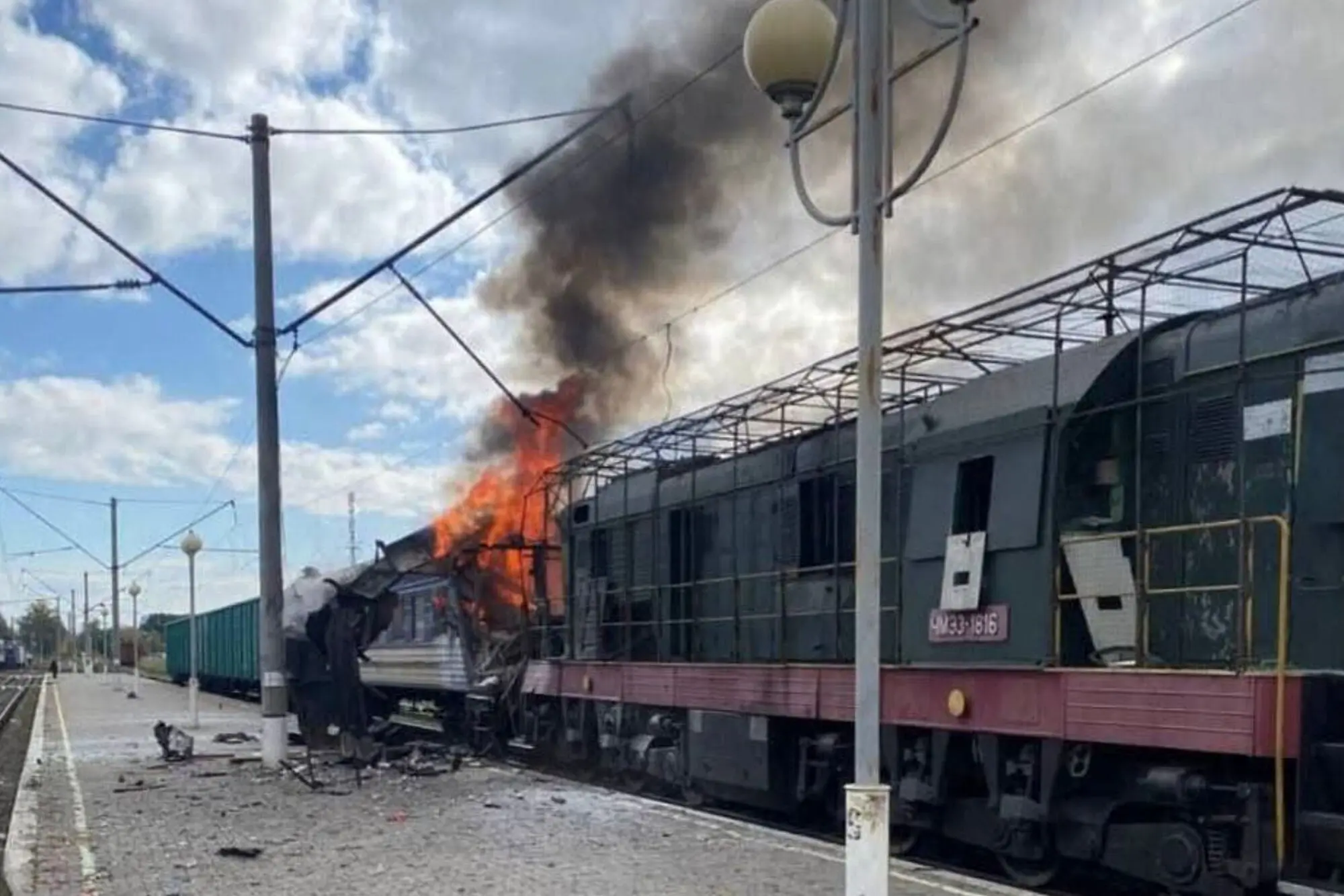
This shift is changing the logic of the energy war. Earlier campaigns relied heavily on large missile strikes against thermal power plants, high-voltage substations and main transmission lines. Now Russia combines missiles, Shahed-type drones and smaller attack waves against infrastructure closer to homes, businesses and military facilities.
According to Daycom’s earlier analysis, this tactic does not signal a retreat from large-scale destruction, but its adaptation. Moscow is trying not only to remove capacity from the system, but also to complicate repairs, stretch Ukrainian air defenses and turn electricity supply into a permanent field of uncertainty.
Smaller power substations and transformer nodes have become one of the most vulnerable links. They do not carry the same political symbolism as large power stations, but they are the points through which electricity reaches districts, towns, factories, hospitals and military sites. A strike on one such node may not black out the country, but it can leave tens of thousands of people without power.
Ukraine is forced to set priorities. Air-defense systems primarily protect major cities, power plants, key generation facilities and strategic infrastructure. It is almost impossible to defend every small substation: Ukraine has a little more than a hundred high-voltage substations, but more than 3,000 smaller transformers.
That is precisely the arithmetic Russia is exploiting. A drone is cheaper than a missile, easier to produce and can be launched in large numbers. When dozens or hundreds of unmanned aircraft enter Ukrainian airspace in a single day, the range of possible targets expands. Even intercepted drones drain air defenses, because every interceptor, crew and radar has limits.
This logic became especially visible last winter. Russian strikes on the energy system increased compared with the previous season, while attacks on smaller substations grew sharply as a share of confirmed strikes against energy assets. From October 2025 to April 2026, they made up the majority of verified attacks on Ukraine’s power infrastructure.
That does not mean large power plants have lost importance. On the contrary, they remain the central targets of massive waves in which drones are mixed with dozens of missiles. But between those large attacks, another pattern has emerged: the methodical exhaustion of distribution networks, where a single transformer can become a critical point for an entire district.
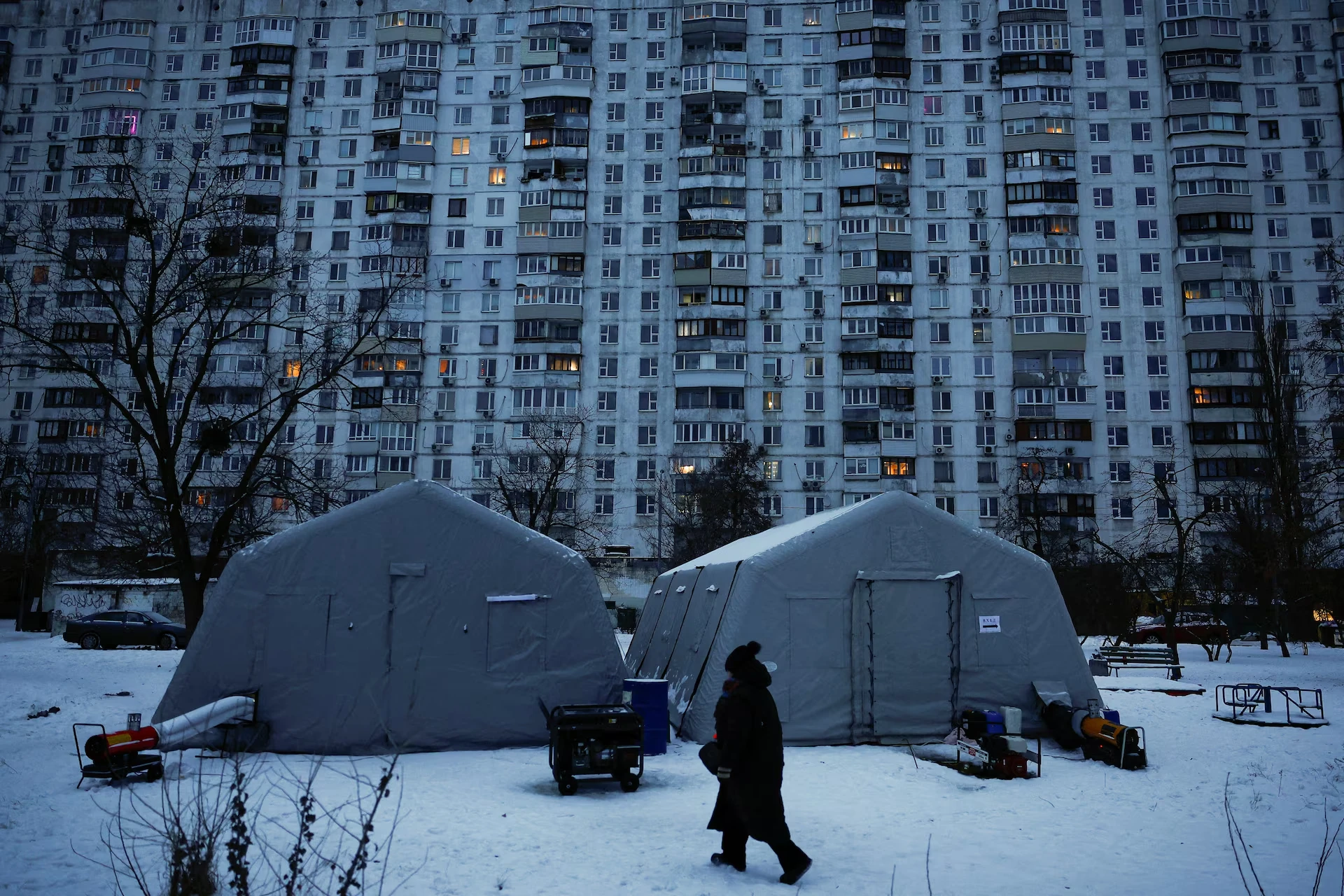
For civilians, the consequences are felt not in abstract figures, but in daily routines. Power disappears for hours, heating becomes unstable, businesses shift production to generators, hospitals rely on backup systems and cities organize life around outage schedules. Energy security has become part of everyday endurance.
Russia presents its strikes on energy infrastructure as a way to weaken Ukraine’s military capability. Ukraine regards attacks on civilian energy infrastructure as a war crime. Beyond the legal argument, the strategic purpose is clear: to make normal life more expensive, more difficult and psychologically more exhausting.
The scale of the damage is already measured in tens of billions of dollars. Ukraine’s energy sector has suffered about $25 billion in destruction, while full recovery and modernization are expected to require more than $90 billion. This is not simply repair after bombardment. It is the rebuilding of a system that must survive under constant threat.
Ukraine’s response is changing as well. The country is developing mobile fire groups, electronic warfare systems, interceptor drones, distributed generation, battery storage and local reserves. The logic of defense is gradually shifting from protecting a few large facilities toward building a network that can lose parts without collapsing entirely.
This is one of the most important transformations of the war. Russia is trying to make Ukraine’s energy system fragile; Ukraine is trying to make it flexible. In this contest, the advantage does not belong to the side with one powerful asset, but to the side that can repair faster, reroute faster, create reserves faster and restore power after each strike.
The attacks on small substations show that the war over electricity is no longer limited to large explosions at major plants. It has moved into smaller nodes, closer to cities and consumers, into the infrastructure of distribution, transformers and cable routes. That is where an invisible front line now runs.
Russian drones are not only destroying equipment. They are testing the state’s ability to preserve the rhythm of life under pressure: to keep hospitals running, restart production, heat homes, sustain communications and supply water. Electricity has become not just a technical service, but a measure of national resilience.
That is why the winter campaign against Ukraine’s energy system matters far beyond the power sector. It is an attempt to turn cold, darkness and fatigue into weapons. At the same time, it is also proof that Russia failed to break Ukraine with a single blow and has moved instead to a strategy of slow exhaustion.
The question for the next winter is no longer only how many drones Moscow will launch. It is how quickly Ukraine can disperse generation, strengthen air defenses, protect substations and make grid recovery faster than the pace of destruction. In this race, light has become a form of defense.