




















The war in Ukraine is increasingly being felt beyond Ukrainian and Russian airspace. Since spring, Finland, Estonia, Latvia and Lithuania have faced a series of incidents involving military drones, some of which crossed into NATO territory after flying through or near Russia.
For the Baltic states, these are no longer isolated episodes. Drones have crashed near energy infrastructure, forced civilians into shelters, disrupted air travel, triggered NATO fighter scrambles and, in Latvia, contributed to a political crisis.
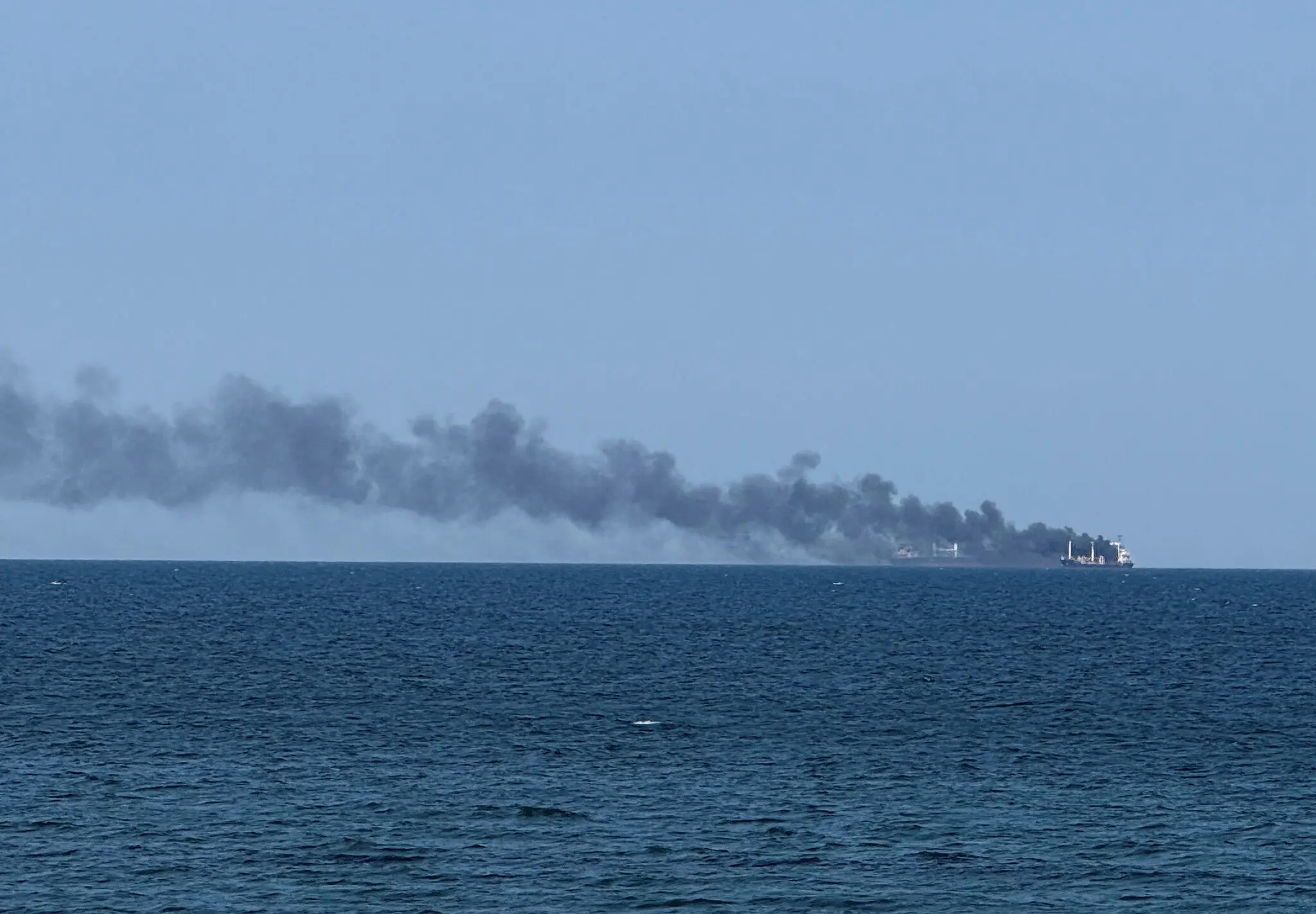
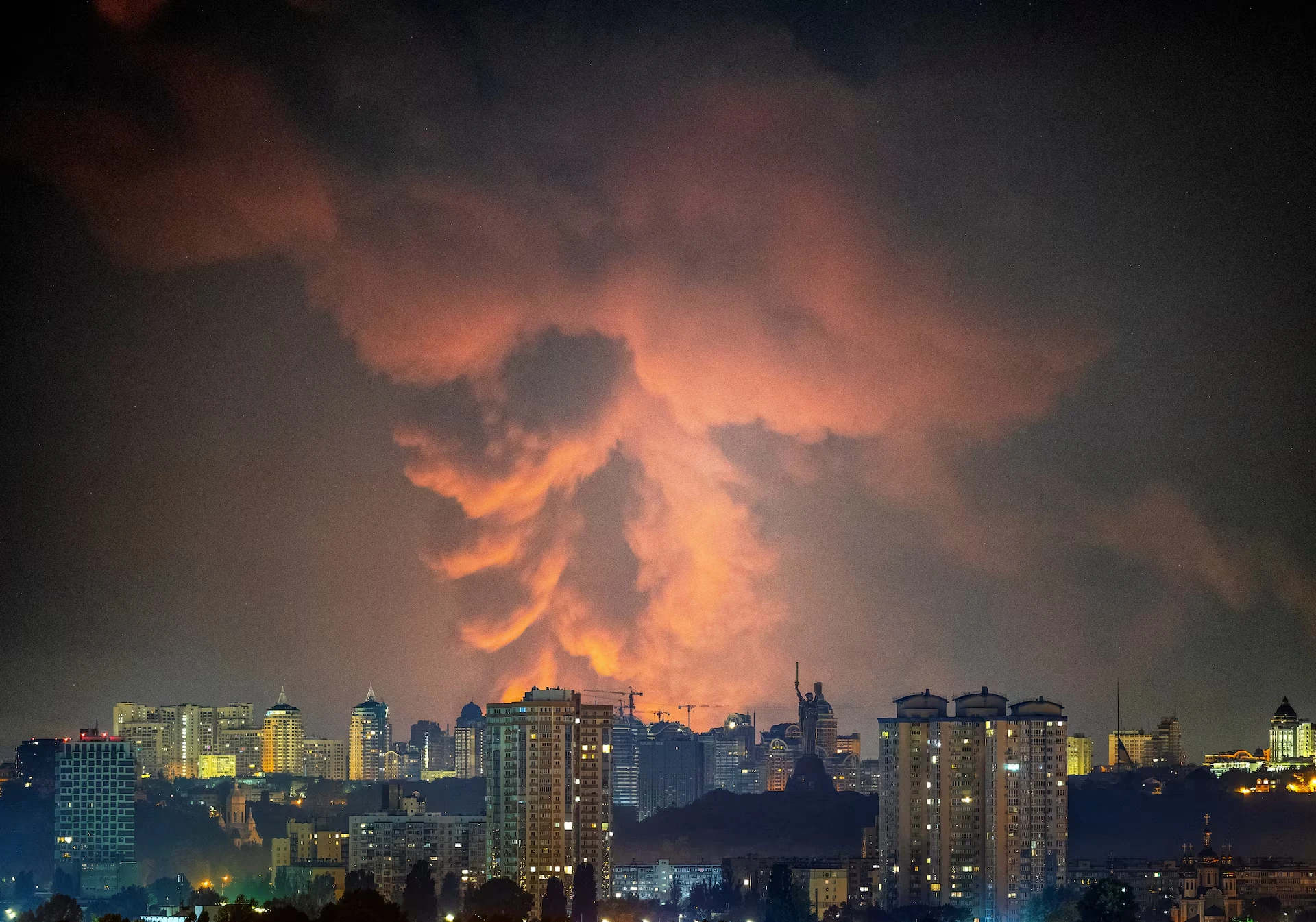
The main source of the new risk is the expanding geography of Ukraine’s long-range campaign. Kyiv is increasingly targeting Russian oil ports and other infrastructure around the Baltic Sea, while powerful Russian electronic warfare systems can interfere with navigation and push some aircraft away from their intended routes.
As Daycom has previously noted, the central problem is not simply who owns a particular drone. These incidents show how modern warfare creates a cross-border zone of risk in which navigation errors, electronic jamming or technical failures can turn into a NATO security emergency within minutes.
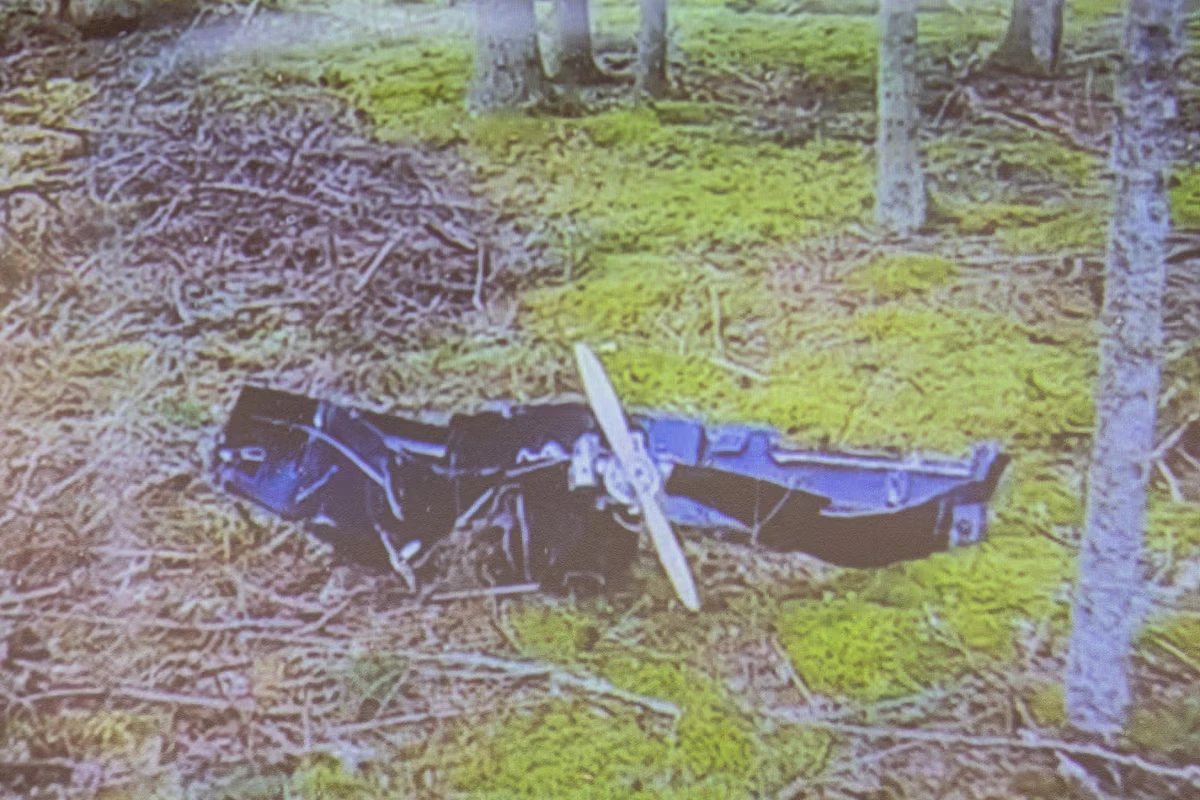
The first serious warning signs appeared in late March. Two Ukrainian military drones that had traveled through Russian airspace entered Estonia and Latvia. One struck a chimney at Estonia’s Auvere power station, while another crash-landed in Latvia.
At roughly the same time, Finland reported a suspected airspace violation in the southeast of the country and scrambled F/A-18 fighter jets. One of the detected aircraft was identified as a Ukrainian drone.
Finnish officials quickly pointed to Russian electronic jamming as a possible factor. Interference with satellite navigation has long been part of the security environment near Russia’s borders, but the consequences have become more dangerous: systems designed to protect Russian targets can redirect risk toward neighboring countries.
That makes the problem politically complicated. From Ukraine’s perspective, a drone diverted by Russian electronic warfare remains part of an operation against Russia. For the NATO country over which it is flying with an explosive payload, the question is much simpler — how quickly can it be detected and destroyed?
By May, the issue was no longer merely technical. Two suspected drones crossed from Russia into Latvia and crashed. One exploded at an oil storage site in the Rezekne region, damaging four empty tanks.
The incident quickly became a domestic political crisis. Latvia’s defense minister resigned after criticism that anti-drone systems had not been deployed quickly enough. Days later, the dispute helped bring down the governing coalition.
A drone that had not been intended to strike Latvia thus became a factor in changing the political balance of a NATO country. It was perhaps the clearest example yet of how a deviation in a battlefield weapon can produce consequences far beyond the original military operation.
Finland experienced a different kind of disruption. In mid-May, authorities warned about 1.8 million people in the Helsinki region to remain indoors because of suspected drone activity and temporarily suspended traffic at the capital’s airport.
Even when there is no direct military attack, the response itself is costly. A single unidentified aircraft can be enough to divert civilian flights, close airspace, scramble fighters and place parts of the civil-defense system on alert.
Lithuania faced a similar episode. Explosives were discovered near the wreckage of a suspected Ukrainian military drone that crashed close to the Latvian and Belarusian borders. Days later, another air alert forced Vilnius airport to suspend traffic, interrupted train services and sent children in schools and kindergartens into shelters.
Members of parliament also took shelter underground.
For people in these countries, such incidents are changing the psychology of the war. The Baltic states have spent years preparing for the possibility of direct Russian pressure. They are now confronting a different scenario — not invasion or an intentional strike, but the persistent presence of uncontrolled military risk in their own skies.
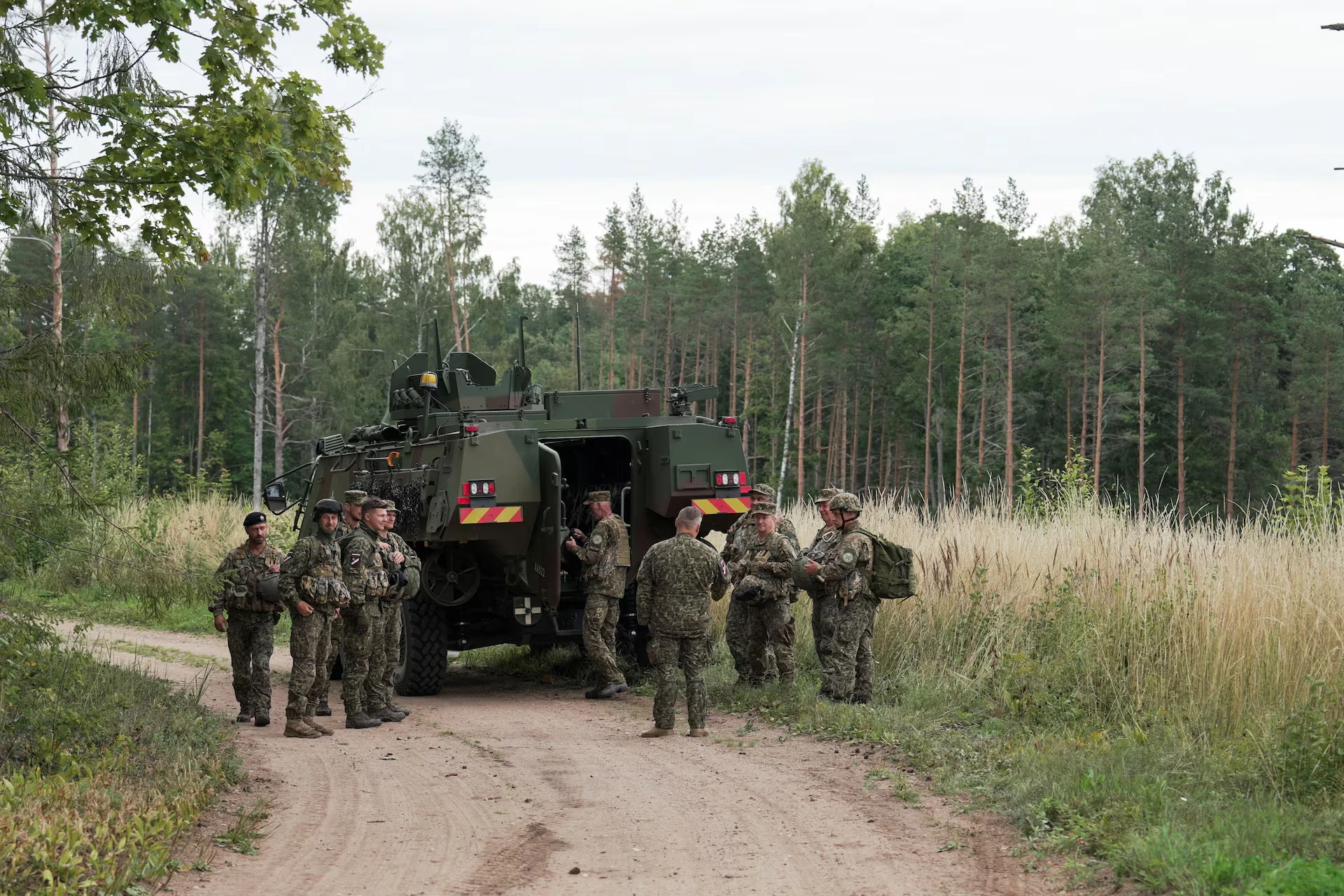
Governments therefore have little choice but to treat every unidentified drone as potentially dangerous. In May, a Romanian NATO fighter shot down a suspected Ukrainian drone over Estonia. In June, a French NATO fighter destroyed another drone in Latvian airspace.
On August 14, aircraft assigned to NATO’s air-defense mission again shot down a drone over Latvia. Finland imposed temporary airspace and maritime restrictions in the eastern Gulf of Finland the same day as a precaution.
The alliance is therefore moving from monitoring these incursions to intercepting them with growing regularity.
That creates a strategic dilemma. NATO must continue supporting Ukraine while also making clear that uncontrolled flights by Ukrainian military systems over allied territory cannot simply be tolerated.
Ukraine has acknowledged that some of the drones were its own and apologized to Baltic partners, while arguing that Russian electronic warfare had diverted them. Kyiv has also denied using Latvian or Estonian territory as a launch corridor for attacks on Russia.
But for NATO, the origin of the drone does not remove the operational problem. If an aircraft carries a warhead and is flying over a populated area, commanders may have only minutes to act without knowing where it will go next.
That is increasing pressure on the air defenses of Finland and the Baltic states. Latvia and Lithuania have already called for stronger protection, while Finland repeatedly imposed temporary restrictions in airspace and at sea near the Russian border during July.
The challenge cannot be solved only by adding more missiles and radars. Small drones are far cheaper than fighter aircraft and are often cheaper than the interceptor missiles used to destroy them.
This is one of the defining asymmetries of modern air warfare. Inexpensive long-range weapons can force states to use vastly more expensive defensive systems, while every alert creates costs even when no strike ultimately occurs.
There is also an economic impact. Tourists have begun canceling trips to Latvian regions bordering Russia because of fears about drone incursions. For small communities dependent on seasonal visitors, military risk is becoming a direct loss of income.
A new zone of instability is taking shape along NATO’s northern flank. It does not resemble a conventional front: there are no trenches, artillery battles or continuous ground combat.
Instead, there are radar tracks, air-raid warnings, temporarily closed airports, fighter jets overhead, electronic warfare systems and civilians deciding whether an unidentified object dozens of kilometers away is reason enough to seek shelter.
For Ukraine, the issue is strategic as well. The deeper its drones penetrate toward Russian targets around the Baltic, the more Kyiv depends on reliable navigation and the ability to minimize risks for allied countries.
Every incident carries a political cost that Russia may be able to exploit without launching a direct attack of its own. If a Ukrainian drone closes a NATO airport or contributes to a government crisis, Moscow gains an indirect benefit from its electronic warfare defenses.
The next phase of the drone war will therefore require more than greater range. It will demand stronger resistance to jamming, more reliable navigation and better fail-safe mechanisms that can terminate a flight if control is lost.
Finland and the Baltic states are effectively becoming a testing ground for that new reality.
The war has not crossed NATO’s borders in the conventional sense. But its technologies, mistakes and electronic warfare effects are already crossing them repeatedly.
That may become the central challenge for the alliance’s northern flank: learning to distinguish a stray drone from a genuine attack faster than a single error in the sky can turn into a crisis between states.