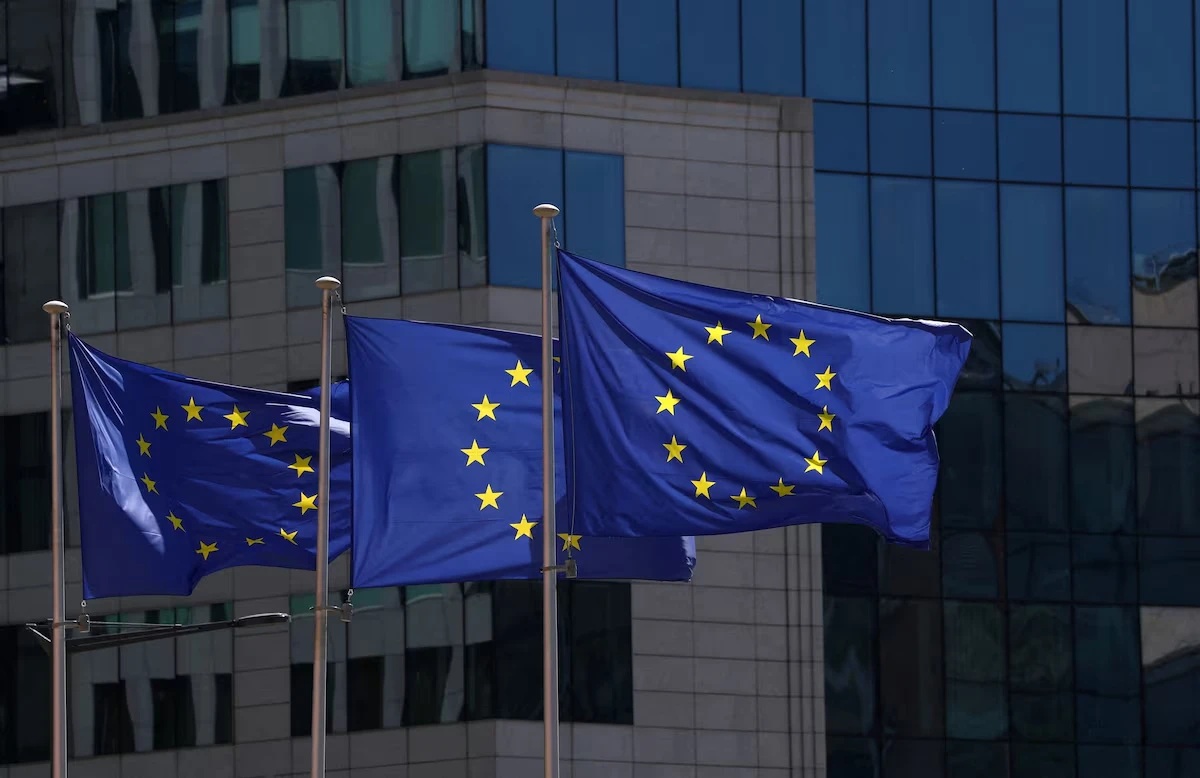

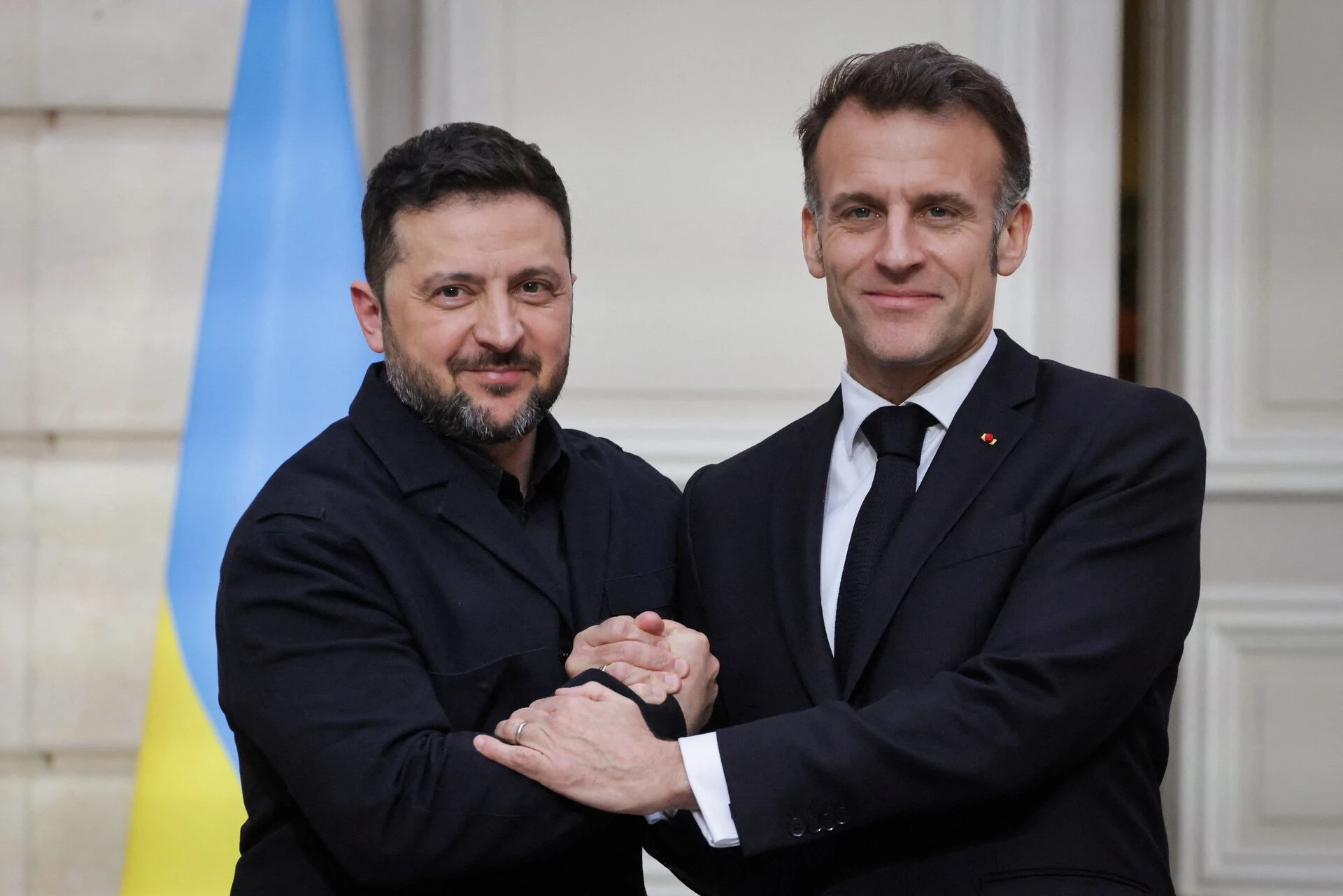

















The European Union has transferred €3.9 billion to Ukraine for the purchase of new drones. Formally, it is part of a large two-year loan. Politically, it is a signal that Europe increasingly sees unmanned systems not as auxiliary weapons, but as one of the main instruments for changing the balance in the war with Russia.
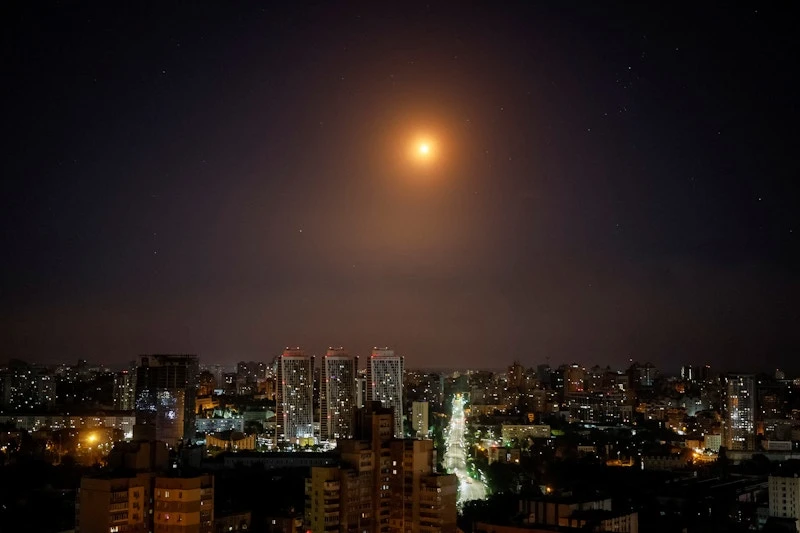
The tranche arrived against the backdrop of new Russian attacks on Kyiv and Ukrainian strikes on Russia’s oil infrastructure. Moscow describes its bombardments as retaliation for Ukrainian actions. But that rhetoric does not change the essence of the war: Russia has spent years attacking Ukrainian cities, energy sites and civilian infrastructure, while Ukraine is looking for ways to hit the systems that sustain that aggression.
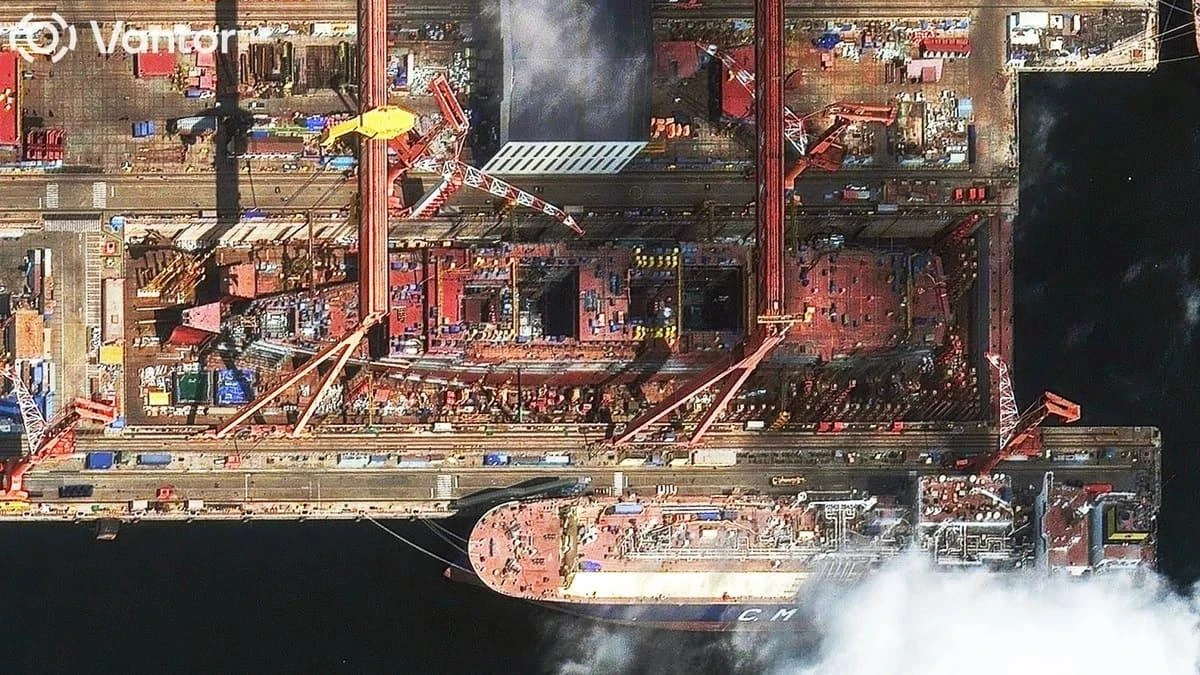
In recent months, Ukrainian drones have knocked out a significant part of Russia’s oil refining capacity. This is not simply a series of long-range strikes. It is an attempt to damage the economic foundation of the war: fuel for the army, energy-sector revenues, logistics, the domestic market and the sense of impunity that Moscow long treated as a strategic advantage.
According to Daycom’s earlier analysis, the new European tranche matters because it moves support for Ukraine from a mode of reaction into a mode of investment in advantage. Drones have become weapons that allow a country with fewer resources to impose disproportionately high costs on a larger adversary.
This is not only about the number of drones. It is about the industrial logic of the war. Ukraine needs reconnaissance drones, strike drones, naval drones, interceptors, guidance systems, electronic warfare tools, components and stable production. Funding for drone procurement therefore matters not as a one-time payment, but as fuel for an entire sector of the defense economy.
The €3.9 billion is part of a €90 billion package approved by the EU to support Ukraine in 2026 and 2027. The package is meant to cover a substantial share of the country’s needs over the next two years, including defense, budget stability and the development of wartime production. For Kyiv, this is not a luxury, but a condition for planning a long war.
The main value of such financing is predictability. Ukraine cannot build a defense industry if every tranche depends on a political crisis in another European capital. Drone warfare requires contracts, production lines, component purchases, operator training, repairs, modernization and reserves. None of that can be done in a state of monthly uncertainty.
That is why the unblocking of the loan after Hungary lifted its veto was more than a procedural detail. For months, Budapest had slowed European support for Ukraine, while Viktor Orbán repeatedly obstructed Brussels’ efforts to assist Kyiv. After his election defeat, Hungary removed its objections, giving the EU room to move faster.
The episode exposed Europe’s weak point: strategic assistance to a country at war can depend on a single government with its own relationship with Moscow. But it also showed the opposite: once the political obstacle disappears, the European machine can turn a decision into money, and money into defense capacity.
For Ukraine, drones have become one of the few areas in which it is not only compensating for shortages of heavy weapons, but building its own asymmetric advantage. They allow Ukraine to see the front, strike equipment, stop assaults, hit depots, disrupt logistics and carry the war to targets inside Russia that once seemed out of reach.
Strikes on oil refining are especially important. The Russian army depends on fuel just as it depends on shells and missiles. When refineries stop, repairs drag on, export flows become more complicated and the domestic market feels shortages, the war becomes more expensive not only at the front, but deep inside Russia itself.
Moscow has long tried to impose a logic of exhaustion on Ukraine: hitting power stations, cities, ports, railways, depots and homes, forcing the state to spend resources on repair. Ukraine’s drone campaign answers with a different logic: not merely to defend, but to create a price for the aggressor where it finances and supplies its war machine.
In this sense, Europe’s €3.9 billion is not only aid to Ukraine. It is an investment in changing the cost of the war for Russia. If Ukrainian drones more often reach refineries, depots, port infrastructure, military airfields and logistics hubs, the Kremlin must stretch air defenses, strengthen protection, repair damage and explain domestic shortages to its own citizens.
At the same time, drone advantage does not appear automatically. Russia is also producing drones on a massive scale, expanding overnight attacks, combining missiles and unmanned systems, and looking for cheap ways to overload Ukrainian air defenses. Ukraine’s advantage therefore depends on speed. Every month of delay gives Moscow time to adapt, change routes, strengthen protection and find new supply channels.
This is where European money must become tempo. It should support not only the purchase of finished systems, but production inside Ukraine, joint ventures, localization of components, engineering teams, testing, software and the scaling of successful models. In drone warfare, the winner is not the side with one good prototype, but the side that moves fastest through the cycle of failure, upgrade and serial production.
Europe is also receiving its own lesson. Ukraine’s experience is already changing defense thinking across NATO and the EU. The war has shown that an inexpensive drone can change the fate of an armored vehicle, a logistics convoy, an ammunition depot or even an oil refinery hundreds of kilometers from the front. This is not the future of war. It is its present.
Funding Ukrainian drones is therefore also a European investment in its own security. Ukraine is testing technologies, tactics and production models that will shape the defense of the continent tomorrow. By supporting this sector, the EU is buying not only weapons for Kyiv, but knowledge about a kind of war Europe long avoided preparing for.
The political meaning of the tranche, however, will be lost if it remains only an accounting line. Ukraine needs rapid implementation, transparent procurement, minimal bureaucracy, protection against corruption risks and priority for manufacturers that deliver real results at the front. Drone warfare does not tolerate a slow administrative culture.
Russia will try to respond. It will strike Ukrainian production sites, energy infrastructure, logistics, engineering teams and the cities where defense innovation is being built. Drone financing must therefore go hand in hand with industrial protection: air defense, dispersed production, reserve capacity, cyber defense and stable energy supply.
The new EU tranche also changes Kyiv’s political horizon. When Ukraine knows it has resources not only for immediate needs, but for two years of resistance, it can plan strategically rather than from one attack to the next. That is critical for a state fighting an enemy that is betting on prolonged exhaustion.
For Moscow, the signal is unpleasant. European aid is not disappearing, collapsing from fatigue or stopping at symbolic declarations. It is entering a specific sector that is already causing Russia tangible damage. Where the Kremlin wanted to see an exhausted Ukraine, it sees a country receiving resources for a further technological strike.
That is why €3.9 billion for drones is more than a tranche. It is part of a new formula of war: Ukrainian ingenuity, European money, industrial scaling and strikes on the systems that sustain Russian aggression. In that formula, the drone is not a cheap substitute for major weapons. It is a strategic language of its own.
The war is increasingly decided not only by the number of tanks or missiles, but by the ability to produce, adapt and use technology quickly. The EU has taken a step in that direction. Now the central task is to turn this money as fast as possible into the eyes, wings and strikes of Ukraine’s defense. Every drone that stops Russia’s war machine narrows the space in which Moscow can continue the war with impunity.