





















There have always been two wars inside House of the Dragon. The first is human: a struggle over inheritance, revenge, legitimacy and the right to sit the Iron Throne. The second is far more dangerous — a war involving creatures people insist on treating as weapons, even though they can never fully control them.
Season 3, Episode 7, “The Dragon in Winter,” finally brings those two conflicts together. Plans are made, bargains are struck and conspiracies unfold, but the fate of each faction increasingly depends less on strategy than on what a particular dragon decides to do.
That is clearest in the confrontation surrounding Rhaena and Sheepstealer. The dragon that helped kill Jace is no longer merely a military asset. He becomes a symbol of how personal the war has become for Rhaenyra, and of how quickly military logic collapses once grief enters the calculation.
As Daycom noted in its earlier analysis, the episode works because the dragons are no longer spectacle layered on top of the plot. They function as a second cast of characters, each with a distinct temperament, fear, aggression and capacity to shatter human intentions.
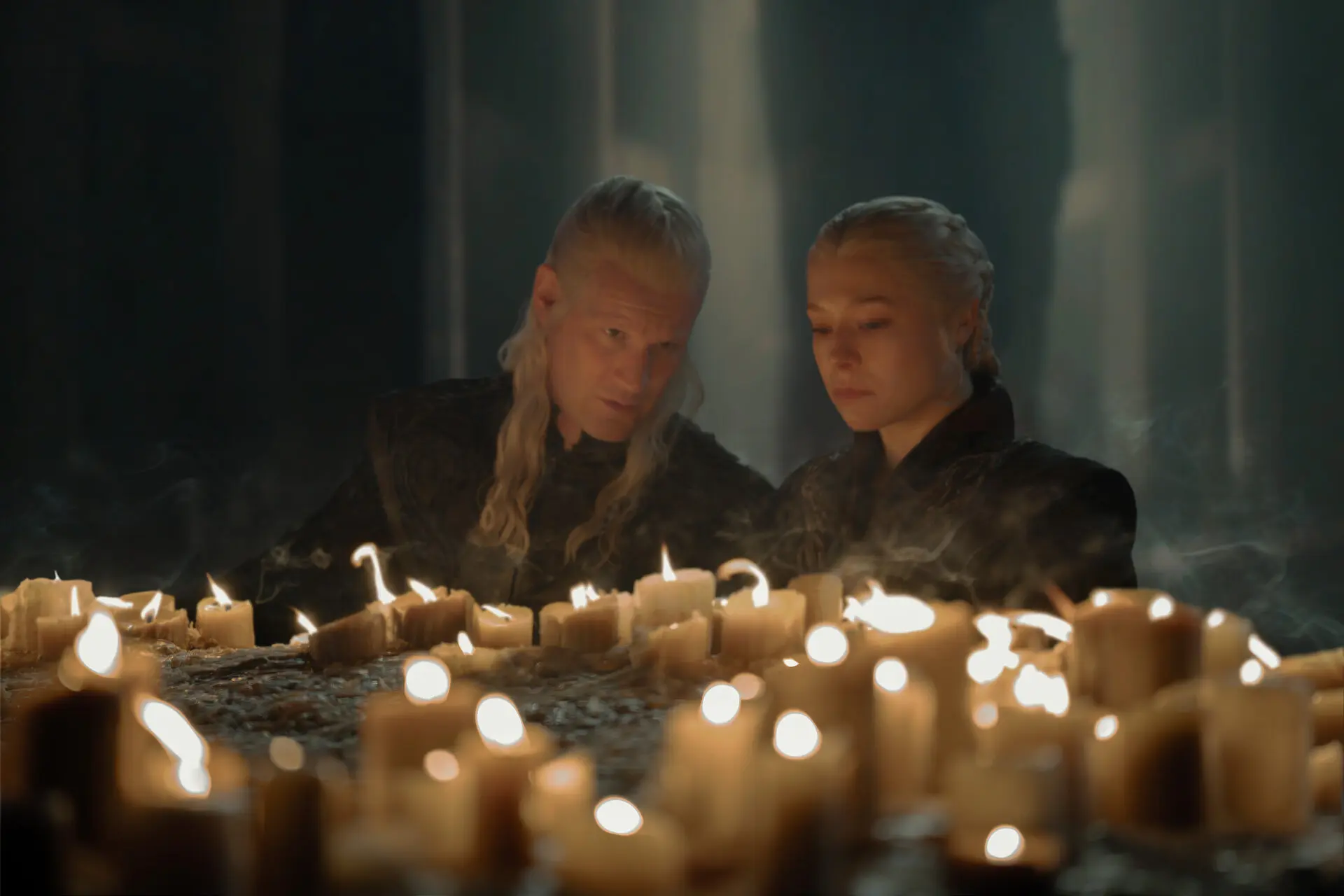
Rhaenyra confronts Rhaena, Daemon and Addam in the Vale, where the truth about Sheepstealer finally surfaces. She learns not only about Rhaena’s role in the Battle of the Gullet, but also that Daemon concealed it in order to protect his daughter, even at the cost of further conflict with his wife.
The scene could easily have ended in another family catastrophe. Instead, the show takes the harder route. Rhaenyra spares Rhaena and accepts that there was no conspiracy against her. Daemon was not behaving like a rival claimant. He was behaving like a father.
Sheepstealer pays the price instead. Rhaena could barely control him before, and now he is forced into a brutal mismatch against other dragons. The sequence is staged to create discomfort rather than triumph: a beast that once seemed nearly untouchable crawls away wounded, crying in pain.
That change in tone matters. House of the Dragon has long treated human death with grim efficiency, but when the dragons suffer, the series reminds us that the Targaryen civil war is destroying more than a dynasty. It is destroying the very magic on which the dynasty’s power was built.
Then the episode immediately undercuts the idea that a dragon can ever be written off for good. Sunfyre, burned, maimed and nearly rotting after earlier battles, returns just as Aegon and Tyland appear doomed.
For once, Aegon does not run. He seems prepared to die after declaring himself to his enemies — until Sunfyre lurches from the forest and burns them alive. Aegon’s laughter is not relief so much as madness, the sound of a man whose terror and exhilaration have become indistinguishable.
Sunfyre’s return changes more than Aegon’s immediate survival. It restores a political figure who had nearly been discarded and reinforces the season’s central rule: no balance of power can remain stable while dragons still exist outside anyone’s certainty.
The same instability applies to the people who ride them. Ulf, long resentful of Rhaenyra and Daemon’s condescension, defects to Ormund Hightower. His betrayal is not ideological. He chooses the side that promises him comfort, status and the life he believes he deserves.
That makes him especially dangerous. Rhaenyra may possess dragons, but she does not automatically possess the loyalty of their riders. Give an embittered man immense destructive power without binding him politically, and he can become as dangerous as an enemy army.
Addam remains loyal for now. He helps hunt Sheepstealer and plays a crucial role in bringing Rhaena in safely. But his awkward emotional thread with Baela opens another fracture: she does not even realize that he is speaking about his feelings for her, assuming he means her relationship with Alyn.
For Rhaenyra’s faction, that is not a trivial problem. After Ulf’s defection, another alienated dragonrider could become a strategic disaster. The series is increasingly making the point that the important question is not how many dragons a side has, but how many riders it can actually trust.
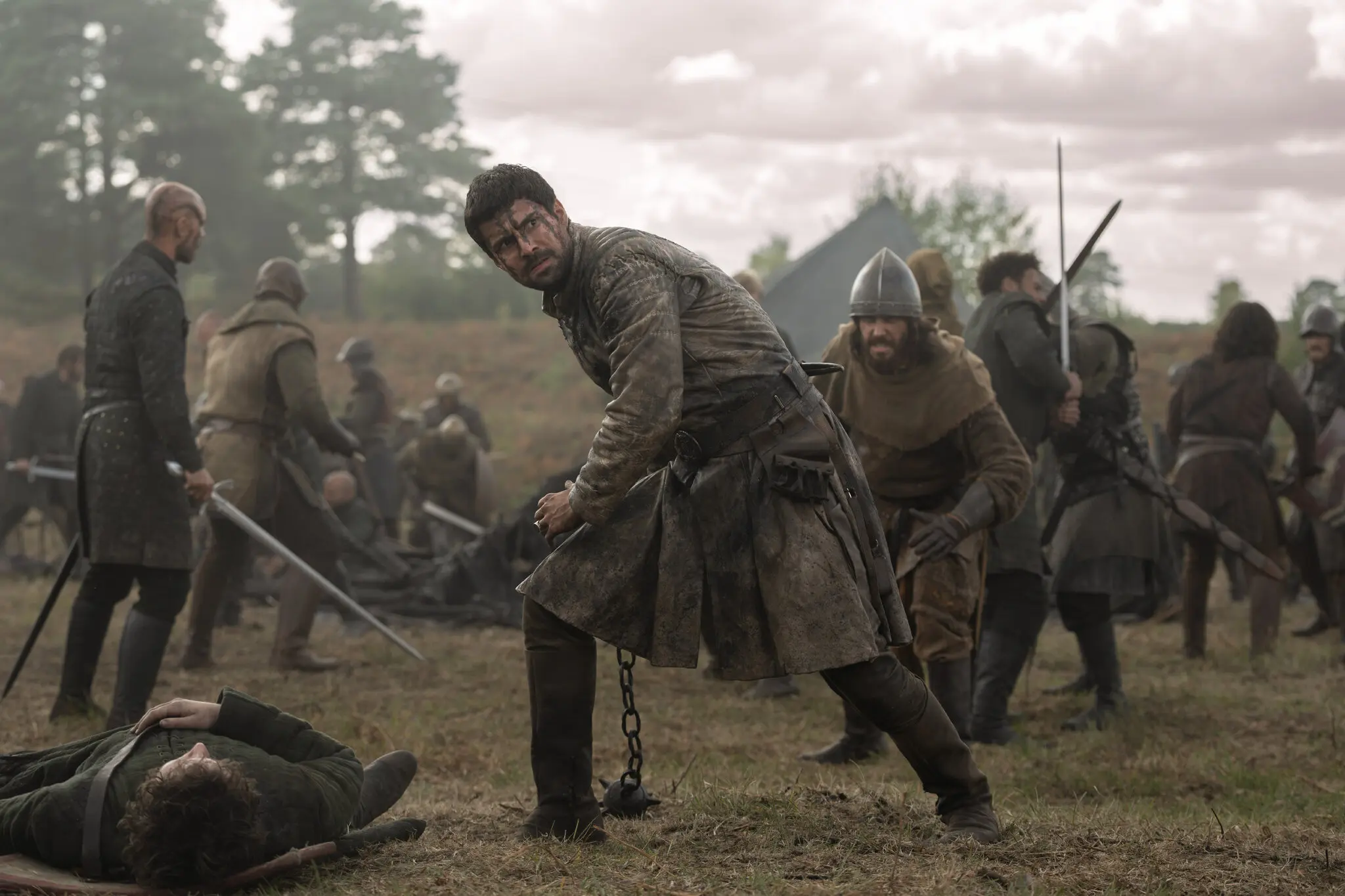
In the Riverlands, the war becomes brutally literal. Ser Criston, still a central figure only an episode ago, is now reduced to a head on a spear carried by Roderick Dustin. His earlier prediction that they were marching toward annihilation has come true with almost grotesque precision.
His death is another reminder that House of the Dragon has entered a phase in which prominence no longer guarantees survival. Characters who once seemed structurally essential can now disappear in a single cut.
Aemond, meanwhile, remains trapped inside his own private nightmare. Vhagar is absent from the battlefield, but Harrenhal becomes a place where he can no longer distinguish political reality from the psychological traps constructed around him by Alys.
The strangest sequence comes when Alys appears in Alicent’s form, followed soon after by the real Alicent arriving with a guard meant to kill her son. Motherhood, sexuality, fear and magic collapse into one another so completely that even Aemond can no longer tell where manipulation ends and reality begins.
He kills the guard, but still accepts spiced wine from his mother. It is a fatal act of trust. The next time we see him, he collapses at Alys’s feet, poisoned, while Alicent flees Harrenhal.
Again, the show returns to the same idea: the most dangerous blows rarely come from obvious enemies. Aemond surrounds himself with dragons, terror and sorcery, but what makes him vulnerable is painfully ordinary — the belief that his mother still loves him enough not to kill him.
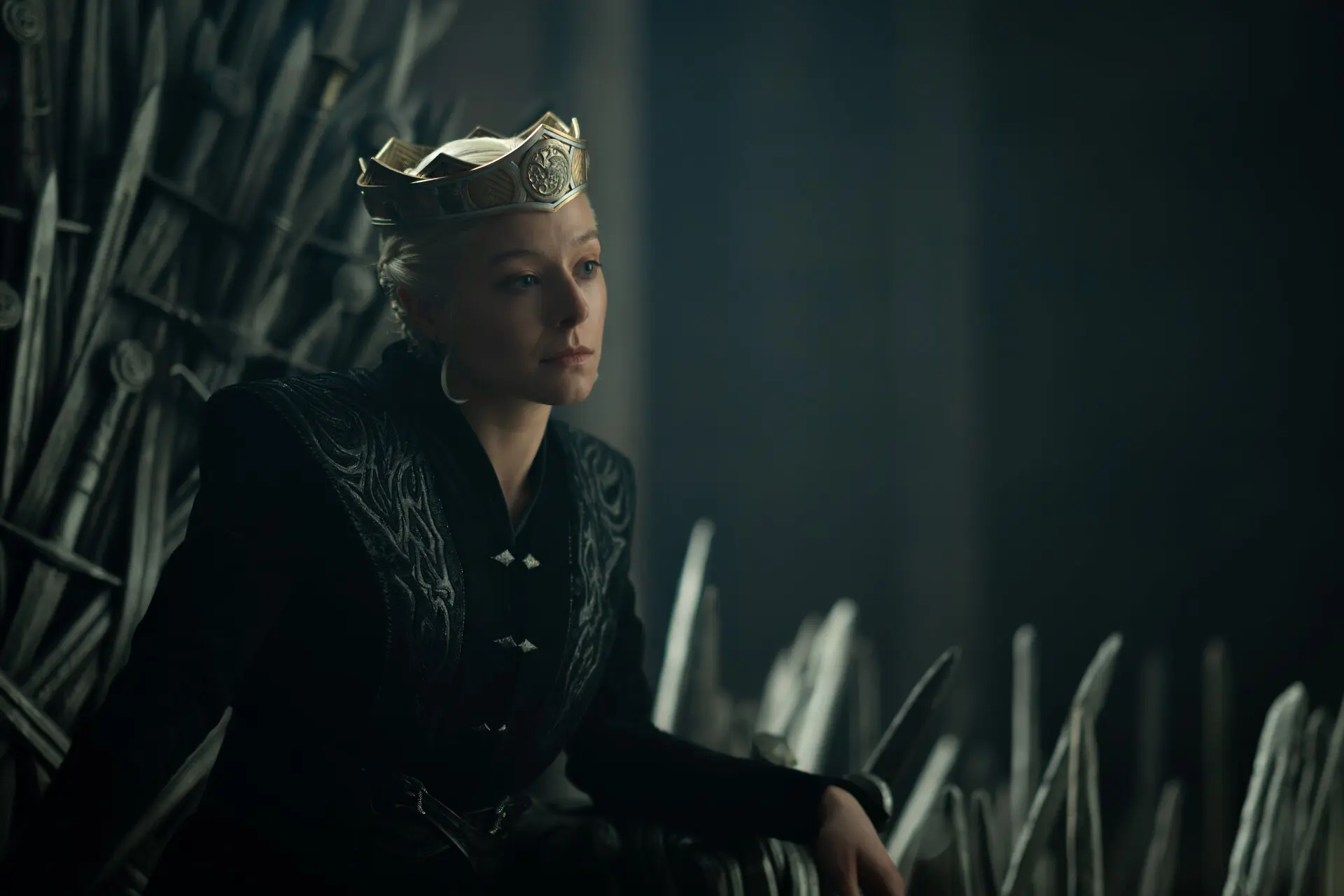
Rhaenyra is hardly more secure despite holding the Iron Throne. She increasingly treats Helaena like a living intelligence service, pressing her for visions as though prophecy could be converted into military planning.
But Rhaenyra does not really want information. She wants reassurance. She needs someone to tell her that she will win, and the more power she accumulates, the more urgently she seems to need confirmation that she deserves it.
With Corlys absent, Mysaria becomes her closest adviser. Their relationship again turns intimate, even though Rhaenyra knows perfectly well that Mysaria has manipulated her feelings toward Daemon.
The scene plays less like romance than escape. Rhaenyra has the throne, dragons and the capital, but no real sense of safety. Her intimacy with Mysaria becomes a brief retreat from a war she increasingly cannot control.
Against that background, Alicent’s children emerge as some of the episode’s most sympathetic figures. Daeron is visibly disgusted by Ormund’s militarism and seems almost indifferent to the crown. If Rhaenyra wants it, he suggests, she can have it. He wants only a way out.
But House of the Dragon has never been kind to characters who simply want to leave the game. The ominous musical motif around Tumbleton suggests that Daeron may soon be dragged directly into the violence he hopes to escape.
Helaena is even more tragic. Pregnant and effectively confined, she dreams of giving birth to Aegon’s son, of riding Dreamfyre and of briefly inhabiting a world where happiness might still be possible.
For once, a dragon is not presented as a symbol of power but as part of her inner freedom. Yet even Helaena’s imagination cannot provide sanctuary. Snow begins to fall across the pastoral vision, supernatural cold spreading forward until private happiness is overwhelmed by something much larger than dynastic politics.
That final image gathers the episode’s themes into one place. Everyone is still fighting over the crown, but the series keeps reminding us that forces exist beside which that struggle may ultimately look temporary.
Episode 7 succeeds not because it merely rearranges the board, but because it destroys the illusion that anyone is really in control. Rhaenyra cannot control her riders. Aemond cannot control Harrenhal. Aegon cannot control his own unraveling. No one fully controls the dragons.
And that is where House of the Dragon finds its most convincing form of tragedy. The war began with people who believed dragons were arguments in a political dispute. By now, the people themselves increasingly resemble creatures being carried forward by instinct, resentment and fire.