
















In Iran, the crisis over the cease-fire with the United States has become an internal political test. New American strikes and renewed attacks around the Strait of Hormuz have exposed what had already been developing inside the system: the leadership has no single view on whether to keep negotiating with Washington or return fully to the logic of open confrontation.
Divisions inside Iran’s leadership began to show even before the latest wave of American strikes. One group of officials, associated with President Masoud Pezeshkian and the diplomatic wing, has argued for keeping a channel to Washington open. Another, harder-line camp, closer to the military-ideological establishment, sees any deal with the United States as a dangerous concession.
After the fighting resumed, that conflict stopped being hidden. Pezeshkian accused Washington of pressure, deception and violations of the cease-fire, but he did not abandon the idea of engagement itself. To his opponents, that position looks like weakness: they are no longer directing their anger only at the United States, but increasingly at their own government.
According to Daycom’s assessment, this internal fracture may become one of the main drivers of further escalation. When an external conflict overlaps with a struggle over the regime’s direction, every decision carries a double risk: it must answer the military situation while also avoiding the appearance of surrender to domestic rivals.
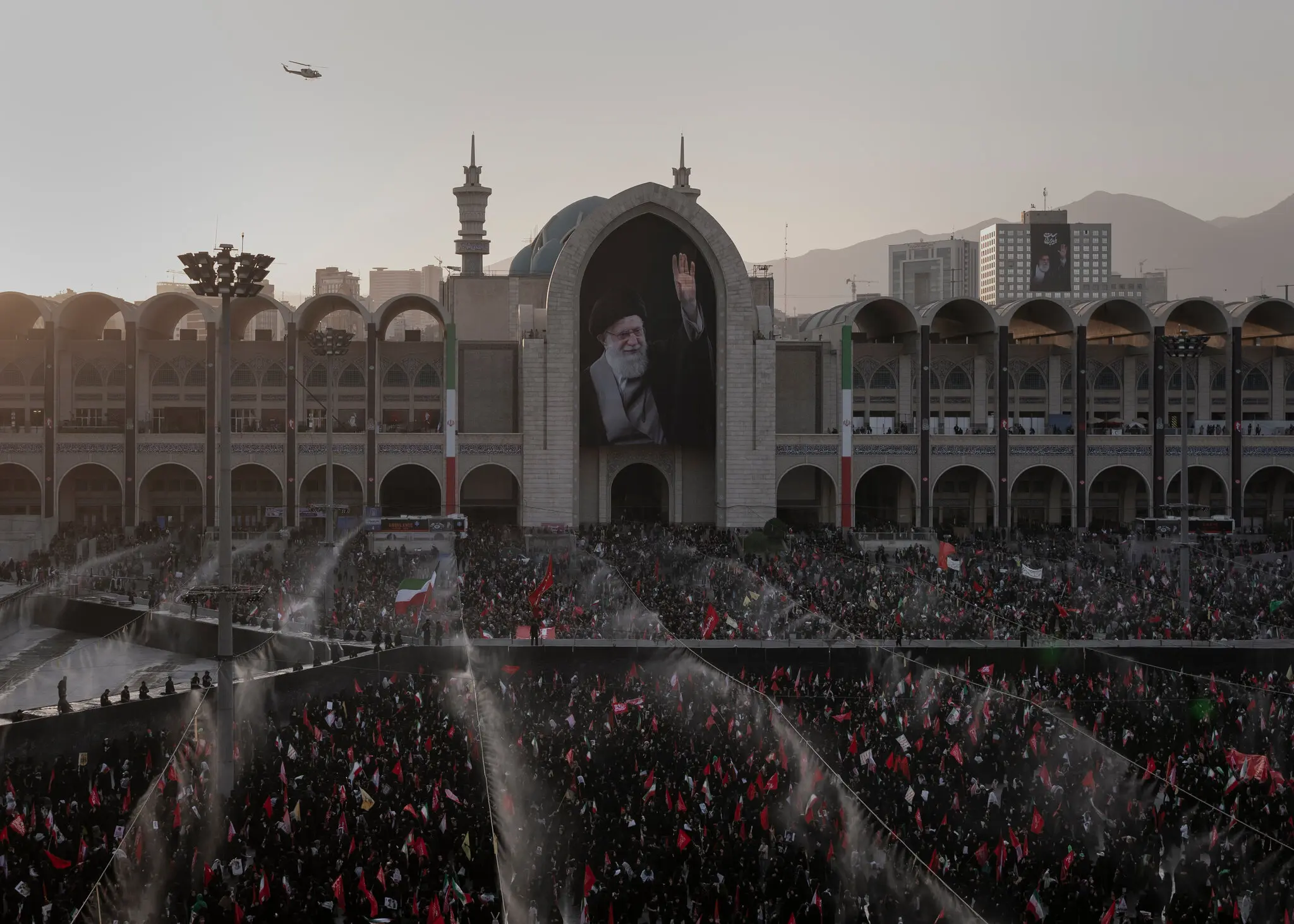
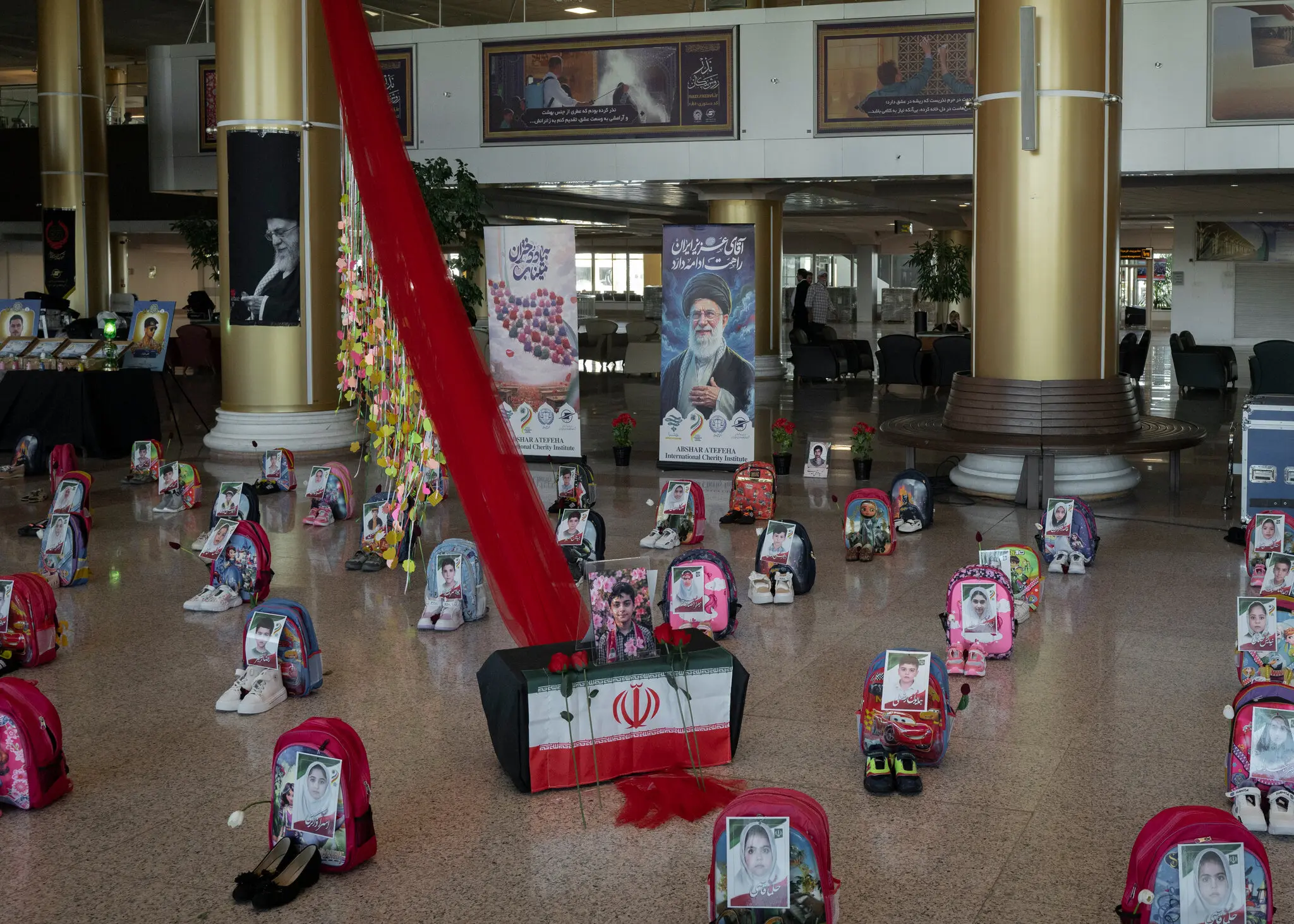
The symbolic setting for this struggle is difficult to overstate. Iran is going through a week of funeral ceremonies after the death of Ayatollah Ali Khamenei. The mourning has unfolded across several cities in Iran and Iraq, including Najaf and Mashhad, becoming not only a religious ritual but also a demonstration of the system’s resilience after a strike against its highest authority.
It was during these ceremonies that hard-line supporters began openly pressuring officials. Pezeshkian became the target of an aggressive crowd shouting curses at the “peacemaker.” Foreign Minister Abbas Araghchi was also attacked during the funeral events. In Iran’s political culture, these were more than street incidents: they signaled that the diplomatic wing is no longer fully protected even within the space of official mourning.
The attacks on the president and foreign minister showed how quickly internal polemics can turn into physical pressure. Government supporters are demanding arrests and accountability, but the problem is deeper than individual episodes. The hard-line camp is trying to impose a framework in which any dialogue with the United States becomes equivalent to betraying the memory of the fallen leader.
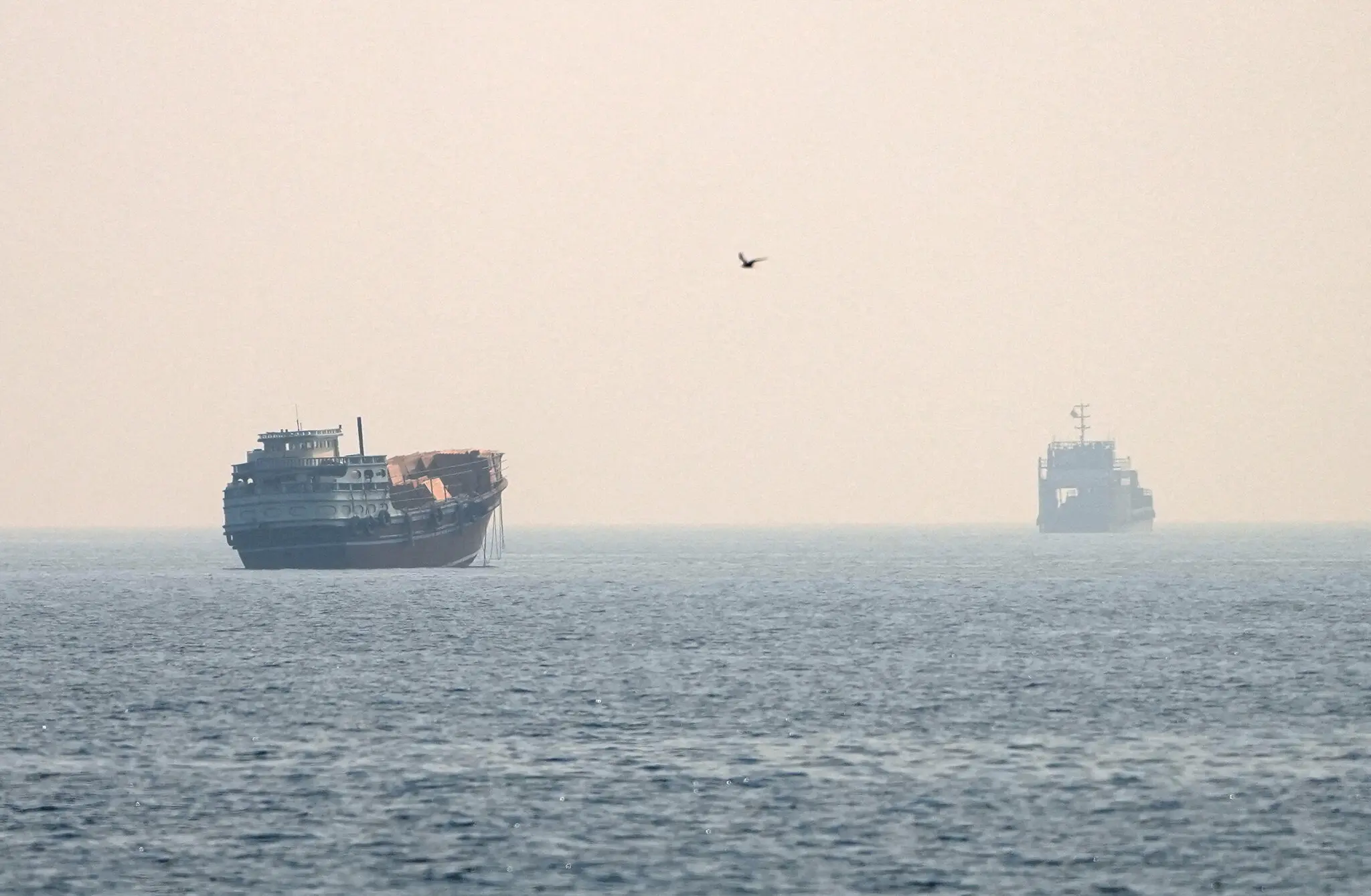
At the same time, fighting around the Strait of Hormuz again destroyed the fragile logic of the cease-fire. After attacks on commercial vessels, the United States struck targets along Iran’s southern coast. Tehran responded with ballistic missiles and drones aimed at American military sites in Kuwait and Bahrain. By Wednesday evening, the United States had attacked Iran again.
In that sequence, the most important question is not only who struck first in a particular episode. More significant is the fact that the cease-fire no longer functions as a restraint. It has become a space of mutual accusation, in which each side treats its own use of force as justified retaliation and the other side’s actions as proof of betrayal.
For Iran, the Strait of Hormuz has become the main instrument of pressure. Control over shipping routes gives Tehran leverage that reaches far beyond the battlefield. It affects oil prices, tanker insurance, gas delivery schedules and the economic confidence of U.S. allies in the Persian Gulf.
That is why the argument inside Iran is so fierce. Supporters of negotiation see diplomacy as a way to preserve sanctions relief, reduce the risk of a major war and keep the economic situation from spinning out of control. Hard-liners see the strait as proof that Iran finally has a real instrument of coercion and should not give it up under American pressure.
Pezeshkian and those around him are in a particularly difficult position. They cannot appear soft toward the United States after new strikes, but they also cannot abandon negotiations entirely without admitting the collapse of their own political line. The result is harsh rhetoric toward Washington combined with an effort to defend the principle of a diplomatic channel.
Yousef Pezeshkian, the president’s son and adviser, effectively stated the central argument of this camp: anger directed at Iran’s own officials serves the enemy. This was not merely a defense of his father or the government. It was an attempt to preserve internal unity at a moment when the hard-line camp is turning an external war into a tool of domestic pressure.
For the Islamic Revolutionary Guards Corps, the situation opens a different set of possibilities. Military escalation increases its political weight, while U.S. strikes strengthen the case against compromise. The more attacks and threats accumulate, the easier it becomes for hard-liners to argue that Washington does not keep its word and that negotiations only restrain Iran.
In this sense, the phrase about a man who does not honor his word or his signature captures the state of Iranian politics. Distrust of Trump is shared across factions, but the conclusions drawn from it are opposite. One side says negotiations must continue, but with harder terms and stronger guarantees. The other says that negotiations themselves were the mistake.
Iran’s problem is that both positions have their own logic. The diplomatic line is necessary to avoid economic suffocation and an uncontrolled war. The hard-line position draws on the experience of broken agreements and the real fear that concessions will only open the way to further pressure. That is why the split is not superficial; it touches the regime’s basic model of survival.
Khamenei’s death makes this choice even more dangerous. While the supreme leader was alive, his final word could settle a dispute or at least force factions into discipline. Now, during a transition of authority and the formation of Mojtaba Khamenei’s power, each faction is trying to shape the new line before it becomes fixed.
That explains the chaotic political signals from Tehran. On one side are threats of a severe response to American strikes. On another is the continued possibility of diplomacy. On a third are hard-line demands for the deal to be formally ended. The Iranian system is displaying strength, mourning, fear and a struggle over direction all at once.
For the United States, this internal split creates both temptation and risk. Washington may believe pressure will improve the negotiating position of the more pragmatic wing. But strikes on Iran often produce the opposite effect: they strengthen those who oppose negotiations and make compromise politically toxic.
For the region, the implications are broader still. If Iranian policy is increasingly shaped by factional competition, decisions about the Strait of Hormuz, strikes on U.S. bases or attacks on vessels may become less predictable. In such conditions, even a limited military move can be driven not by strategic necessity, but by the need to prove firmness to a domestic audience.
The most dangerous feature of the moment is that the external war and the internal struggle have begun reinforcing each other. American strikes give hard-liners new arguments. Their pressure narrows the room for negotiations. A narrower diplomatic space increases the likelihood of further strikes. In that closed circle, the cease-fire loses not only its practical function, but also its political one.
Iran’s leadership may still try to hold both lines at once — responding with force while keeping a channel for a deal open. But the longer the exchange of strikes continues, the less room remains for that dual strategy. After Khamenei’s funeral, the country will emerge not only from mourning. It will enter a new phase of struggle over what its war with the United States will become: controlled, diplomatically constrained, or finally handed to those who see the very idea of negotiation as defeat.