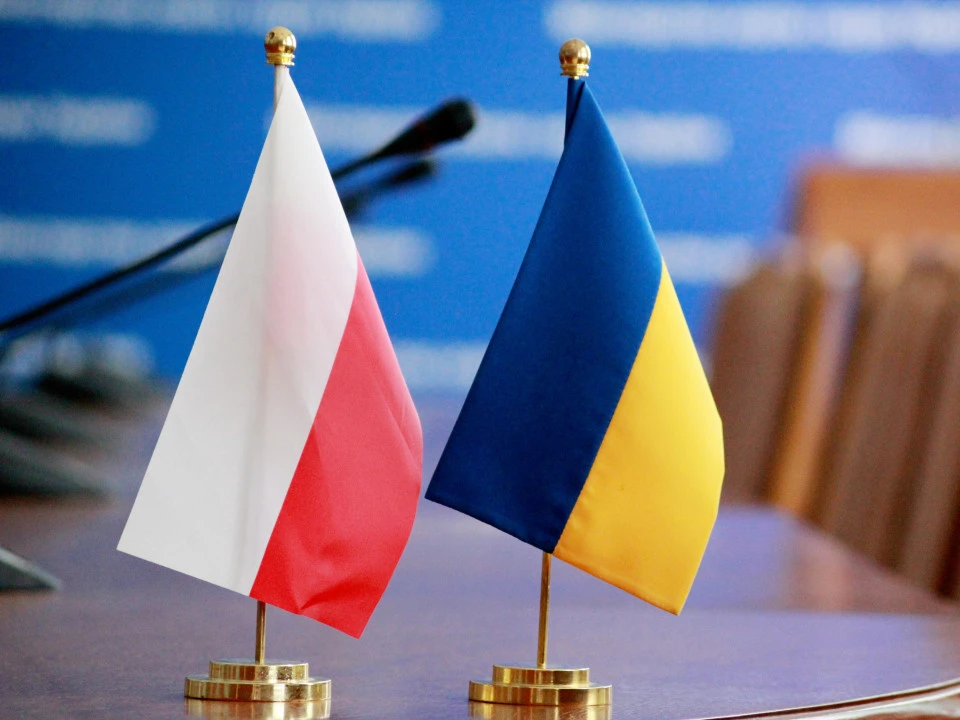














Volodymyr Zelensky’s decision to grant a Ukrainian combat unit an honorary name linked to the Ukrainian Insurgent Army was intended in Kyiv as an act of wartime remembrance. In Warsaw, it landed as a painful blow to historical sensitivity. What Ukraine read as a symbol of resistance to Moscow, Poland heard through the trauma of Volhynia.
Warsaw’s reaction was sharp. President Karol Nawrocki called for Zelensky to be stripped of the Order of the White Eagle, Poland’s highest state honor, which the Ukrainian president received in 2023. A dispute over the name of a military unit quickly became a crisis of political trust.
On the surface, this looks like a clash over one symbol. In reality, it reaches into a deeper knot: two national memories reading the same wounded territory of the 20th century in radically different ways — Volhynia, Galicia, underground warfare, Soviet occupation, Polish losses and Ukraine’s experience of statelessness.
According to Daycom’s assessment, the current dispute is dangerous precisely because it has erupted not between enemies, but between allies. Poland remains one of the essential rear bases of Ukraine’s resistance to Russia, yet historical memory in Polish politics has long had the power to slow even strategically obvious decisions.

For Ukraine, the UPA often represents anti-Soviet resistance and the struggle for independence at a time when Ukrainian statehood was crushed between empires. In a country again fighting Moscow, that line of memory has gained new force: the emphasis falls on resistance, sacrifice and continuity.
For Poland, the UPA carries a darker center of gravity. Polish historical memory links it above all to the Volhynia massacres of 1943–1945, when tens of thousands of Polish civilians were killed. In Poland’s political and historical canon, those events are often defined as genocide aimed at removing the Polish presence from territories where postwar Polish and Ukrainian claims could collide.
Kyiv does not accept that legal formula as the only frame for the entire history. The Ukrainian position stresses the complexity of the Polish-Ukrainian conflict, reciprocal violence, the deaths of Ukrainians in reprisal actions and the impossibility of reducing the whole UPA experience to Volhynia alone. But this is exactly where the central problem lies: what one side sees as a symbol of liberation, the other still sees as a sign of mass murder.
Operation Vistula in 1947 adds another layer to the dispute. After the war, Poland’s communist authorities forcibly resettled about 140,000 Ukrainians and Lemkos from southeastern Poland to former German territories. The official aim was to cut underground support networks, but in Ukrainian memory it became a trauma of ethnic cleansing and collective punishment.
That is why the Polish-Ukrainian historical conflict has no simple moral structure in which one side only remembers and the other only denies. Both nations carry experiences of loss, deportation, fear and violence. The difference lies in which events became central to national identity, and which remained peripheral, uncomfortable or politically dangerous.
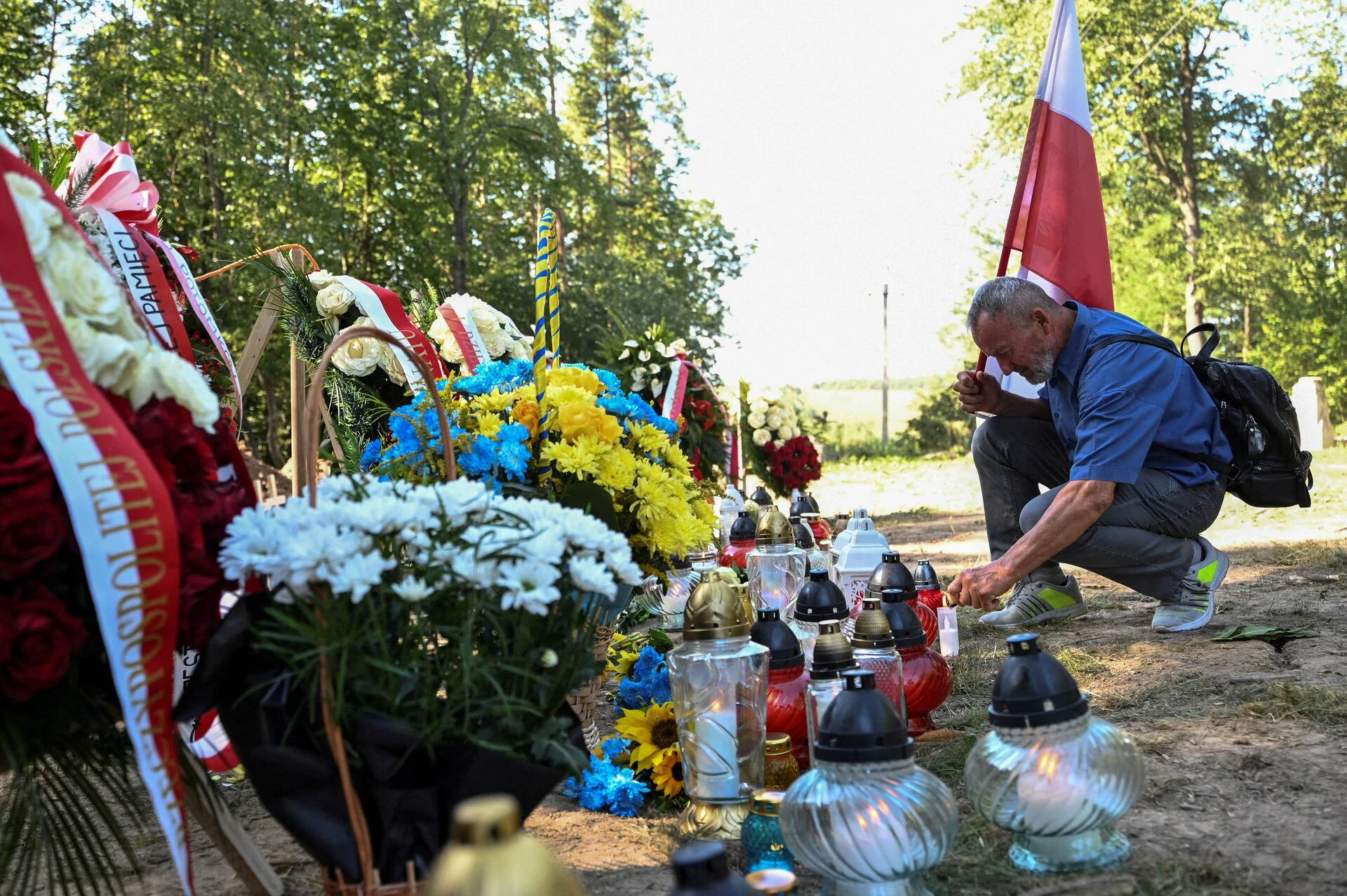 Чоловік із польським національним прапором із гербом запалює свічку на місці масового поховання поляків, убитих українськими націоналістами під час Другої світової війни, у колишньому польському селі Пузники Тернопільської області, Україна, 6 вересня 2025 року — Анастасія Смолієнко
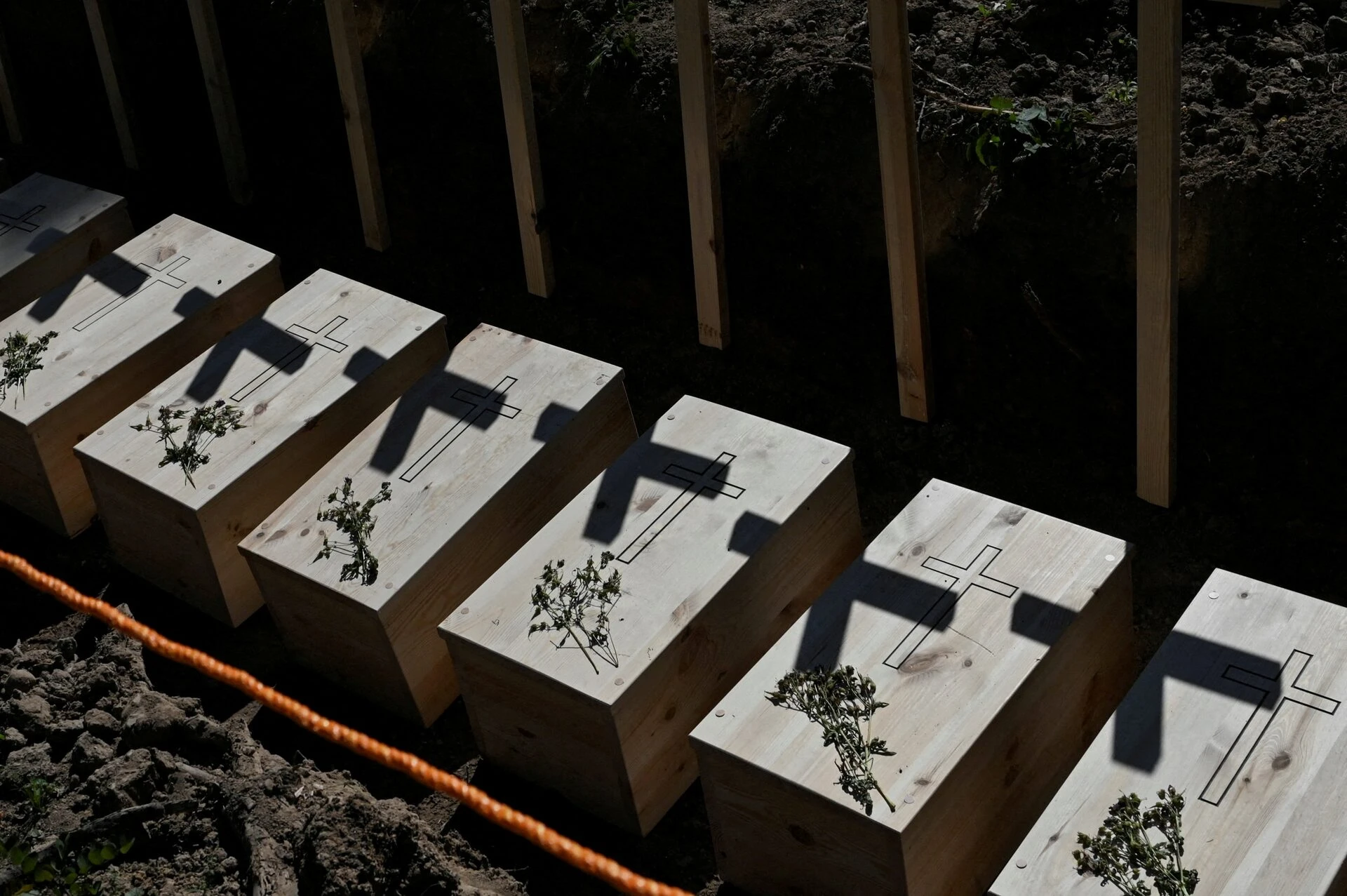
In recent years, Kyiv and Warsaw had tried to move the dispute from declarations into practical work with graves. Exhumations, searches for remains, identification of victims and dignified burials were meant to be more than a technical process. They were a way to return a human dimension to a conversation too often trapped in slogans.
That is why the new surge of tension feels especially painful. Just as slow work with burial sites, names and families had begun, a political gesture raised the temperature again. For Poland, without exhumations, identification and funerals, any Ukrainian commemoration of the UPA can look like a refusal to see Polish suffering.
Ukrainian diplomacy has tried to lower the tension, stressing that the unit’s name carried no anti-Polish intent and reflected the choice of soldiers now fighting Russia. That argument matters, but it does not erase another truth: symbols live not only in the intention of those who use them, but also in the memory of those who hear them.
Nawrocki, a historian and conservative politician, used the moment within a broader domestic Polish frame. Fatigue in parts of Polish society over the war, the presence of many Ukrainians and the costs of supporting Kyiv has created ground on which historical disputes can easily become tools of current politics.
This does not mean Polish pain is artificial. It is real and deep. But the political use of that pain can quickly cross a line, turning the memory of victims from a path toward reconciliation into a weapon against a present-day ally. In such a scenario, Moscow benefits most, because every split between Kyiv and Warsaw weakens Europe’s eastern flank.
Ukraine also has a lesson to draw. The wartime mobilization of memory gives strength, but it demands precision. Honoring anti-Soviet resistance without sensitivity to the Polish tragedy inevitably carries a diplomatic cost. A country moving toward the EU and NATO must speak about its own history without denying the graves of others.
Poland’s lesson is no less difficult. Supporting Ukraine cannot mean abandoning its own memory, but memory must not become a lever for blocking Ukrainian security. If Volhynia, the UPA and exhumations become conditions for Ukraine’s strategic isolation, that will be a victory not for historical truth, but for geopolitical shortsightedness.
The way out of this crisis does not lie in symbolic punishment. It lies in joint commissions, open archives, new exhumations, dignified burials, precise language and a refusal of convenient myths. Poland needs recognition of its pain. Ukraine needs understanding of its anti-imperial experience. Both countries need an alliance strong enough not to collapse every time the past returns to politics.
The dispute over the Order of the White Eagle has shown the central fact: Polish-Ukrainian relations cannot be built only on a shared fear of Russia. That alliance will be durable only if it can withstand not just war, but the truth about its own history — incomplete, painful, mutual and necessary.