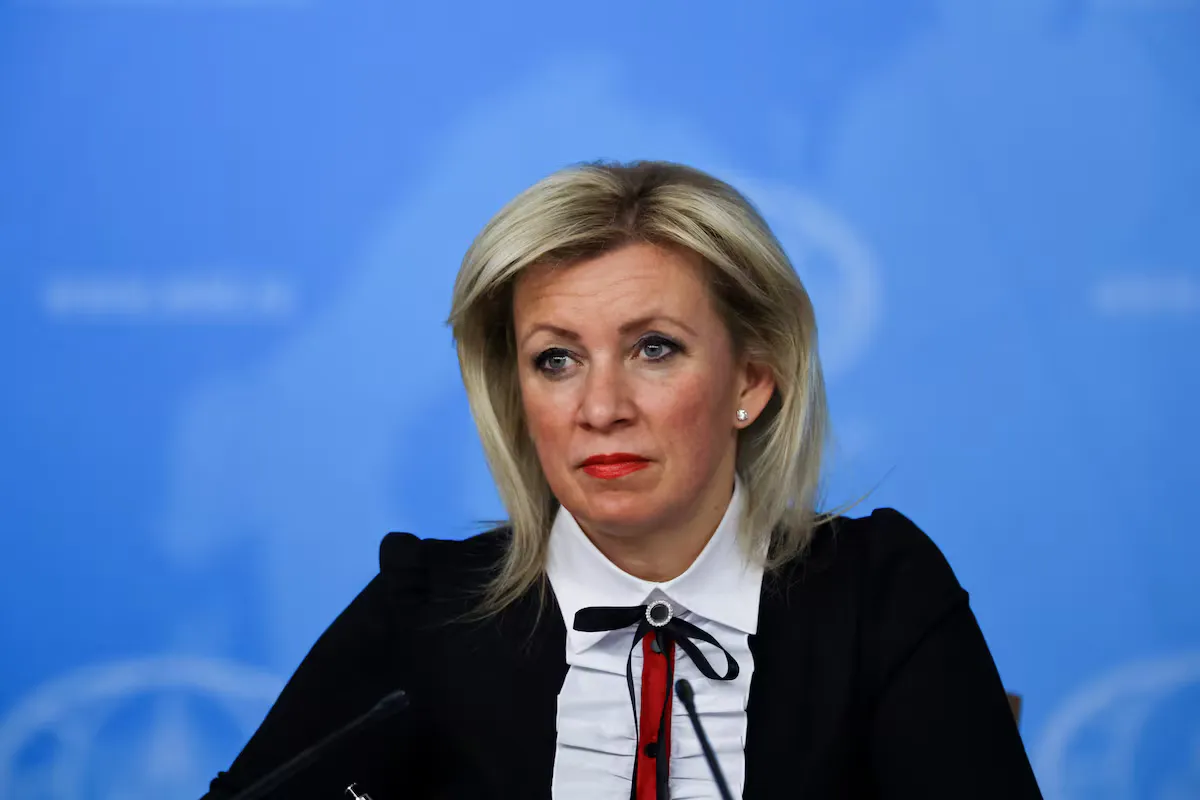






















Moscow is increasingly trying to shift responsibility for Ukrainian long-range strikes away from Kyiv and onto Washington. Sergey Lavrov says Russia has formally asked the US State Department to explain what Moscow describes as American involvement in attacks deep inside Russian territory.
The accusation centers on intelligence support. Lavrov argues that US assistance goes far beyond conventional military aid and extends into the preparation and execution of strikes. Moscow has not publicly produced evidence establishing that degree of direct American operational involvement.
At the same time, Lavrov threatened to make Russian methods “much tougher” in order to destroy Western supplies feeding Ukraine’s armed forces. The diplomatic accusation is therefore paired with a military signal: the Kremlin wants Western weapons to be seen not simply as aid to Ukraine, but as components of a broader war against Russia.
As Daycom has previously assessed, this is the central purpose of the argument. Moscow is not merely protesting Western support for Ukraine. It is trying to widen the political and psychological definition of who is participating in the war, so that a Ukrainian strike on a strategic Russian target can be presented as an American or NATO action.
That framing offers the Kremlin an obvious domestic advantage.
If Ukraine can independently strike Russian refineries, ports, storage facilities, military airfields and logistics hubs hundreds of kilometers from the front, that undermines the image of Moscow controlling the escalation ladder.
If those same attacks can instead be explained through American intelligence, technology and coordination, the political picture changes.
Russia is then no longer simply failing to shield its own territory from Ukraine.
It can claim to be confronting the military system of the most powerful Western state.
That distinction matters increasingly for the Russian public.
The war, now in its fifth year, is reaching more deeply into everyday life inside Russia. Drones strike energy infrastructure, ports and industrial facilities. Fuel disruptions raise transportation costs, while air-raid alerts reach regions that once experienced the war mainly through television.
Under those conditions, the Kremlin needs an explanation that makes the scale of the threat appear understandable while reducing the political cost of its own vulnerabilities.
The United States fits that role almost perfectly.
For years, Russian authorities have promoted the idea that the country is not really fighting Ukraine, but the West through Ukraine. Every successful long-range strike now allows that abstract claim to be made more concrete.
There is, however, a fundamental difference between military assistance and direct participation in an operation.
The United States and other Ukrainian allies provide weapons, ammunition, air-defense systems, technology and intelligence. But the existence of that support does not by itself prove that Washington selects a specific target or plans a particular Ukrainian strike.
That distinction is precisely what Moscow is now trying to blur.
And the effort matters for more than propaganda.
If the Kremlin can establish politically that Western intelligence is an operational component of attacks on Russian territory, it gains a broader argument for defining additional infrastructure as “involved in the war.”
That is the logic behind Lavrov’s warning that Russia will intensify efforts to destroy everything that “fuels Kyiv’s war machine from the West.”
The wording is intentionally broad.
It can encompass arms depots, logistics centers, railway junctions, repair facilities, energy infrastructure and almost any other site Moscow chooses to associate with Western military support.
In effect, the Kremlin is preserving room for escalation without clearly defining in advance where that escalation ends.
The message works in two directions.
The first is aimed at Ukraine: continued deep strikes into Russia may be met with even harsher attacks on Ukrainian infrastructure.
The second is aimed at Washington.
The Kremlin wants the United States to believe that expanding support for Ukraine increases the risk of a direct collision between major powers.
This has been one of Russia’s most persistent strategies throughout the war — placing Western assistance beneath a permanent shadow of a supposedly approaching “red line.”
The difficulty for Moscow is that many of those lines have already been crossed.
Ukraine has received more advanced air-defense systems, longer-range weapons, tanks, modern combat aircraft and other capabilities once described as dangerously escalatory. Russia responded with strikes and threats, but a direct NATO-Russia war did not follow.
That has gradually reduced the persuasive force of Russian warnings.
To restore their weight, the Kremlin has to raise the rhetorical threshold.
The argument is no longer merely that Western deliveries are dangerous. It is that the United States may be directly involved in organizing attacks on Russian territory.
The change in language comes as the geographic reach of Ukrainian strikes is expanding in practice.
Russian refineries, fuel logistics, Black Sea terminals and other strategic facilities are increasingly under pressure. For Moscow, the consequences are not only military but economic.
Strikes on energy infrastructure are already affecting refining, fuel exports, domestic freight costs and the operation of major ports.
That makes the question of Western support for such attacks far more sensitive for the Kremlin.
When a strike is mainly symbolic, Moscow can describe it as terrorism and move on.
When repeated attacks begin to affect the functioning of an industry, the problem becomes strategic.
At that point, shifting the discussion from the effectiveness of Ukraine’s campaign to alleged American responsibility becomes politically useful.
Another part of Lavrov’s remarks concerned diplomacy.
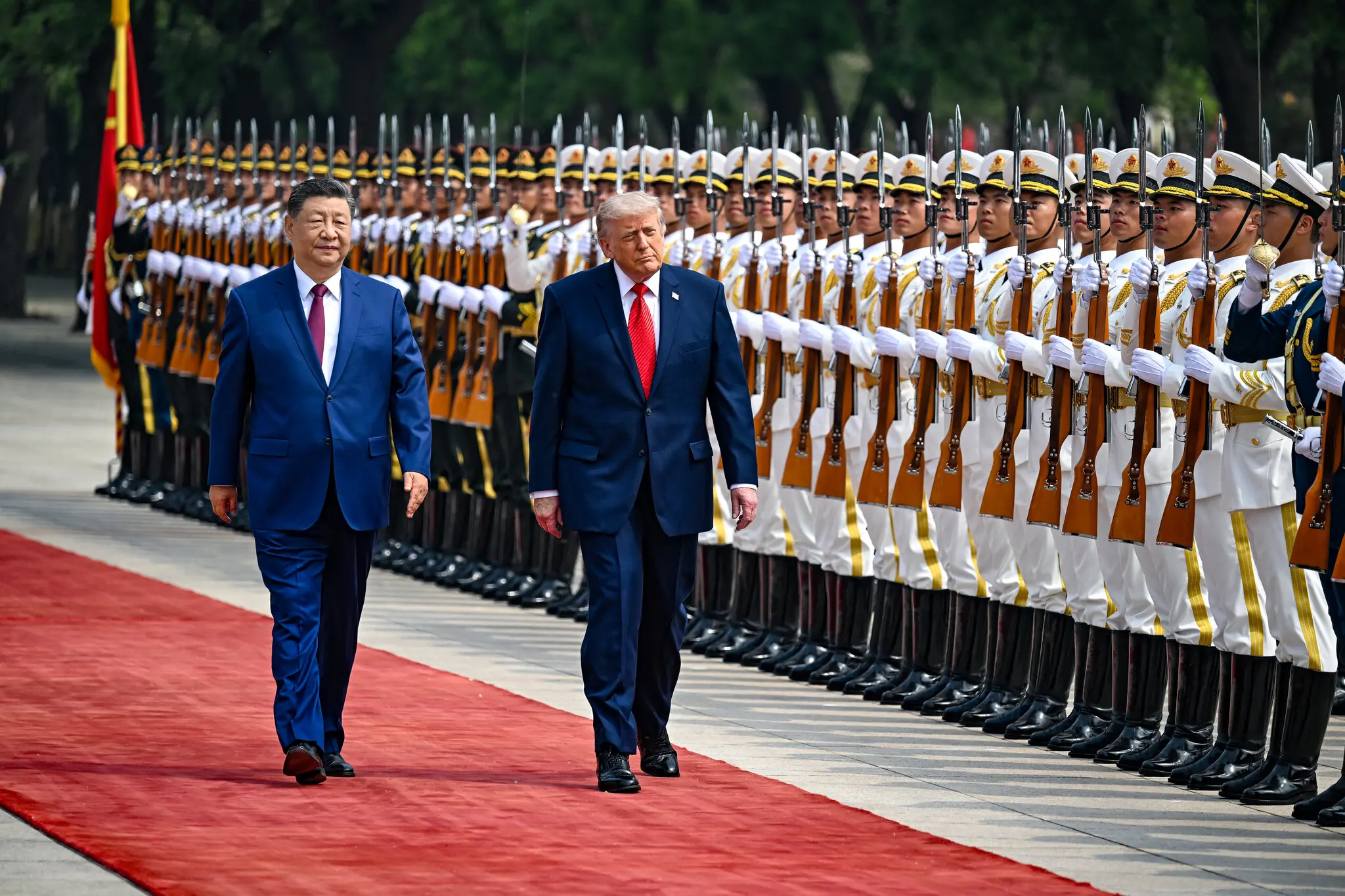
He returned to Vladimir Putin’s conversation with Donald Trump a year earlier and portrayed the Russian president as having been prepared to accept US peace proposals, while saying that some issues still required compromise.
Washington has previously rejected that interpretation.
Marco Rubio’s position has been straightforward: no agreement was reached; if one had been reached, the war would already be over.
That contradiction reveals another important feature of the current moment.
Moscow wants to present itself simultaneously as a government open to negotiations and a state prepared to intensify military pressure.
Within the Kremlin’s logic, those positions are not contradictory.
They reinforce each other.
Russia wants negotiations to take place against a constant background of military pressure. The diplomatic channel may remain open, but its content is shaped by battlefield leverage and by each side’s capacity to impose costs on the other.
Lavrov also left open the possibility of renewed contact with Trump’s envoys.
Putin, he said, would be prepared to receive them again.
But the revealing phrase came at the end: the question is what they would be “bringing with them.”
That sentence captures Moscow’s position.
Russia is not rejecting talks as such. It doubts that Washington will offer a package consistent with Russian demands.
Since peace contacts broke down in February, the diplomatic track has effectively frozen.
The war itself has continued to evolve.
Ukraine is expanding its long-range strike capabilities and trying to move more of the economic cost of the war onto Russian territory. Russia continues missile and drone attacks, applies pressure at the front and seeks to destroy Western-supplied systems before they can be used.
Against that backdrop, the accusations against the United States carry particular significance.
They may be less a preparation for direct confrontation with Washington than part of a new struggle over the boundaries of what outside support is supposed to permit.
Moscow wants to narrow the space in which Western governments can help Ukraine without considering themselves direct parties to the war.
Kyiv has the opposite interest.
For Ukraine, intelligence, technology and military assistance from partners remain essential tools for offsetting Russia’s larger resource base.
For Moscow, that support is one of the reasons the war cannot be reduced to a bilateral contest with a weaker neighboring state.
That is the strategic dispute hidden beneath Lavrov’s language.
The issue is not only who provided coordinates.
Nor is it only who supplied the weapon.
The deeper question is who has the right to help Ukraine impose inside Russia the costs of a war Moscow once assumed it could keep largely outside its own borders.
The more often Russian infrastructure is disrupted by Ukrainian attacks, the more insistently the Kremlin will try to convince both its own population and the outside world that it is fighting Washington, not Kyiv.
That framing helps explain failures, justify further escalation and pressure Western governments through fear of direct confrontation.
But it also carries a dangerous reverse effect.
The more frequently Moscow describes the United States as an actual participant in attacks, the more difficult it becomes to preserve the deliberately blurred line between political threat and genuine expansion of the conflict.
That is why Lavrov’s latest move should not be read as a routine diplomatic complaint.
It is an attempt to redraw the map of responsibility for the war.
Russia wants every successful Ukrainian strike deep inside its territory to be interpreted as evidence of direct Western participation.
Ukraine is trying to establish the opposite principle: Russian territory is no longer an untouchable rear area, and the war launched by the Kremlin carries a material cost inside Russia itself.
The contest between those two interpretations is likely to become one of the most important political battle lines of the next phase of the war.