



















Seoul’s Defence Ministry delivered the assessment to South Korean lawmaker Yu Yong-weon as speculation intensified over the next stage of North Korea’s involvement in Russia’s war. Military intelligence believes Pyongyang retains the capability and preparations required for further deployments, even if the final operational phase has not begun.
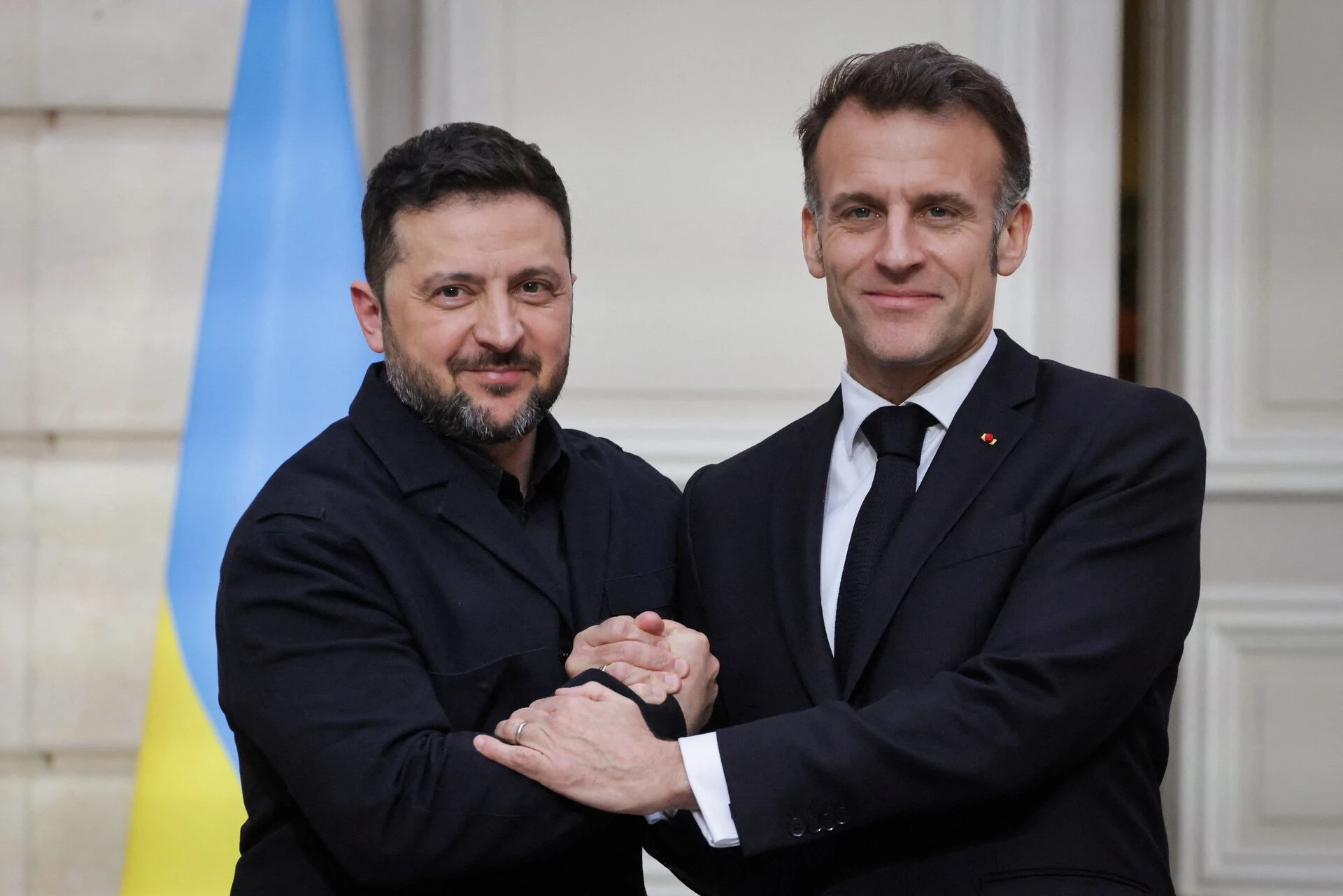
The finding followed a claim by Ukrainian President Volodymyr Zelenskyy that North Korea could send as many as 50,000 additional troops to Russia. Kim Yo Jong, the powerful sister of leader Kim Jong Un, rejected that figure, calling the Ukrainian assertion groundless.
The argument is no longer about whether North Korean soldiers have fought for Russia at all. In April 2025, Pyongyang publicly acknowledged for the first time that Kim Jong Un had ordered troops to assist Russian forces in the Kursk region, ending months of official ambiguity surrounding their presence.
Daycom’s analysis of verified public information indicates that another North Korean troop deployment to Russia would be only one part of a much larger exchange. Moscow receives manpower, ammunition and missiles; Pyongyang gains battlefield experience, technical feedback and data that peacetime testing cannot fully reproduce.
South Korea’s Defense Intelligence Agency estimates that more than 16,000 North Korean personnel may have been dispatched to Russia since the autumn of 2024. A substantial share of those forces was involved in fighting in the Kursk region as Moscow sought to push Ukrainian troops out of Russian territory.
Earlier Ukrainian and Western estimates had generally put the force at around 14,000 when later reinforcements were included. Russia and North Korea initially avoided confirming the deployment, but both eventually began openly celebrating the role of North Korean troops in the Kursk campaign.
For the Korean People’s Army, the deployment offered something unusually valuable: direct exposure to a modern, high-intensity battlefield. North Korean soldiers encountered mass FPV-drone attacks, electronic warfare, persistent aerial surveillance and artillery operations linked closely to unmanned reconnaissance.
The human contribution, however, may be smaller than North Korea’s importance as an ammunition supplier. South Korean intelligence now estimates that Pyongyang has provided Russia with more than 15 million artillery rounds when different types of ammunition are converted into 152mm-shell equivalents.
That figure does not mean every item delivered was a standard 152mm projectile. Seoul uses the calibre as a common measure for estimating a broader range of ammunition shipments. Even with that qualification, the total illustrates how deeply North Korean production has become embedded in Russia’s war of attrition.
Pyongyang has also continued supplying weapons systems, including short-range ballistic missiles. This part of the relationship may have the most lasting consequences because South Korean intelligence believes combat use in Ukraine has helped North Korea improve the accuracy and reliability of some missile designs.
Ukrainian officials had previously reported a marked improvement in the performance of certain North Korean missiles after their initial use. Some later strikes were assessed to have landed roughly 50 to 100 metres from their intended targets, a substantial improvement over the wider errors observed in earlier launches.
Public evidence remains insufficient to isolate the cause of those gains. Seoul’s latest assessment points instead to a combination of battlefield data, Russian technical advice and possible component support. Together, those factors could allow engineers to identify weaknesses far more quickly than through controlled testing alone.
For South Korea, that matters much more than the replenishment of Russian missile stocks. Systems such as the KN-23 were developed primarily with the Korean Peninsula in mind. Any improvement achieved through attacks on Ukraine could therefore strengthen weapons intended to threaten South Korean and US military facilities in Asia.
South Korea’s Defence Ministry also believes development of several North Korean ballistic missiles and multiple-launch rocket systems intended for a possible conflict on the peninsula is approaching completion. That progress is now occurring alongside a level of military cooperation with Russia that did not exist before the invasion of Ukraine.
One system receiving particular attention is the Hwasong-12 intermediate-range ballistic missile. According to Seoul’s assessment, North Korea is preparing it for operational deployment. Its range is sufficient to threaten Guam, a major US military hub in the western Pacific and a critical base for American forces in the region.
The assessment of North Korea’s intercontinental ballistic missiles remains more cautious. Seoul believes Pyongyang has demonstrated flight performance consistent with the ability to reach the continental United States, but several critical technologies, including reliable warhead re-entry, have not been independently verified.
Part of the uncertainty stems from North Korea’s testing pattern. Its intercontinental missiles have generally been fired on steep, lofted trajectories, allowing them to reach extreme altitude while landing relatively close to the Korean Peninsula. Such tests do not reproduce every stress involved in a normal-range intercontinental flight.
That is why the possibility of Russian technical assistance carries significance far beyond Ukraine. Moscow possesses decades of experience with long-range missile propulsion, guidance systems and re-entry technology — precisely the areas in which North Korea has sought to close remaining gaps in its strategic weapons programme.
There is no public evidence that Russia has transferred the complete package of such technologies to Pyongyang. Western governments have nevertheless warned for years that closer military ties could involve Russian technical assistance in exchange for the ammunition, missiles and manpower North Korea provides for the war.
The political framework for that relationship was formalised in June 2024, when Vladimir Putin and Kim Jong Un signed a comprehensive strategic partnership treaty. Its mutual-assistance provisions created a foundation for military cooperation that went considerably further than the political declarations that had characterised earlier ties.
North Korea later invoked that agreement when explaining why its troops had been sent to the Kursk region. The treaty had therefore moved from diplomatic symbolism to operational reality: Russia gained foreign soldiers and large quantities of ammunition, while Pyongyang obtained direct access to a major war.
By August 2026, the language surrounding the partnership had become more explicit. Russian officials openly praised North Korean troops for their battlefield role, while both governments increasingly portrayed their relationship not as a temporary wartime arrangement but as a long-term strategic alignment.
Kim Yo Jong’s denial of a 50,000-strong new deployment should therefore not be read as a rejection of military cooperation with Moscow. North Korea has already acknowledged previous deployments, honours the soldiers involved and makes no attempt to conceal the wider strategic relationship with Russia.
The central question is instead when Moscow might request another contingent and what mission it would perform. Seoul’s conclusion that no deployment appears imminent means only that the final signs of movement have not been observed. It does not indicate that preparations have stopped or that Pyongyang has ruled out sending more forces.
For Ukraine, additional North Korean troops would give Russia another source of manpower. For South Korea, the longer-term implications are different: every rotation through the war can return soldiers with practical experience of drone warfare, artillery fire, assault operations and survival on a battlefield under near-continuous observation.
The same feedback loop applies to missiles. Every North Korean weapon launched in Ukraine can generate data on accuracy, component failures, navigation, electronic interference and performance against real defensive systems. For weapons designers, such information can be more valuable than a succession of carefully controlled test launches.
This is why the Russia-North Korea relationship is increasingly difficult to describe as one-way assistance to Moscow. Russia receives resources it needs to sustain the current war, while North Korea gains an opportunity to refine armed forces and weapons that could eventually be used in an entirely different conflict.
The exchange of shells and soldiers for combat experience, technology and technical feedback links two security theatres that were once treated largely separately. A further North Korean deployment to Russia would therefore matter not only on the Ukrainian battlefield, but also in the longer contest over military power in Northeast Asia.