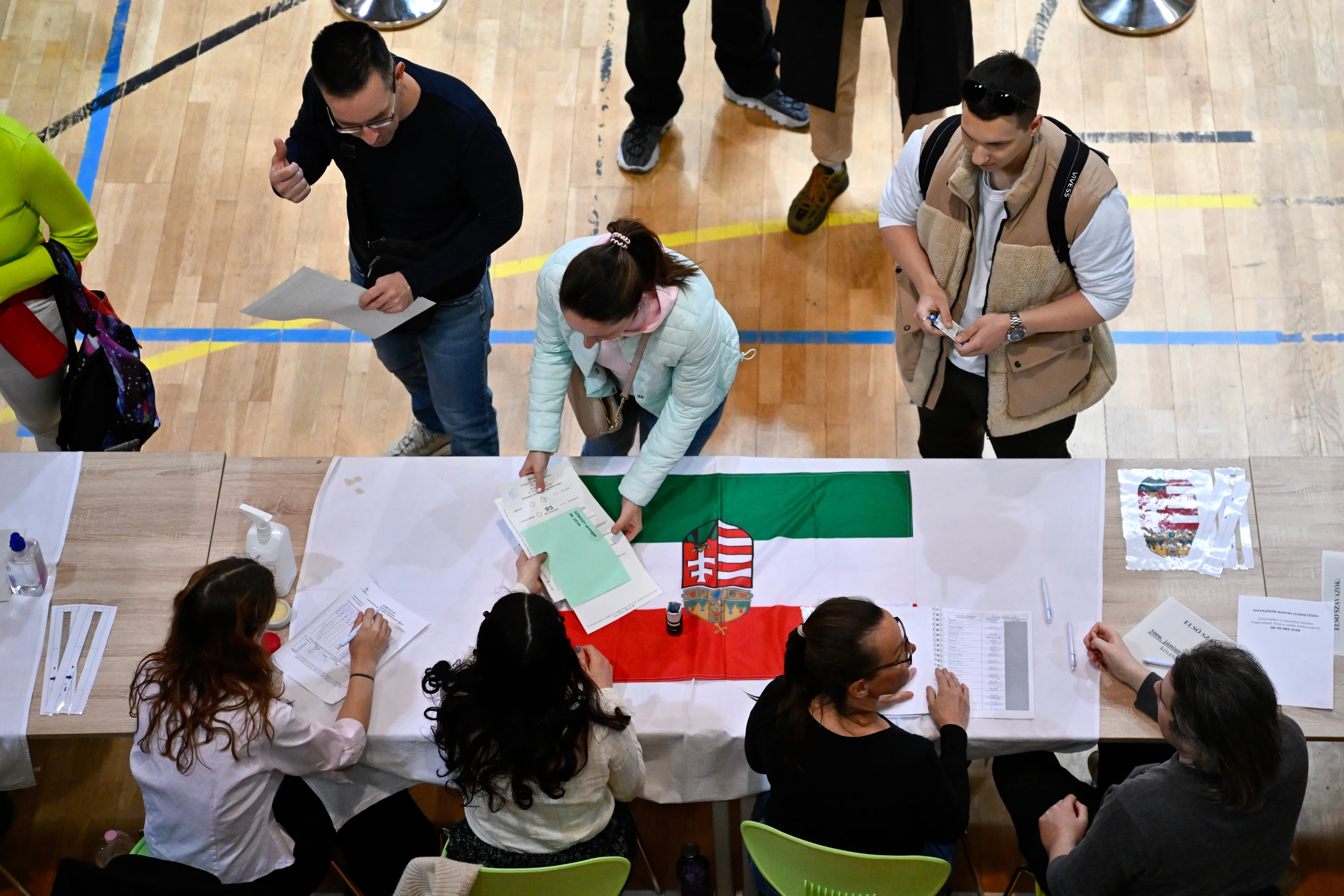
















Hungary is voting in an election that long ago ceased to be a purely domestic event. By mid-afternoon, turnout had reached roughly 66 percent, a record for the country’s post-communist era and a sign that this was not being treated as a routine trip to the ballot box, but as a defining test for the political system itself.
For Viktor Orbán, these are the most dangerous elections in years. After sixteen years of uninterrupted rule, he is approaching the finish not as an unquestioned favorite, but as a leader facing a challenger with a credible chance of shaking the system he built. That challenger is Péter Magyar, a former insider who has turned corruption, decaying public services and exhaustion with one-party dominance into the central language of the campaign.
But the day’s real significance lies not only in voter mobilization. High turnout has come together with growing doubts about the integrity of the process. As Daycom noted in its earlier assessment, this election is becoming not only a contest between Orbán and Magyar, but a test of confidence in the electoral system itself.
When record participation coincides with a wave of claims about misconduct, the struggle shifts. It is no longer only about seats in parliament. It is also about the legitimacy of the result that emerges from the count. In Hungary, where power has long rested on a mix of electoral dominance, media control and the cultivated sense that the outcome is ultimately preordained, that question carries unusual weight.
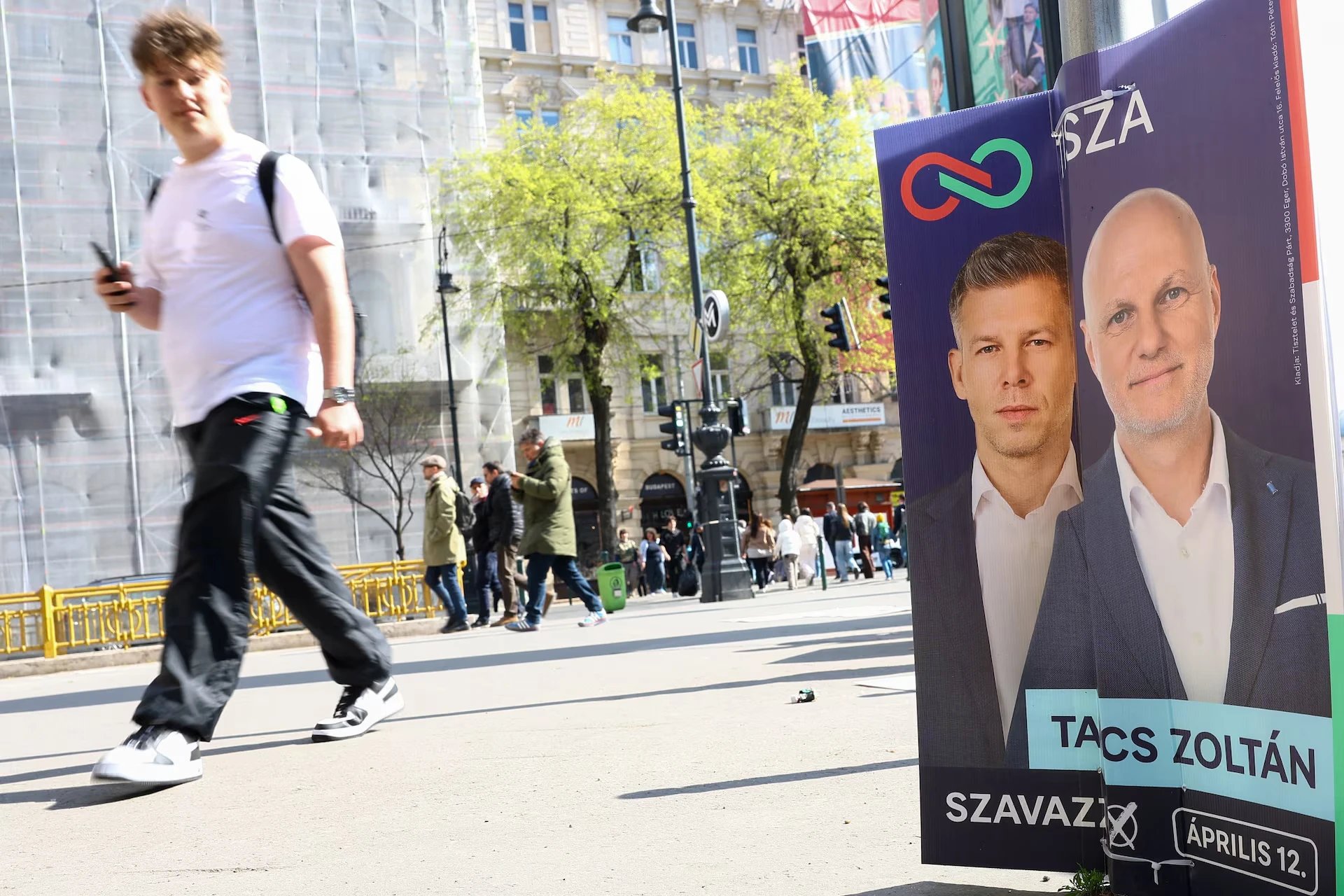 Чоловік проходить повз передвиборчий плакат партії «Тиса», на якому зображені лідер партії Петер Мадяр та член партії Золтан Танач напередодні парламентських виборів на вулиці в Будапешті, Угорщина, 11 квітня 2026 року — Лісі Ніснер
The most explosive episode of the day has centered on suspicions of outright vote-buying. Hungarian media published an audio recording and video material pointing to a scheme involving gift cards worth 10,000 forints allegedly distributed in exchange for support for Fidesz. At the center of the story is István Jakab, the head of the Roma local self-government in Cegléd. According to the published reports, Penny gift cards were handed out in Kerepes and Cegléd, and remarks captured on camera linked them directly to voting for the ruling party.
There is, for now, no public conclusion from any official investigation. But that has not prevented the case from becoming one of the central stories of election day. In a tense political environment, evidence does not have to be judicially finalized before it begins shaping public perception. Once a campaign is already saturated with distrust, even a partially documented scandal can alter the emotional atmosphere of the vote.
A second layer of suspicion has come from warnings about possible Russian interference. Hungarian media and analysts have pointed to structures allegedly tied to the Russian state that may have been working in ways favorable to Orbán’s continued rule. European politicians, even before voting began, had already been urging Brussels to pay closer attention to the risks of foreign influence, disinformation and pressure on the electoral process. In that setting, every domestic allegation immediately acquires a wider geopolitical meaning.
That wider meaning matters because Orbán is no ordinary incumbent. He is not simply Hungary’s prime minister, but one of the best-known symbols of illiberal politics inside the European Union. For his supporters, he represents proof that a government can fight Brussels, tighten control over institutions and still retain electoral legitimacy. For his critics, he embodies the danger of a system that preserves the form of democracy while steadily narrowing its substance. Any sign of manipulation therefore resonates far beyond Hungary’s borders.
At the same time, the informational field in Hungary has filled with other allegations as well, from claims of organized transport of voters to complaints about breaches of ballot secrecy. Yet the most publicly documented and detailed stories so far remain the reports about vote-buying and the broader warnings of interference. That distinction matters. Election days often generate a flood of accusations, but only some of them arrive with enough material to shape the political narrative before the polls even close.
It is telling that both Fidesz and Tisza had already created their own channels for reporting irregularities before election day. That alone says something important about the atmosphere in which the country voted. Both camps were preparing not only to compete, but to contest the moral standing of the other side. In such a climate, elections become more than a mechanism of representation. They become a struggle over who gets to claim democratic legitimacy afterward.
This is why Hungary’s vote now reads as something much larger than a familiar duel between government and opposition. For Orbán’s camp, it is a chance to show that the illiberal model he built can still reproduce itself through the ballot box. For his opponents, it is the first serious opportunity in years not only to challenge the government, but to undermine the deeper sense of inevitability on which Orbánism has relied for so long.
As the country records extraordinary turnout, the central question is beginning to shift. It is no longer only who will win more votes. It is whether the final result will be accepted as clean, persuasive and politically sustainable — inside Hungary, in Brussels and among the international allies who have long treated Orbán not simply as a national leader, but as a political symbol of a much wider ideological project.
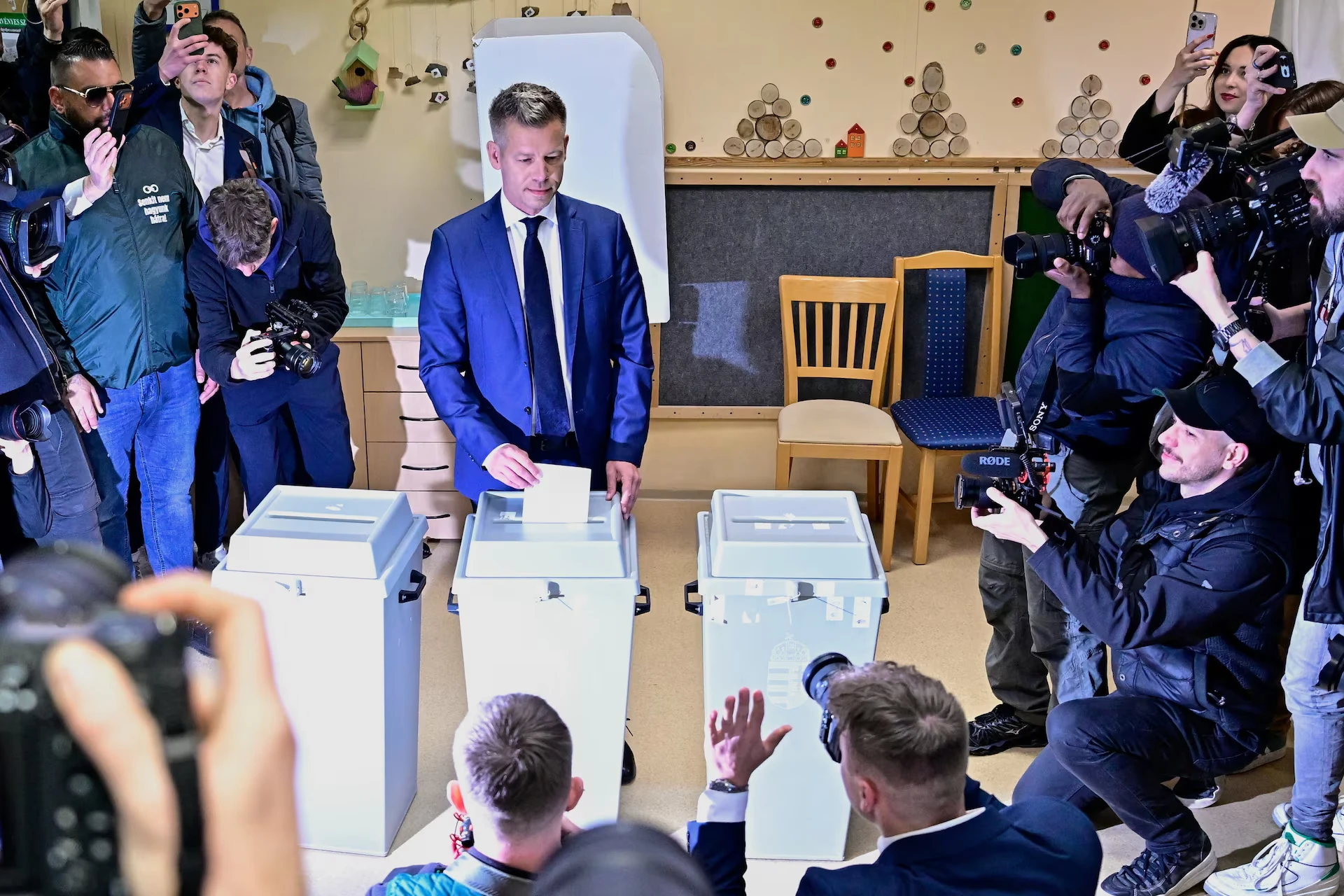 Петер Мадяр, лідер опозиційної партії «Тиса», голосує під час парламентських виборів у Угорщині в Будапешті, Угорщина, 12 квітня 2026 року — Леонхард Фоегер