





















Moscow said on August 15 that Russian troops had taken control of 19 settlements in the Dnipropetrovsk and Zaporizhzhia regions during their summer campaign. It did not provide a full list of the locations, making it difficult to match the headline figure against specific changes along the front.
The claim came only days after Ukraine announced the results of its own operations across a broad stretch of the southeastern battlefield. Kyiv says Ukrainian forces have retaken 745 square kilometres since the start of the year and restored control over 26 settlements in the region.
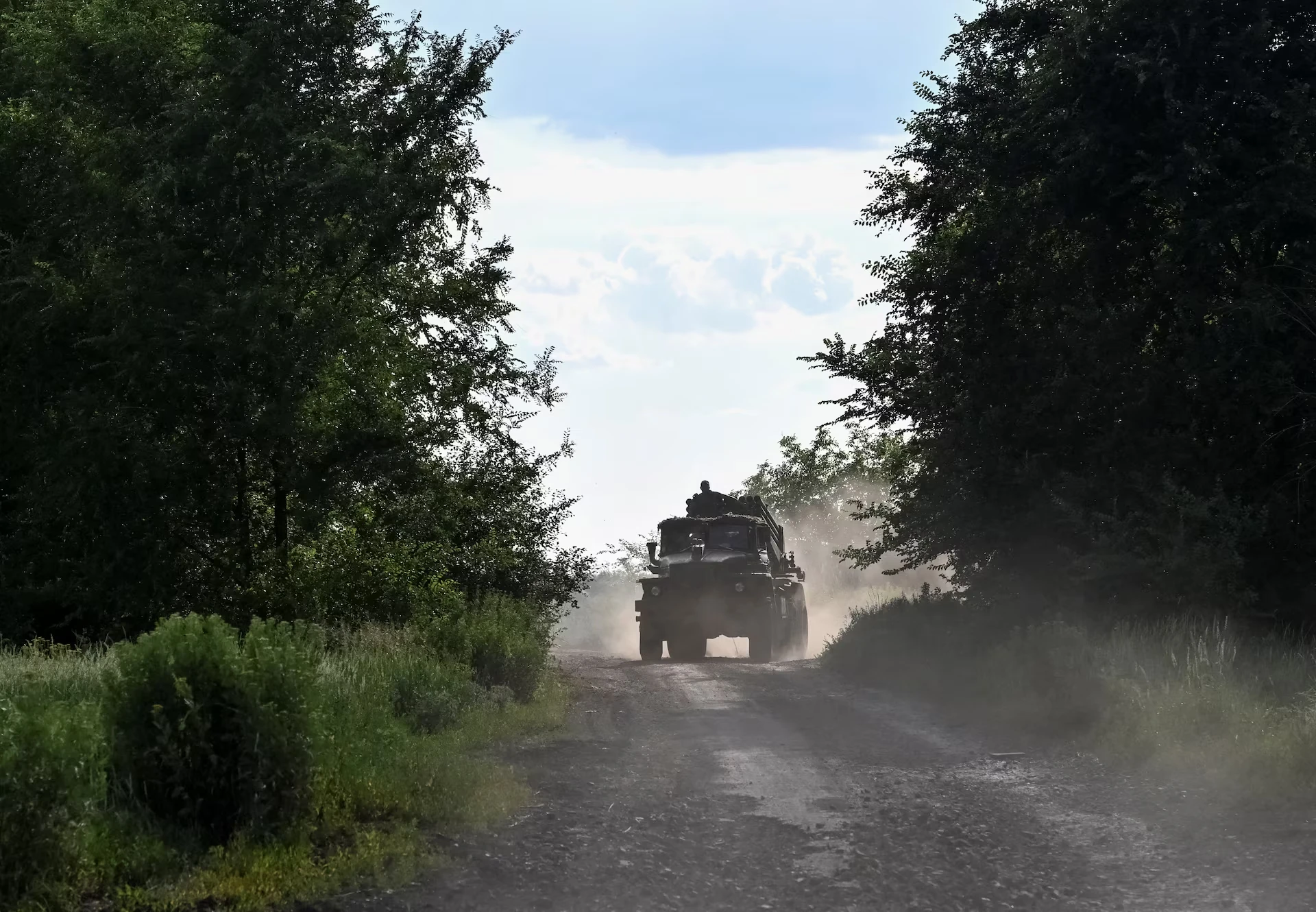
Much of the fighting is concentrated around the junction of the Dnipropetrovsk, Donetsk and Zaporizhzhia regions, where the Russian offensive in southeast Ukraine has increasingly run into Ukrainian counterattacks. On parts of this front, the line of contact has shifted in both directions over recent months.
That is why the figures of 19 and 26 cannot be read as a simple scoreboard showing which side is winning the campaign. They cover different periods, areas and methods of counting. A village can change hands more than once, while an advance of several kilometres does not necessarily amount to an operational breakthrough.
Daycom’s analysis of open and verified battlefield information indicates that the central question is not how many settlements either side can claim, but whether local gains can be converted into a durable shift in the military balance. By mid-August, there was still no clear evidence of such a decisive change.
Ukrainian forces have regained some territory that Russian units had occupied earlier in the year and have forced Moscow to fight again for areas it had previously presented as secured. Russian attacks, however, have not stopped, and pressure remains intense along several sectors of the southeastern front.
Ukraine’s counteroffensive activity in this area began during the winter. By spring, Kyiv was reporting the recovery of more than 400 square kilometres; by August, that figure had risen to 745. The change suggests a meaningful alteration of the front, even though the precise boundaries remain fluid.
For Ukraine, the operations carried particular weight because Russian forces had previously been trying to widen their foothold toward Dnipropetrovsk region. The counterattacks did not remove that threat, but they showed that local offensive action remains possible even on a battlefield saturated with drones.
Moscow, in turn, is seeking to demonstrate that its summer campaign has still produced territorial gains. The claim of 19 captured settlements supports the message that Russia retains the initiative. Yet the lack of a complete list makes it difficult to assess exactly which advances are being included in that total.
Russia separately said its forces had taken Rybalske in Zaporizhzhia region. Naming a specific settlement provides a clearer indication of where Russian units may be pressing, but control of a small village does not automatically translate into stable control of the surrounding area.
On today’s battlefield, a small assault group may enter the edge of a settlement, occupy several buildings or establish itself in nearby tree lines while access routes remain under enemy fire. There is a significant difference between infiltration, partial presence and the ability to hold an area securely.
That is one reason why settlement counts have become a less reliable measure of battlefield momentum. Many frontline villages consist of only a few streets and have been heavily damaged or almost entirely destroyed. Their capture may matter tactically without opening the way to a rapid advance beyond them.
More revealing indicators include the depth of an advance, the condition of logistics routes, access to fire positions, the ability to move ammunition and reserves, and whether newly occupied ground can withstand counterattack. A true operational gain changes the conditions of the next battle, not merely the map legend.
That distinction is particularly visible in southeast Ukraine. Ukrainian troops have not only recovered some previously lost ground but have also forced Russian units to respond to counterattacks instead of advancing continuously westward. The fighting has therefore become more dynamic and less linear.
For Moscow, even a limited presence inside Dnipropetrovsk region carries political as well as military significance. Small territorial gains can be used to show that the geography of the war is expanding, especially when the pace of Russian advances elsewhere has slowed or become more costly.
Ukraine faces the opposite challenge: preventing narrow Russian penetrations from becoming durable footholds for further movement deeper into the region. That gives battles around the junction of the three regions importance far beyond the military value of individual villages or strips of open ground.
In that sense, Kyiv’s figure of 745 square kilometres is more informative than a simple count of recaptured settlements. But it also requires caution. Front lines change quickly, grey zones are common, and official statements by both sides may use different definitions of what constitutes control.
The gap between battlefield claims and independent mapping has been a constant feature of the war. Control over tree lines, isolated streets, ruined villages and contested approaches is often difficult to establish in real time, particularly where drones and artillery can deny movement without permanent occupation.
None of this means that the Russian offensive has stopped. Russian forces continue to apply pressure on several axes and retain the ability to concentrate troops for renewed attacks. What has changed is the picture of momentum: the campaign no longer resembles an uninterrupted advance capable of quickly collapsing Ukrainian defences.
At the same time, Russia has intensified strikes against Ukraine’s rear, using missiles and drones against Kyiv and other cities. That allows Moscow to impose pressure far beyond the front even during periods when ground operations fail to deliver large or rapid territorial changes.
The competing August claims therefore describe the same campaign from opposite directions. Moscow counts settlements it says were taken during the summer offensive. Kyiv points to territory recovered during its own counteroperations. Between those figures lies a front where control remains unstable and frequently contested.
By mid-August, the Russian offensive in southeast Ukraine looked less like an unbroken push forward than a struggle to preserve or regain momentum. Ukraine has demonstrated an ability to counterattack and recover ground, but it has not eliminated the pressure or the danger of new Russian penetrations.
The coming weeks will matter less for how many additional village names appear in military statements than for whether Russia can turn tactical advances into deeper movement. Equally important will be whether Ukraine can continue to disrupt those gains and deny Moscow a stable operational advantage.
For now, southeast Ukraine remains a battlefield without a single clear direction of travel. The map is changing through small salients, counterattacks and repeated battles over the same ground — which is why the arithmetic of captured villages reveals far less than the ability to hold the next defensive line.