
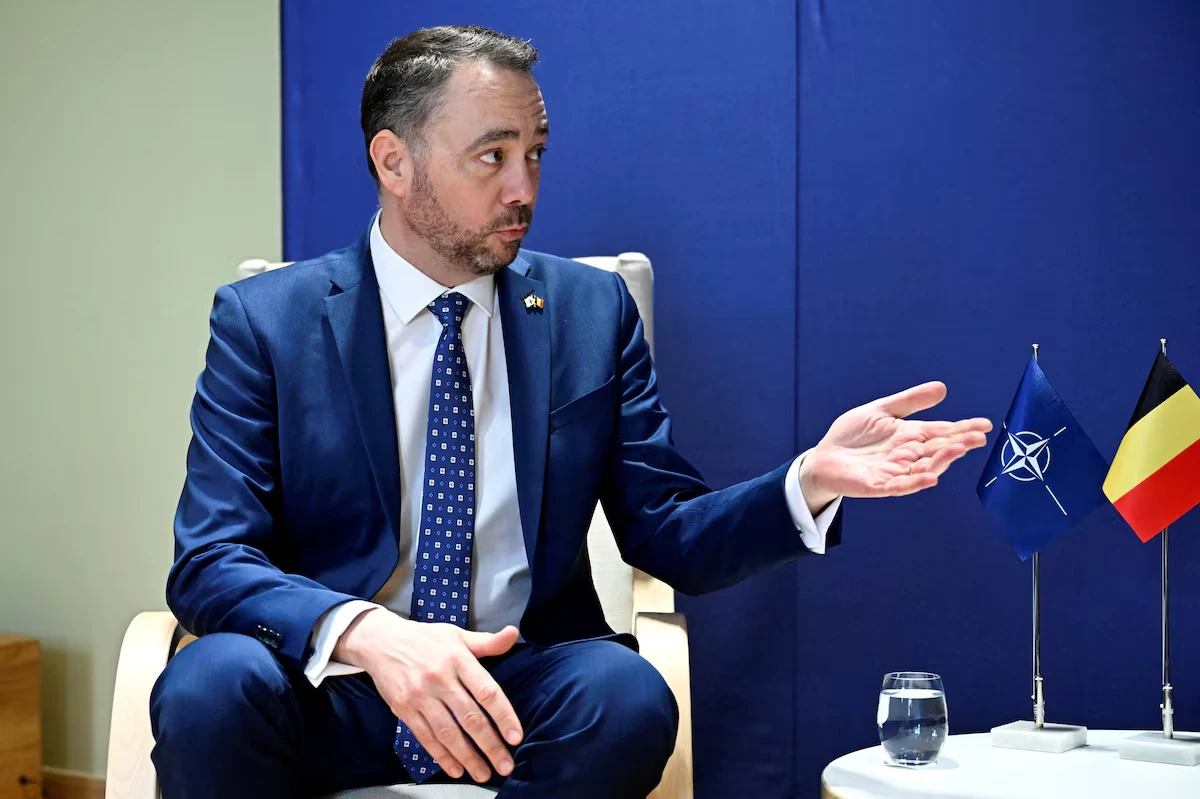




















Russia-US financial ties resurfaced after Anton Siluanov’s first meeting with Scott Bessent. Moscow says common economic interests could ease political tensions; Washington says there will be no economic relief or wider agreements while Russia’s war in Ukraine continues.
The first face-to-face meeting between the Russian and U.S. finance chiefs under the current American administration produced something more revealing than a deal: two sharply different descriptions of what economic dialogue is supposed to accomplish. Moscow presented the encounter as an opening. Washington presented it as a boundary.
Russian Finance Minister Anton Siluanov said the two countries had grounds for developing financial ties despite the political rupture between them. He argued that economic professionals can sometimes find common understanding faster than politicians and that shared interests, once developed, could make political disputes easier to resolve.
U.S. Treasury Secretary Scott Bessent delivered almost the reverse sequencing. According to a source familiar with their meeting, he told Siluanov that Russia should expect no economic relief or agreements on other matters while its war in Ukraine continues. The meeting took place on the sidelines of the G20 finance gathering in North Carolina.
Both accounts can describe the same conversation. Siluanov emphasised that a channel now exists and that common interests may be found. Bessent emphasised the condition that must be met before those interests can produce tangible benefits. The disagreement is less about whether to talk than about what must happen first.
According to Daycom’s analysis of verified public reporting, that distinction defines the current stage of Russia-US financial ties. This is not yet economic normalisation. It is a negotiation over whether the prospect of normalisation can become leverage in a broader attempt to change the political relationship.
For Moscow, the optics already carry value. Siluanov’s presence marked his first in-person participation in a G20 finance meeting since Russia’s full-scale invasion of Ukraine in 2022, placing a senior Russian economic official back inside a forum where Western governments had previously sought to display his country’s isolation.
A bilateral meeting with the U.S. Treasury secretary strengthens that message. Even without sanctions relief, investment agreements or new payment arrangements, Russian officials can point to direct high-level contact as evidence that diplomatic isolation is neither permanent nor absolute.
Washington can interpret exactly the same encounter differently. Maintaining a direct channel does not require granting Moscow anything immediately. It allows the United States to communicate conditions, test Russian positions and preserve a potential package of economic incentives for a later stage of negotiations.
That is why Bessent’s reported formulation matters. If economic relief remains unavailable while the war continues, sanctions retain value not only as punishment for past conduct but also as bargaining power over future conduct. A concession that has not yet been granted can still influence negotiations.
Siluanov’s approach turns that logic around. He suggested that practical financial cooperation should be developed where common interests exist and that doing so could help reduce political confrontation. In effect, Moscow is arguing that economics can become a bridge toward political settlement rather than merely a reward delivered afterward.
The difference is fundamental. In the Russian sequence, economic engagement helps create the conditions for political progress. In the American sequence described by Reuters, political progress — specifically an end to the war — is the condition for meaningful economic engagement.
That disagreement explains why the meeting should not be mistaken for a thaw. No new bilateral financial mechanism was announced. There was no public agreement on sanctions, investment, banking access or broader commercial normalisation. The most concrete outcome was the reopening of a conversation whose possible rewards remain withheld.
European governments are watching that conversation closely. Russia’s return to the G20 finance table drew criticism from several European officials, who feared that renewed access to international forums could create the appearance of normal relations while the war in Ukraine continues.
German Finance Minister Lars Klingbeil was among those arguing that there could be no normalisation while Russia remained at war with Ukraine. European ministers and central bankers also declined to include the Russian representative in the official group photograph, underscoring that dialogue did not mean political rehabilitation.
For Europe, symbolism is inseparable from policy. Diplomatic normalisation rarely begins with a single dramatic declaration. It can emerge gradually through restored meetings, technical consultations and the return of officials to institutions from which they had been politically marginalised.
The U.S. position therefore has to serve several audiences at once. Moscow needs to understand that future economic benefits may be available. Kyiv needs reassurance that those benefits will not be granted merely in exchange for participation in talks. European allies need evidence that Washington is not dismantling sanctions pressure unilaterally.
That is a difficult balance because sanctions are most useful in negotiations when the other side believes they can eventually be lifted. If Moscow concludes that restrictions will remain indefinitely regardless of its actions, their value as an incentive falls even while their punitive effect remains.
The opposite risk is equally clear. If economic relief begins before Russia makes verifiable political concessions, Washington gives away part of its leverage in advance. Moscow could gain the benefits of engagement simply for entering a negotiating process without changing the underlying conduct that caused the sanctions.
The meeting between Bessent and Siluanov is therefore best understood as a test of sequencing. The central question is not whether the United States and Russia possess areas of overlapping economic interest. Two large economies can almost always identify such areas. The question is when those interests become actionable.
For Russia, the potential rewards are substantial. A broader political settlement could eventually open discussions over financial restrictions, international transactions, commercial access and the risks facing companies that do business with sanctioned Russian entities.
For Washington, keeping those possibilities hypothetical preserves leverage. Each potential concession can remain part of a future package rather than being absorbed into the relationship before an agreement on Ukraine has been reached.
The structure also allows for graduated bargaining. Economic measures do not have to be treated as one giant switch between sanctions and normality. Some restrictions can theoretically be adjusted earlier than others, creating the possibility of a phased process tied to specific and verifiable Russian actions.
Such a model would be attractive to negotiators because it preserves incentives through several stages. But it would also require agreement among allies, since the economic restrictions surrounding Russia are not controlled by the United States alone.
That point is especially important for Europe. EU governments have their own sanctions regimes and their own political interests in determining how any future easing would proceed. A U.S.-Russian understanding could shape the debate, but Washington cannot by itself reconstruct Russia’s prewar economic relationship with the West.
European irritation over Siluanov’s G20 appearance therefore reflects more than discomfort with photographs and protocol. It is partly a struggle over who defines the terms of Russia’s possible return to international economic life and what Moscow would have to do before that return begins.
For Ukraine, the sequencing question is even more direct. Kyiv has an obvious interest in ensuring that financial incentives are tied to concrete outcomes rather than to negotiations themselves. Otherwise Russia could receive part of the economic benefit while retaining military pressure as a separate instrument.
Bessent’s reported message offers a clear line for now: no economic relief while the war continues. Whether that principle survives the pressures of future diplomacy will matter more than the symbolism of one ministerial meeting.
Siluanov, meanwhile, is already describing the relationship in terms of opportunities. His assertion that strong areas of common interest exist is designed to make future economic cooperation sound not exceptional but rational — something that politics is currently obstructing rather than something fundamentally impossible.
That framing also serves Russia domestically. It allows the Kremlin to argue that Western economic isolation can eventually be reversed and that the United States remains willing to deal with Moscow directly despite years of confrontation.
The American framing serves a different political purpose. A meeting can be presented not as rehabilitation but as pressure: a senior Russian official is told directly what must change before meaningful economic benefits become available.
The same table therefore supports two narratives. Moscow can say financial dialogue has resumed. Washington can say the dialogue exists precisely to explain why financial relief has not.
That ambiguity is not necessarily a failure of diplomacy. At an early stage, negotiations often depend on each side seeing enough potential advantage to remain engaged while withholding enough concessions to preserve leverage.
What would transform the encounter into genuine economic normalisation is not another meeting but a policy change: sanctions relief, new financial permissions, restored investment channels or some other material decision altering the legal and commercial relationship between the two countries.
None of that emerged from the North Carolina talks. What emerged was a clearer outline of the bargaining structure. Russia wants economic engagement to help produce political accommodation; the United States says political change must precede economic reward.
The return of Russia-US financial ties to high-level discussion is nevertheless significant. After years in which finance ministries mainly interacted through sanctions and restrictions, officials are again considering the economic relationship as something that could, under different political circumstances, contain incentives as well as penalties.
That makes the financial channel potentially important to any eventual settlement over Ukraine. Economic access is one of the few prizes large enough to matter to Moscow and sufficiently divisible for Washington and its allies to use in stages.
But the order will determine whether it functions as leverage or concession. Give the benefits first, and their bargaining value disappears. Keep every benefit permanently unavailable, and Moscow has less reason to treat them as an incentive.
The meeting between Bessent and Siluanov did not solve that equation. It simply made it visible.
For now, Russia-US financial ties exist more clearly as an object of negotiation than as an emerging economic relationship. Moscow is already describing the common ground it wants to cultivate. Washington is describing the political price that must be paid before that ground can produce anything tangible.
The decisive development, therefore, was not that the two finance ministers met. It was that both sides revealed where they believe economics belongs in the sequence of ending a war: Russia wants it near the beginning of the process; the United States, at least for now, says the reward comes at the end.