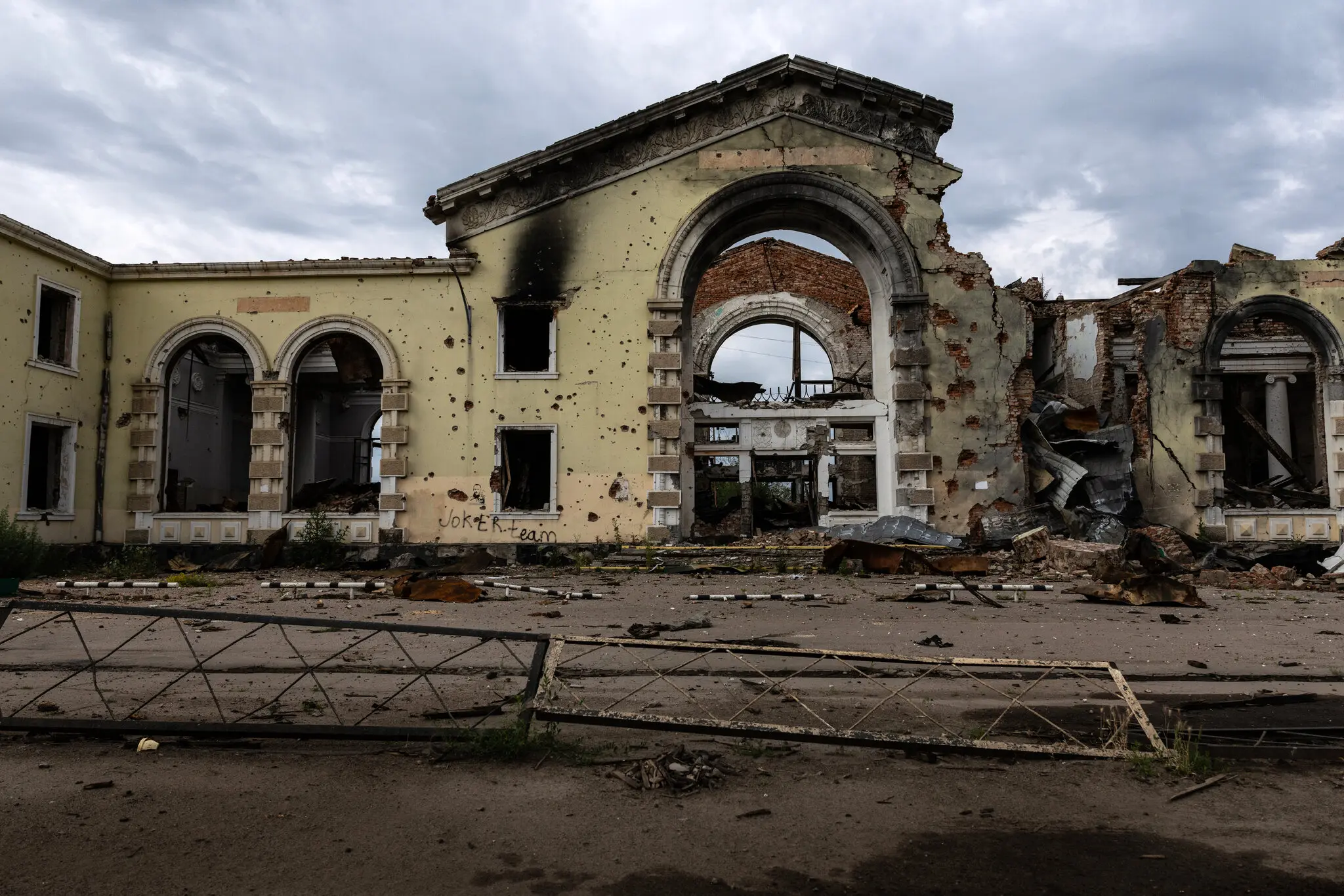
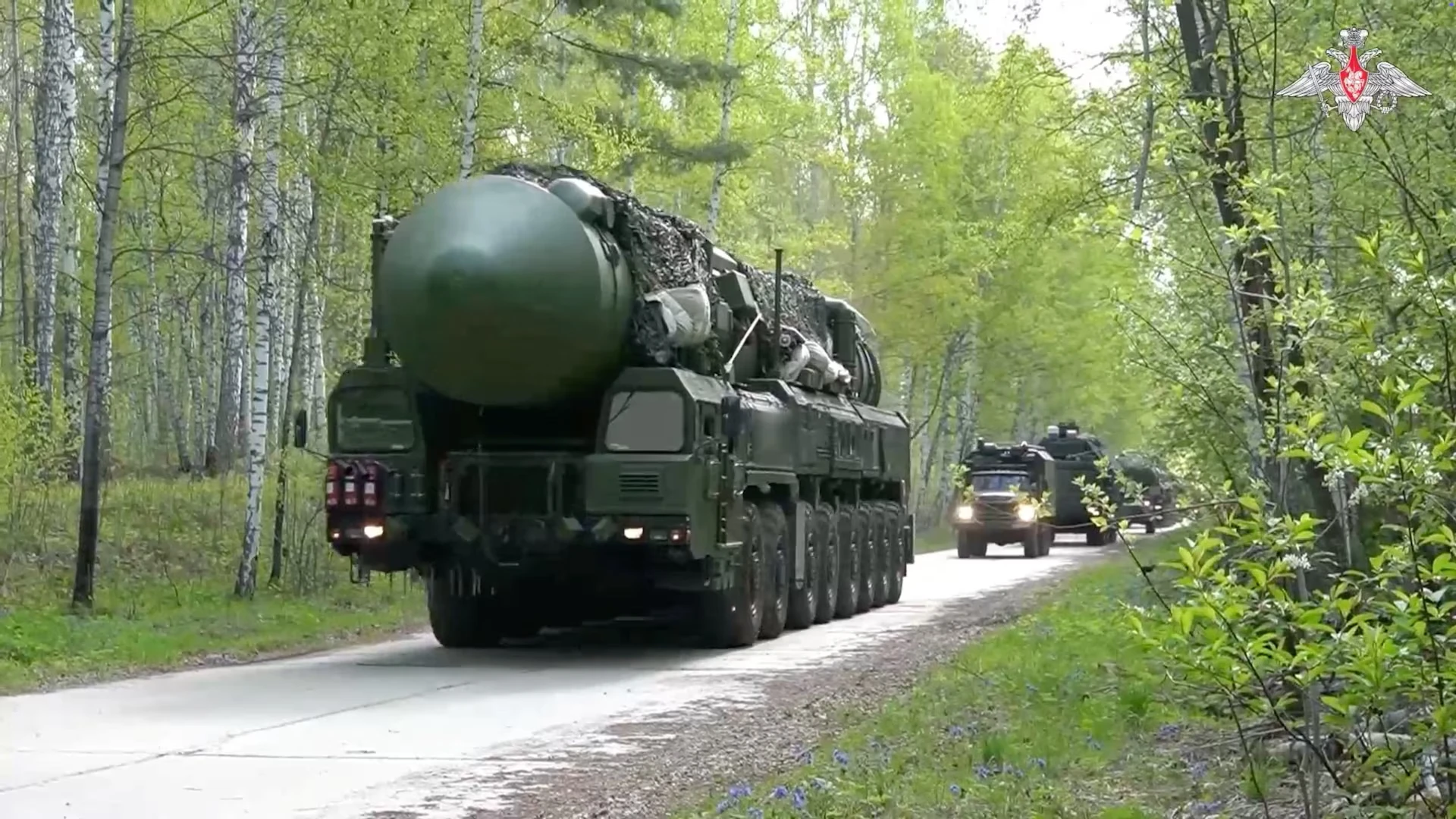






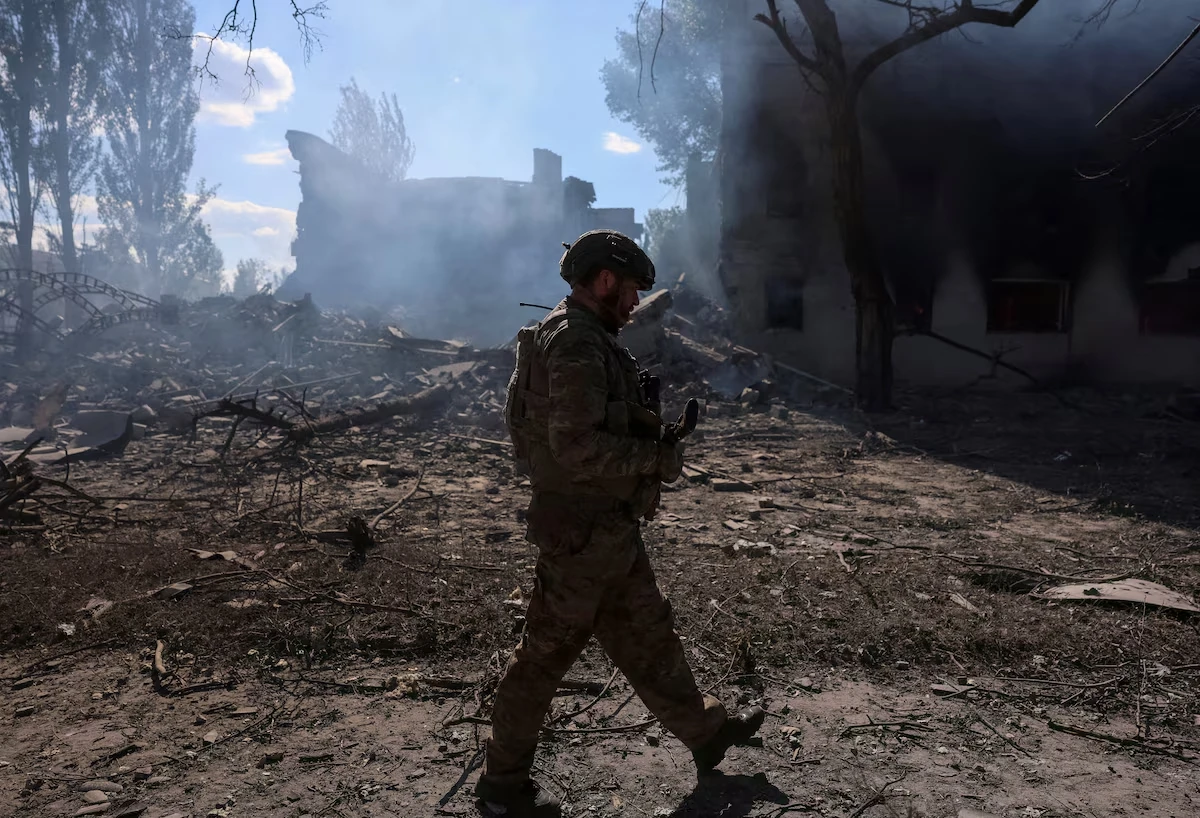













A Russian ballistic missile struck a site where members of Ukraine’s defense industry had gathered. Ten people were killed and nearly one hundred were wounded. An event intended to showcase the technologies of war became, within seconds, a demonstration of their most lethal limit.
The missile hit a privately operated training ground in the Kyiv region during an event attended by defense companies. The scale of the casualties reflects not only the destructive force of the weapon, but the danger of concentrating specialists and visitors in one exposed location.
Ukrainian prosecutors have opened an investigation into possible negligence in the preparation and conduct of the event. Investigators must now determine who approved the location, timing, format, access rules and emergency procedures.
In Daycom’s assessment, the tragedy exposes one of the central contradictions of Ukraine’s defense model. The industry depends on rapid testing, direct contact with troops and constant exchange between engineers and commanders. Yet every large gathering also creates a target.
Responsibility for the deaths rests with Russia, which launched the ballistic strike. But an external act of aggression does not remove the obligation of Ukrainian institutions and organizers to reduce foreseeable risks. These are separate levels of responsibility, and acknowledging one does not weaken the other.
Questions about security are sometimes treated as an attempt to shift blame from the aggressor to the victim. In reality, professional responsibility means accepting that the enemy will exploit every opportunity to inflict maximum damage—and refusing to leave that opportunity open.
Ukraine’s defense industry grew through a culture of speed. Engineers, soldiers and manufacturers meet with limited bureaucracy, test systems on training grounds, alter designs after battlefield feedback and complete in weeks what peacetime institutions might require years to accomplish.
That flexibility helped Ukraine gain an advantage in drones, electronic warfare, ground robots and digital command systems. But rapid innovation has a dangerous reverse side: informal procedures, weak access controls and a persistent tendency to treat rear areas as relatively safe.
The Kyiv region has not been a secure rear zone for years. Russian intelligence combines satellite imagery, intercepted signals, agent networks, open-source analysis and physical surveillance. In some cases, a handful of photographs, an announcement or repeated travel patterns may be enough to identify a valuable target.
Public promotion of a defense event during wartime is therefore not neutral communication. It can reveal the likely timing, audience and approximate area of a gathering. Even without a published address, the combined digital trail can sharply narrow the search.
After the strike, industry representatives were urged not to publish images or information from the site. That restraint is necessary to prevent a follow-up attack and protect the identities of those present. But genuine operational security must begin before an event, not after the first missile lands.
Ballistic weapons leave especially little time. Only minutes may pass between detection, an air-raid warning and impact. If participants are outdoors or far from hardened shelter, a formal alert does not provide a realistic chance of survival.
Security standards cannot therefore be reduced to a siren, a contact list and the nearest basement. They require protected facilities, small groups, limited time on site, flexible schedules and a clear procedure for ending an event immediately when a threat emerges.
The format itself also requires scrutiny. A large exhibition at a training ground creates a human, technological and reputational target at the same time. Developers, military specialists, prototypes and irreplaceable knowledge may all be concentrated in one place.
Ukraine’s defense industry is often measured by the number of companies, contracts and systems produced. Its scarcest asset, however, is human expertise: engineers, programmers, operators, test specialists and commanders capable of turning frontline experience into a working weapon.
A strike on that community can cause damage far beyond the equipment destroyed. The loss of a small team may halt a promising project, remove critical expertise from a company or sever the connection between a combat unit and the developers supporting it.
Russia seeks to attack not only finished weapons, but the entire chain that creates them. Factories, component warehouses, power systems, logistics networks and specialists are all part of the target set. Protecting the defense industry must therefore cover the full cycle—from design and procurement to field testing.
That requires more than guarding individual plants. Ukraine needs a counterintelligence framework for the entire sector. Companies should have clear rules for handling geolocation, photographs, guest lists, transport, communications and information about trials.
Small private manufacturers need particular support. They often produce the fastest-moving innovations but lack security departments, protected facilities and counterintelligence expertise. The state cannot demand military-grade protection without providing the tools to achieve it.
Excessive secrecy also carries risks. If every contact requires months of approval, the innovation cycle will slow and soldiers will receive equipment already overtaken by battlefield change. The goal is not to close the sector, but to create secure speed.
A distributed testing model may offer part of the answer. Instead of one large gathering, organizers could hold several small sessions at different times. Instead of publishing schedules, they could notify participants shortly before arrival. Some demonstrations could be replaced by remote data and limited-access trials.
Demonstration sites should also be separated from locations used regularly for combat training or weapons testing. A site that repeatedly hosts military activity accumulates a digital signature over time. Holding a large event there increases exposure even when the exact date is concealed.
The investigation must avoid two easy conclusions. The first is to identify one convenient official, punish that person and declare the problem solved. The second is to dismiss the event as an unavoidable consequence of war. Both responses would preserve the same vulnerabilities.
What is needed is a full reconstruction of the decision chain: who initiated the event, what information was circulated, how the threat was assessed, where shelters were located, how long evacuation would have taken and whether there were grounds to postpone or cancel the gathering.
Investigators should also examine what happened after the warning. Without releasing sensitive details, they can establish whether participants received a clear order, who was responsible for enforcing it and whether the event continued because air-raid alarms had become routine background noise.
Ukraine faced a similar tragedy in Chernihiv in 2023, when a Russian missile struck the city center during an event connected to drone technology. That attack also raised questions about concentrating members of the defense community in a known location.
A similar failure three years later would suggest that earlier lessons never became mandatory practice. Remembrance cannot be limited to moments of silence. It must appear in revised protocols, prohibited formats and automatic safeguards against dangerous decisions.
The strike also underscores Ukraine’s shortage of ballistic-missile defense. No organizational discipline can substitute for enough Patriot systems and interceptor missiles to protect industrial and urban areas.
Yet even the best air defense cannot create a perfect shield. Some missiles will penetrate, particularly during complex attacks. Security planning for critical gatherings must assume that interception may fail and that a strike on a detected target may be accurate.
Russia’s military logic was clear: inflict losses on the community that builds Ukraine’s tools of resistance. The internal investigation has a different purpose—to determine whether Ukrainian decisions made that objective easier to achieve.
That distinction matters. Punishing negligence does not reduce Russia’s guilt. It demonstrates that Ukraine places a higher value on human life than the aggressor and refuses to let wartime risk become an excuse for poor management.
Ten dead and nearly one hundred wounded are too high a price for a lesson that should have been learned earlier. The state must now convert the tragedy into a new standard: no defense presentation, contract or technological demonstration justifies gathering people where they cannot be protected.
Ukraine will prevail not only through the weapons it develops, but through its ability to preserve the people who develop them. In a technological war, the most valuable system is neither a missile nor a drone. It is the network of knowledge, trust and experience behind them—the very resource Russia sought to destroy and Ukraine must now defend as strategically as any weapons plant.