



















A massive Ukrainian drone attack on Moscow and the Moscow region brought the war into a space the Kremlin had long tried to keep outside the direct experience of danger. Moscow region governor Andrei Vorobyov said 16 people were injured after the strikes.
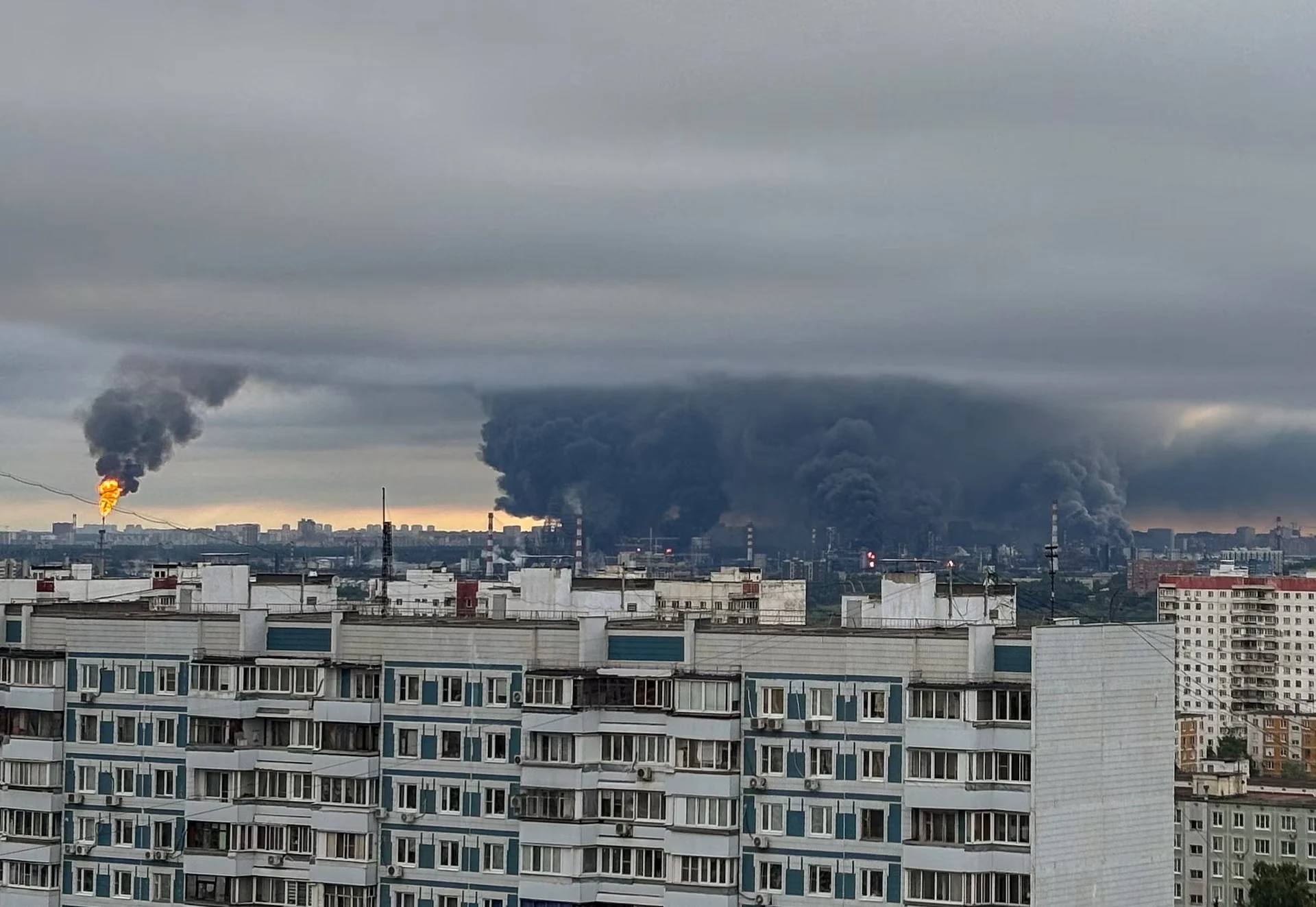
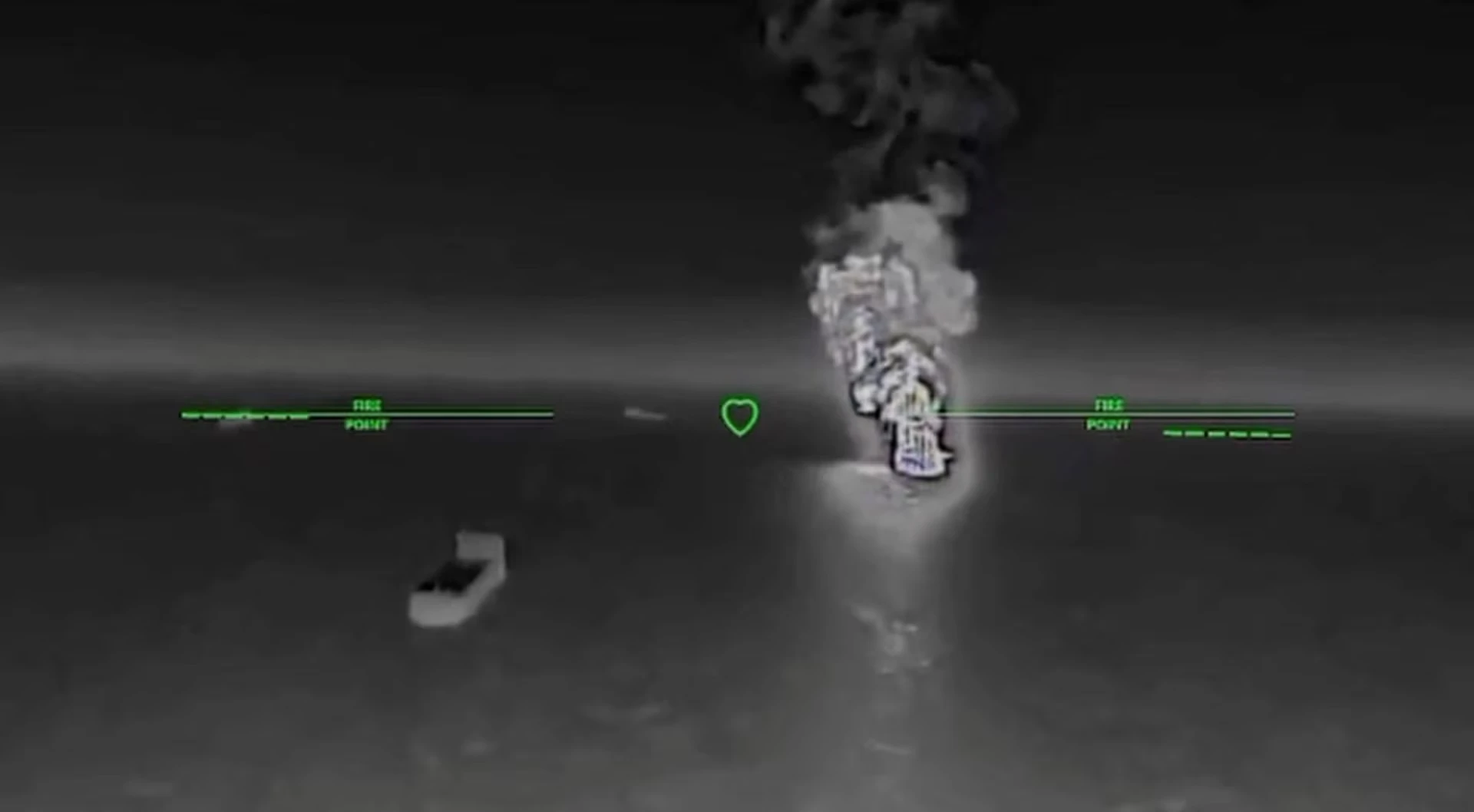
The main target was again the Moscow oil refinery. For the Russian capital, this is not a peripheral industrial site, but one of the key nodes of its fuel supply. A second strike on the facility in one week turns an isolated incident into part of a systematic campaign.
The scale of the attack matters not only because of the number of drones involved. It shows that Ukraine is increasingly able to operate deep inside Russia, forcing Russian air defenses to stretch resources between the capital, border regions, refineries, airfields, depots and logistics hubs.
According to Daycom’s assessment, the injuries in the Moscow region add a politically difficult dimension to the attack. Ukraine’s strategy is aimed at infrastructure that supports Russia’s war machine, but drone warfare in densely populated areas always carries the risk of debris, air-defense errors and secondary consequences.
That is why the strike on Moscow has a double nature. Militarily, it puts pressure on the fuel system that supports transport, the economy, security structures and part of Russia’s military logistics. Politically, it breaks down the sense of safe distance between the Russian capital and the war against Ukraine.
The Moscow refinery is already becoming a symbol of a new stage. Earlier Ukrainian strikes on Russian energy infrastructure were often associated with border regions or remote sites. Smoke rising over a facility in the capital zone works differently: it is harder to hide inside regional statistics or explain away as a local disruption.
For Russia, oil refining is one of the nerves of the war economy. Producing crude is not enough. It must be turned into gasoline, diesel and aviation fuel, delivered to consumers, and used to support reserves, the army, transport, industry and the domestic market. Ukraine is trying to make this chain more expensive and less stable.
After a series of strikes on refineries, Russia’s fuel market has already shown signs of strain. Lines at gas stations, disruptions in some regions, limits on fuel purchases and the need for additional supplies show that attacks on refining do not have to be catastrophic to be effective.
A war of attrition rarely works through a single decisive blow. It works through accumulation: repairs, downtime, equipment losses, higher security costs, redeployment of air defenses, insurance risks, logistical changes and market anxiety. Every repeated strike on an important facility raises that cost.
For Moscow, there is also a psychological problem. The capital long lived in a state of controlled distance from the war. Reports about the front, mobilization, casualties and strikes on Ukraine remained background noise. A drone attack, injuries in the region and a strike on the refinery move the war from the screen into daily infrastructure.
This does not mean Moscow has become a front-line city. But it does mean that Russia’s rear can no longer regard itself as a guaranteed zone of immunity. In modern warfare, drones blur the old boundary between front and depth, between military target and logistics system, between the safety of the capital and the price of aggression.
Ukraine explains such strikes as a response to Russian attacks on cities, communities, energy infrastructure and cultural monuments. After strikes on Kyiv, damage to the Lavra and new ballistic missile attacks, this logic is not symbolic for Kyiv, but strategic: to make Russia feel that continuing the war will not be free.
The Kremlin, in turn, will try to use civilian injuries to accuse Ukraine and strengthen mobilizing rhetoric. But the root cause of this danger remains unchanged: Russia brought war to Europe, it attacks Ukrainian cities every day, and its military infrastructure has become the target of Ukraine’s response.
For Kyiv, such a campaign requires maximum precision. The deeper Ukrainian drones enter Russia’s rear, the more important target selection, consequence control and political explanation become. A strike on a refinery has a different logic from a strike on a residential district, and that distinction is essential for Ukraine.
The mass attack on the Moscow region does not end the war and does not break Russia’s war machine in one blow. But it changes the environment in which that machine operates. Russia must now defend the capital, fuel nodes, airports and industrial facilities at the same time, spending more resources on its own rear.
That is the strategic meaning of the strike. Ukraine is not only defending itself from Russian missiles. It is gradually creating a new reality for Moscow, one in which the war returns to its source — as drones over the capital, smoke above refineries, injuries in the suburbs and a question that is becoming harder to postpone: how much longer Russia is willing to pay for continued aggression.