
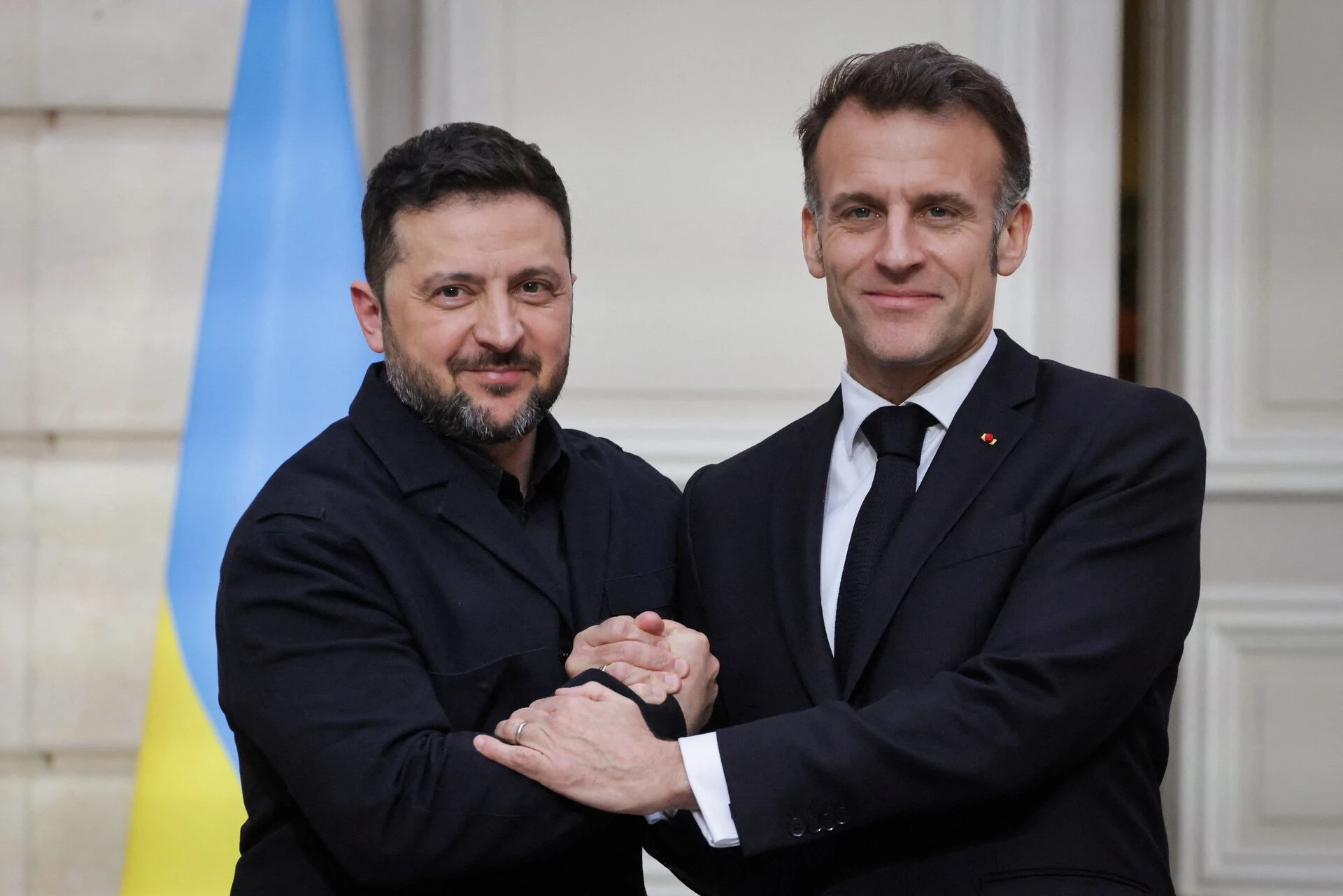























Britain has opened the way for Ukraine and France to move ahead with plans to assemble SCALP long-range cruise missiles on Ukrainian soil, approving the release of classified information covering British-made components. Prime Minister Andy Burnham announced the decision during his first foreign trip since taking office.
Burnham arrived in Kyiv on August 24, Ukraine’s 35th Independence Day, where he was due to meet President Volodymyr Zelenskyy and join European leaders for talks on long-term military support. Choosing Ukraine for his first overseas visit also gave the new government an early opportunity to demonstrate continuity in British policy.
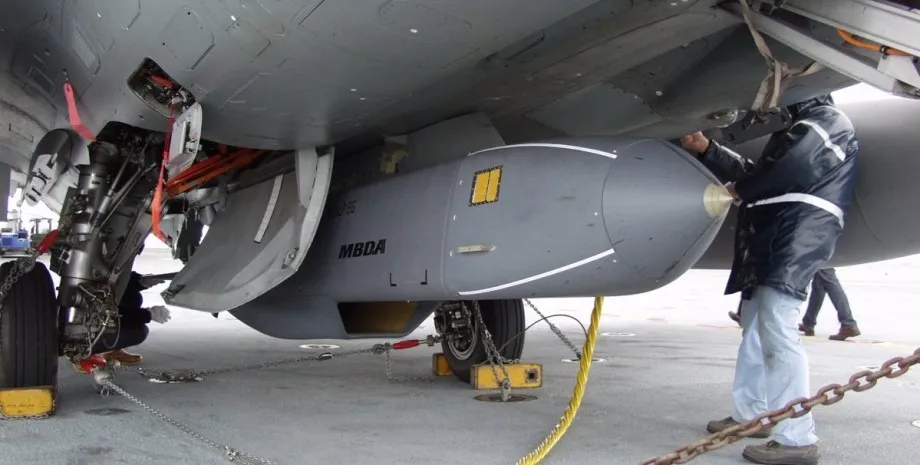
The immediate significance lies in technology rather than a new shipment of finished missiles. Britain has authorised MBDA to disclose protected information relating to UK components used in SCALP, allowing France and Ukraine to advance work on local assembly lines that previously required London’s approval.
That distinction matters. Britain has not announced the transfer of a complete SCALP manufacturing process, nor disclosed production volumes, dates or which major subsystems would ultimately be made inside Ukraine. What London has done is remove a technological and legal obstacle to deeper industrial cooperation.
Daycom’s analysis of verified public information indicates that SCALP missile production in Ukraine is significant less as an immediate increase in available weapons than as another step away from a stockpile-based aid model. Western support is increasingly being tied to Ukraine’s ability to assemble, maintain and eventually produce advanced weapons itself.
SCALP is the French version of Britain’s Storm Shadow, and the two missiles share technology developed across the British and French defence industries. Because sensitive intellectual property is divided between the partners, Paris alone could not simply authorise the disclosure of every element needed for Ukrainian assembly.
The missile is designed for deep strikes against high-value fixed targets, including hardened facilities and critical infrastructure. MBDA lists its weight at about 1,300 kilograms and its length at 5.1 metres, with navigation combining inertial guidance, GPS, terrain referencing and an infrared seeker during the terminal phase.
Its operational value comes from allowing aircraft to release a precision weapon at considerable distance and then withdraw rather than approaching a heavily defended target. After launch, Storm Shadow and SCALP fly at low altitude before using stored target information and an infrared seeker to guide the final approach.
Ukraine has used Western long-range cruise missiles since Britain broke an important political barrier in 2023 by becoming the first country to provide Kyiv with such weapons. The debate has since shifted markedly: the question is no longer only whether Ukraine should receive long-range systems, but whether it should help build them.
Local assembly could make the supply chain more resilient, shorten some logistical routes and expand Ukrainian expertise in servicing sophisticated missile systems. But its effectiveness will depend on the flow of imported engines, electronics, guidance components, warheads and other parts if those remain manufactured elsewhere.
For that reason, an assembly line should not be confused with strategic autonomy. Ukraine could gain substantially greater control over final integration while remaining dependent on British, French and other European factories for critical hardware. No public announcement so far establishes that SCALP will be manufactured entirely inside Ukraine.
The industrial challenge is also unusually difficult because the factories involved would operate under the threat of Russian missile and drone attacks. A sustainable programme would therefore require dispersed production, protected storage, secure transportation and redundancy — factors that can make wartime manufacturing slower and more expensive.
Moscow made that threat explicit on Monday. Kremlin spokesman Dmitry Peskov criticised the British decision as an escalation and said Russia was gathering information to identify and destroy missile-production facilities in Ukraine. The statement underlined the military risk attached to moving more weapons production into the country.
Russia’s reaction also illustrates why the decision carries political weight beyond its technical content. London is deepening industrial cooperation with Kyiv just days after Moscow warned Britain of unspecified consequences over British-made drones reportedly used in Ukrainian long-range attacks against targets inside Russia.
Burnham has shown little interest in allowing those warnings to define the new government’s approach. He has repeatedly said British backing for Ukraine will continue, framing Ukrainian security as directly connected to Britain’s own. His Kyiv visit turns that political commitment into an early foreign-policy test for his premiership.
The timing is particularly notable because Ukraine has increasingly relied on long-range drones and other strike weapons against Russian refineries, logistics centres and military infrastructure far behind the front. These attacks are designed partly to impose costs on the systems that sustain Russia’s battlefield operations.
Cruise missiles and long-range drones, however, occupy different niches. Drones can be produced in much larger numbers and at lower cost, while a system such as SCALP offers greater speed, a heavier conventional payload and a sophisticated guidance package suited to particularly important or difficult targets.
That makes the emerging Ukrainian strike architecture increasingly layered. Large numbers of relatively inexpensive drones can force Russia to disperse air defences and expend interceptors, while scarcer cruise missiles can be reserved for targets whose value or protection justifies the higher cost of each weapon.
Britain is pursuing the same logic through other programmes. Downing Street said the SCALP decision complements Project Brakestop, an effort to accelerate development of lower-cost advanced long-range strike weapons for Ukraine rather than relying exclusively on expensive existing cruise-missile inventories.
The broader objective is industrial endurance. Four and a half years into the full-scale war, Ukraine’s supporters face the problem that sophisticated Western missiles were never designed to be expended at the rate required by a prolonged high-intensity conflict. Production capacity has therefore become almost as important as individual weapons transfers.
This is where Ukrainian manufacturing offers allies a second advantage. Ukraine has built a defence industry shaped by rapid wartime iteration, particularly in unmanned systems. Integrating that industrial base with European manufacturers could increase output while feeding battlefield experience back into British and continental weapons development.
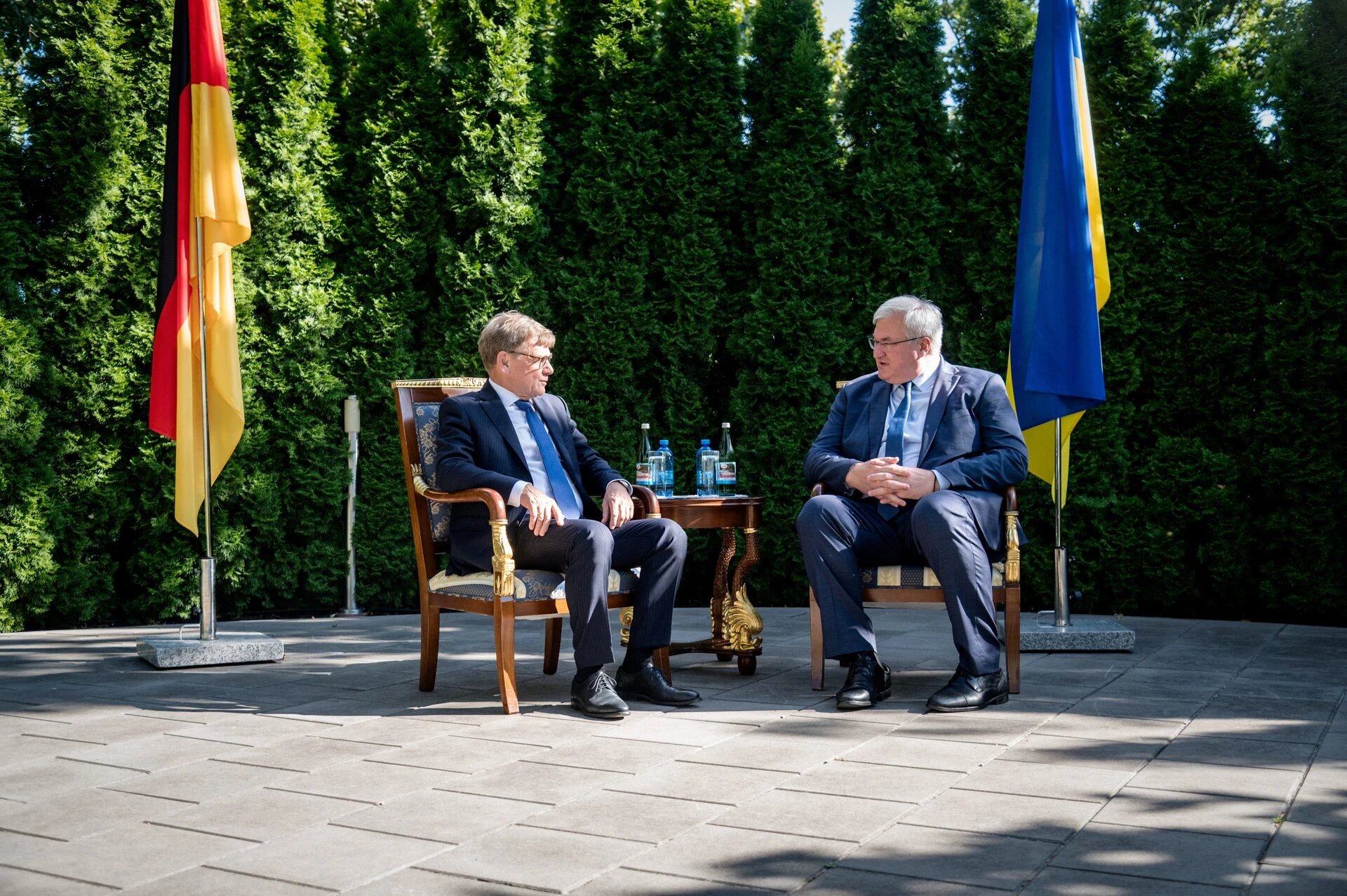
Burnham’s visit also carries a wider European dimension. In Kyiv he is participating in the Coalition of the Willing, with Britain, France and Germany among the countries coordinating support for Ukraine and discussing the security arrangements that could underpin any future settlement.
Those discussions are increasingly inseparable from industrial capacity. A security guarantee has limited credibility if Ukraine cannot replenish ammunition and long-range weapons during a renewed conflict. Domestic production and European supply chains can therefore function as a form of deterrence even before any formal post-war guarantee is tested.
Britain has committed £25 billion in support to Ukraine since the full-scale Russian invasion, according to Downing Street, including £16 billion in military assistance and £5.6 billion in non-military support. The government also points to the UK-Ukraine 100 Year Partnership as the framework for increasingly long-term cooperation.
London has repeatedly tried to position itself at the front edge of Western weapons decisions. It moved early on Challenger 2 tanks and Storm Shadow missiles, helping normalise categories of assistance that other governments had initially approached more cautiously. The SCALP decision follows a similar pattern, but on the industrial rather than purely operational side.
The political symbolism is strengthened by Burnham’s personal timetable. Zelenskyy was his first international guest after he became prime minister in July; only weeks later, Burnham chose Kyiv for his first trip abroad. The sequence is intended to signal that a change in Downing Street has not produced strategic distance from Ukraine.
His visit also comes as the new British government argues for closer defence and security cooperation with Europe. During the Kyiv trip, Burnham said Britain needed to be bolder in rebuilding ties with the European Union, making cooperation on Ukraine part of a wider attempt to reconnect British and continental security policy.
For France, Britain’s approval removes a particularly practical constraint. SCALP may be French-produced, but its shared technological heritage means some sensitive decisions cannot be made in Paris alone. Releasing information on UK components allows the French-Ukrainian industrial plan to move into territory that had previously required British consent.
What remains unknown may ultimately matter more than Monday’s announcement. Neither the UK nor Ukraine has publicly specified when an assembly line could begin operating, how many missiles it might produce, which components would be imported, or whether the programme is designed mainly for wartime replenishment or a permanent post-war capability.
Those questions will determine whether the initiative becomes a strategically meaningful source of weapons or remains a limited integration project. Cruise missiles are complex systems, and transferring final assembly does not by itself solve bottlenecks in engines, seekers, electronics, explosives or other specialised components.
Even so, the direction of travel is increasingly clear. Western policy toward Ukraine is evolving from emergency deliveries drawn from national inventories toward licensing, joint ventures, technology sharing and manufacturing partnerships intended to survive beyond individual aid packages and electoral cycles.
That is why Britain’s decision on SCALP matters even before the first locally assembled missile appears. It represents another piece of the gradual incorporation of Ukraine into Europe’s defence-industrial system — a process driven by the immediate needs of war but increasingly designed around the possibility of a long confrontation with Russia.
If SCALP assembly in Ukraine reaches sustained production, the programme will mark more than another expansion of Kyiv’s long-range arsenal. It will show that the dividing line between arming Ukraine and building weapons with Ukraine is beginning to disappear — and that European deterrence is being reorganised around that change.