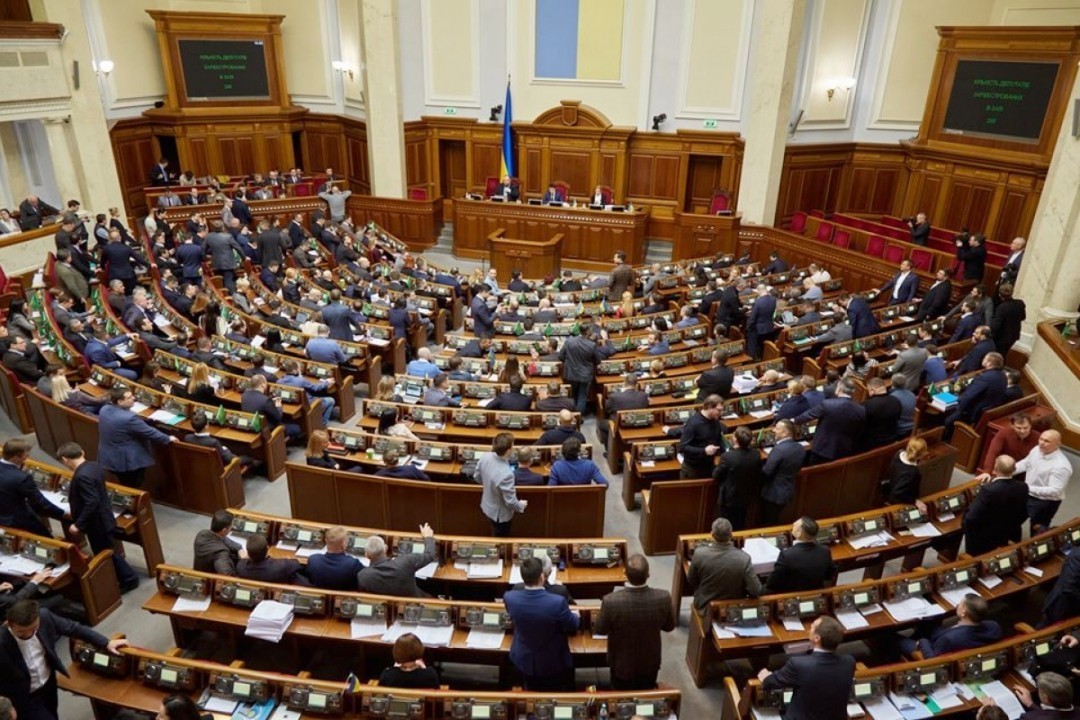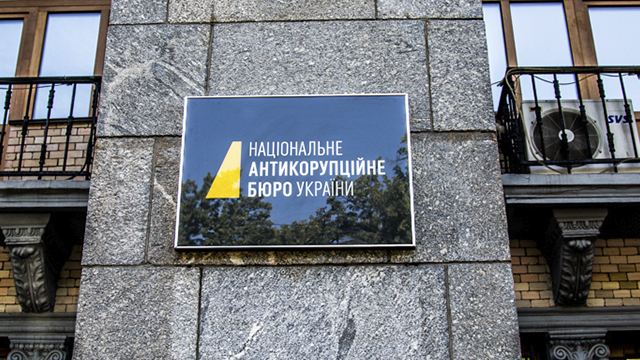





















Ukraine’s anti-corruption agencies opened a high-profile operation on August 19 targeting an alleged criminal organisation involving current and former lawmakers and senior officials from the presidential administration. The announcement came only hours before parliament was expected to consider a new defence minister.
The National Anti-Corruption Bureau, or NABU, and the Specialised Anti-Corruption Prosecutor’s Office, known as SAPO, initially released few details. They said investigators were acting against a group allegedly led by political figures and involving officials from the presidential office, with further information to follow.
Subsequent reporting said investigators were examining the alleged laundering of about 150 million hryvnias, or roughly $3.3 million, connected to bail in an energy-sector corruption case. Officials identified the suspected participants by their positions rather than by name, leaving their individual roles to be established.
That distinction is essential. The existence of searches or investigative measures does not establish the guilt of any individual, and a description based on official position is not a substitute for a formal charge. At this stage, the allegations remain the prosecution’s case and must still withstand judicial scrutiny.
According to Daycom’s analysis of verified public information, the significance of the Ukraine anti-corruption probe lies as much in its timing as in the money involved. It has emerged during one of the most sensitive wartime reshuffles of Zelenskyy’s presidency, when both defence leadership and anti-graft independence are under intense scrutiny.
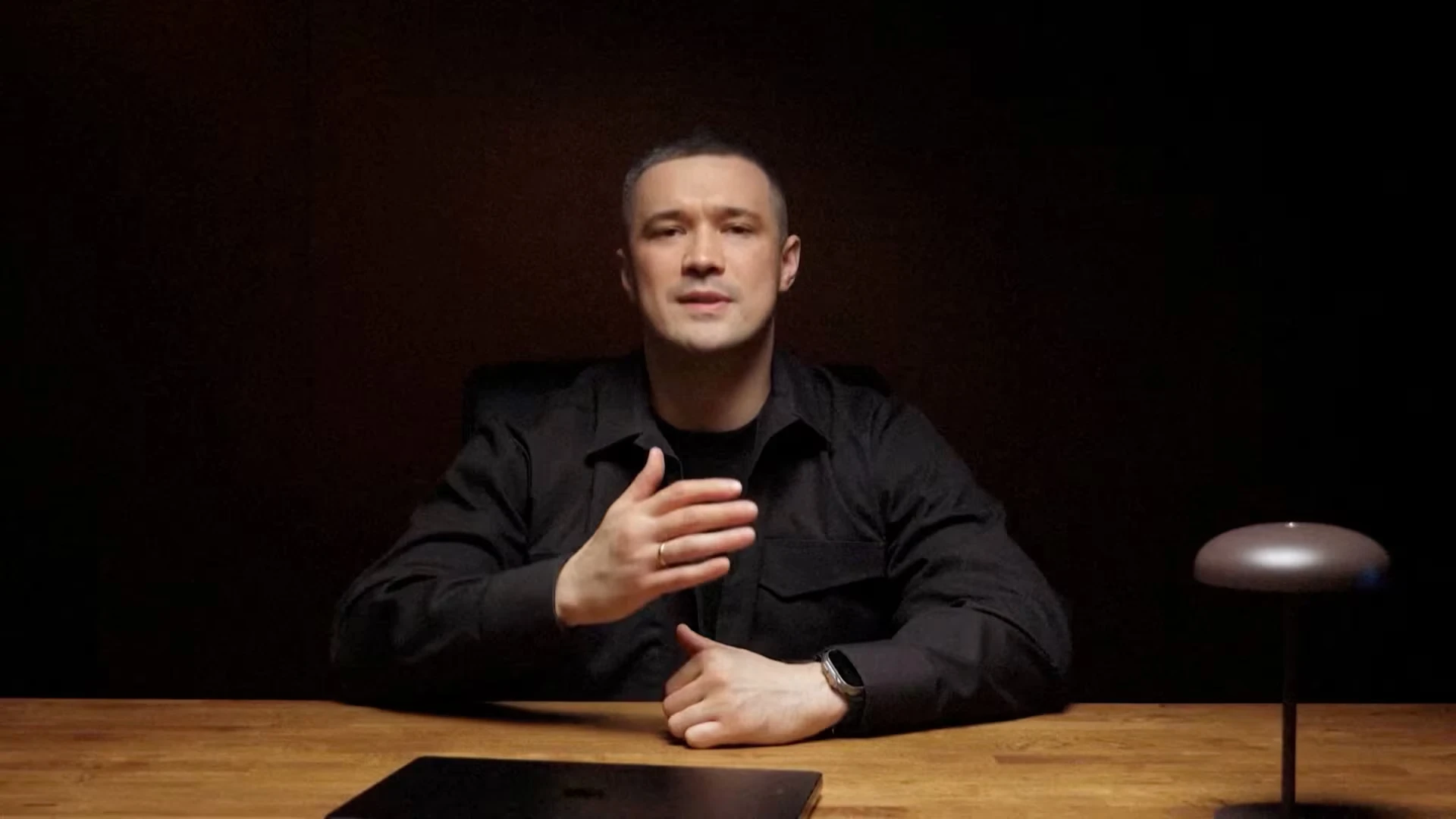
There is currently no evidence that the investigation is connected to Yevhenii Khmara, Zelenskyy’s nominee for defence minister. NABU and SAPO have not said their operation concerns Khmara, and the parliamentary appointment process is legally separate. Their convergence on the same day is politically striking but does not prove a causal link.
Khmara’s nomination follows weeks of upheaval at the Defence Ministry. On the morning of August 19, parliament’s national security and defence committee unanimously recommended that lawmakers approve presidential resolution No. 15523 appointing him as defence minister. The final decision rests with the full Verkhovna Rada.
During the committee hearing, lawmakers questioned Khmara about supplying the armed forces, international military cooperation, budget spending and defence procurement. Those issues carry particular weight during wartime, when the speed of weapons acquisition must coexist with safeguards over enormous volumes of public expenditure.
Khmara comes from Ukraine’s security and special-operations establishment. He previously led the Security Service’s elite Alpha unit and later served as acting head of the SBU. Zelenskyy has highlighted his experience in technologically driven warfare and long-range operations as a reason for moving him into the defence portfolio.
The vacancy was created by the abrupt dismissal of Mykhailo Fedorov, one of the most prominent figures in Zelenskyy’s wartime government. Fedorov had built his political identity around digitalisation, drones and attempts to modernise military administration, making his removal far more controversial than a routine cabinet reshuffle.
His departure triggered rare wartime street protests in Kyiv and other cities. Demonstrators demanded that Zelenskyy restore the 35-year-old minister, arguing that his reform programme had begun to challenge entrenched bureaucracy inside the defence establishment at a time when Ukraine cannot afford administrative stagnation.
The crisis soon expanded beyond the ministry. Zelenskyy also replaced Ukraine’s top military commander, Oleksandr Syrskyi, with Mykhailo Drapatyi, a younger general who had attracted support among some of the protesters. They hoped his reputation for attention to soldiers’ needs could translate into changes in battlefield management.
Political pressure intensified on August 18 when Fedorov made an extraordinary public intervention, calling for a renewed democratic process and wartime elections. He argued that Ukraine was facing a crisis of governance and criticised corruption and institutional resistance to reform, presenting the sharpest challenge yet from a former Zelenskyy insider.
Fedorov stopped short of formally declaring himself a presidential candidate. Even so, his intervention transformed a dispute over one ministerial dismissal into a broader argument about political legitimacy, wartime accountability and how long democratic competition can remain suspended while Russia’s invasion continues.
Holding a national election under martial law would present formidable legal and practical problems. Millions of Ukrainians are abroad or internally displaced, large numbers are serving in the armed forces, and Russian occupation still prevents normal voting across substantial parts of the country. Those obstacles make an immediate election far more complicated than a political slogan.
Against that backdrop, the NABU-SAPO operation introduces a second institutional test. The investigation does not implicate Zelenskyy personally, and no evidence made public so far establishes wrongdoing by the president. Yet the reported involvement of a senior presidential-office figure inevitably places the case close to the centre of political power.
That sensitivity is heightened by Ukraine’s recent history with its anti-corruption institutions. In July 2025, parliament approved legislation increasing the prosecutor general’s control over NABU and SAPO, provoking domestic protests and alarm among European partners who viewed their independence as central to Ukraine’s reform programme.
The controversy made any subsequent investigation involving senior officials a measure of whether those institutions can operate without political interference. The question is therefore broader than the guilt or innocence of particular suspects: it concerns whether investigators can follow evidence when it reaches the upper levels of government.
That question matters directly to Ukraine’s European ambitions. The European Union has repeatedly linked progress toward membership to functioning rule-of-law institutions and credible action against high-level corruption. Independent anti-graft bodies are therefore not simply a domestic reform project but part of Kyiv’s strategic relationship with Brussels.
Nor did the August 19 operation appear in an institutional vacuum. NABU reported that in the first seven months of 2026 it opened hundreds of investigations, named more than a hundred new suspects and sent dozens of indictments to court. The bureau’s workload illustrates how deeply anti-corruption enforcement now intersects with wartime governance.
The reported 150 million hryvnias in the current case should nevertheless be treated as one specific allegation rather than folded automatically into every previous energy-sector investigation. What matters legally will be the documented origin of the funds, how they moved, who controlled them and whether prosecutors can establish a criminal purpose.
The reported involvement of people linked to a state-owned bank could make the case particularly complex. If investigators substantiate those allegations, the inquiry would touch several layers of public administration at once: political authority, state-controlled finance and corporate governance. The precise mechanism has not yet been fully disclosed.
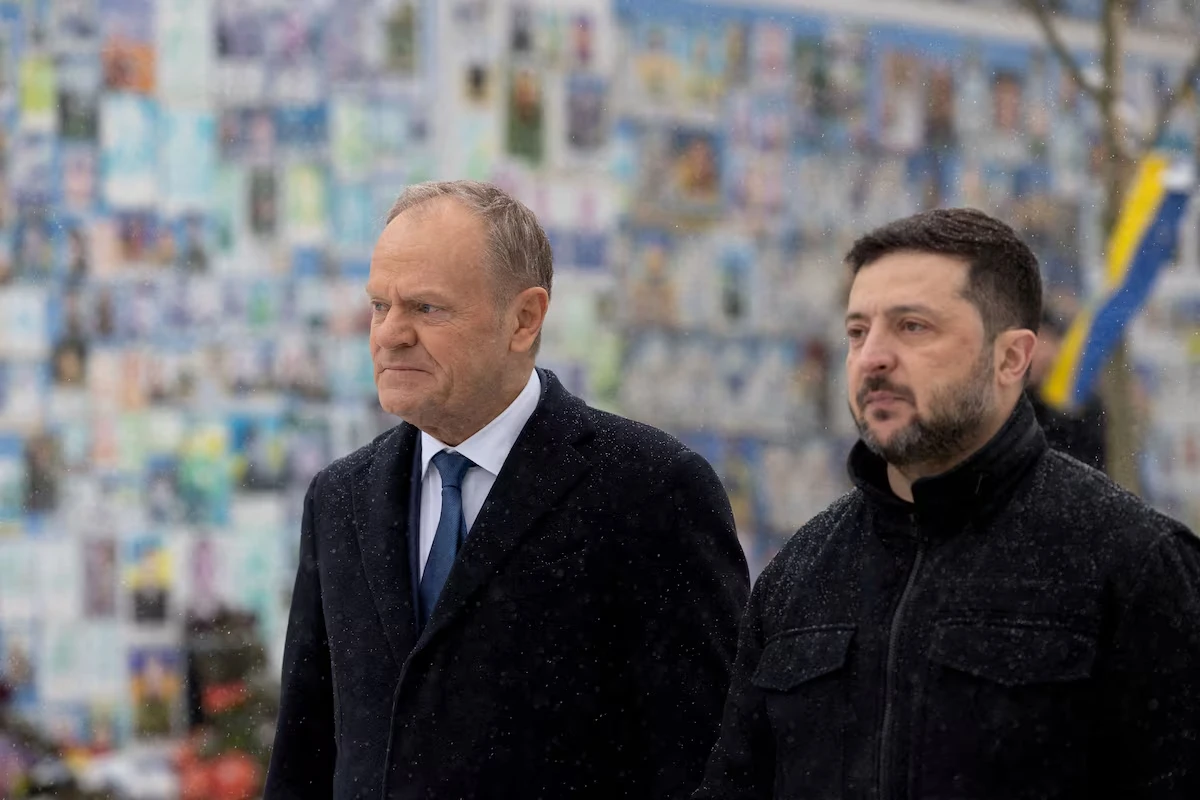
For Zelenskyy, the timing is difficult. He is trying to close a damaging chapter over the Defence Ministry, install a new leadership team and demonstrate governmental stability while the country remains at war. The corruption investigation instead pushes questions about accountability and concentration of power back to the centre of the national debate.
Yet the existence of an investigation into senior figures can also be read as evidence that the anti-corruption architecture is functioning. A state does not demonstrate institutional strength by producing no scandals; it does so by allowing investigators, prosecutors and courts to pursue allegations regardless of the political status of those involved.
The ultimate importance of the operation will therefore depend on what comes next. Formal notices of suspicion, evidence tracing the money, judicial decisions and the conduct of any eventual trial will matter far more than the drama of the first announcement. Until then, individual criminal responsibility remains unproven.
The same caution applies to the political consequences. An investigation involving presidential officials may damage the government, but it could also strengthen confidence in institutions if NABU and SAPO are permitted to proceed independently and transparently. Interference, by contrast, would revive the concerns that produced protests and international criticism in 2025.
As of early afternoon on August 19, the Verkhovna Rada’s official record showed that the defence committee had endorsed Khmara, while no final plenary vote on his appointment had yet been published. Parliament was continuing its sitting, meaning the personnel decision remained unfinished as the corruption operation unfolded.
Whoever ultimately takes charge of the Defence Ministry will inherit an unusually demanding political environment. Battlefield performance, technological innovation and weapons procurement will remain central, but so will public scrutiny of spending and the need to rebuild confidence after a month of personnel disputes and demonstrations.
For Zelenskyy, August 19 has consequently become a test of two systems at once. Parliament must determine who will lead the defence establishment during the fifth year of the full-scale war, while independent investigators are examining an alleged corruption network reaching into senior state institutions.
The coincidence is politically explosive, but its lasting significance will depend on institutional outcomes rather than headlines. The defence vote will test Zelenskyy’s ability to stabilise his wartime leadership; the Ukraine anti-corruption probe will test whether the country’s system of accountability can function when investigators move close to power.