












The war in Ukraine has crossed a threshold that once seemed almost unthinkable. Russia’s full-scale invasion has now lasted longer than World War I — the conflict remembered in Europe as the ultimate symbol of trenches, mass casualties and the collapse of faith in quick victory.
By June 11, 2026, Russia’s large-scale war against Ukraine had lasted 1,569 days. That is longer than the period between July 1914 and November 1918. For a country the Kremlin expected to break within days, the number itself has become a political verdict on Moscow’s original plan.
The comparison with World War I cannot be mechanical. That war involved empires, several continents, million-man armies and a very different structure of states. Ukraine did not exist then as an independent country. Yet in the logic of the front, attrition and technological rupture, the parallels have become increasingly clear.
According to Daycom’s assessment, the deepest similarity is not the trench itself, but the destruction of the illusion that force could deliver a quick outcome. In 1914, Germany moved toward Paris expecting a lightning conclusion. In 2022, Russian columns advanced toward Kyiv with the same political overconfidence.
Both campaigns began as bets on speed. Both stalled near capitals that were meant to symbolize victory. In both cases, the failure of the opening blow led to a long war in which the result was no longer determined by one maneuver, but by industry, logistics, alliances, social endurance and the ability of armies to learn.
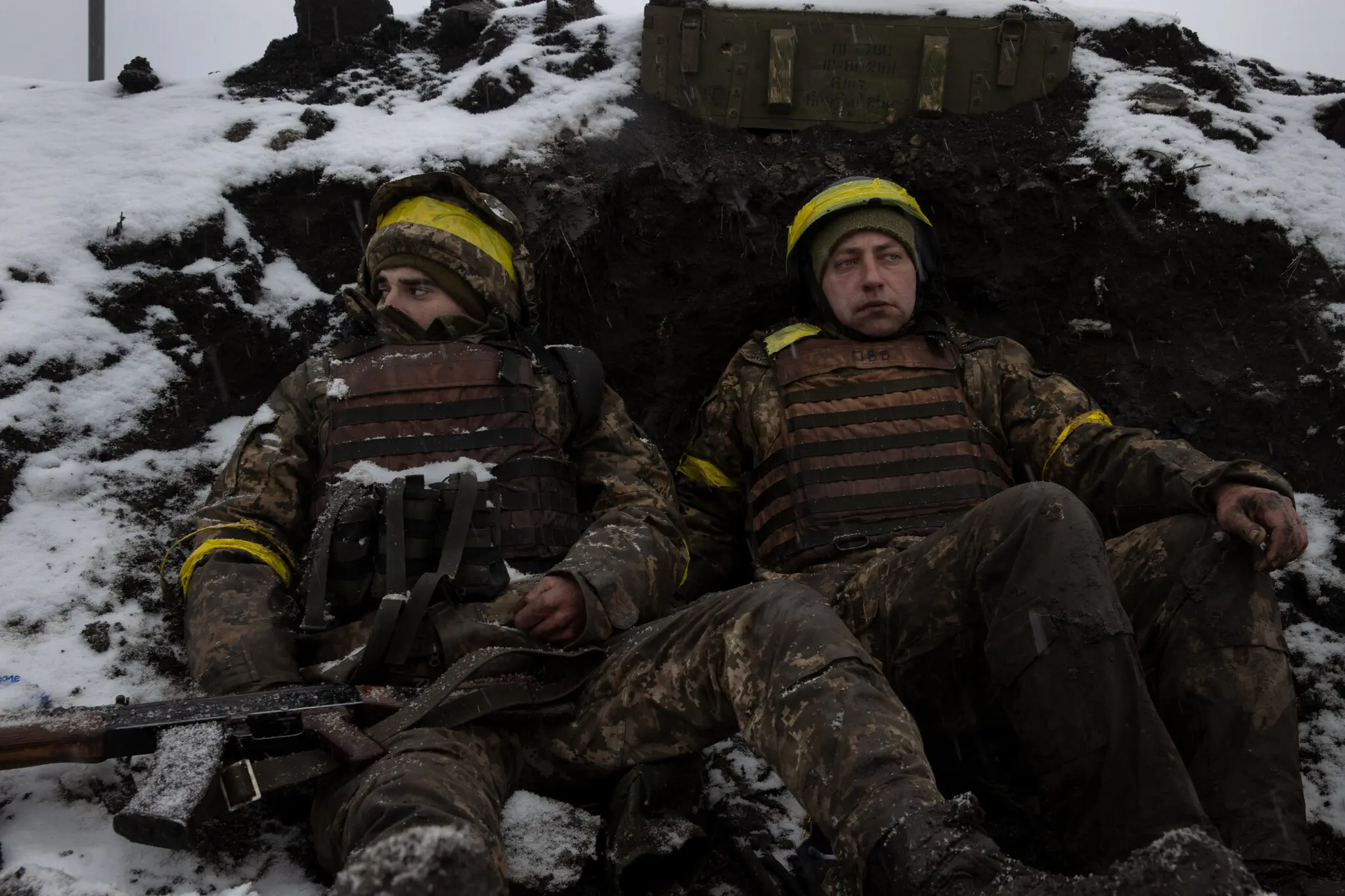 Українські солдати в Харкові 25 лютого 2022 року, через день після початку війни в Україні — Тайлер Хікс
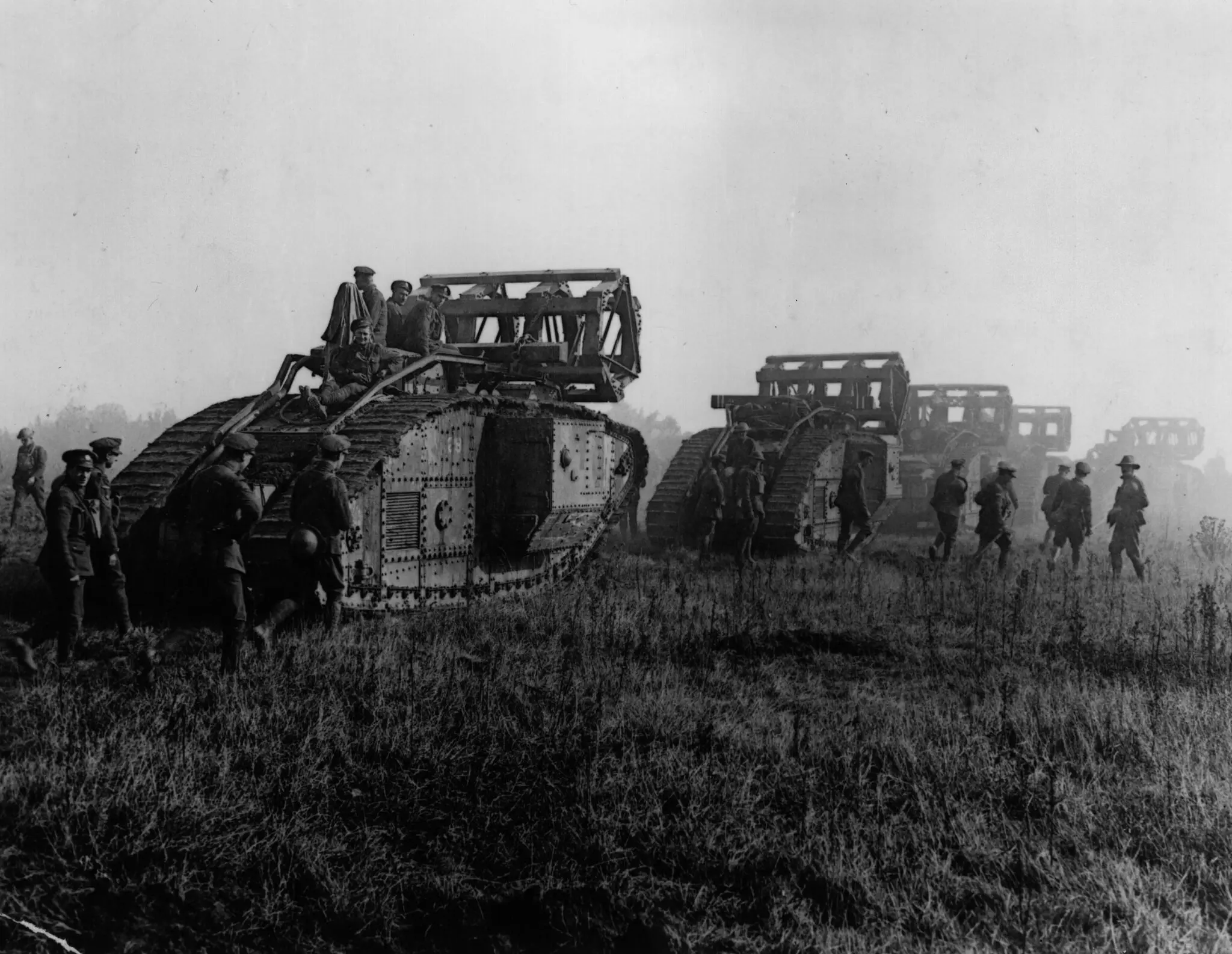 Британські танки під час Стоденного наступу 1918 року. Танки були одним з найбільших технологічних досягнень Першої світової війни — Колекція Генрі Гуттмана/Архів Халтона, через Getty Images
By late 2022, words Europe had thought belonged to history returned to military language: trenches, dugouts, artillery duels, tree-line assaults, night rotations, meters gained at enormous cost. Eastern and southern Ukraine became a space where the front often froze, and movement was measured not in kilometers, but in the price paid by units.
As a century ago, the intensity of fire forced soldiers underground. Artillery, mortars, aerial bombs and rocket systems created an environment in which open movement meant death. A soldier survived not because he was stronger, but because he was deeper, lower and harder to see.
But it is precisely here that the analogy with World War I begins to break. In 1916, the tank emerged as an answer to the trench deadlock. In Ukraine, that role has been taken by the drone — cheaper, more numerous, more flexible and far more widely distributed than the heavy machines of the last century.
Drones have made the line of contact transparent. What could once be hidden by fog, darkness or folds in the terrain is now caught by a camera. Reconnaissance drones detect movement, strike drones punish it, and FPV drones hunt individual vehicles and even lone soldiers.
The old trench system, stretched across open communication lines, has become dangerous. A trench path can be seen from above, an entrance to a dugout can become a marker, and a group of men can quickly become a target. Survival increasingly means not larger fortification, but smaller visibility.
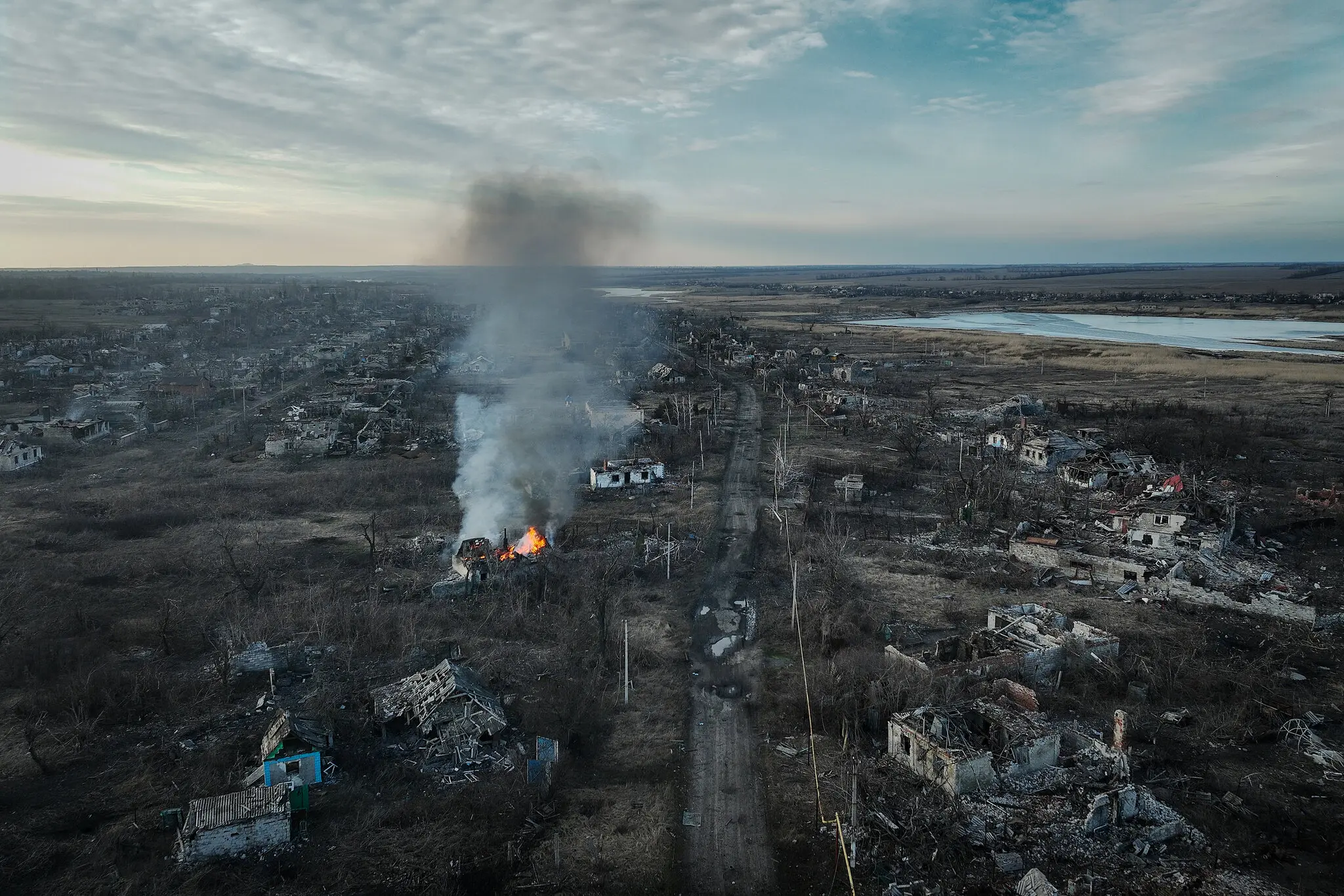 Спустошене село в буферній зоні на околиці окупованого Росією міста Донецьк у 2024 році — Тайлер Хікс
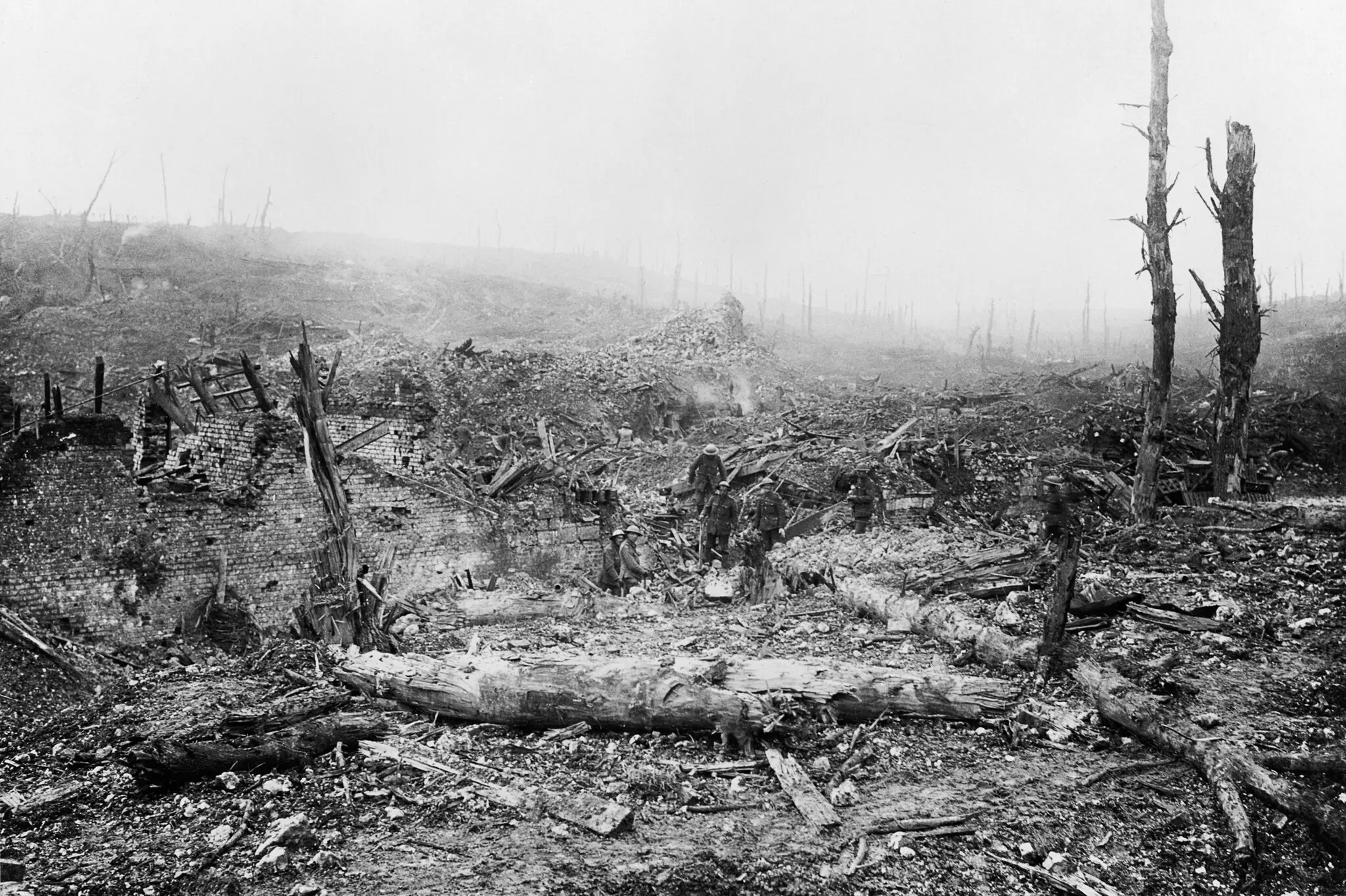 Залишки французького села Бомон-Амель у Пікардії після його захоплення британськими військами у листопаді 1916 року — Лейтенант Ернест Брукс, фотограф британської армії/Імперські військові музеї, через Getty Images
Ukrainian soldiers now speak more often of small, deep shelters built for only a few men. Sometimes a single soldier’s position resembles a foxhole more than a classic trench. The war no longer only demands digging; it demands the design of underground life under the constant eye of a drone.
This has also changed the assault. The mass attacks that sent thousands of men into machine-gun and artillery fire in World War I have become almost impossible in Ukraine. Dense surveillance and strike drones make large groups too vulnerable. Where a company might once have advanced, now one or two soldiers may move.
Tanks, which at the beginning of the full-scale war still carried the aura of breakthrough weapons, have increasingly become large, visible targets. They are covered with metal cages, fitted with anti-drone structures, camouflaged and used more cautiously. War has kept armor on the battlefield, but stripped it of its old confidence.
The destruction, however, often looks eerily familiar. Broken trees, gray fields, shell craters, villages without roofs, cities with their centers torn open, roads crossed only under threat. In drone footage, parts of Donetsk region can look as if history has not moved forward, but merely changed the camera.
Casualties are difficult to compare. World War I killed millions of soldiers across several fronts. The war in Ukraine is smaller in geography and in the number of armies involved, but its lethality for those inside the combat zone approaches the harshest ideas of industrial war.
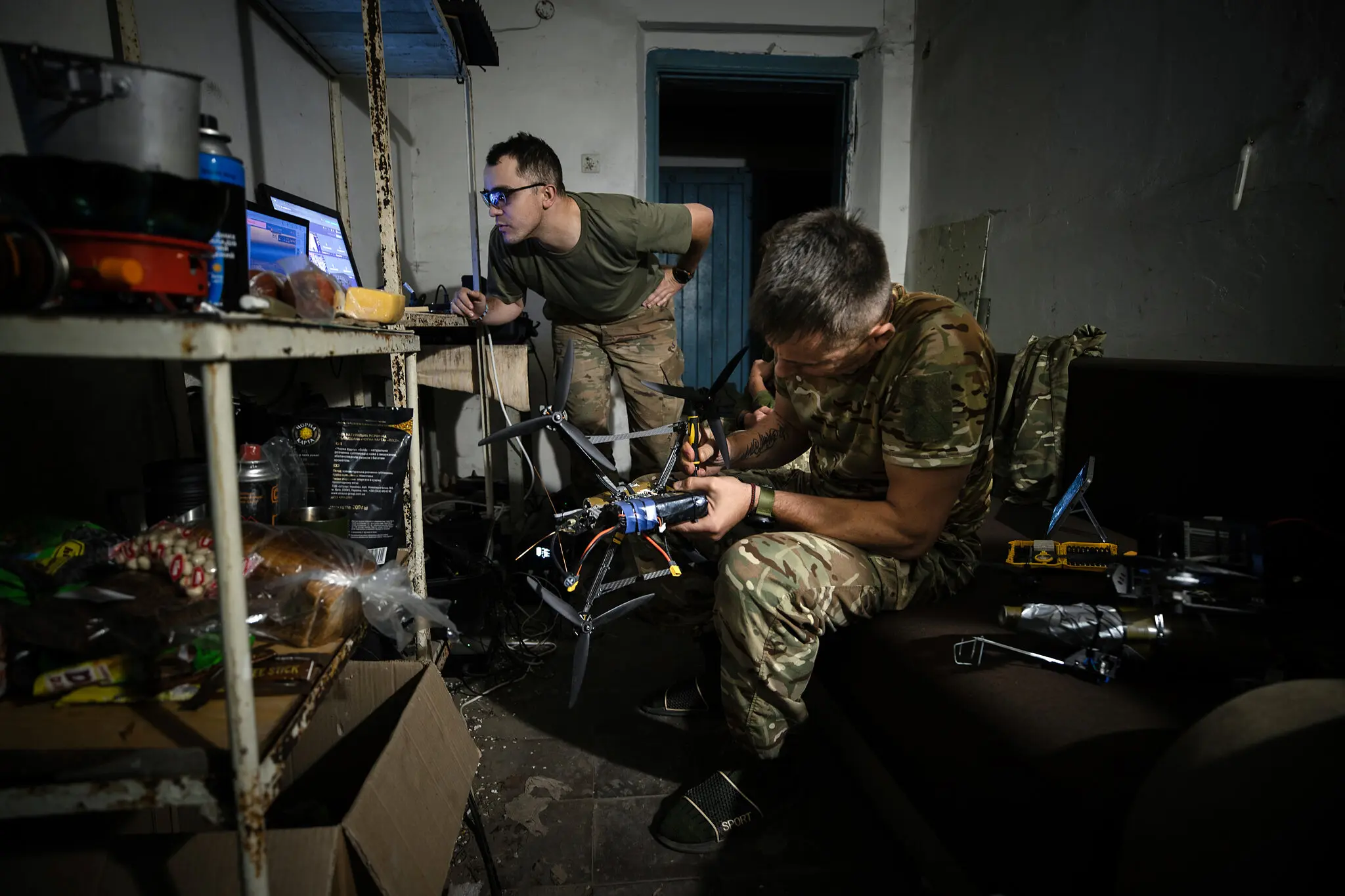 Український солдат готує озброєний дрон поблизу Торецька, Україна, у 2024 році. Дрони змінили війну, відправивши солдатів глибоко під землю та обмеживши пересування на багато миль навколо лінії фронту — Тайлер Хікс
Russian advances in some areas have at times been slower than movement in some of the most notorious battles of World War I. Around Pokrovsk, months of fighting produced progress measured in dozens of meters a day. That arithmetic shows that modern sensors and drones have not abolished attrition. They have made it more precise.
Still, Ukraine is not simply repeating 1914–1918. Then, the great technological shifts were tanks, aircraft, poison gas, new artillery and machine-gun mass. Today, the breakthrough lies in drones, satellite communications, digital maps, artificial intelligence, naval unmanned systems and networks that connect reconnaissance to strikes within minutes.
This has not made war less human. It has made it more merciless toward humans. Technology has not removed the soldier from the battlefield. It has made him more visible, more vulnerable and forced him to act in an environment where a mistake can be recorded instantly. The machine sees more, but the human still dies.
The comparison with World War I also matters politically. That war shattered empires, redrew borders, created new states and left Europe with a trauma that shaped politics for decades. Russia’s war against Ukraine is already changing the continent in a similar way: restoring defense budgets, expanding NATO, rearming Europe and destroying old assumptions about security.
Ukraine is fighting not only for territory. It is carrying the question of whether borders in Europe can again be redrawn by force. That is why the duration of the war is not only a calendar fact, but a civilizational test: every additional month strains allies, economies, political will and social resilience.
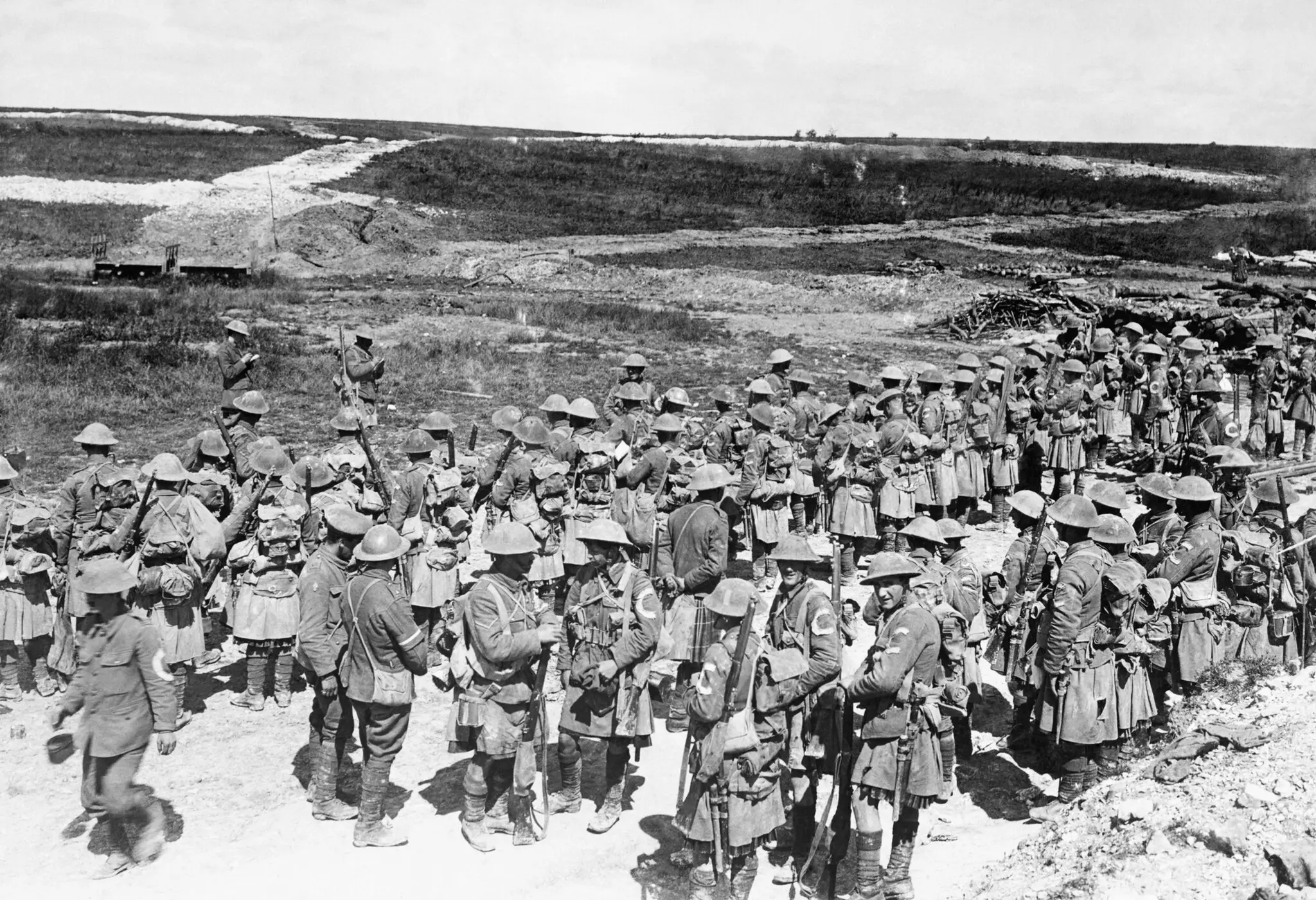 Британські солдати поблизу Бомон-Амеля, Франція, під час битви на Соммі в 1916 році — Лейтенант Ернест Брукс, фотограф британської армії/Імперські військові музеї, через Getty Images

Russia is making a different bet. Its strategy of attrition rests on the assumption that time favors the larger state, with more manpower, deeper reserves and a willingness to pay an enormous price for slow advances. The Kremlin does not need to win quickly if it can force Ukraine and its partners to live under constant pressure.
Ukraine’s response increasingly resembles a layered campaign. At close range, drones hold back assaults and make the forward edge deadly. At medium depth, they strike roads, depots, fuel routes and rotations. At long range, they hit refineries, military factories, airfields and rear infrastructure inside Russia.
There is an echo here of World War I, when economic pressure on Germany was combined with relentless military offensives. Ukraine does not have the manpower to reproduce frontal battles of that scale. Its logic is different: to make Russia’s war more expensive, slower and less manageable before the next assault ever reaches the tree line.
Long-range strikes on oil infrastructure serve that purpose. They are not merely symbolic operations. They target the financial and fuel base of Russia’s military machine. If World War I demonstrated the force of blockade, Ukraine’s war is demonstrating a new form of technological pressure on an aggressor’s economy.
But faith in technology does not erase danger. Ukraine enters the next phase with shortages of air defense, the risk of renewed attacks on its energy grid, pressure in the Donbas and an exhausted society. Drones create opportunity, not certainty. They shift the balance, but they do not replace people, ammunition or political support.
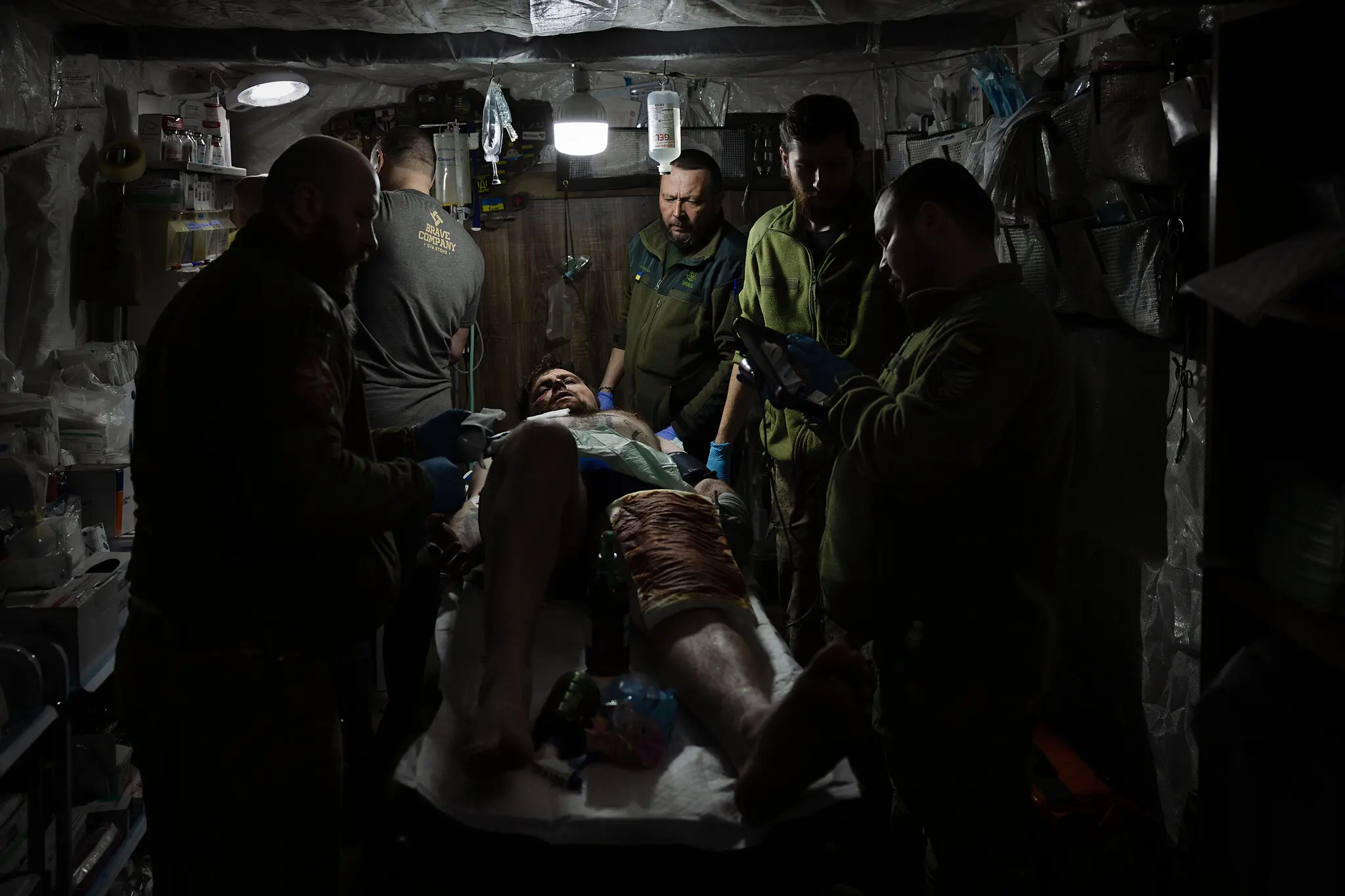 Медики стабілізують стан та лікують українського солдата, пораненого російським безпілотником на сході України минулого року — Тайлер Хікс
The deepest parallel with World War I is not trenches, or even duration. It is the moment when all sides understand that there is no quick exit, but still cannot see the mechanism that will end the war. Talks produce no settlement, maximalist goals remain, and the front consumes time, resources and lives.
For Ukrainians, this war has lasted longer than 1,569 days. It did not begin with the first missile over Kyiv in February 2022, but with Russia’s seizure of Crimea and the start of the war in the Donbas in 2014. The full-scale invasion only exposed what had for years been treated by some as a local conflict.
That is why the calendar threshold with World War I feels so heavy. It shows not only how long the war has lasted, but how wrong the world was to believe that large-scale land war in Europe belonged to the past. History has not repeated itself literally. It has returned in a new technological form.
World War I did not end when both sides were equally tired. It ended when one system lost the ability to continue. Ukraine’s question today is similar: whether Kyiv, with allied support, can make Russia’s continuation of the war more costly than any outcome the Kremlin can accept.
The answer depends on drone production, air-defense supplies, Europe’s defense industry, the resilience of Ukraine’s rear, the quality of command and the ability to maintain political focus. A war of attrition is not won by one breakthrough, but by daily superiority in the speed of learning.
Ukraine has already proved that it can survive a scenario designed to last only days. Now it must prove something else: that it can endure a war longer than one of the most terrible conflicts in European history, without allowing exhaustion to become a form of defeat.
This is no longer World War I with drones. It is a new type of European war, in which the past has returned with trenches and the future has arrived with unmanned systems. Between them stands the Ukrainian soldier — deeper underground, more visible from the sky, and still the bearer of a decision no technology can make in his place.
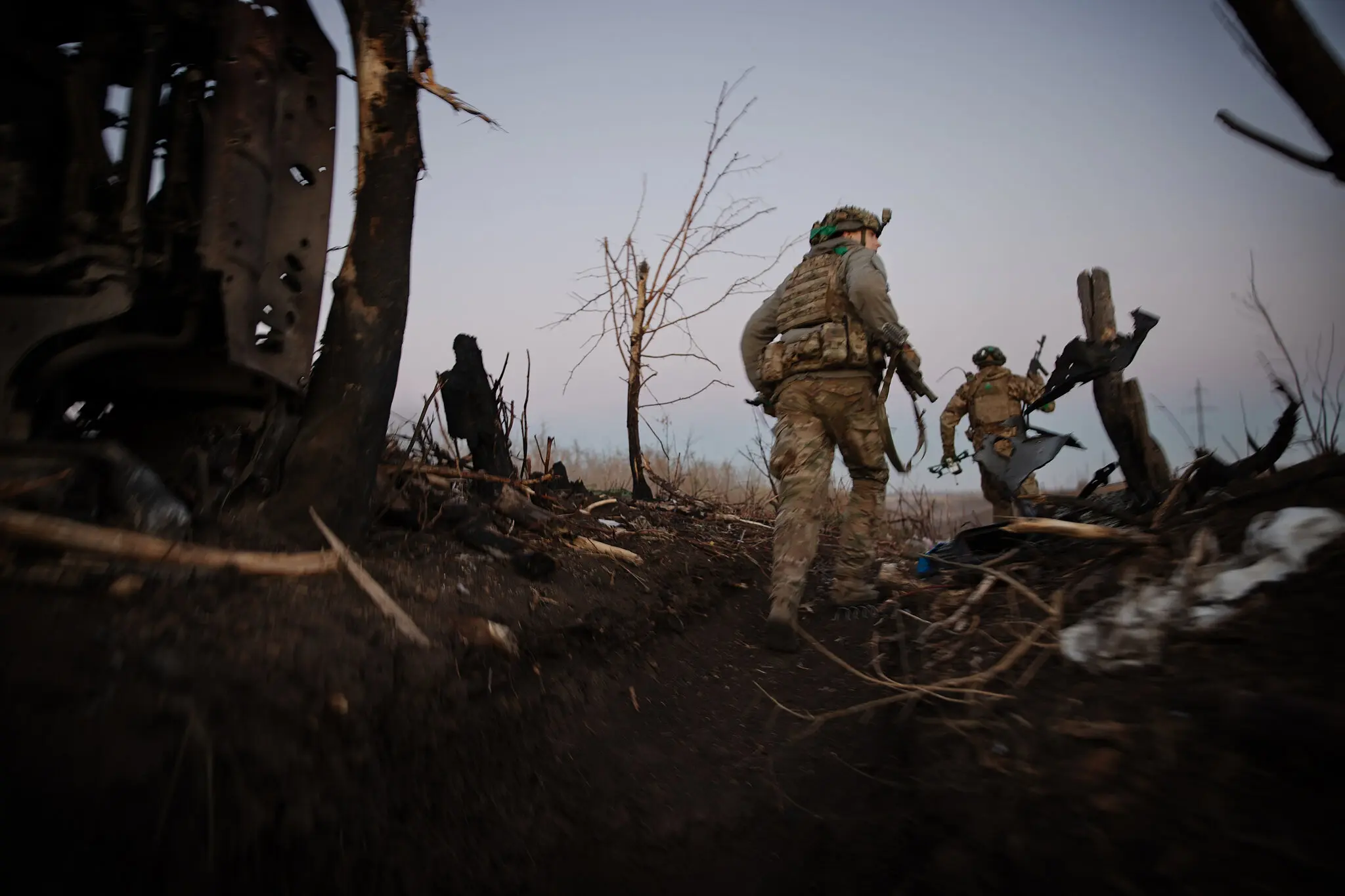 На передовій під Торецьком у 2024 році — Тайлер Хікс