




















Vladyslav Vlasiuk, President Volodymyr Zelenskyy’s sanctions commissioner, is heading to Washington this week with a specific task: persuade the House of Representatives not to block one of the toughest packages of economic pressure on Russia considered by Congress since the full-scale invasion began.
The main political hurdle has already been cleared in the Senate. On August 7, lawmakers approved the measure by 86 votes to 11, an unusually broad bipartisan majority in today’s Washington. The bill bears the name of the late Senator Lindsey Graham, who had championed the idea of secondary pressure on buyers of Russian energy.
The situation in the House is more complicated. A separate House version was introduced on August 10 and sent to several committees, but no floor vote has yet been scheduled. With lawmakers returning from the summer recess, the central provisions of the measure have become the subject of a new political fight.
Donald Trump supports the package. His administration argues that the legislation would give the president additional leverage over Moscow and strengthen Washington’s hand in negotiations. Yet the breadth of those new presidential powers has become one of the main reasons the bill is facing resistance in the House.
Daycom’s analysis indicates that the dispute over US sanctions on Russia is no longer mainly about whether Moscow should face greater pressure. The sharper argument is over who controls that pressure and how much authority Trump should have to punish third countries with tariffs.
That is the political environment Vlasiuk must navigate. For Kyiv, the legislation matters not simply because it would add more Russian officials or companies to sanctions lists. Its central purpose is to raise the economic cost for countries that continue to buy large volumes of Russian oil and gas.
The mechanism goes well beyond traditional asset freezes. The bill targets Russian officials, banks, state structures, defence-sector actors, operators of the shadow oil fleet and foreign companies that help Moscow circumvent existing restrictions.
It would also restrict new US investment in Russia, impose additional limits on transactions benefiting the Russian state and expand measures against financial and payment networks that help sanctioned entities preserve access to international commerce.
The most powerful — and most controversial — part of the package concerns tariffs. Certain goods imported directly from Russia could face duties of up to 500%. Given the already limited scale of direct US-Russia trade, that provision would be punitive rather than systemically important.
Far more consequential is the authority to impose additional tariffs of up to 100% on goods from countries that rank among the largest buyers of Russian oil or gas, or that play a major role in helping Russia evade energy sanctions.
That is fundamentally different from sanctioning a single company or bank. If a country falls within the criteria, the consequences could reach far beyond its energy sector and affect a much wider range of exports to the United States, from industrial goods and electronics to clothing and consumer products.
The potential impact therefore extends well beyond the Russia-Ukraine war. Some of the biggest purchasers of Russian energy are also major US trading partners. Even the threat of a very high tariff could influence contracts, investment decisions and corporate supply chains.
The bill would not automatically impose the maximum rate. The phrase “up to 100%” leaves the administration considerable room to select a specific tariff level and to adjust pressure depending on whether a country is increasing or reducing its purchases of Russian energy.
In other words, the tariff is designed not only as punishment but as a negotiating tool. Washington could threaten significant trade costs, demand lower purchases of Russian oil and then ease the pressure if a partner changes course.
For Ukraine, that structure is particularly attractive. Russia has learned to adapt to direct Western restrictions by redirecting exports elsewhere. Secondary tariffs are intended to make continued purchases of Russian energy less profitable for the buyers themselves.
A country could effectively be forced to weigh two economic relationships against each other. If potential losses in the US market exceed the discount Russia offers on its oil, the incentive to continue buying Russian crude begins to weaken.
That is precisely where resistance in the House has emerged. Some Democrats support stronger pressure on Russia but are reluctant to hand Trump another broad instrument of tariff policy, particularly after earlier disputes over the scope of presidential trade powers.
Several influential Democrats have argued that they support the objective of weakening Moscow but consider the tariff provisions too expansive. In their view, the president already possesses substantial authority under existing law to impose sanctions on Russia.
Their objection is therefore less about whether Russia should face further economic punishment than about the structure of delegated power. Critics fear that legislation passed in response to the war in Ukraine could become an additional legal channel for sweeping tariffs against other countries.
House Democratic leader Hakeem Jeffries has said his caucus has not yet reached a common position. Senior Democrats remain concerned that the new sanctions and tariff authorities could be used far more broadly than lawmakers intend.
That explains the central paradox. A package that secured 86 votes in the Senate cannot automatically expect a similarly overwhelming result in the House. Bipartisan support for Ukraine remains, but presidential tariff authority cuts across a very different fault line in domestic US politics.
November’s midterm elections add further pressure. Republicans hold only a narrow majority, and any increase in prices linked to new trade restrictions could quickly become campaign material. Business groups are also wary of higher import costs from major economies.
The economics of a tariff make that concern tangible. Duties are paid when goods enter the United States, meaning the immediate financial burden falls on the US importer. Some or all of that cost may then be passed on to manufacturers, distributors or consumers.
Supporters of the bill argue that this is exactly what gives the mechanism its power. If a foreign government knows that continued purchases of Russian oil could jeopardize a much larger volume of exports to the US, the incentive to compromise may emerge before the highest tariff is ever imposed.
Another contentious provision gives the president wide discretion to grant exemptions. Trump would be able to waive certain sanctions, restrictions or tariffs if he formally determined that doing so served the national interest of the United States.
For the administration, that flexibility is an advantage. It allows sanctions to function as bargaining leverage — pressure can be increased against a country and then eased in return for lower purchases of Russian oil or other concessions.
For critics, the same flexibility is a weakness. Congress would create a powerful sanctions architecture while still leaving the president broad freedom to decide who faces the harshest measures and who receives relief.
That issue is especially sensitive for Kyiv. Ukraine needs more than legislation containing dramatic tariff numbers. It needs a mechanism credible enough to change the commercial decisions of buyers of Russian oil rather than encourage them to assume that a presidential waiver will eventually shield them.
The package also establishes a tougher structure for lifting sanctions on Russia altogether. Their termination is tied to a peace settlement accepted by a free and independent Ukrainian government and to an end to Russian military aggression.
Congress would retain a role in reviewing an administration decision to remove the restrictions. The intention is to make it harder to dismantle sanctions rapidly as part of a political bargain without formal notice and legislative scrutiny.
For Kyiv, that part of the bill is no less significant than the secondary tariffs. It links the prospect of normal economic relations with Russia not merely to the announcement of a ceasefire, but to an agreement that Ukraine itself accepts.
The Trump administration sees the legislation as an additional negotiating instrument. The higher the potential economic cost of continuing the war for Russia and its trading partners, the stronger the incentive, in Washington’s view, for the Kremlin to move toward a settlement.
Ukraine’s strategic logic is somewhat different. Over years of sanctions, Moscow has built alternative networks of banks, traders, tankers, intermediaries and oil-transfer arrangements. The next stage of pressure therefore has to target not only Russia but the infrastructure that allows it to work around isolation.
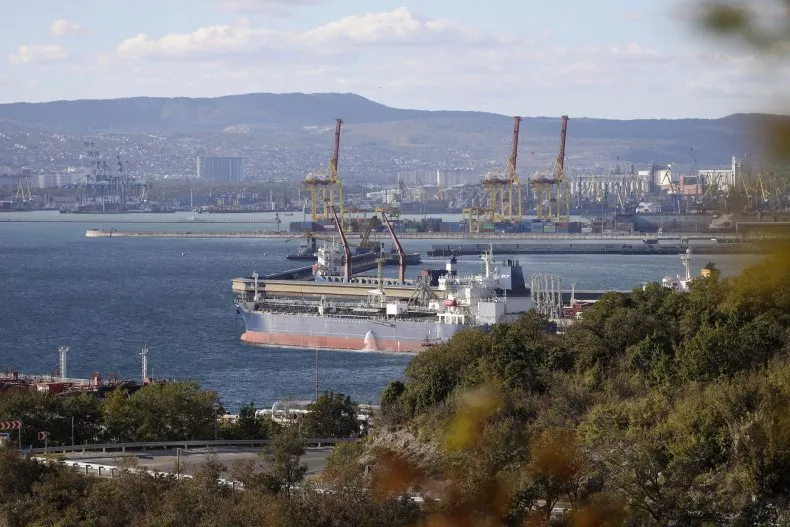
The legislation also addresses vessels involved in transporting Russian oil in violation of sanctions regimes, as well as actors helping disguise cargo origins or circumvent price restrictions. Owners, operators and other participants in those chains could also face penalties.
For Russia’s economy, such pressure could prove more damaging than adding another hundred companies to a blacklist. Oil exports remain one of the country’s main sources of foreign-currency revenue, and maintaining those exports depends simultaneously on buyers, ships, finance, insurance and port access.
Yet the power of the legislation will depend on whether markets believe Washington is prepared to use it. If governments and companies conclude that the United States would never impose steep tariffs on genuinely important trading partners, much of the threat will lose its force.
If the tools are used too broadly, however, the United States could face higher costs, disrupted supply chains and retaliatory trade measures. The current House debate is taking place precisely between those two risks.
That is the space in which the Ukrainian delegation will be looking for votes. Vlasiuk must persuade sceptical lawmakers that the mechanism can be tough enough to reduce Russian revenue while remaining sufficiently controlled that it does not become a universal tariff weapon for the White House.
There is also a procedural obstacle. The House has its own text, while the Senate has already approved a separate version. For the measure to reach the president, both chambers must ultimately agree on identical language or the House must adopt the Senate bill without changes.
Time therefore matters. The closer Congress gets to the midterm elections, the less appetite lawmakers may have for a bill that simultaneously touches Russia, Ukraine, China, India, energy prices, tariffs and presidential powers.
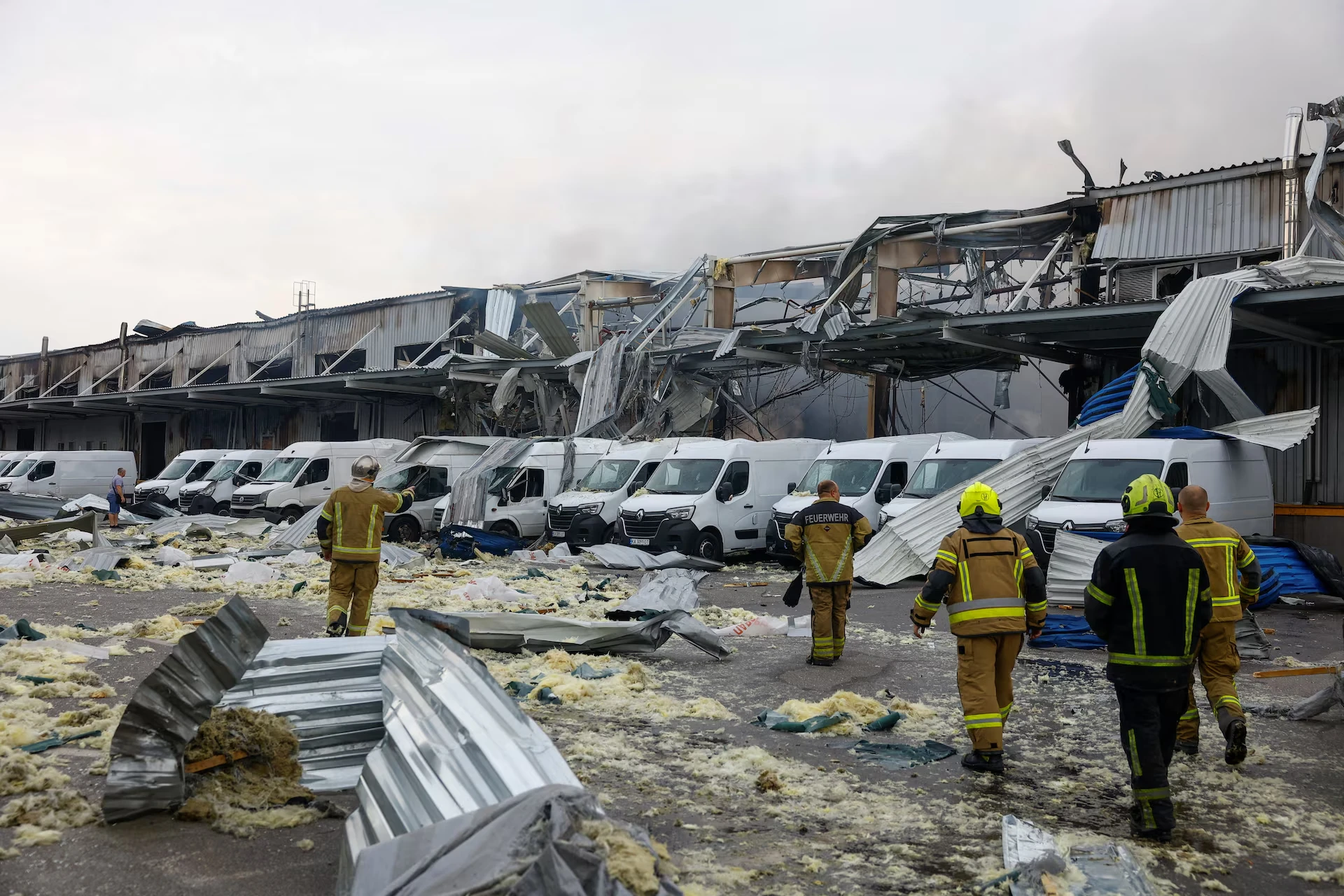
For Ukraine, delay means losing a potentially important instrument at a moment when Kyiv is trying to deepen the economic dimension of the war. Long-range strikes can physically damage Russian refining capacity, while sanctions are intended to reduce the profitability of the energy Russia still manages to sell abroad.
The combination of those two tools is central to Ukraine’s broader strategy: raise costs inside Russia while reducing the value of energy exports outside it. But the second half of that strategy depends on partner decisions, and in Washington it is now entangled in domestic politics.
The paradox of the Graham sanctions bill is that it combines one of the broadest bipartisan coalitions for pressure on Russia with one of the most contentious mechanisms for applying it. The Senate largely agreed on the objective. The House is fighting over the instrument.
That is why Vlasiuk’s visit to Washington is more than routine lobbying for another sanctions package. Ukraine is trying to preserve a mechanism that could turn access to the American market into leverage over buyers of Russian energy. The remaining question is whether Congress is willing to place that leverage in Trump’s hands.