




















A new dispute is sharpening in Washington over whether sanctions on Russia remain an active instrument of pressure or are gradually becoming a reserve tool the administration is reluctant to use. Two senior senators are demanding an explanation for the long pause in measures targeting networks that help Moscow circumvent existing restrictions.
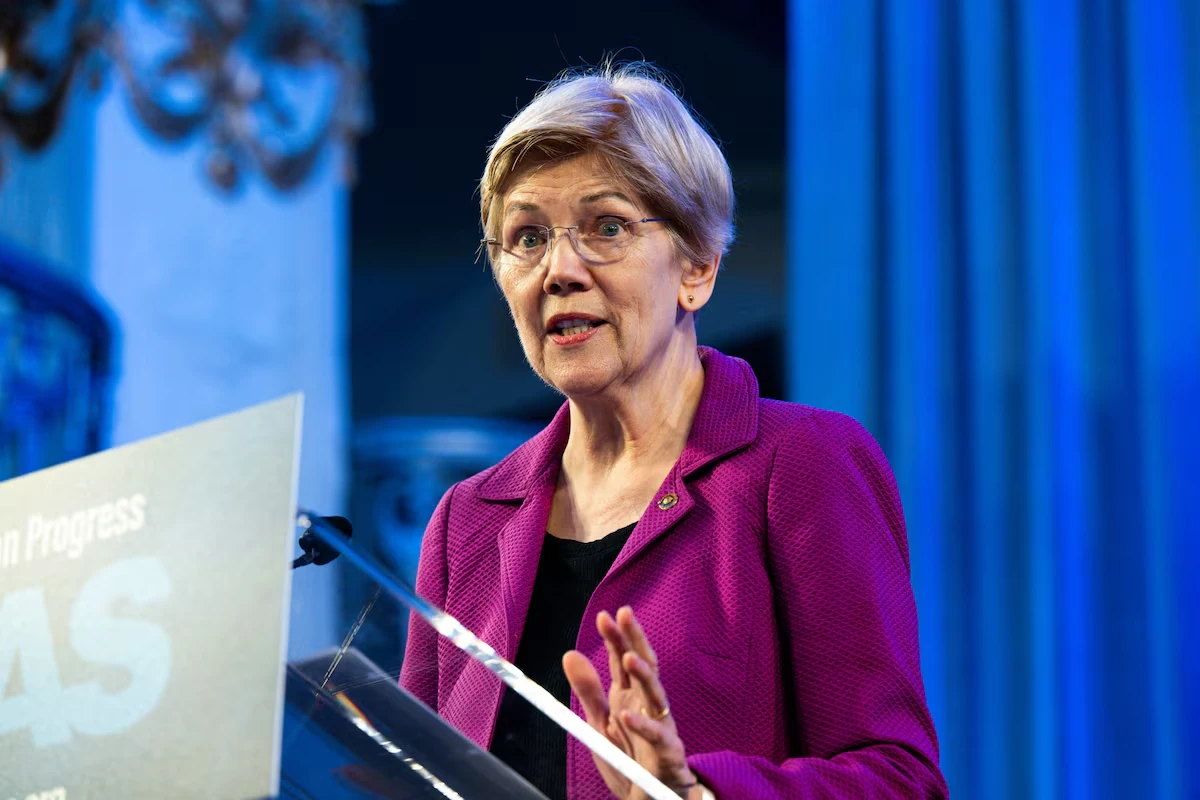
Elizabeth Warren, the top Democrat on the Senate Banking Committee, and Christopher Coons have written to Secretary of State Marco Rubio and Treasury Secretary Scott Bessent. They argue that regular sanctions against companies, banks and intermediaries involved in evasion have effectively been suspended for 17 months.
The administration had justified its restraint in part by citing the need to preserve room for negotiations with Moscow. That reasoning is becoming harder to sustain politically: officials themselves have acknowledged that the diplomatic track has failed to produce significant progress, yet systematic sanctions pressure has not resumed.
As Daycom has previously noted, sanctions are most effective not when a major revenue source is blocked once, but when new routes of circumvention are pursued continuously. Russia’s economy adapts faster than sanctions packages are written, and long pauses give intermediaries time to rebuild payment and supply chains.
The last major U.S. move came in the fall of 2025, when Washington imposed sanctions on Rosneft and Lukoil. Politically, that was a significant signal. But the senators view it more as an exception than as evidence that a sustained enforcement campaign has restarted.
That is the core of their criticism. Sanctions on major Russian corporations matter, but their effect erodes if banks, traders, shipping companies, insurers, technology suppliers and shell firms are not targeted at the same time.
A sanctions regime functions like a network that requires constant repair. Once one route is closed, another appears through a different jurisdiction, company or financial intermediary. Counter-evasion measures therefore work only when they are routine rather than episodic.
After Russia’s full-scale invasion in 2022, the previous administration imposed more than a hundred separate rounds of sanctions. They did not force Moscow to end the war, but they did complicate Russia’s access to capital, advanced technology and parts of the international market.
The difficulty is that sanctions rarely operate like an immediate off switch. Their effects accumulate through higher financing costs, more complicated logistics, technological losses, longer trade routes and greater dependence on a limited pool of partners.
That is why a pause in enforcement matters even when the underlying restrictions remain formally in place. If intermediaries begin to believe that the risk of being sanctioned has declined, they become more willing to enter transactions that once looked too dangerous.
For Russia, this is particularly important in the energy sector. Oil and petroleum-product exports remain a major source of foreign currency, while alternative trading and financial channels help preserve part of that revenue despite restrictions.
The same logic applies to imports. Russia’s defense industry continues to need precision machinery, electronics, machine tools, components and specialized materials, much of which reaches the country through complex chains involving third states.
In such a system, the most effective pressure is not limited to the final Russian buyer. It must also reach the surrounding network of intermediaries. That, in essence, is what the senators are demanding: a return to a pace of sanctions enforcement that forces evasion networks to keep rebuilding themselves.
The political debate is complicated by the administration’s desire to preserve diplomatic flexibility. But a prolonged pause creates a different question: if sanctions were restrained in order to give negotiations a chance, what justifies continuing that restraint once those negotiations have stalled?
That is the central argument of the critics. If sanctions were paused to protect a peace process, and that process failed to advance, then the absence of new measures begins to look less like diplomatic calculation and more like a separate policy choice.
The case is further complicated by the fact that Washington has continued to impose sanctions on other countries even while maintaining diplomatic contacts with them. That weakens the argument that negotiations themselves require economic pressure to be suspended.
The Senate has meanwhile advanced new sanctions legislation aimed at Russia. Its future remains uncertain, however, because some provisions could give the president broader authority to impose tariffs on goods from countries that continue trading with Moscow.
That creates a contradiction inside Washington. Some lawmakers want much stronger pressure on Russia but worry that sweeping tariff powers could also hit U.S. allies in Europe and Asia.
Sanctions policy therefore becomes less a straightforward instrument than a system of trade-offs. Pressure on Moscow can be increased, but part of the economic cost may fall on countries Washington is trying to keep inside a united coalition.
For Ukraine, the equation is simpler. The slower sanctions enforcement moves, the more time Russia has to adapt — and the easier it becomes to finance the war, acquire critical components and sustain industrial production.
That is why counter-evasion measures can matter more than another high-profile sanctions package. A major announcement creates political impact, but day-to-day effectiveness depends on how quickly specific banks, companies, ships, brokers and trade routes are identified and cut off.
The senators have asked the administration to respond by Aug. 28. Their central question is straightforward: if regular sanctions were paused because of peace talks, and those talks have long since lost momentum, why has Washington not restored systematic pressure?
The dispute extends far beyond partisan politics. It is about whether sanctions remain a central pillar of U.S. strategy toward Russia or are gradually being shifted from a tool of continuous pressure into a form of political reserve.
That distinction will shape how seriously Moscow takes future threats of new restrictions. Sanctions derive power not only from what has already been imposed, but from the belief that the next round will be swift, targeted and costly.
If months pass between evasion and punishment, while networks have enough time to reorganize, the deterrent effect begins to weaken.
That is why the current Senate dispute concerns more than Russia and Ukraine. It is also a test of whether the United States can sustain sanctions as a continuous enforcement strategy — or whether they are increasingly becoming a series of isolated political gestures.