





















The U.S.-Israeli war against Iran lasted more than five weeks and quickly evolved from a decapitation strike against the Islamic Republic’s top leadership into a wider regional conflict marked by attacks on military bases, energy infrastructure, and shipping routes in the Persian Gulf.
What began as a direct confrontation soon spread beyond two states, drawing in Lebanon, the Gulf countries, and Yemen’s Houthis, while sending shock waves through global oil markets. Below is a concise timeline of the campaign’s defining moments, from February 28, when the first strikes began, to April 7, when a two-week cease-fire was announced on the war’s 39th day.
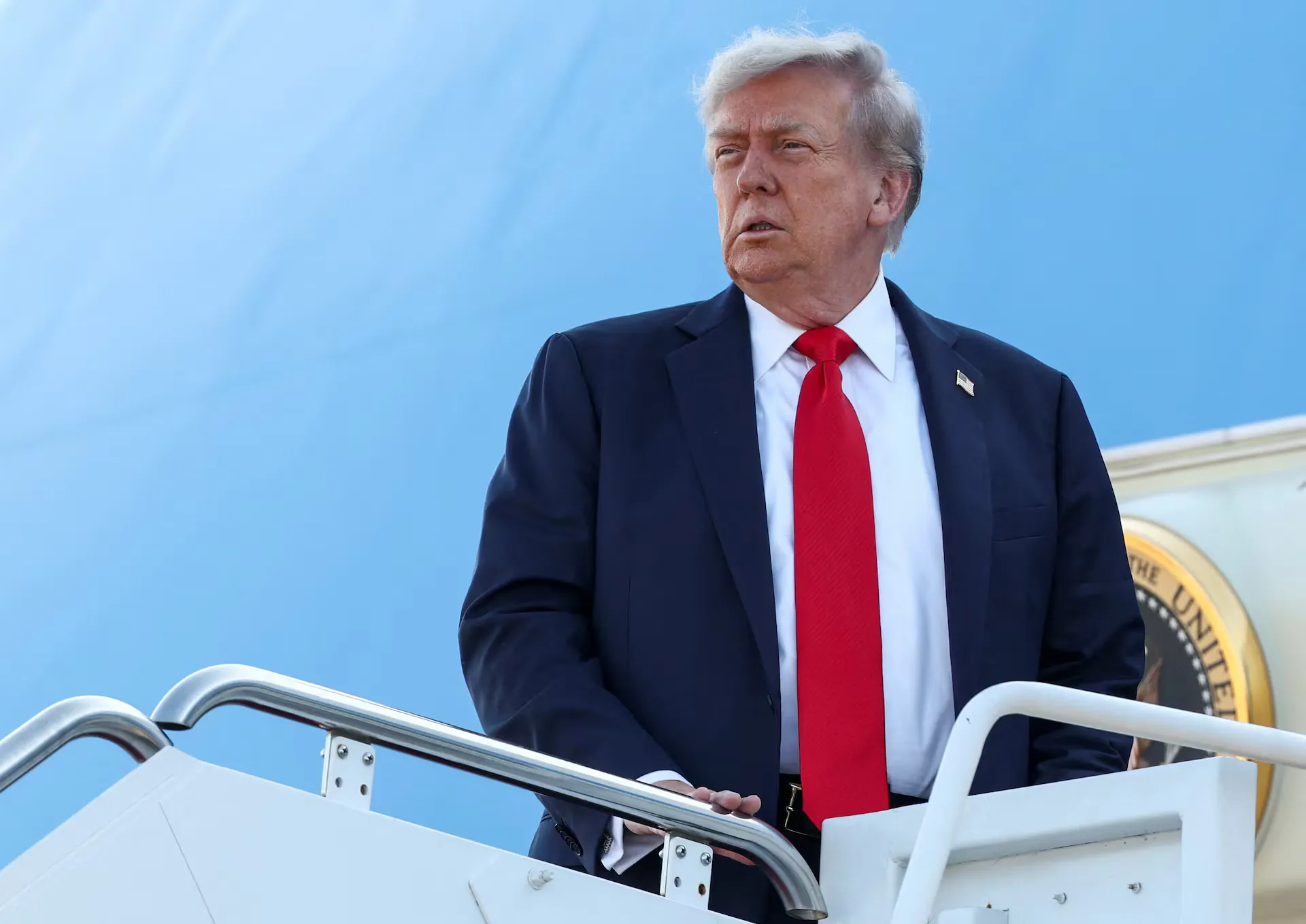
 Президент США Трамп під час прес-брифінгу в Білому домі в понеділок — Кенні Голстон
Timeline of Key Events in the U.S.-Israeli War Against Iran
February 28
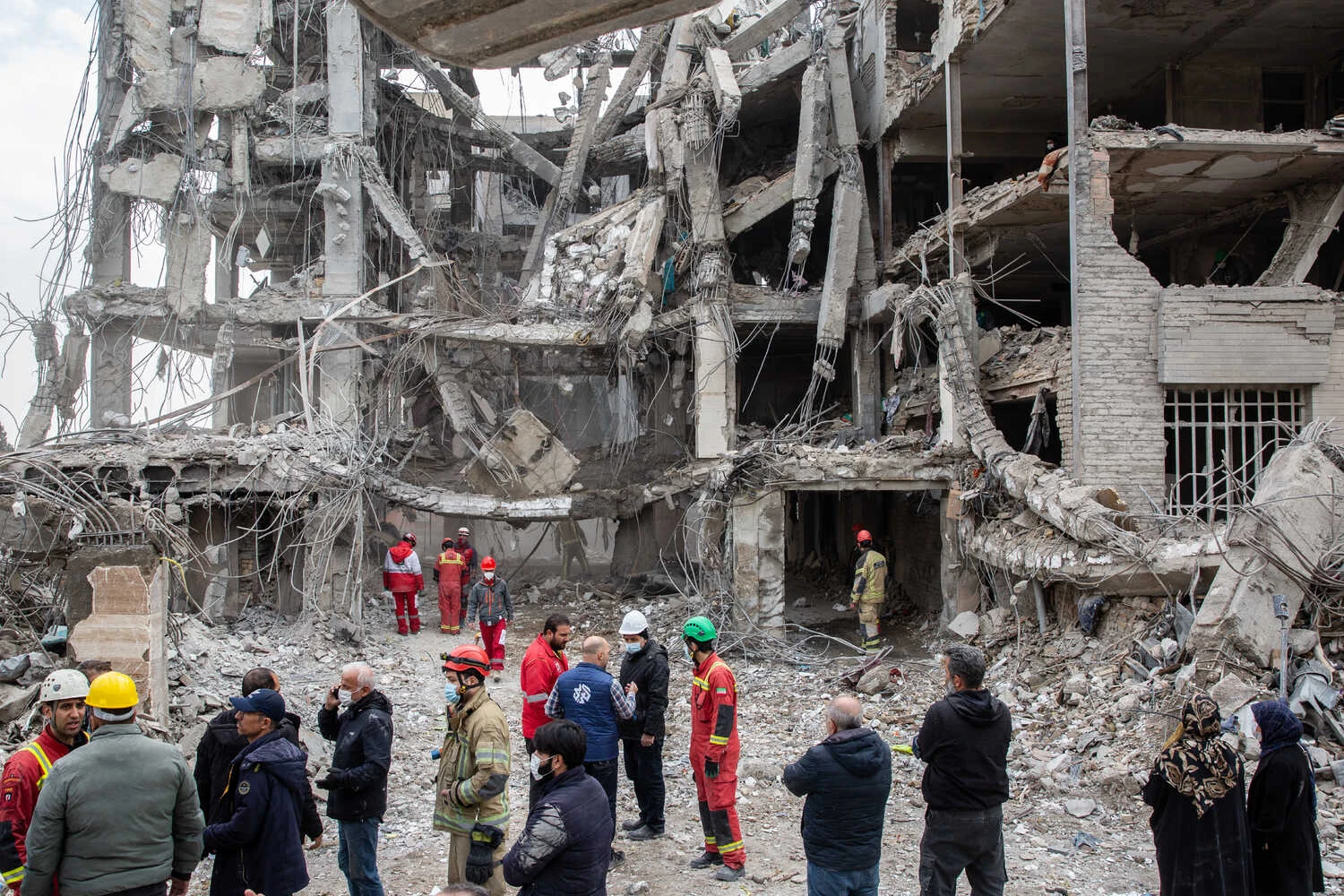
The United States and Israel launched their first strikes on Iranian territory. A government compound in Tehran and a number of military targets were hit. Ayatollah Ali Khamenei was killed, along with several senior military and intelligence officials. On the same day, a strike on a girls’ elementary school in southern Iran killed at least 175 people. Iran responded with missiles and drones aimed at Israel and U.S. bases in Qatar, Kuwait, and the United Arab Emirates.
March 1
An Iranian drone attack on Port Shuaiba in Kuwait killed six American service members, the first U.S. fatalities of the war. Hezbollah entered the conflict by firing rockets at Israel. Donald Trump said the campaign could last “four to five weeks.”
March 8
After much of Iran’s senior leadership had been eliminated, Tehran named Mojtaba Khamenei, the son of the slain supreme leader, as the country’s new supreme leader. The move was meant to project continuity and signal that the regime would not show weakness.
March 11
Iran sharply escalated attacks in and around the Strait of Hormuz. At least three ships were struck. The attacks immediately rattled oil markets and intensified global concern over energy routes.
March 12
Mojtaba Khamenei issued his first written statement as supreme leader and ordered the military to continue choking off the Strait of Hormuz. The same day, a U.S. KC-135 refueling aircraft crashed in Iraq, killing six crew members. Total U.S. military deaths in the war rose to at least 13.
March 13
U.S. forces carried out a large bombing raid on Kharg Island, Iran’s main oil export hub. Trump said the strike targeted military infrastructure rather than oil facilities themselves.
March 17
Israel killed two key figures in Iran’s security structure: Ali Larijani, the head of the National Security Council, and Gholamreza Soleimani, the commander of the Basij. It was one of the most serious blows to Iran’s leadership since the war began.
March 18
The conflict entered a new phase of mutual attacks on Gulf energy infrastructure. Israel struck Iran’s South Pars gas field, which accounts for most of the country’s natural gas production. In response, Qatar said Iran had attacked Ras Laffan Industrial City, the world’s largest LNG export complex.
March 23
Trump publicly said for the first time that the United States and Iran were discussing an end to the war. It was the first open sign of a diplomatic track since the fighting began.

March 27
An Iranian strike on Prince Sultan Air Base in Saudi Arabia wounded 12 U.S. troops. It was one of the most serious breaches of American air defenses during the conflict.
March 28
The Yemeni Houthis joined the war by launching a ballistic missile at Israel. The missile was intercepted, but the move marked a further regional expansion of the conflict.
April 3
Iran shot down a U.S. F-15E fighter jet. One crew member was rescued the same day, while the search for the second lasted another two days. It was the first time in the war that Iran had downed a U.S. combat aircraft.
April 7
Donald Trump announced a two-week cease-fire with Iran. Iran’s National Security Council confirmed the agreement and presented it as a political victory of its own. A cease-fire was declared on the 39th day of the war.

Summary
The war lasted more than five weeks and quickly expanded beyond a two-sided confrontation. It drew in Iran, Israel, Lebanon, the Gulf states, the shipping lanes of the Strait of Hormuz, and global energy markets. Its trajectory moved from a rapid strike on Iran’s leadership to a broad regional escalation, attacks on critical infrastructure, and finally an attempt to freeze the conflict through diplomacy.