




















In June, one of Europe’s wealthiest countries faced a crisis for which it was less prepared than for many conventional emergencies. Elderly people died in overheated apartments, emergency lines struggled with call volumes, and hospitals treated waves of patients in buildings where some wards lacked air-conditioning.
For decades, Belgium built its housing, health system and daily habits around the expectation of a cool, damp climate. That model is now colliding with the reality of a continent warming rapidly and experiencing longer, more intense periods of extreme heat.
In a single week in late June, Europe recorded roughly 16,000 deaths above normal statistical levels. Belgium, France and Germany were among the worst affected. In Wallonia, mortality from mid-June into early July was about 77% higher than expected.
As Daycom has previously noted, climate adaptation is no longer an environmental debate about a distant future. It is becoming a test of basic state capacity. Extreme heat puts hospitals, power grids, housing, social services and emergency response systems under pressure at the same time.
Wallonia became one of the clearest examples of that new vulnerability. On June 28, 313 people died in the region — more than on any single day during the worst phases of the 2020 coronavirus pandemic.
Excess mortality does not mean that every death was caused directly by heat stroke. Heat often works less visibly, aggravating cardiovascular, respiratory and other chronic illnesses and pushing already vulnerable bodies beyond their limits.
That is why official heat-stroke statistics almost always understate the true human cost of extreme temperatures.
Older people were hit hardest. Of more than 900 excess deaths recorded in Wallonia between mid-June and July 1, roughly 85% were among people aged 65 and older.
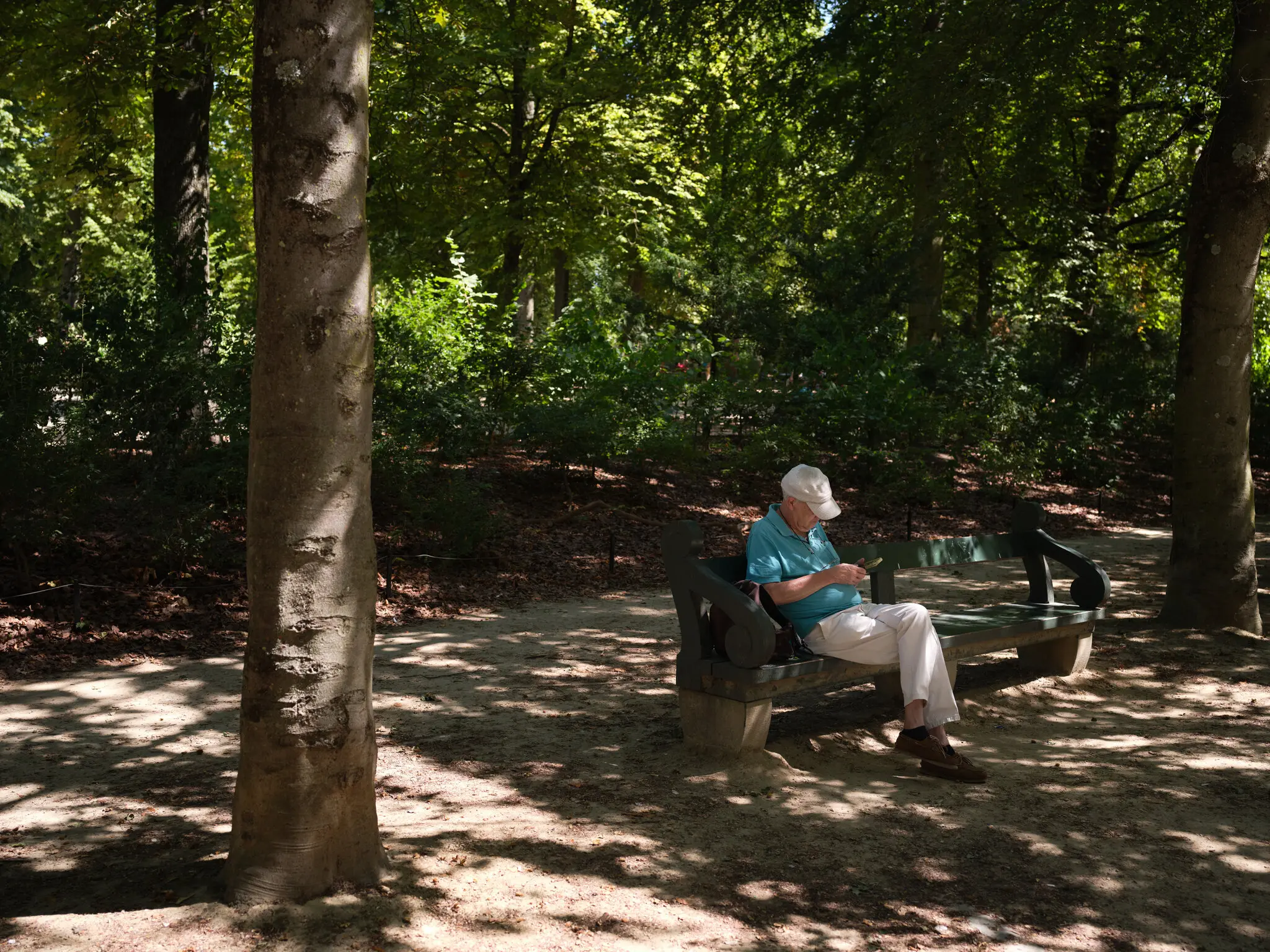
Low-income seniors living alone were particularly vulnerable. Many inhabit aging buildings designed to retain warmth during cold winters. During prolonged heat, the same construction features can turn apartments into traps.
In Belgium, that also means climate risk is becoming intertwined with inequality. Wallonia is poorer on average than Flanders, and lower incomes often mean worse housing, fewer resources for renovation, less access to cooling and a higher prevalence of chronic health conditions.
The result was a stark regional divide: excess mortality in Wallonia was more than twice that recorded in Flanders.
The health system, too, proved better adapted to yesterday’s climate than today’s.
At MontLégia hospital in Liège, the influx of patients became so intense that some were temporarily placed in corridors. Doctors encountered severe overheating cases that, at these latitudes, they had previously associated more with medical textbooks than everyday emergency work.
Other parts of Wallonia experienced similar pressure. At a major hospital in Charleroi, the number of emergency vehicles arriving each day rose from around 60 to as many as 110.
Yet about half of Wallonia’s emergency departments lacked air-conditioning. The medical system was being asked to treat people for dangerous overheating while operating inside overheated buildings itself.
The strain began before patients even reached the hospital. At the height of the crisis, emergency phone lines were overwhelmed, and some callers had to wait several minutes before reaching an operator.
For many routine problems, a delay of several minutes is frustrating. For a stroke, heart attack or severe heat illness, it can determine the outcome.
That is the central lesson from Belgium’s experience: heat is dangerous not only because temperatures rise. It simultaneously increases the number of people needing help while reducing the efficiency of the systems meant to protect them.
Emergency rooms fill up, medical staff tire more quickly, transport systems come under pressure, apartments fail to cool, and patients themselves often recognize the seriousness of their condition too late.
Cultural unpreparedness added another layer of risk. In a country where hot weather was long treated as a short-lived and welcome anomaly, many people have never learned to view heat as a medical threat.
At the beginning of the June heat wave, high temperatures were still being treated by some politicians as an occasion for jokes about overreaction. Within days, the tone changed dramatically as temperatures in parts of Wallonia climbed above 38 degrees Celsius and deaths rose sharply.
The timing made the wave even more dangerous. It arrived early in the summer, before many people had physiologically acclimatized to sustained heat.
Some risks were not obvious even to patients themselves. Certain antidepressants, psychiatric medications and blood-pressure drugs can make the body less able to cope with high temperatures.
People continued commuting, working, walking outside and following their normal routines without realizing that medication or chronic illness could make them considerably more vulnerable.
Climate adaptation therefore reaches far beyond major infrastructure. It also comes down to ordinary decisions: a family doctor warning a patient, a social worker checking on an elderly person living alone, a care home canceling an excursion, or a municipality opening an accessible cooling center.
Europe will also have to rethink its housing stock.
Much of northern and central Europe was built to keep heat inside. Thick walls, limited ventilation, insulated roofs and attic apartments perform well during cold winters but increasingly badly when temperatures remain above 35 degrees for days.
Mass air-conditioning may appear to be the obvious answer, but it comes with its own limits.
Cooling systems sharply increase electricity demand during peak hours. They also discharge heat outdoors, worsening the urban heat-island effect. If tens of millions of European homes begin using intensive cooling at the same time, power grids will face a new seasonal stress test.
Long-term adaptation therefore has to be broader: external shutters, better ventilation, green roofs, shaded streets, more trees, insulation that works in both directions, reflective surfaces and public cooling spaces.
But for the most vulnerable, air-conditioning may need to be treated less as a luxury than as medical protection.
This is where Europe will have to move beyond an old cultural argument over whether air-conditioning represents unnecessary American-style excess. For an 80-year-old with heart disease, the difference between an apartment at 31 degrees and one at 25 can be the difference between hospitalization and an ordinary day.
Belgian authorities have already begun reassessing their response. Measures under discussion include more cooling spaces, better-targeted support for vulnerable residents, changes in how emergency calls are handled and faster renovation of housing.
But the central conflict remains: the climate is changing faster than institutions can adapt.
Renovating a hospital takes years. Upgrading millions of homes takes decades. Training medical staff, building early-warning systems and strengthening social services all require time.
Another heat wave can arrive within weeks.
That is why Belgium’s experience matters far beyond Belgium. France, Germany, the Netherlands, Britain and much of Central Europe share the same underlying weaknesses: aging housing, rapidly aging populations and health systems designed for a cooler climate.
European warming is therefore becoming a demographic problem. The larger the share of the population entering older age groups, the more people will be physiologically less able to withstand extreme heat.
It is also becoming a social problem. A wealthy household can install cooling, leave an overheated apartment or temporarily move out of the city. An elderly person living alone on a small pension may have none of those options.
And increasingly, it is becoming a question of public security — not because heat destroys buildings like a flood or a missile, but because it can overload several life-sustaining systems at once.
Belgium has shown how dangerous the old definition of a “normal summer” has become.
The country did not turn Mediterranean in a single season. But its infrastructure, health system and public habits can no longer be built around the assumption that extreme heat is a rare exception.
The most important adjustment therefore has to come even before new cooling systems and renovated buildings: Europe must stop treating dangerous heat as simply pleasant weather that lasted a few days too long.
In the new climate, it is an emergency that arrives without sirens, leaves buildings standing and often finds its victims alone inside their own homes.
That is what makes it so easy to underestimate — and so costly to underestimate again.