




















British drones for Ukraine have become a new source of tension between Moscow and London after reports that UK-made systems were used for long-range attacks inside Russia. Moscow is warning of “consequences,” while Britain’s Ministry of Defence has not confirmed specific operations and shows no sign of reducing military support for Kyiv.
Russia on August 18 threatened Britain with unspecified “consequences” after reports that British-made drones had been used by Ukraine for long-range strikes against targets on Russian territory. The warning came as Kyiv continues to expand a campaign against oil, logistics and military infrastructure far behind the front line.
The Russian embassy in London said Britain would pay a higher price the deeper it became involved in the war and the greater its support for Kyiv. Moscow did not explain what form any retaliation might take. Similar warnings have been directed at Britain and other Western supporters of Ukraine repeatedly since the full-scale invasion began in 2022.
The immediate trigger was a report in The Times, which cited Ukrainian military sources as saying drones made by two British manufacturers had been used against industrial and military targets in Russia. The newspaper described the operations as the first known use of British-built unmanned systems for strikes of this kind deep inside Russian territory.
Britain’s Ministry of Defence did not confirm that UK-made drones had been used in any specific attack inside Russia. It did, however, reaffirm the broader policy behind British assistance, saying London would continue to provide Ukraine with the equipment it needs to defend itself against Russia’s invasion.
Daycom’s analysis of confirmed public information shows why that distinction matters. Britain unquestionably finances and supplies unmanned systems to Ukraine, but the government has not publicly verified that particular British-built platforms were used in the reported deep strikes. Moscow is treating the media reports as evidence of direct British involvement.
It is also important not to confuse the Times report with a separate British programme announced in June to finance 150,000 drones. The UK government explicitly said those 150,000 systems would be manufactured in Ukraine, even though their purchase is being financed with British funds.
That programme forms part of a £752 million package that also includes additional air-defence support. By the end of 2026, London plans to finance the delivery of the drones alongside more than 350 air-defence missiles and radar systems intended to strengthen Ukraine’s ability to counter Russian aerial attacks.
The funding is linked to Britain’s participation in the G7 Extraordinary Revenue Acceleration mechanism, which is serviced through proceeds generated by frozen Russian sovereign assets. It therefore represents a longer-term financing model rather than a conventional one-off transfer funded solely through an annual defence budget.
Reports about British-made long-range drones concern another strand of cooperation. The Times said systems produced by two UK companies had been used over recent months against military and industrial targets in Russia, placing the issue squarely within the broader debate over Western support for Ukraine’s deep-strike capabilities.
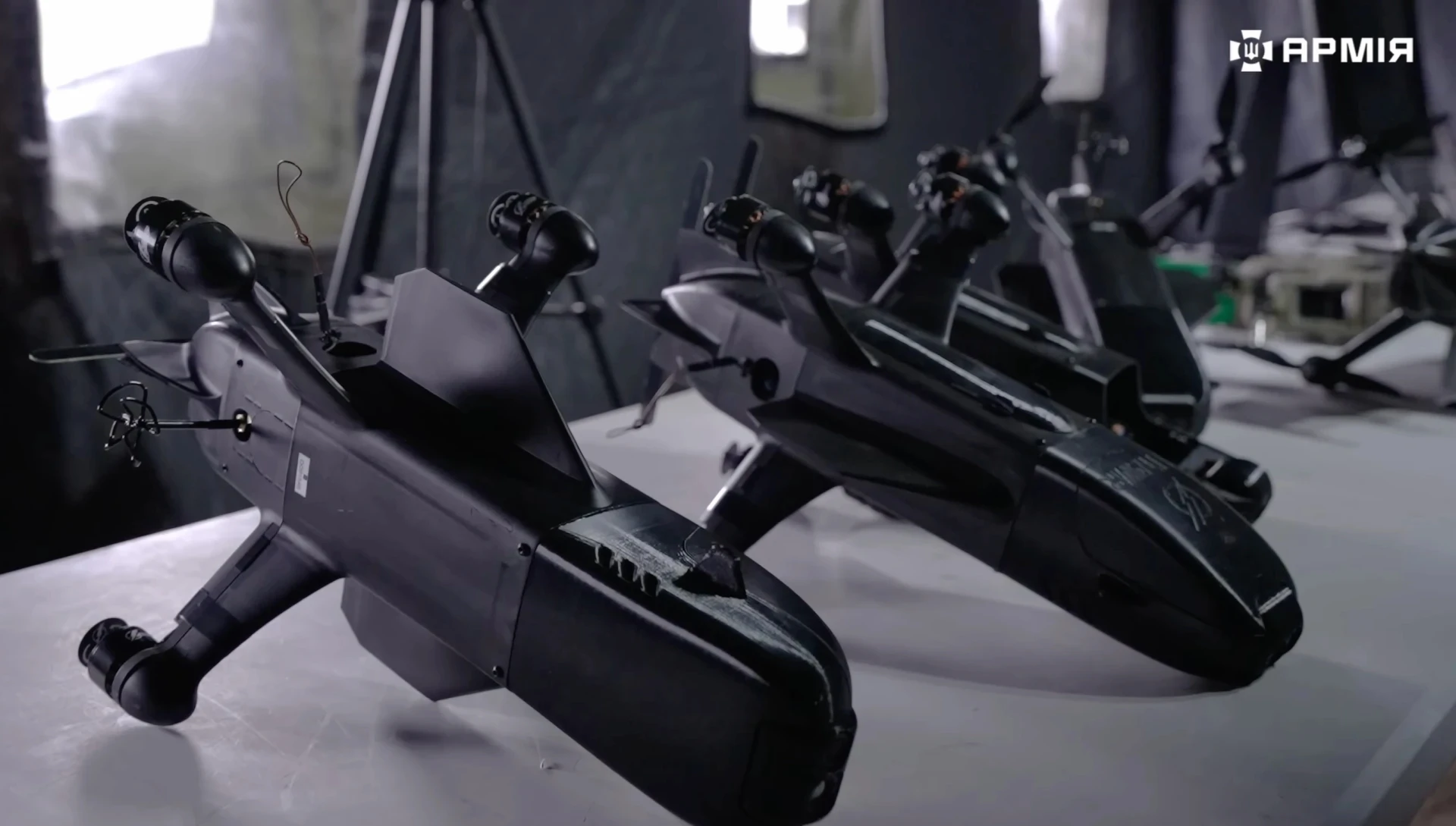
One of the platforms mentioned in public reporting is Nyan, a jet-powered one-way attack system developed by Callen-Lenz, now part of BAE Systems. The manufacturer presents the aircraft as a system designed to penetrate defended airspace and attack targets at operational depth.
BAE Systems explicitly lists deep strike among the intended roles for Nyan. It also says the aircraft has a low radar signature, can operate in environments where satellite navigation is degraded or denied, and can be launched from relatively austere locations without requiring extensive fixed infrastructure.
The company describes the system as operationally proven and says more than 1,000 have been produced. Public corporate material, however, does not provide a complete record of combat missions or establish that Nyan was used in the particular attacks inside Russia cited by the British press.
That is the line between what is confirmed and what remains reported but unverified. The existence and purpose of British deep-strike systems are not in doubt. What has not been publicly established by the British government is whether it authorised or facilitated the use of a specific platform against a specific target in Russia.
Moscow, by contrast, presents such reports as evidence that Britain is becoming a more direct participant in the war. That fits a long-established Russian narrative under which the transfer of increasingly capable Western weapons is portrayed as evidence that supplying states are themselves moving closer to direct confrontation.
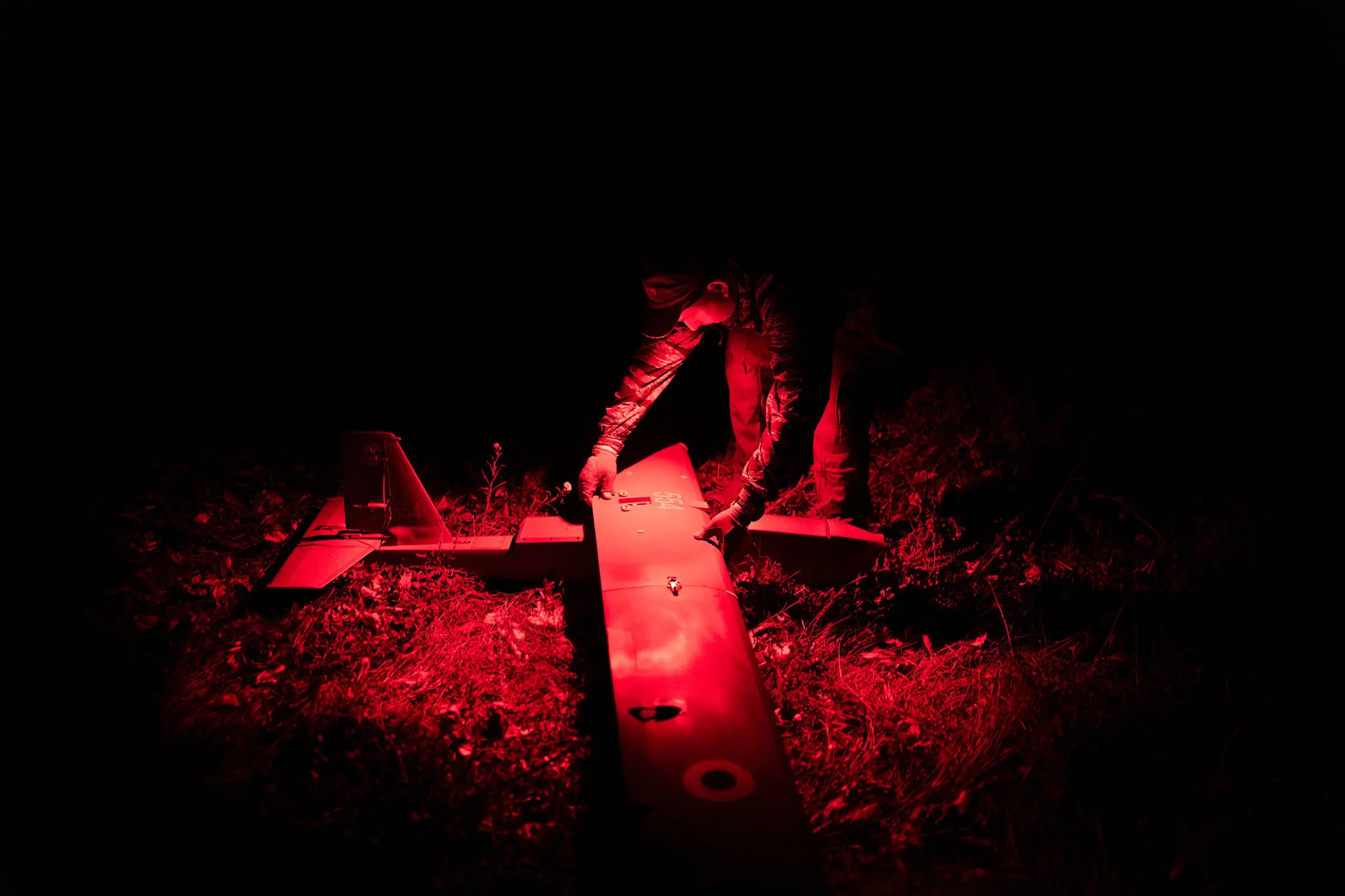
Ukraine, meanwhile, has been steadily expanding its long-range strike campaign. Drones have repeatedly targeted oil refineries, logistics hubs, military facilities, airfields and other infrastructure that Kyiv says contributes directly to Russia’s ability to sustain military operations against Ukraine.
Some targets struck in recent months have been located more than 1,000 kilometres from the Ukrainian border. That distance illustrates how quickly Ukraine’s unmanned strike capability has evolved and how the war is increasingly reaching industrial and logistical assets once considered relatively secure in Russia’s interior.
Kyiv argues that these operations are intended to reduce Russia’s economic and military capacity to continue the war. Oil-processing facilities support domestic fuel supply, export revenues and military logistics, meaning that even temporary disruptions can have consequences beyond the immediate physical damage at a single site.
Russian regional authorities have in some cases acknowledged prolonged disruption after Ukrainian attacks. Damage to specialised industrial equipment can be particularly difficult to repair when replacement parts are foreign-made, restricted by sanctions or no longer readily available through pre-war supply chains.
For Britain, support for Ukrainian long-range capabilities no longer consists only of transferring ready-made equipment. London is also investing in its own defence industry and using battlefield lessons from Ukraine to accelerate the development of lower-cost, precision systems capable of striking targets at greater distances.
One prominent example is Project Brakestop. Britain’s Ministry of Defence has asked industry to develop a ground-launched strike system with a range of more than 500 kilometres, a warhead weighing at least 225 kilograms and a speed above 600 kilometres per hour.
The target cost is around £400,000 per system excluding the warhead. That is significantly cheaper than many traditional cruise or ballistic missiles and reflects a wider wartime trend towards weapons that are less expensive, easier to manufacture at scale and more adaptable to rapidly changing battlefield conditions.
Projects from MBDA UK, MGI Engineering and Rotron Aerospace have advanced to flight-testing stages under Brakestop. Britain has already commissioned improved prototypes for subsequent phases, with further trials expected to take place not only in the UK but also in operationally relevant environments connected to Ukraine.
The programme does not prove any connection between Brakestop and the current strikes inside Russia. Those systems remain under development. It does, however, demonstrate the strategic direction of British policy: London increasingly regards long-range precision strike as a core requirement for both Ukraine’s future defence and NATO’s broader deterrence posture.
Britain has also moved to lead a wider European effort on deep precision strike. The initiative involves roughly a dozen countries and envisages tens of billions of dollars in investment over the coming decade in systems with ranges extending from several hundred to more than 2,000 kilometres.
London itself plans to invest billions of pounds in long-range strike programmes through the end of the decade. British officials have openly pointed to the Ukrainian experience as evidence that strikes against logistics and infrastructure deep behind enemy lines can disrupt the ability of an adversary to sustain offensive operations.
Seen in that context, Russia’s warning to Britain is about more than one drone model. Moscow is responding to a broader erosion of the old distinction between Western assistance intended only for the immediate defence of Ukrainian territory and support for capabilities that allow Kyiv to impose costs deep inside Russia.
British policy increasingly reflects that shift. London is simultaneously financing air defence, large-scale drone production, training, precision munitions and the development of future long-range platforms. The result is a support structure designed not only to keep Ukraine fighting today, but to shape its military capabilities for years.
Britain’s overall military commitment to Ukraine already runs into many billions of pounds, with the government maintaining a multi-year framework for continued assistance. That long-term approach suggests that repeated Russian warnings are unlikely, by themselves, to alter the strategic direction of British policy.
At the same time, uncertainty surrounding the operational use of specific British drones remains important. Moscow speaks as though Britain’s direct role has been established, while London avoids confirming details of particular missions. Publicly available evidence still consists of press reporting, known system capabilities and Britain’s broader military-support policy.
For Ukraine, long-range drones have become a way to compensate for limited stocks of expensive missiles and to transfer part of the military pressure onto Russian rear areas. For Britain, the Ukrainian battlefield has simultaneously become an important source of lessons for the accelerated development of new weapons and operational concepts.
That combination is what makes British drones for Ukraine increasingly sensitive in relations between Moscow and London. The dispute is no longer simply about how much weaponry Britain provides, but about how far that weaponry can extend the geographic reach of the war.
Russia’s threat still lacks a specific scenario for retaliation, but it marks a new stage in the confrontation. The central argument is shifting from whether Western states arm Ukraine to how deeply Western-backed systems can strike inside Russia. That question is likely to remain one of the most volatile points of tension between Moscow and Kyiv’s allies.