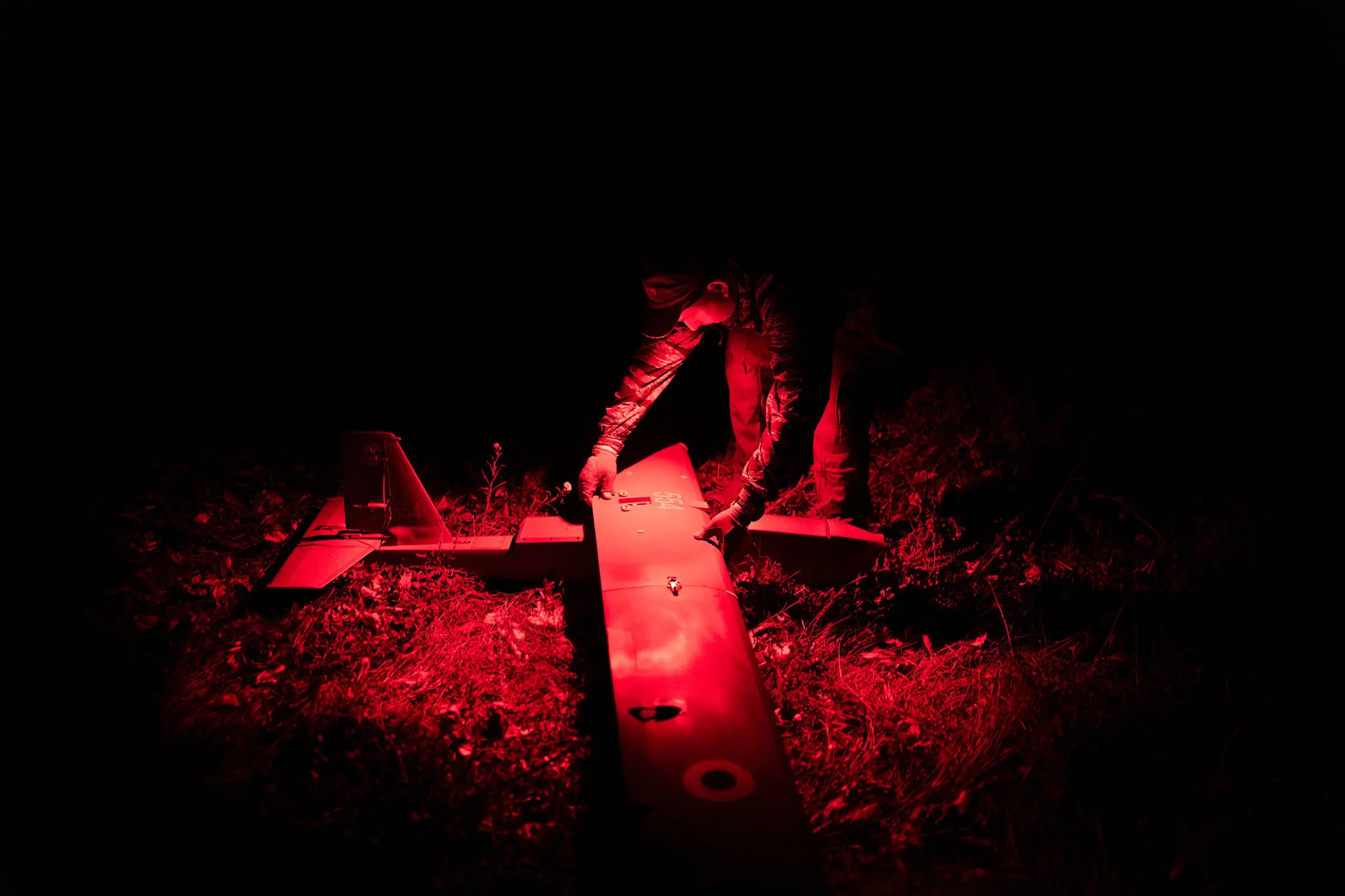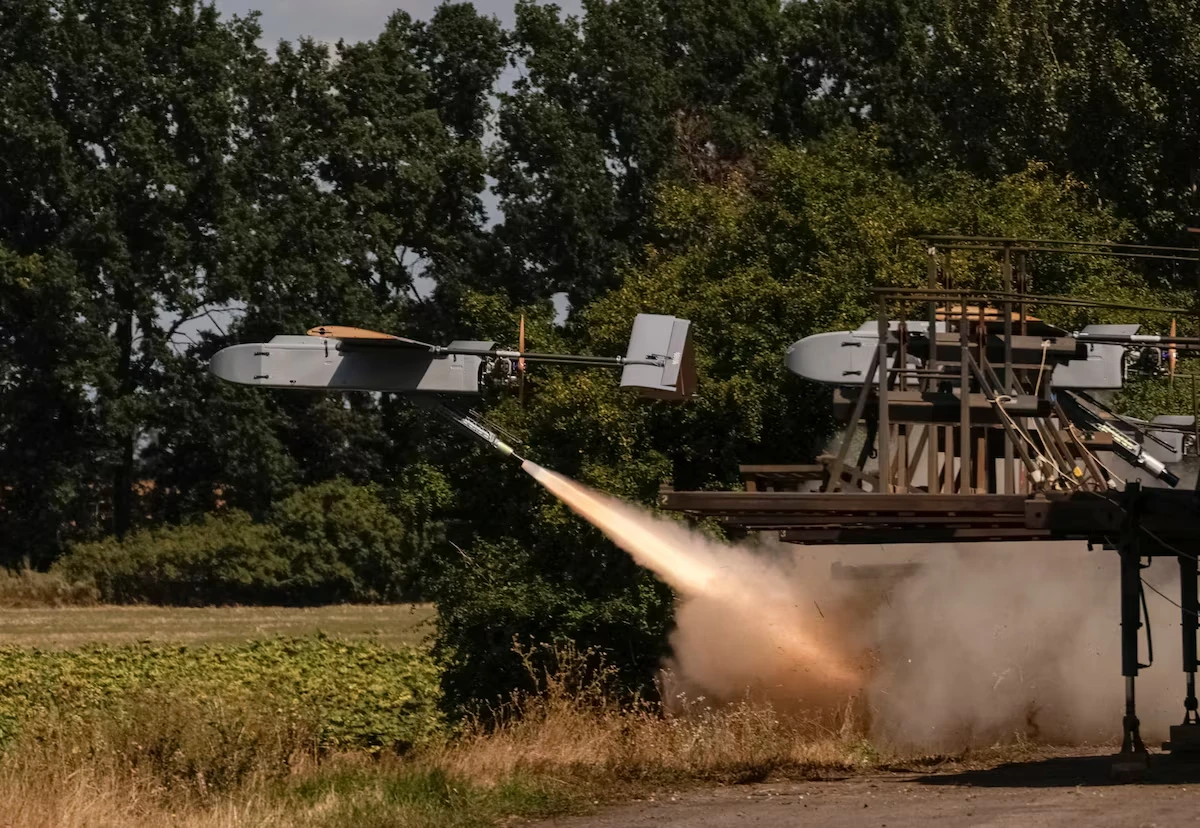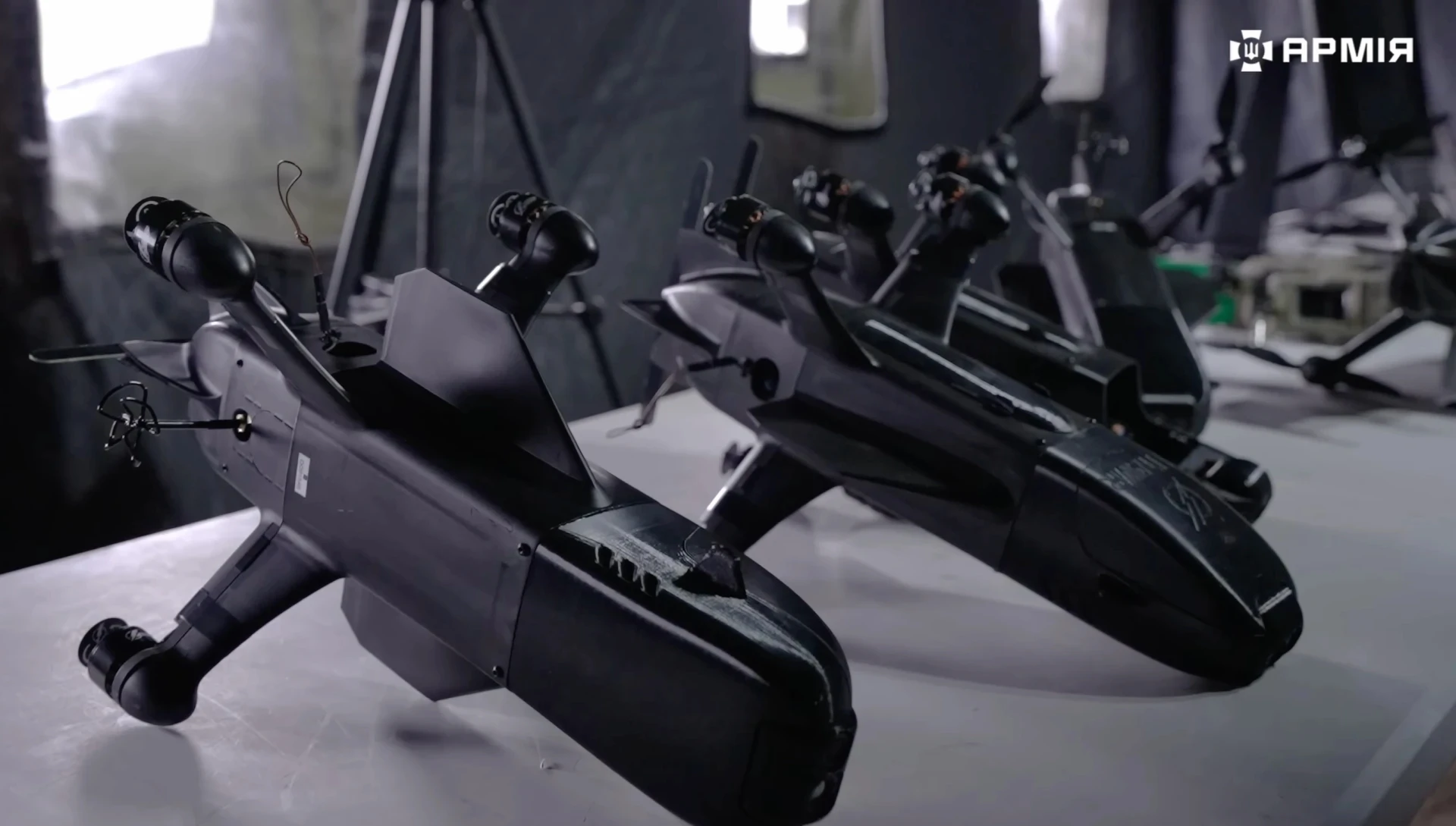



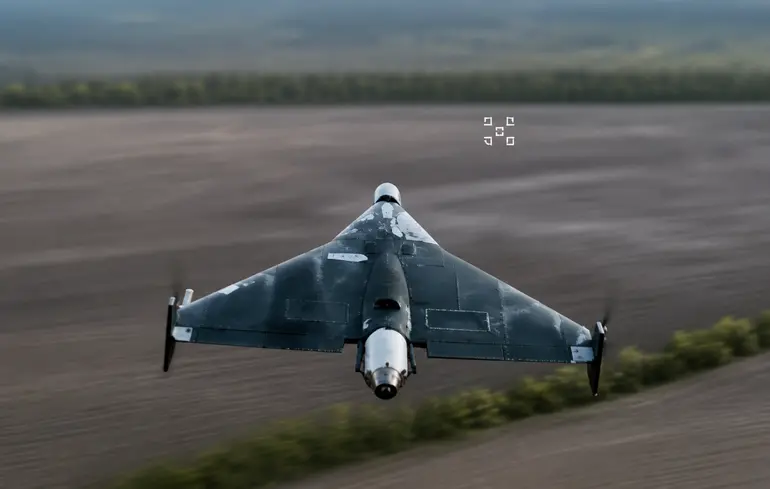



















The night of August 18 turned the airspace around Moscow into one of the most heavily contested zones of Russian air defense since the beginning of the full-scale war. Moscow Mayor Sergei Sobyanin said that between Monday evening and 5 a.m., a total of 620 drones were heading toward the Moscow region. According to him, 180 were destroyed within the region itself. If those figures are accurate, this was not simply another drone attack on Moscow but an operation on a scale at which Ukrainian long-range strikes are beginning to impose a permanent burden on the Russian capital—less like isolated raids and more like a sustained air campaign. The number of aircraft cited by Russian officials cannot currently be independently verified.
This time, the consequences were not limited to reports of air-defense activity. Moscow Region Governor Andrei Vorobyov said at least three people were injured, including a 10-year-old girl. Drones or their debris damaged several sites across the region. A warehouse operated by Russian e-commerce company Wildberries was hit again. The company said one of its walls sustained minor damage after being struck by drone debris. At the same time, flights across Moscow’s aviation hub were temporarily restricted—a measure that has become familiar in recent months but, during large-scale raids, amounts to a direct intrusion of the war into the operation of one of Russia’s most important transport centers.
There is an important distinction in the figure of 620. Sobyanin did not say that all of those drones were shot down over Moscow or even that they reached the Moscow region. He said they were heading in the direction of the capital region; 180, according to Russian officials, were destroyed after entering the region. That distinction matters. Russian official statements about mass drone attacks often combine data on targets intercepted along different routes and at considerable distances from their presumed objectives. The figure of 620 should therefore be understood as Moscow’s claim about the scale of the aerial flow toward the capital, not as a confirmed number of strikes on the city itself. Even so, 180 claimed interceptions inside the Moscow region would by itself indicate an exceptionally intense night.
The timing makes the attack particularly striking. It came only two days after another extremely large raid. On August 16, Ukrainian drones had already struck the Moscow region, where an 83-year-old man was killed, several people were injured, and a major fire broke out at a Wildberries warehouse in Koledino, about 45 kilometers south of Moscow. At the time, Russia’s Defense Ministry claimed that 822 Ukrainian drones had been shot down across the country. Moscow is therefore no longer dealing with a single record-setting raid followed by a return to normality, but with a succession of mass operations separated by only a few days.
According to a preliminary analysis by “Deikom,” the frequency of these attacks, rather than the record numbers alone, is becoming the clearest sign of a shift in Ukraine’s long-range strike strategy. One major attack can set a warehouse on fire, damage an industrial site or close an airport for several hours. A sequence of major attacks forces the adversary to keep radar systems, surface-to-air missile units, mobile fire teams, combat aircraft, emergency services and civilian air-traffic management structures on sustained alert. In such a model, the question is no longer only how many drones reach a specific target. It is also how many resources Russia must spend every night to prevent them from doing so.
Only a few months ago, an attack involving hundreds of drones aimed at the capital region would itself have dominated the news. Now such numbers are recurring. On July 20, Russian authorities said more than 400 drones had been launched toward the Moscow region in a single night. Ten people were reported injured, buildings and industrial facilities were damaged, and Sobyanin said 85 drones had been destroyed on approaches to the capital. On June 18, during another major raid, the mayor of Moscow also reported 180 drones shot down around the city, although some aircraft still reached the Moscow Oil Refinery in Kapotnya. Sixteen people were injured in the wider Moscow region, while all major airports serving the capital temporarily suspended operations.
This sequence shows how quickly the geography of the war is changing. At the start of Russia’s full-scale invasion, Moscow lay deep beyond the reach of most Ukrainian strike systems. The Russian capital could function almost separately from the physical consequences of the war, while missiles and drones repeatedly struck Kyiv, Kharkiv, Odesa, Dnipro and other Ukrainian cities. By 2026, that asymmetry has narrowed substantially. Ukraine has developed its own long-range unmanned systems capable of traveling hundreds of kilometers, navigating around air-defense routes and forcing Russia to protect territory that was once considered effectively out of reach.
Moscow is an especially difficult target in this regard. One of the densest air-defense networks in Russia has historically been deployed around the capital. The region contains the country’s main state institutions, military structures, industrial plants, large logistics hubs, oil-processing facilities and one of Europe’s largest aviation centers. Ukrainian President Volodymyr Zelensky said in May that the Moscow region was the most heavily saturated part of Russia in terms of air defenses, while arguing that Ukrainian long-range systems were already capable of penetrating at least part of that shield. The fact that large groups of drones are now repeatedly reaching the capital’s defensive belt forces Russia to disperse expensive air-defense assets far from the front.
That creates one of the central economic paradoxes of modern warfare. A long-range drone can cost substantially less than the missile used to intercept it. Even if most of the attacking aircraft are destroyed, the attacker can still achieve part of its strategic objective simply by compelling the defender to expend costly ammunition, activate radar systems, relocate air-defense units and constantly revise defensive patterns. During raids involving hundreds of aircraft, the arithmetic becomes particularly unfavorable for the defending side: only a few drones need to get through to ignite a fuel depot, warehouse or industrial facility, while stopping the entire wave requires an enormous and expensive defensive architecture.
Civil aviation is another critical part of the equation. Every temporary closure of Vnukovo, Domodedovo, Sheremetyevo or Zhukovsky is not a military defeat in itself, but it creates a cascade of consequences: delays, diverted flights, additional fuel costs, crew scheduling problems, passenger congestion and the need to rebuild timetables once airspace reopens. The more frequent drone attacks on Moscow become, the more this effect shifts from an emergency exception into a systemic transport risk. During one of the previous mass raids in June, all Moscow airports suspended operations, while Sheremetyevo, the largest of them, reported evacuation measures.
Wildberries has meanwhile become a recurring symbol of the current campaign. Russia’s largest online retailer has repeatedly found itself among the facilities affected by attacks in recent weeks. Ukrainian officials have accused parts of its logistics network of supporting Russia’s war effort and circulating military or dual-use goods. On August 16, a strike on the warehouse in Koledino caused a major fire, while a person was killed elsewhere in the Moscow region during the attack. Two nights later, another Wildberries facility was damaged. This time the company said debris had only slightly damaged a wall. The repetition of such incidents suggests that large logistics centers are increasingly being treated as part of the economic infrastructure capable of sustaining Russia’s military system.
At the same time, the campaign increases risks to civilians. The injuries to a 10-year-old girl and two other people are a reminder that even a successful interception does not eliminate danger. A destroyed drone and the missile used against it do not vanish in the air: debris falls to the ground, can penetrate roofs, start fires and cause injuries. In the densely populated Moscow region, where urban areas, private housing, industrial zones, warehouses and transport infrastructure are packed closely together, large-scale air-defense activity itself creates an additional hazard. The exact balance between direct drone impacts and damage caused by falling debris often becomes clear only after emergency crews complete their work.
There is also an information problem. Figures describing hundreds of supposedly destroyed drones come primarily from Russian state institutions, while the full statistics cannot be independently verified in real time. Public videos can confirm explosions or fires at specific locations, and satellite imagery can establish damage at major facilities, but neither provides a complete count of launched or intercepted aircraft. Reports of 620 drones and 180 shot down in the Moscow region should therefore be treated seriously as an indication of the scale of the alert, but cautiously as wartime statistics issued by one of the belligerents. Even allowing for a substantial margin of error, the broader trend is clear: the number of long-range drones Russia says it is confronting during Ukrainian attacks has risen sharply in recent months.
That trend is changing the very meaning of the Russian rear. A secure rear is essential to a war economy not only for weapons production, but also for repair, storage, transportation, oil refining, power supply, airport operations and the psychological stability of major cities. When long-range drones regularly reach the Moscow region, Russia is forced to defend an expanding list of sites—from refineries and military factories to warehouses and transport junctions. No air-defense system has unlimited numbers of radars, launchers and interceptor missiles. Assets shifted toward Moscow cannot simultaneously protect another region or front-line infrastructure.
For Ukraine, this is the strategic logic behind long-range strikes. Kyiv has repeatedly said it intends to push the consequences of the war onto Russian territory and target facilities that sustain the Russian military. In July, Zelensky spoke explicitly about strikes on logistics near Moscow, warehouses containing components for military production and other elements of Russia’s war infrastructure. Ukrainian authorities describe such operations both as a response to systematic Russian attacks on Ukrainian cities and as a way of increasing the cost to Moscow of continuing the war.
The scale of the raids is also creating a new stage in the technological contest. Russia is adapting its air defenses, expanding mobile interception teams, using electronic warfare and changing rules for managing its airspace. Ukraine, in turn, is increasing the number of aircraft, varying routes and drone types and attempting to overwhelm defenses through saturation. It is a classic struggle between penetration and interception, but with one crucial new feature: the current scale has been made possible by comparatively inexpensive unmanned systems. Where a mass strike once required dozens of costly cruise missiles, hundreds of autonomous aircraft can now be put into the air at the same time.
That is why the night of August 18 matters even if the final numbers differ from those announced by Sobyanin. If hundreds of drones were in fact moving toward the Moscow region simultaneously, the Russian capital is facing a problem that cannot be solved by deploying one additional air-defense battalion. If the official figures are inflated, the hours of air-defense activity, injuries, damaged facilities and airport restrictions still demonstrate that Ukrainian long-range attacks are producing a tangible operational effect.
Even more important is the fact that the raid came only two days after the previous major attack. The interval between operations may prove strategically more significant than the record number of aircraft in any single night. Air defenses can be reinforced ahead of an expected strike. It is far harder to function under conditions in which another mass raid may come 48 hours later, then again a few days after that, while airports, industry and emergency services must repeatedly shift into crisis mode. That is how not only a military system, but the wider infrastructure of a major metropolis, begins to come under sustained strain.
The drone attack on Moscow overnight on August 18 therefore marked another threshold in a war where distance is increasingly losing its meaning as a guarantee of safety. Russia launched its full-scale invasion with the ability to strike Ukrainian cities systematically from territory that was almost beyond the reach of retaliation. Four and a half years later, its own capital is regularly forced to suspend airport operations, activate layered air defenses and count hundreds of drones moving in its direction. Moscow remains one of the best-defended places in Russia. But the night of August 18 once again demonstrated the difference between being well defended and being unreachable. The second description no longer applies to the Russian capital.