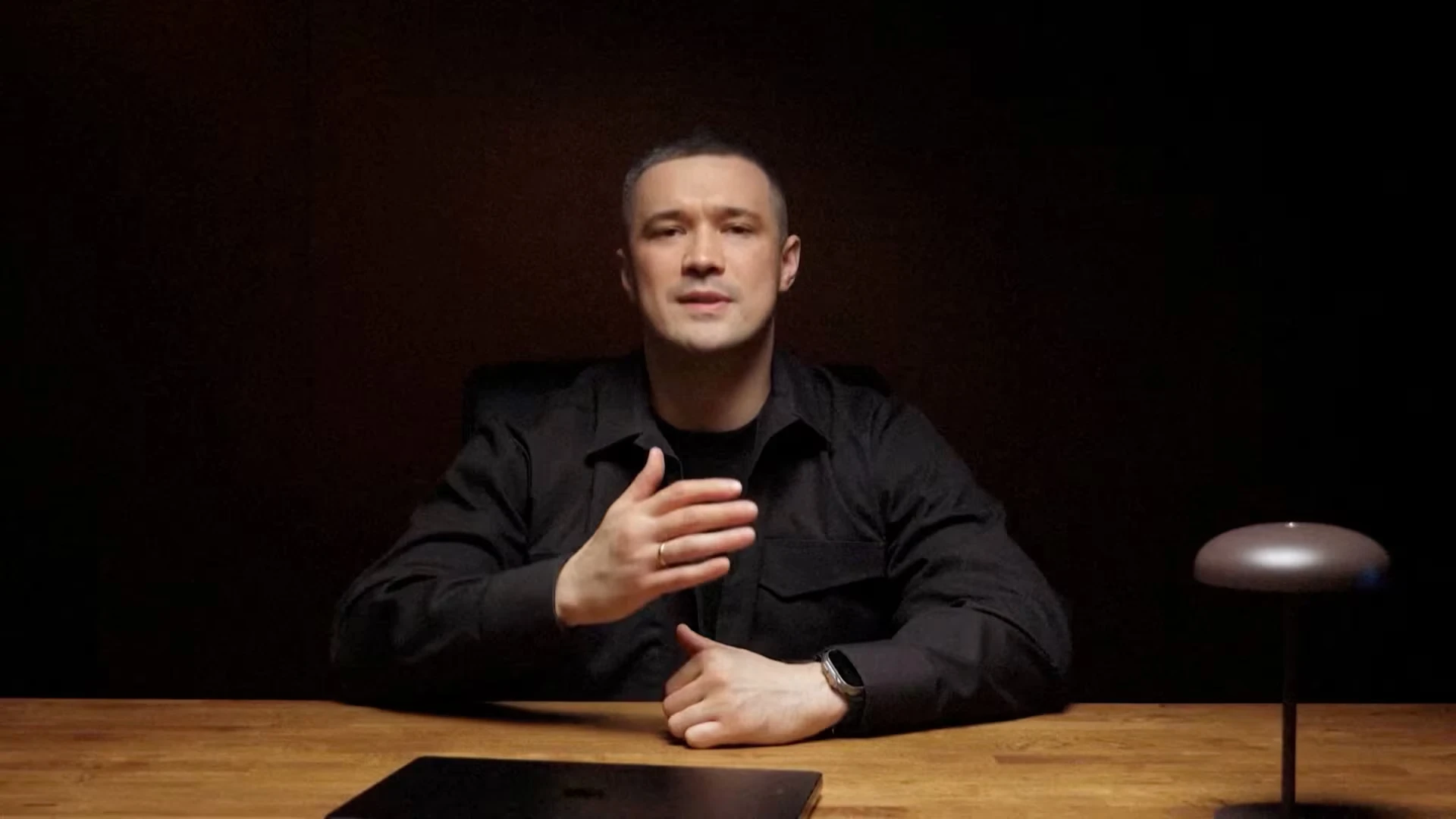


















Mykhailo Fedorov, until recently one of the most prominent figures in Volodymyr Zelensky’s political team, changed the nature of his confrontation with the presidential establishment on August 18. The former defence minister publicly argued that Ukraine should find a way to hold elections even if the war continues for an extended period.
Fedorov did not announce a presidential bid, nor did he propose a timetable for a vote. His argument was broader: Ukraine, he said, should develop a legal, safe and realistic mechanism capable of restoring the full democratic process despite the conditions created by a prolonged war.
The significance lies largely in who is making the argument. Since the beginning of Russia’s full-scale invasion, senior figures within Ukraine’s governing establishment have generally avoided openly demanding national elections while martial law remains in force. Fedorov has now pushed that question into the centre of an increasingly public political confrontation.
His intervention follows a month of turmoil that began with his unexpected removal from the Defence Ministry. What initially looked like a personnel dispute quickly exposed deeper disagreements over military leadership, procurement, technological reform and the conduct of the war, before spilling into unusually visible street protests in Kyiv.
Daycom’s analysis indicates that the election demand moves the dispute beyond personalities and appointments. Until now, the confrontation centred on who should run the military and how quickly defence institutions should change. Fedorov is now raising a more fundamental question: how political legitimacy should be renewed if the war has no predictable end date.
The immediate legal obstacle is straightforward. Under Ukraine’s current wartime framework, presidential, parliamentary and local elections cannot be held while martial law remains in force. The restriction is embedded in the country’s legal order rather than simply being a political convention that can be set aside by the government.
Martial law continues to be extended as the war goes on. Under that framework, a conventional presidential or parliamentary campaign cannot simply be announced without changing the law, altering the wartime regime or designing an entirely new electoral mechanism that can withstand constitutional scrutiny.
Claims that Ukraine automatically enters a constitutional vacuum once a presidential term expires are also misleading. The existing constitutional structure provides continuity: the sitting president remains in office until a newly elected successor formally assumes the presidency.
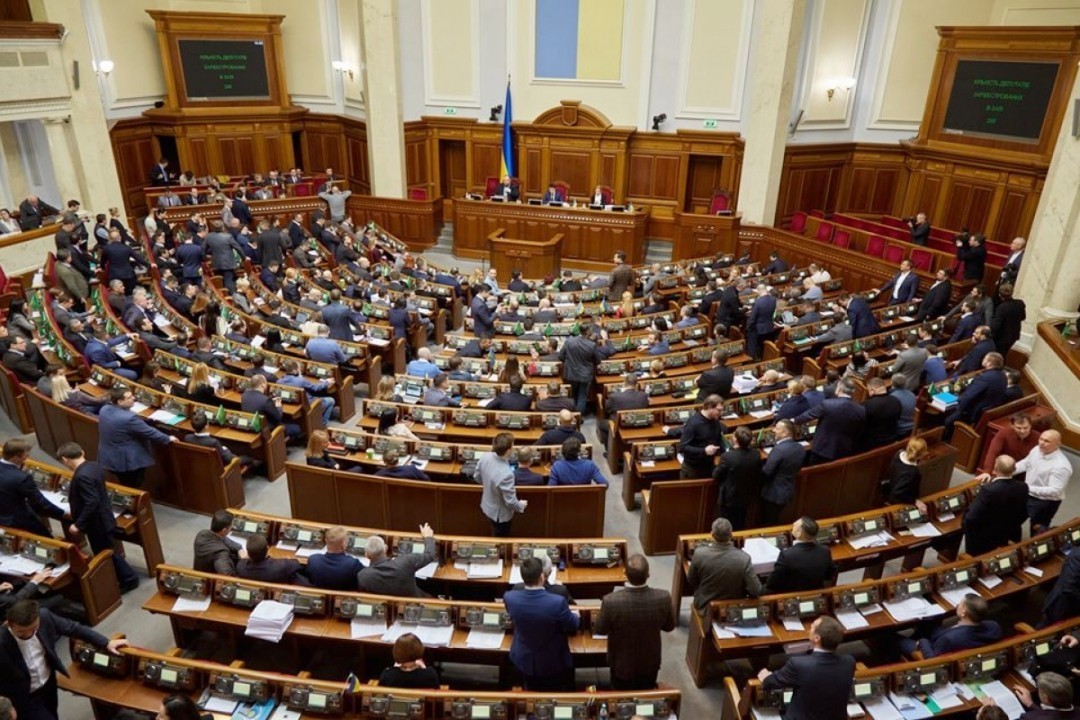
The same principle is even clearer for parliament. If the term of the Verkhovna Rada expires during martial or emergency rule, its mandate continues until a newly elected parliament convenes after that exceptional legal regime has ended.
The dispute over elections in Ukraine during wartime is therefore not fundamentally about whether the current authorities cease to exist legally. It is about whether rules designed for a period of emergency should be reconsidered if that emergency stretches across many years with no clear endpoint.
Ukraine has already been preparing for eventual elections, but most institutional planning has assumed that voting would take place after martial law is lifted or terminated. That scenario still requires special transitional rules because the country that eventually votes will be demographically and geographically very different from the one that voted before the invasion.
Fedorov’s proposal goes further. Holding elections while martial law is still in force would require not merely technical adjustments but a significant redesign of the legal and political framework that currently governs the country during war.
The challenge is much larger than selecting an election date. Millions of Ukrainians live abroad, large numbers remain displaced within the country, hundreds of thousands serve in the armed forces, and substantial areas are either occupied or exposed to persistent military danger.
Voting abroad would be one of the first practical problems. Ukraine’s existing network of polling stations attached to embassies and consulates was never designed to process several million voters. Without a major expansion of capacity, meaningful participation for citizens living outside the country would be extremely difficult.
Military voting presents an even more complicated problem. Ukraine would have to protect ballot secrecy, prevent pressure from commanders, guarantee access to campaign information and provide physical security for soldiers who may be serving only kilometres from active fighting.
A credible national election also requires campaigning, media access, election observers, party organisation and public events. Creating genuinely equal conditions in Kyiv, Lviv, Kharkiv and frontline communities while missile and drone attacks continue would be extraordinarily difficult.
Russia would represent another layer of risk. A national campaign would create opportunities for cyberattacks, influence operations, disinformation and attempts to exploit social divisions. Yet the threat of Russian interference cannot, by itself, provide an indefinite justification for suspending political competition.
That tension lies at the heart of Fedorov’s argument. If the end of the war cannot be tied to a reliable date, then postponing elections until “after the war” may effectively mean postponing them indefinitely. At that point, what began as a legal emergency becomes a question about the long-term democratic structure of the state.
Only recently, such a confrontation between Fedorov and Zelensky would have appeared improbable. Fedorov entered government with Zelensky’s team in 2019, became Ukraine’s youngest-ever minister at 28 and spent years as one of the defining figures behind the country’s rapid digital transformation.
When he took over the Defence Ministry in early 2026, he tried to bring the same governing philosophy into the military bureaucracy: digital management, data-driven decision-making, rapid technological adoption, expanded drone warfare and an overhaul of defence procurement.
His tenure lasted only about six months. The abrupt dismissal soon ceased to look like an ordinary cabinet reshuffle because Fedorov publicly challenged senior military leadership and described a fundamental disagreement over how the war effort should be managed.
The sharpest clash involved then commander-in-chief Oleksandr Syrskyi. Fedorov criticised resistance to reform and the culture of military decision-making, while the president’s side portrayed the dispute as a breakdown in the working relationship between the defence minister and the armed forces leadership.
The conflict quickly moved beyond government offices. Thousands of people demonstrated in Kyiv, demanding Fedorov’s return and changes at the top of the military command. The protests lost some of their initial momentum but continued to draw significant crowds.
The subsequent removal of the military chief eased part of the pressure on the government but did not restore Fedorov to office. The former minister rejected alternative positions and continued to argue that meaningful reform required real authority rather than a symbolic role inside the system.
Fedorov has also suggested that resistance to changes in defence procurement contributed to his dismissal. That remains his interpretation of the dispute, but it reinforced the perception among supporters that the confrontation was about institutional interests and reform, rather than a simple personal disagreement.
His August 18 address went further still. Instead of focusing on his former ministry, he spoke of a systemic crisis of governance, corruption and institutions that, in his view, too often protect themselves from change. The language transformed him from a dismissed official into a potential national political alternative.
He has still stopped short of saying that he intends to run for president. It would therefore be premature to describe the address as the formal launch of an election campaign. Yet calling for elections gives him a political platform far broader than a dispute over one ministry or one military appointment.
The timing was also striking. His intervention came just as the government was attempting to close the chapter opened by his removal and install a permanent successor at the Defence Ministry. While the state sought to institutionalise the new arrangement, Fedorov widened the argument to the legitimacy and renewal of the political system itself.
For Zelensky, that creates a new kind of challenge. Throughout most of the full-scale war, domestic political disputes remained fragmented, while national elections were largely placed outside the immediate political agenda because of martial law. Fedorov has now brought the issue back from within the president’s former inner circle.
But holding an election soon would not automatically strengthen Ukrainian democracy. If millions of voters cannot participate effectively, if service members face unequal conditions and if campaign security varies dramatically by geography, the existence of a ballot alone would not guarantee a fair contest.
That is why planning for eventual elections is complicated even before a date is chosen. Voter registers need updating, overseas voting capacity must expand, military participation requires special rules, observers need access and the electoral system must account for years of displacement.
Fedorov’s argument points in the opposite direction: if war continues indefinitely, democratic renewal cannot be tied entirely to an unknown moment in the future. That proposition is likely to turn elections from a technical post-war question into one of Ukraine’s most consequential domestic political debates.
Any real change would require far more than a decision by the president or a demand from a former minister. Parliament, election authorities, constitutional lawyers, military leaders and political parties would all have to agree on what risks the country is prepared to accept and what safeguards would be indispensable.
For now, Fedorov’s intervention does not bring Ukraine closer to a specific election date. What it does is politically more significant: it transforms a largely legal and procedural debate into an open contest over how wartime power should be renewed and constrained.
That may mark the beginning of a new phase in Ukrainian politics. The question is no longer simply whether elections can be held during war. It is whether a democracy fighting an open-ended conflict can preserve genuine political renewal without creating an electoral process in which millions of citizens are structurally unable to participate on equal terms.