





















Mykhailo Fedorov has left Ukraine’s Defense Ministry at a moment when the war increasingly depends on which side learns faster. His departure after six months in the post does not look like an ordinary government rotation. It opens a deeper argument about what kind of army a country needs when it is fighting a much larger enemy.
Fedorov was not merely a minister. He became the face of Ukraine’s belief in technological asymmetry: drones, robotic systems, digital platforms, new procurement channels and a direct link between the front and manufacturers. His political image rested on one central idea: Ukraine cannot defeat Russia by mass, but it can impose speed.
That speed became the source of conflict. Some in the military command saw in his approach too many presentations and too little heavy infantry reality. Some defense contractors saw a threat to long-established contracting systems. Inside the government, Fedorov gradually shifted from young reformer to an independent center of political weight.
According to Daycom’s assessment, his dismissal is one of the most important internal signals in Ukraine’s wartime politics in 2026. It shows that the central conflict in Kyiv is not simply between “technology” and “tradition,” but between competing ideas of control: who sets the tempo of war, who allocates money, and who has the right to speak in the name of the front.
Fedorov entered the defense ministry with the reputation of a man who had already changed the Ukrainian state through digital services. Before the full-scale war, he was associated with e-government, technological modernization, Zelenskyy’s younger team and the direct language of start-ups. After 2022, that experience was transferred to the battlefield.
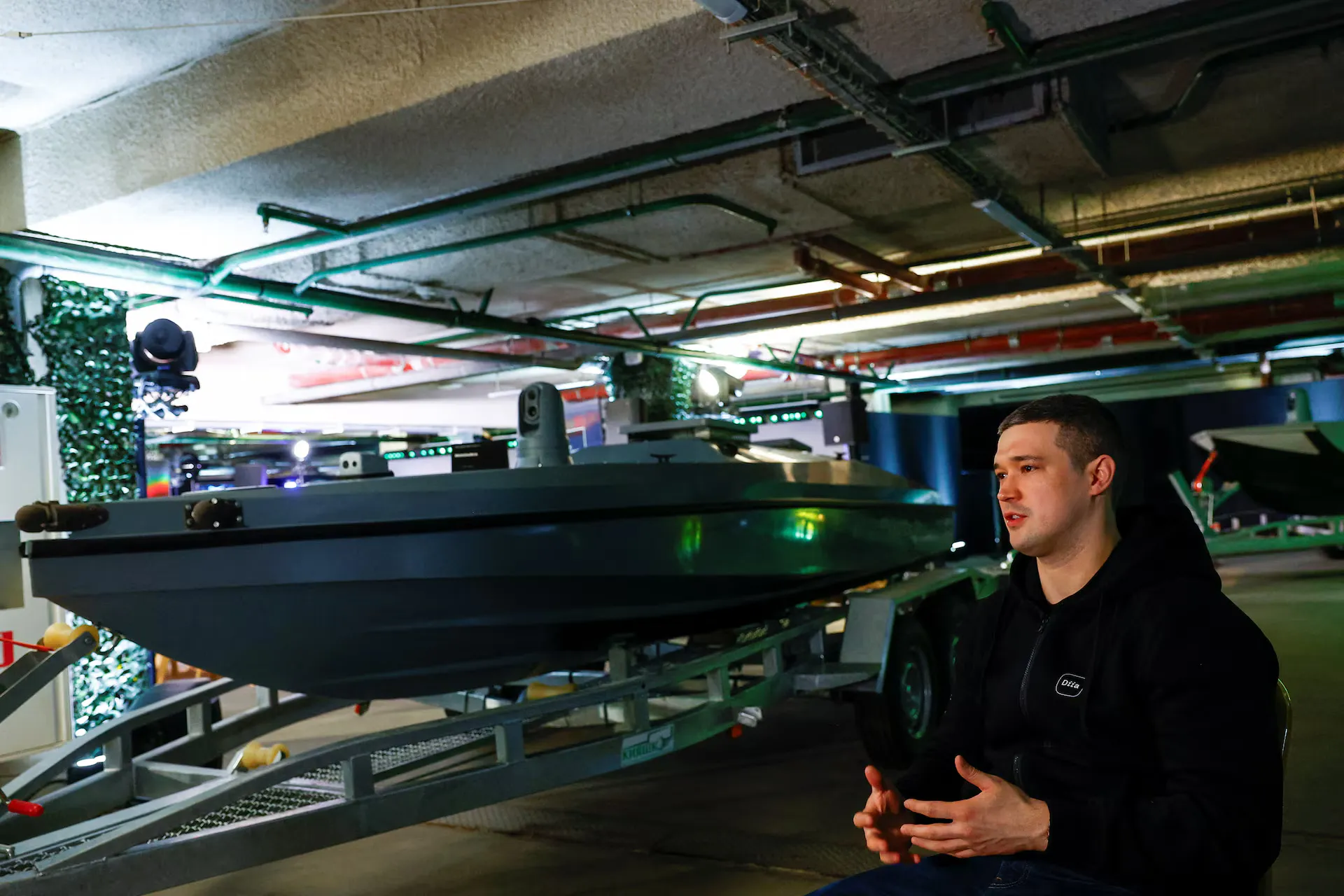
Ukraine did become one of the world’s main laboratories of modern war. Aerial drones, naval unmanned systems, ground robots, targeting software, battlefield data platforms and gamified systems for drone operators were not decorative additions. They helped compensate for shortages of artillery, manpower, aircraft and time.
Fedorov embodied that logic. He spoke of war as a race in the speed of innovation. His team pushed platforms that allowed soldiers to obtain weapons faster and manufacturers to move working solutions to the front more quickly. The revolutionary idea was simple: the army should stop waiting for the entire vertical chain to approve a need and start buying what actually works.
That is where the conflict with the defense industry began. Traditional contractors live in a world of large contracts, lobbying, closed negotiations, long cycles and control over access to the budget. Platforms such as Brave1 and DotChain struck at that model. They shortened the route between soldier, producer and money.
The idea of an “Amazon for weapons” sounds striking, but its political meaning is even more important. If a unit can choose part of the equipment it needs, some authority moves from offices to the front. For innovation, that means acceleration. For the old system, it means loss of control. For contractors, it means pressure on profits. For generals, it means the risk of disrupting a unified supply logic.
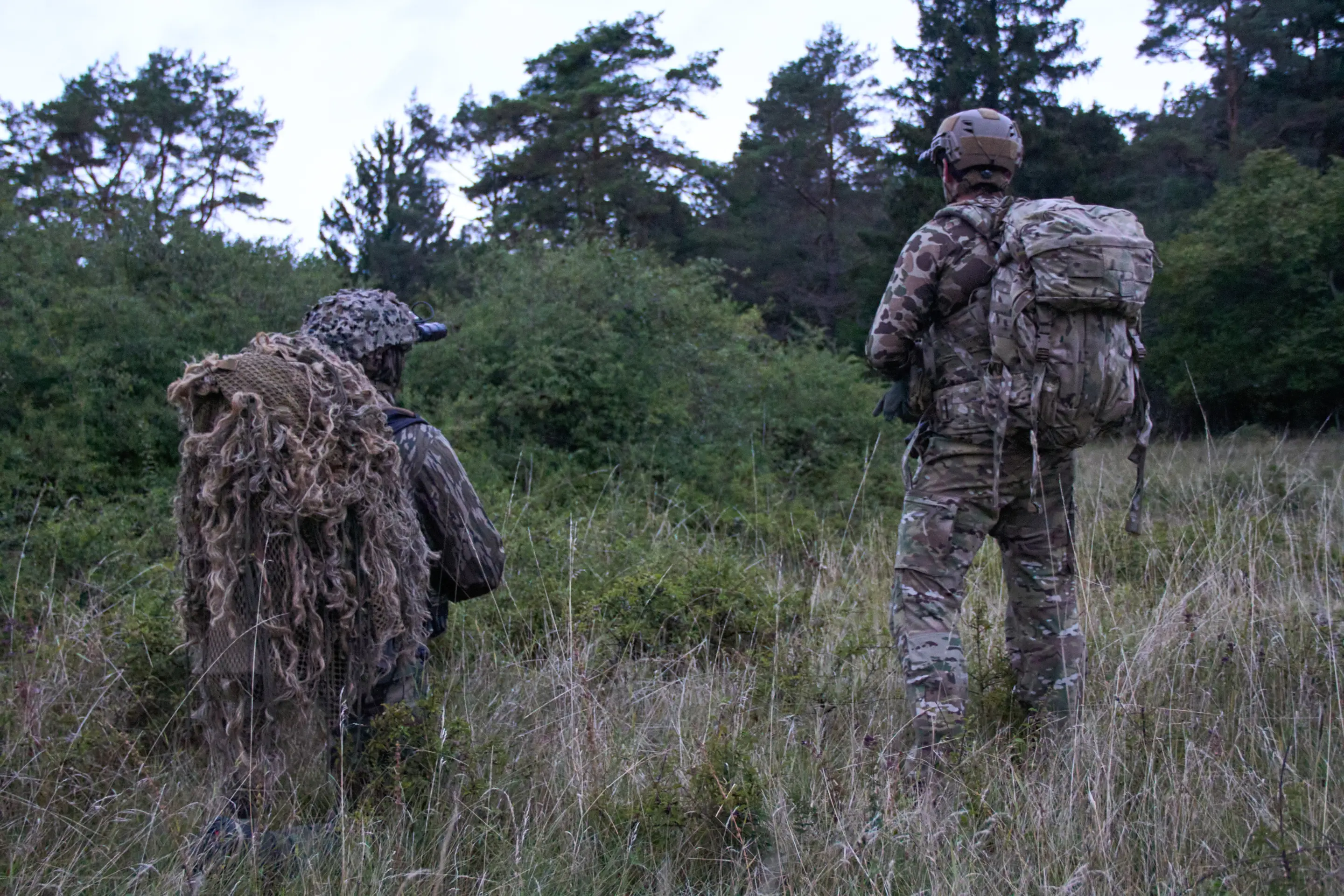
Fedorov touched not only money, but military culture. His vision of a war fought with drones and robots inevitably came into tension with commanders whose experience tells them that the front remains, above all, infantry, trenches, assaults, rotations, losses and the physical holding of ground. They could recognize the importance of drones while rejecting the idea that technology could radically replace human presence.
This dispute is not a simple battle of old against new. The generals hold part of the truth. Ground robots cannot occupy every trench. Aerial drones do not hold a tree line after an assault. Algorithms do not replace a sergeant deciding how to move people out of fire. War remains dirty, physical and human.
But Fedorov also held part of the truth. If Ukraine continues to fight primarily through the logic of infantry attrition, it plays on terrain where Russia has the larger human resource. Technology does not abolish the soldier, but it can reduce the number of situations in which the soldier carries all the risk. For Ukraine, this is not futurism. It is survival.
That is why his departure has alarmed supporters of Ukraine’s drone revolution. It may be read as a victory of old military-industrial inertia over frontline speed. A young minister who spoke the language of Silicon Valley and Ukrainian workshops is giving way to the force of generals, contractors and political balance.
Yet the situation is more complicated. Fedorov was not only a reformer fighting the system. He was himself part of Zelenskyy’s system, one of its most successful public products. His rise was possible precisely because the presidential vertical favored quick digital solutions, strong public images and officials who could speak to the West in the language of efficiency.
Now that same vertical has pushed him aside. This reveals another dimension of the decision: in a system where the president remains the uncontested political center, a minister who becomes too visible can become a problem even when he is effective. Fedorov was young, recognizable, supported by parts of the opposition and understood by Western technology circles. In wartime politics, that kind of weight is not always treated as an asset.

Around his name, a distinct myth formed — the minister of the future war, the man of drones, robots, start-ups and direct solutions. For Zelenskyy, who has long been the central face of Ukrainian resilience, that may have created discomfort. Ukraine’s wartime political system tends toward centralization not only of decisions, but of symbolic capital.
Fedorov’s exit is part of a broader government reset that includes the replacement of the prime minister and a search for new management priorities. The likely turn toward energy expertise in the choice of a new prime minister points to the challenges of the coming winter: electricity, heat, gas, infrastructure repair and the resilience of the power grid under Russian attack. That is a different logic from the logic of technological breakthrough.
Ukraine is entering its fifth wartime winter, and for the government, energy may be politically more dangerous than the debate over drones. A city without light, an apartment without heat, industry without stable electricity — these are not abstract management problems. They are questions of social resilience. Zelenskyy is clearly trying to assemble a government around that threat.
But this is precisely where the risk appears: energy resilience and military innovation cannot be set against each other. Russia strikes Ukraine’s energy system because it wants to break the rear. Ukraine strikes Russian military and industrial targets with drones because it wants to break the enemy’s capacity to wage war. The two directions are interdependent.
Fedorov is leaving not at a moment of failure for the drone strategy, but at a moment of visible success. Ukraine’s long-range strikes inside Russia have become more regular. Crimea is increasingly being subjected to a logic of isolation and exhaustion. Naval, aerial and ground unmanned systems no longer look experimental. They are part of real military power.
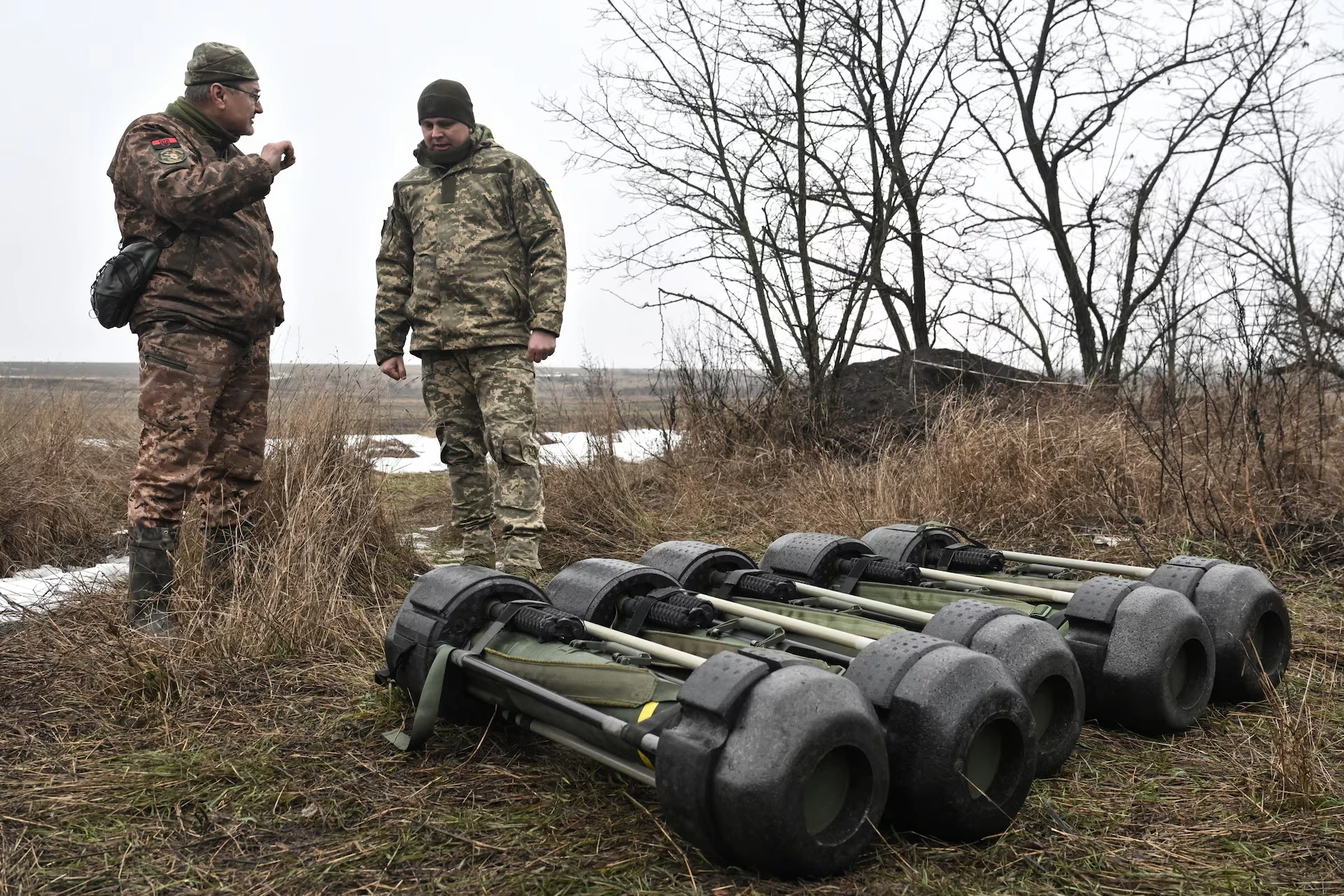
That is why his dismissal appears paradoxical. The minister associated with one of the few areas in which Ukraine created a genuine advantage is leaving not after defeat, but after an escalation of internal conflicts. That means the problem was not only results, but the distribution of influence around those results.
The conflict with contractors is especially sensitive. Ukraine’s defense budget during war is not merely money. It is power over life and death. Whoever receives a contract helps determine what reaches the front, how quickly, at what quality and at what price. Procurement reform inevitably touches the interests of those accustomed to operating in a less transparent environment.
If opposition claims about corrupt interests influencing Fedorov’s removal take hold in society, they could damage trust in the government reset. Ukrainians are prepared to endure hard decisions, but they react far more sharply to the suspicion that innovation is being slowed not by military necessity, but by someone’s profits.
Social media is already reacting to the story as a clash between young efficiency and old opacity. That frame may be simplified, but it is politically dangerous. The war has created a new social layer: volunteers, drone operators, engineers, small manufacturers and technical teams who see themselves as part of victory. They react painfully when they feel their logic is being pushed aside.
Fedorov had ties to the technology world that most Ukrainian officials lack. His contacts with major Western technology executives were not decorative. Ukraine needs not only money and weapons, but access to data, software, satellite communications, artificial intelligence, cloud infrastructure and production capital. He served as a useful translator between the front and that world.

That is one reason his departure could have consequences beyond Kyiv. For Western technology partners, Fedorov was an understandable figure: fast, young, digital and results-oriented. Whoever becomes the next defense minister will have to prove that the innovation channel is not closing, but merely changing hands.
Otherwise, Ukraine risks losing not the drones themselves, but the tempo of their development. In war, innovation ages faster than in peacetime economies. A drone that works today may be jammed tomorrow. A route that is safe today may be targeted tomorrow. A software solution that gives an advantage today may be copied by the enemy tomorrow. A pause in tempo can cost lives.
The central question after Fedorov’s departure is therefore not his personal fate, but the fate of the system he promoted. Will Brave1, DotChain and similar tools remain real channels for the front? Will procurement drift back toward a more closed model? Will the army retain the ability to test and buy solutions from below? Will the drone revolution become just another department inside a large bureaucracy?
These questions matter more than personal sympathies. Fedorov may have made mistakes, overestimated the speed of robotization, clashed too sharply with military leaders or underestimated infantry reality. But if the answer to his mistakes is not correction, but the rollback of the innovation logic, Ukraine will lose more than one minister.
The war has shown that Ukrainian strength emerges where the state, the front, volunteers and private producers work not sequentially, but almost simultaneously. A commander defines a need. A workshop creates a prototype. A unit tests it. A manufacturer scales it. The state buys it. That cycle must remain short. If it becomes long again, Russia will receive a gift.
Fedorov’s critics also have arguments that cannot be dismissed. The army cannot become a market of uncoordinated purchases. Not every frontline idea is safe. Not every start-up can manufacture at quality and scale. Not every drone that looks good in a demonstration survives real war. The state needs standards, responsibility and control.
But control must not mean a return to slowness. The best answer to the chaos of innovation is not bureaucratic suppression, but intelligent architecture: rapid testing, transparent metrics, competition among producers, feedback from the front, price audits and real consequences for failure. That is what a modern defense system looks like.
The personnel drama around Fedorov also opens a question about the limits of Zelenskyy’s power. The president has the right to reshape the government for wartime needs. But each such move is now judged not only as a management decision, but as a signal: whom the system elevates, whom it removes, whether it tolerates strong ministers, whether it is ready to sacrifice popular reformers for internal manageability.
In peacetime, this would be ordinary political struggle. In war, it is a question of resilience. If the most successful reforms depend on one person, they are vulnerable. If the system cannot integrate a strong reformer without conflict with generals and contractors, it is also vulnerable. If the presidential vertical removes people who become too visible, it risks losing the energy it created.
In his farewell message, Fedorov wrote of the honor of serving and listed what the ministry had achieved. It was the right tone for a politician who does not want to turn dismissal into open rupture. But the president’s silence about his departure speaks just as loudly. In a wartime system, even the absence of explanation becomes an explanation.
Ahead lies a parliamentary vote on a new government and a new configuration of power. For a country at war, personnel changes make sense only if they increase effectiveness. If they merely calm conflicts among influence groups, the cost may be too high. Ukraine does not have the luxury of slowly rebuilding its system in the middle of war.
Fedorov’s exit does not mean the end of Ukraine’s drone revolution. It can no longer be canceled by one decision. At the front, there are operators, manufacturers, units, workshops, commanders and engineers who will continue the work. But the state can either strengthen this ecosystem or make it slower, more expensive and more dependent on old gates.
That is the real stake of the moment. Ukraine is fighting not only for territory, but for the right to remain faster than Russia. Fedorov was one of the symbols of that speed. His departure will show whether speed has become a property of the system or whether it depended too heavily on one person.
If the new leadership preserves open procurement, competition among technological solutions, the link with the front and the courage to experiment, Fedorov’s departure will be painful but not fatal. If old contractors and cautious generals use the moment for a revanche, Ukraine risks losing precisely what gave it a chance against a larger army.
The future of the war in Ukraine will not be decided only by the number of tanks, shells and soldiers. It will be decided by the state’s ability to turn an idea into a weapon, a weapon into mass production, and frontline experience into doctrine. Fedorov’s dismissal has become a test of that ability.
He leaves office at a moment when Ukraine has already proved that innovation can be not a luxury, but a means of survival. Now the government must prove something else: that it can preserve innovation without its most visible political face. Otherwise, the resignation of a defense minister will become not merely an episode in a government reset, but a warning of how easily the war of the future can fall back into the hands of the past.