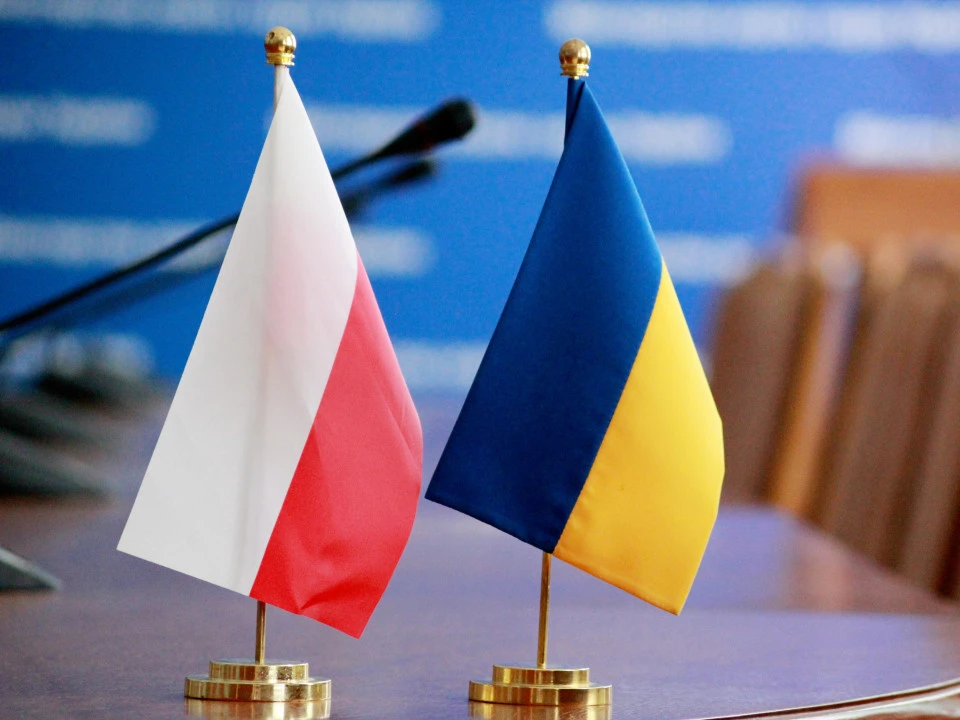
















Four European Union governments are reopening one of the most consequential financial arguments of the war: whether hundreds of billions of euros in frozen Russian state reserves should do more than simply remain locked away. Poland, the Netherlands, Spain and Sweden want the bloc to examine new ways of putting the money to work for Ukraine.
Their foreign ministers have asked for the issue to be discussed when EU counterparts meet in Ireland on September 1 and 2. In a joint letter, the four governments argue that Ukraine will require substantially more predictable financing and that the €90 billion support package agreed for 2026 and 2027 will not be sufficient on its own.
The figures explain why the argument refuses to disappear. Roughly €210 billion in Russian central bank assets are immobilised inside the European Union under sanctions imposed after Moscow’s full-scale invasion in 2022. About €185 billion is held through Euroclear, the Brussels-based securities depository at the heart of the dispute.
For now, the EU has stopped well short of simply transferring that principal to Kyiv. Instead, it has developed mechanisms to use extraordinary revenues generated by the immobilised assets, while preserving the underlying Russian ownership claims and keeping the reserves themselves blocked under European sanctions.
According to Daycom’s analysis of publicly available and verified material, the renewed push is about more than finding another pot of money. It reflects a deeper argument over who should bear the financial burden of a prolonged war: European taxpayers, Ukraine through additional liabilities, or Russia through assets already trapped inside the European financial system.
The political appeal of the Russian reserves is obvious. They are already immobilised, they are large enough to alter Ukraine’s financing outlook, and EU leaders have said they should remain blocked until Russia ends its aggression and compensates Ukraine for the damage caused by the war. That principle was reinforced by the European Council in December 2025.
What remains unresolved is how far Europe can go before immobilisation becomes something closer to appropriation. Sovereign reserves occupy a particularly sensitive place in international finance, and governments have spent years trying to construct a mechanism that would help Ukraine without creating uncontrolled legal liabilities or destabilising confidence in European custody systems.
The EU has already crossed one important threshold. Rules introduced in 2024 allow extraordinary revenues generated by Russia’s immobilised reserves to support Ukraine. Ninety-five per cent of those revenues are directed to a mechanism helping Kyiv repay EU-G7 loans worth about €45 billion, while the remainder goes to the European Peace Facility.
That arrangement, however, uses the financial proceeds rather than the underlying capital. The distinction is central to the European debate. Interest and other windfall revenues can be treated separately from the principal, whereas the reserves themselves remain assets of the Russian central bank even though Moscow has lost access to them.
Last year, the European Commission explored a much more ambitious answer. Its proposed reparations-loan structure would have drawn on cash balances associated with the Russian reserves to make a very large loan to Ukraine, with repayment effectively deferred until Moscow provided reparations for the destruction caused by its invasion.
The plan discussed at the time could have mobilised as much as €165 billion for Kyiv. Its attraction was straightforward: Europe could provide Ukraine with financing on a scale approaching the value of the frozen assets without immediately asking national governments to find an equivalent amount from taxes or fresh borrowing.
But the scheme ran into Belgium. Its objections carried unusual weight because Euroclear holds the overwhelming majority of the Russian reserves inside the EU. Any large-scale legal challenge, compensation claim or financial disruption arising from their use could therefore land disproportionately on a Belgian institution operating under Belgian jurisdiction.
Brussels wanted guarantees that Belgium would not be left carrying risks created by a collective European decision. Belgian officials have insisted that liability must be shared across the Union rather than concentrated in the country where most of the money happens to be held. That demand remains central to the deadlock.
The concern is broader than a possible lawsuit from Moscow. Euroclear sits inside a global financial system built on expectations about how sovereign assets are treated. A mechanism perceived as outright confiscation could provoke arguments about reserve security, future custody decisions and the willingness of governments outside Europe to hold state assets in European institutions.
That does not mean the frozen Russian assets are on their way back to Moscow. In December 2025, the EU adopted additional measures prohibiting transfers of immobilised Russian central-bank assets back to Russia, while European leaders reiterated that the funds should remain blocked until Moscow ends its aggression and compensates Ukraine.
Unable to agree on the more ambitious reparations-loan proposal, EU leaders chose a more conventional route. They approved €90 billion in financing for Ukraine for 2026 and 2027, raised by the European Union on capital markets and backed by the EU budget. Ukraine is expected to repay the loan only once it receives Russian reparations.
The package was legally finalised this spring. It was designed to sustain the Ukrainian state and help meet military needs while keeping open the possibility that Russian assets could eventually be used to repay the borrowing. In other words, the EU postponed the central argument over the reserves rather than resolving it.
The European Commission says €7.1 billion from the new €90 billion facility had been disbursed by the latest published update, including macro-financial assistance and money for defence procurement. But the four governments behind the new initiative argue that the overall package will still fall short of Ukraine’s needs.
That calculation becomes more pressing as Europe looks beyond the immediate wartime budget. Negotiations over the EU’s next long-term financial framework for 2028–2034 will have to accommodate continuing support for Ukraine alongside defence spending, competitiveness programmes and the domestic priorities of 27 member states.
For governments backing a renewed look at Russian assets, every euro that can be generated from another source is a euro that does not have to be found directly from European taxpayers. This gives an argument once framed largely in terms of justice and accountability an increasingly powerful fiscal dimension.
Polish Foreign Minister Radoslaw Sikorski has put the strategic case in especially direct terms. His position is that if Russia cannot recover the money until it pays reparations, there is little sense in leaving the reserves idle while Ukraine needs financing to resist Russian aggression now rather than merely to rebuild once the destruction has ended.
That reasoning effectively brings the logic of reparations forward in time. Traditional reparations compensate for damage after a war. The emerging European argument asks whether assets linked to future Russian obligations can help prevent additional destruction before the war is over, particularly when continued Western financing is itself becoming a long-term political challenge.
The four countries have therefore stopped short of demanding an immediate seizure of the €210 billion. Their letter instead asks European Commission experts to examine new options, in consultation with member states, that could use the immobilised assets while distributing risks across the Union and remaining compatible with international law.
That wording is important. It acknowledges that the previous plan did not fail because governments suddenly became sympathetic to Russia’s financial interests. It failed because they could not agree on how to protect the European institutions and states that might face the consequences if Moscow successfully challenged the mechanism.
Belgium has not abandoned those concerns. Officials cited in recent reporting say the underlying position has not changed, even if Brussels is prepared to hear new proposals. That leaves the chances of an early agreement uncertain and makes the September meeting more likely to reopen a process than to produce an immediate breakthrough.
Yet reopening the process would itself matter. European policymakers have gradually moved from asking whether Russian reserves can legally be immobilised, to how the profits can be used, to whether the assets can underpin large-scale lending. Each step has narrowed the distance between sanctions policy and the direct financing of Ukraine.
The debate also exposes an uncomfortable contradiction at the centre of Europe’s strategy. EU governments insist that Russia must ultimately bear responsibility for the destruction it has caused, yet much of the immediate cost of keeping Ukraine financially and militarily viable continues to fall on European and other allied budgets.
As the war extends deeper into its fifth year, that contradiction becomes harder to manage. Ukraine requires recurring financing rather than one-off rescue packages, while European governments must defend those commitments against competing domestic demands. The immobilised reserves offer an enormous potential resource, but only if Europe can agree on the legal architecture for using them.
If Belgium’s objections cannot be overcome, the EU will probably continue relying on market borrowing, budget guarantees and the revenues generated by Russian assets rather than their principal. That is the safer legal route, but it leaves European governments with a larger share of the financial burden if the war and Ukraine’s reconstruction needs continue to grow.
If a new mechanism does emerge, the significance would extend far beyond the €210 billion currently frozen. Europe would be establishing a new model in which the sovereign assets of an aggressor state could help finance the defence of the country it attacked before a final peace settlement or reparations agreement had been reached.
That is why frozen Russian assets for Ukraine have returned to the centre of the EU debate. The argument is no longer simply about whether Moscow should eventually pay. It is about whether Europe can devise a credible legal and financial system that makes Russian resources contribute to Ukraine’s survival while the war is still being fought.