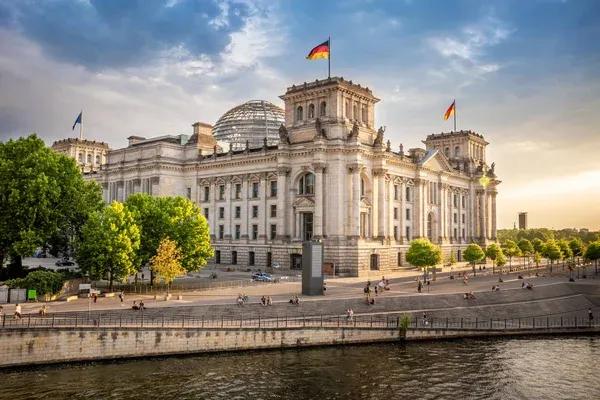



















Germany is trying to pull American diplomacy on Ukraine back toward the center of Washington’s foreign-policy agenda. Foreign Minister Johann Wadephul said on August 24 that he plans to speak with Secretary of State Marco Rubio and encourage him to take a more personal role in efforts to revive negotiations over the war.
The request comes after months in which much of President Donald Trump’s Ukraine diplomacy has run through presidential envoys Jared Kushner and Steve Witkoff rather than through the State Department. Wadephul’s intervention suggests that Berlin sees advantages in bringing a more institutional American channel back into the process.
The timing is important. U.S.-Russian efforts to find a path toward ending the war have slowed substantially while Washington manages the conflict involving Iran. The Kremlin said last week that it had no information about another possible visit to Moscow by Kushner and Witkoff, leaving one of the principal negotiating channels effectively on hold.
Wadephul is not proposing that Rubio replace the president’s envoys. His argument is more pragmatic: if one diplomatic track has become less active, another senior official with access to Trump, European allies and Russia should become more engaged. He told Deutschlandfunk that he hoped he could personally encourage Rubio to “do more.”
Daycom’s analysis indicates that Germany’s initiative reflects concern about a diplomatic vacuum rather than the emergence of a new peace plan. Berlin’s worry is that fighting will continue, positions will harden and negotiations will become dependent on a handful of personalized channels that can stall whenever another crisis captures Washington’s attention.
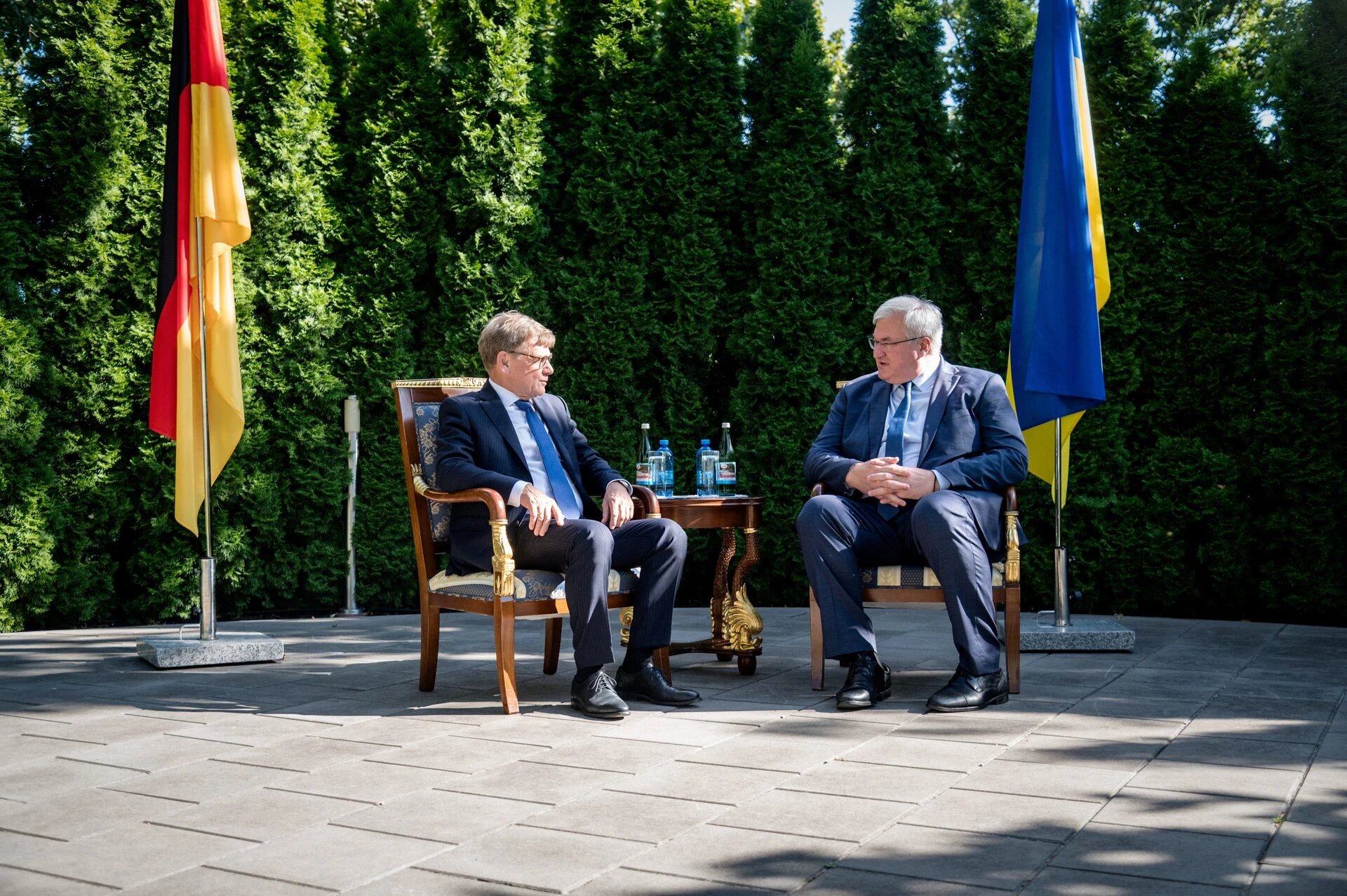
That concern has become more immediate because Wadephul has just returned from Ukraine. In Kyiv, he met Foreign Minister Andrii Sybiha for talks covering the security situation, peace efforts, stronger pressure on Russia, air defense, economic cooperation, preparations for winter and the future of frozen Russian assets.
The visit also took Wadephul to Kharkiv, where he saw infrastructure damaged by Russian attacks. Deutschlandfunk reported that he returned determined to press European governments for greater assistance, particularly as Ukraine prepares for another winter under threat from strikes on its power and heating systems.
That experience helps explain why Berlin is treating diplomacy and military support as parallel tracks rather than alternatives. Germany continues to argue that Ukraine needs air-defense systems, humanitarian assistance and economic resilience even while governments search for openings that could eventually lead to negotiations.
The German strategy extends beyond Washington. Wadephul said Berlin is also in contact with Turkey, Egypt and several Gulf states, all of which maintain working relationships with Moscow that are often deeper than those available to most European Union governments. Germany hopes those channels can help test whether Russia is prepared for substantive talks.
Turkey is the most familiar potential intermediary. Ankara has repeatedly kept dialogue open with both Moscow and Kyiv, from prisoner exchanges to Black Sea arrangements. Gulf governments have also built channels to Russia while maintaining partnerships with Western states, giving them diplomatic access that Europe cannot always reproduce directly.
Egypt fits the same logic. Cairo has longstanding military, commercial and political ties with Moscow, but also depends heavily on relations with the United States and Europe. None of these governments can impose a settlement, yet each may be able to carry messages or test proposals without turning every contact into formal negotiations.
Berlin’s effort therefore resembles a network rather than a single peace initiative. Washington remains indispensable because of American military and political leverage. Europe would have to live with and help enforce any eventual settlement, while intermediary states may provide routes to Moscow when direct European influence is limited.
The obvious risk is fragmentation. Too many parallel channels can create competing messages about sanctions, territorial questions, ceasefires and security guarantees. If Moscow believes one intermediary may offer more favorable terms than another, additional diplomacy can encourage delay rather than compromise.
This is one reason Rubio’s potential role matters. As secretary of state, he combines access to Trump with the machinery of American diplomacy: embassies, intelligence assessments, alliances and regular contact with European governments. That does not guarantee success, but it can provide greater continuity than an entirely personalized negotiating structure.
Rubio has already dealt directly with Moscow. He met Russian Foreign Minister Sergei Lavrov in July and said afterward that the United States remained committed to helping end the war, while cautioning that a rapid breakthrough should not be assumed. Russia has since signaled that it remains willing to hear further American proposals.
Deputy Foreign Minister Sergei Ryabkov said on August 21 that Moscow was prepared to consider new ideas, including ideas associated with Rubio. But he attached a familiar condition: any proposal would have to reflect what Russia calls the “realities on the ground” and remain compatible with the objectives set by Vladimir Putin.
That qualification is more important than the expression of openness. Russia currently occupies about one-fifth of internationally recognized Ukrainian territory and continues to argue that any settlement must take account of the military situation created by the invasion. Moscow’s willingness to talk does not, by itself, signal willingness to retreat from its core demands.
Ukraine approaches the phrase “realities on the ground” from the opposite direction. Kyiv has repeatedly rejected any formula that would convert military occupation into an internationally accepted territorial settlement or permanently constrain Ukrainian sovereignty in exchange for an end to active fighting.
The central diplomatic problem is therefore not the absence of people capable of speaking to one another. It is the distance between the outcomes Russia and Ukraine could accept. New channels can clarify positions and explore limited agreements, but they cannot by themselves resolve conflicting claims over territory, security and the future balance of power.
Germany’s particular concern is that Europe must not become merely the financier and security guarantor of an agreement negotiated elsewhere. During Wadephul’s Kyiv visit, Ukrainian officials stressed that Europe should be directly involved in peace efforts because any durable settlement will reshape the continent’s security architecture.
For Berlin, that argument has practical weight. Germany is one of Ukraine’s most important European supporters, providing military, civilian, financial and humanitarian assistance. Its government also describes Ukraine’s defense as inseparable from the wider security of Europe, making the terms of any eventual settlement a direct German strategic interest.
A ceasefire that simply postpones another Russian offensive could leave Germany facing years of higher defense spending, greater military deployments and repeated emergency support for Ukraine. A more durable arrangement, by contrast, would require credible security mechanisms whose financial and military burden would fall heavily on European states.
This helps explain why Wadephul’s appeal to Rubio is not a call for diplomacy at any price. Germany continues to support stronger Ukrainian air defenses and additional pressure on Russia while seeking negotiations. The underlying theory is that talks become more useful when neither side believes that merely waiting will automatically improve its position.
The German foreign minister’s visit reinforced that linkage. Kyiv and Berlin discussed sanctions, air defense, defense-industrial cooperation, economic support and preparations for winter alongside peace efforts. In other words, strengthening Ukraine was presented not as an obstacle to diplomacy but as part of the environment in which diplomacy would take place.
The approaching winter sharpens that calculation. Russia has repeatedly targeted Ukraine’s energy infrastructure throughout the war, turning electricity and heating into strategic vulnerabilities. Germany has said it wants to help Ukraine prepare for further pressure on civilian infrastructure while simultaneously increasing diplomatic activity.
The Iran war has complicated that agenda by competing for American attention, military planning and senior-level diplomatic bandwidth. For European governments, this is a reminder that U.S. engagement in Ukraine cannot be treated as constant merely because Washington remains the alliance’s most powerful member.
Personalized diplomacy can be fast when the president is deeply engaged. It can also become vulnerable when trusted envoys are reassigned to another crisis. By asking Rubio to become more active, Wadephul is effectively seeking a second institutional engine for a negotiating process that has become unusually dependent on individual relationships.
That does not mean the State Department would necessarily take a more European line. Rubio represents the Trump administration, not Berlin or Kyiv, and any American initiative would ultimately reflect U.S. calculations about the costs of the war, relations with Russia and the burden Washington expects European allies to carry.
What Germany appears to want is not control over American policy but predictability in how that policy is made. A negotiation involving territory, sanctions, reconstruction, security guarantees and future military deployments cannot easily be sustained through episodic conversations among a small number of presidential confidants.
There is also a sequencing problem. Washington, Kyiv and Europe would need to agree among themselves on what could be offered, what could not, and what consequences would follow if Russia rejected or violated an arrangement. Without that coordination, Moscow can exploit differences among Western governments rather than negotiate against a coherent position.
Russia’s current language suggests it understands this advantage. Ryabkov has portrayed Washington as more open to Moscow’s arguments while accusing European governments of continuing to seek Russia’s strategic defeat. That framing encourages the Kremlin to separate the United States from Europe whenever possible.
Berlin is trying to prevent precisely that outcome. A more active Rubio, from the German perspective, could connect White House diplomacy more firmly to consultations with European allies while maintaining a direct line to Moscow. Whether Washington shares that objective to the same degree remains uncertain.
The next meaningful test will not be whether Rubio makes another phone call or meets Lavrov again. It will be whether the United States, Ukraine and European governments can establish a common negotiating sequence — and whether Russia sees any advantage in bargaining rather than using diplomacy to consolidate gains already made by force.
Wadephul’s initiative is therefore less about one German request than about who will shape the next phase of Ukraine talks. After four and a half years of full-scale war, the challenge is no longer simply finding officials willing to speak. It is building a process capable of surviving competing crises, conflicting interests and the enormous distance between the parties’ desired outcomes.