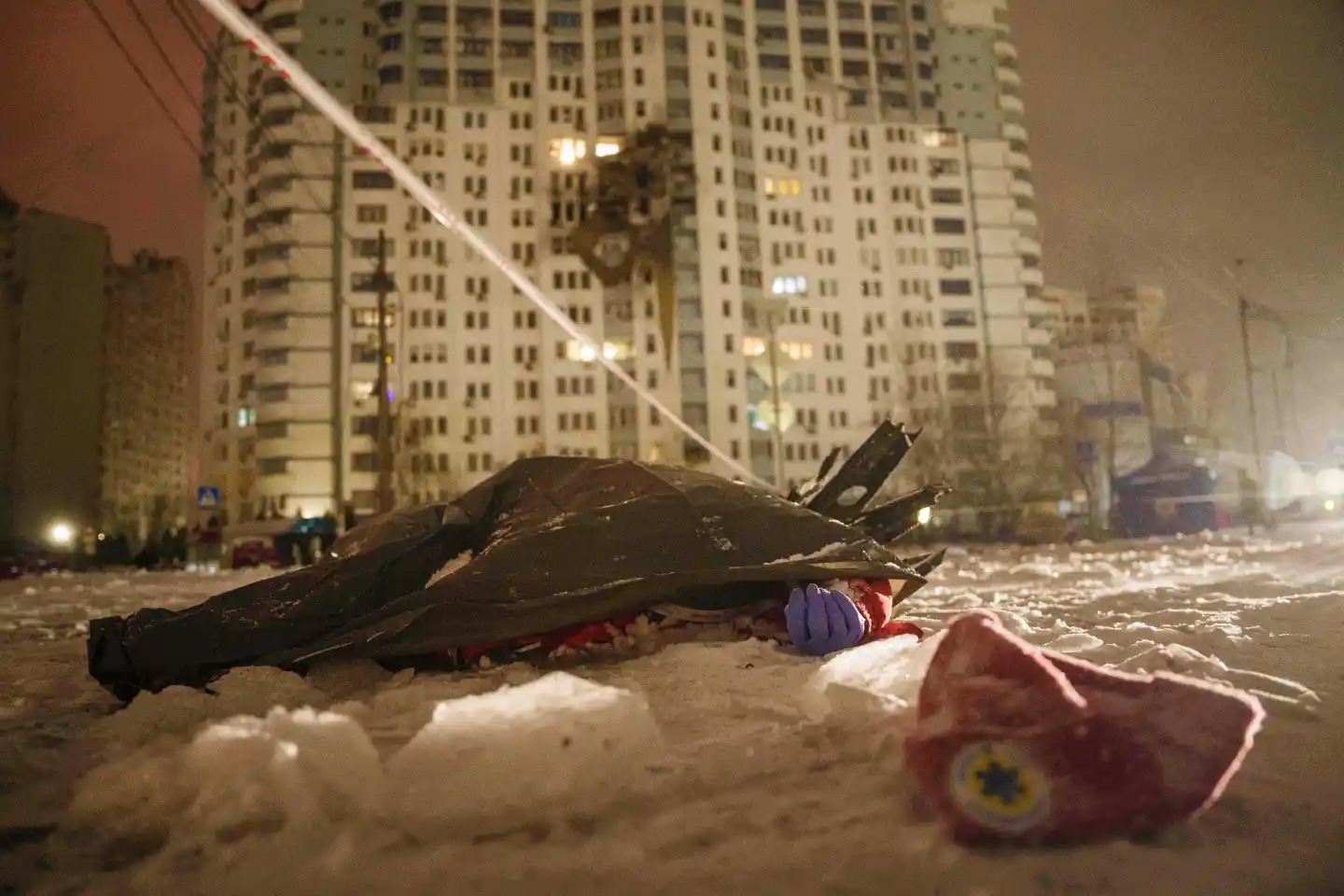























In late July, the scene off Odesa initially looked almost peaceful. Families walked along the promenade while a cargo ship moved slowly across the horizon. Then a drone dropped from the clear sky and struck the vessel. Black smoke rose over the water — a new image of Ukraine’s most important maritime gateway to the world.
During June and July, Russian forces attacked at least 50 cargo vessels, killing more than 30 civilians. The campaign has brought normal traffic into and out of Odesa’s ports close to a standstill just as the harvest season begins, when millions of tons of wheat, corn and barley are supposed to move toward foreign markets.
The problem has moved far beyond port security. Three major ports around Odesa account for roughly 60 percent of Ukraine’s monthly export revenue, which totals about $3.5 billion. When the maritime corridor narrows, farmers, the state budget, foreign-currency earnings and overseas buyers of Ukrainian grain are all hit at once.
As Daycom has previously assessed, the most consequential feature of the campaign is that Russia is attacking not only infrastructure but the economics of maritime risk. A blockade does not require the destruction of every ship. It is enough to make the route so dangerous that shipowners, insurers and crews no longer consider it commercially acceptable.
Merchant vessels are especially vulnerable. They are large, slow and predictable, and they cannot maneuver like warships. Modern strike drones and precision missiles have turned civilian shipping into a target that can be tracked and attacked dozens of kilometers from shore.
Ukrainian sailors describe Russian drones loitering several miles off the coast, waiting for merchant vessels to appear. After some strikes, rescuers have also faced danger, making evacuation and firefighting even more difficult.
One of the deadliest recent cases involved the bulk carrier Golden Leo. The ship had come to collect grain but avoided Odesa’s main harbor because of the threat, docking instead at nearby Chornomorsk. That offered little protection: a neighboring vessel had already been hit, killing an officer and a security guard.
The Golden Leo crew slept in reinforced shelters. On July 19, the fully loaded vessel departed with grain. About four miles from port, an air-raid warning sounded. Ukrainian harbor pilot Volodymyr Mykhailov advised crew members to leave the bridge, since navigation decks are often targeted.
Minutes later, a missile struck the hull. Second officer Blesson Sebastian recalled fire raining down after the explosion. He and Mykhailov were thrown down the stairs. The pilot died in Sebastian’s arms.
The captain suffered severe burns, the boatswain lost consciousness and dense smoke poured from the engine room. Those who survived escaped in a small boat and watched the Golden Leo burn at sea. Nine crew members and the Ukrainian pilot were killed. The ship sank a week later.
Such attacks reshape the economics of an entire trade route. In commercial shipping, fear can be almost as effective as a physical blockade. Every dead seafarer means higher insurance premiums, more expensive freight, greater difficulty finding crews and fewer companies willing to enter Ukrainian ports.
Ukraine has faced this kind of pressure before. In 2022, after the start of Russia’s full-scale invasion, the blockade of Ukrainian ports helped drive global food prices sharply higher and increased the risk of acute food insecurity for an estimated 70 million people.
International mediation later produced the Black Sea Grain Initiative. After that arrangement collapsed, Ukraine managed to restore part of its maritime trade by pushing Russian naval forces out of the northwestern Black Sea and establishing its own shipping corridor.
That success is now being tested through attacks on commercial vessels. Unlike a traditional naval blockade, in which warships physically close a port, a modern blockade can be imposed with missiles, drones, mines and the constant threat of attack.
Ukraine, meanwhile, is conducting its own campaign against Russian maritime traffic. Its forces have repeatedly targeted tankers and cargo vessels linked to Russian energy and military supply chains and have inflicted heavy losses on parts of Russia’s river-sea tanker fleet in the Sea of Azov.
One consequence has been growing pressure on occupied Crimea, where fuel and other supplies increasingly depend on vulnerable maritime and overland routes.
On August 12, Ukrainian forces launched another major attack on Novorossiysk, one of Russia’s key Black Sea ports and an important hub for grain and energy exports. Jet-powered drones, missiles and unmanned maritime systems were used in the operation.
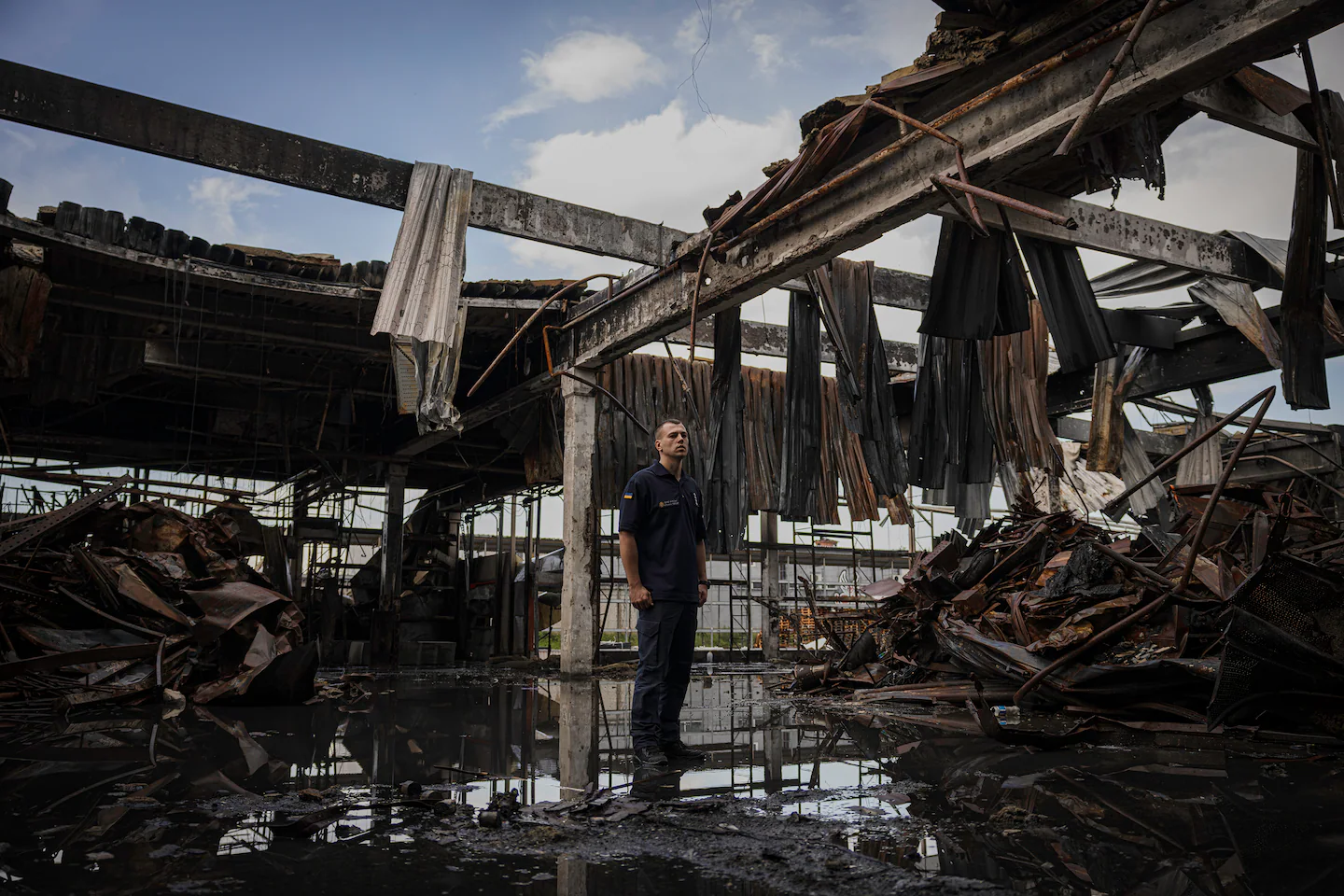
Port infrastructure, piers and air-defense positions were damaged. Local authorities reported three deaths, including an eight-year-old child, as well as damage to dozens of residential buildings and disruptions to the city’s water supply.
The Black Sea is therefore becoming an arena of mutual economic attrition. Russia is trying to choke Ukraine’s grain exports. Ukraine is trying to make Russian oil, cargo and military traffic more costly and vulnerable.
But the two campaigns are not entirely symmetrical. Much of the shipping entering Ukrainian ports carries grain and other civilian goods for the international market. Ukrainian attacks have largely focused on Russian vessels and infrastructure connected to sanctions evasion, energy exports and the financing of Moscow’s war economy.
That distinction is why the battle around Odesa raises a broader question about freedom of navigation. Modern global trade rests on the assumption that civilian vessels can move through international sea lanes without facing systematic attack simply because they called at a port belonging to a country at war.
That principle is under pressure far beyond the Black Sea. Drones, anti-ship missiles and naval mines are increasingly being used to disrupt trade through the Red Sea, the Persian Gulf and other strategically important maritime corridors.
Cheap precision weapons are changing the balance between attackers and commercial shipping. Paralyzing a route no longer requires a large blue-water navy. A relatively small number of long-range drones can create enough danger for insurers and shipping companies to reduce traffic on their own.
For Ukraine, this shift is particularly dangerous because of the structure of its economy. Grain is heavy and relatively low in value per ton, which makes maritime transport by far the most economical way to move it. Replacing a single large bulk carrier requires dozens of trains or thousands of trucks.
If Odesa’s ports remain largely closed, millions of tons of new grain will accumulate inside Ukraine. Domestic prices will fall, storage facilities will fill, and farmers will lose the cash needed for fuel, wages, loan payments and the next planting season.
The global consequences could arrive twice. The first shock would come from lower grain exports this year. The second could follow next season if Ukrainian farms lack the money to plant enough acreage and the country produces a smaller harvest.
That is why the battle over civilian shipping off Odesa is not a peripheral episode of the war. It connects the battlefield to agriculture, insurance, international law, food security and one of globalization’s core systems: the movement of goods by sea.
For sailors, however, the geopolitical stakes are much more immediate. Sebastian suffered first-degree burns in the Golden Leo attack and decided he was finished with life at sea. His conclusion is simpler than any maritime strategy: money is not worth more than a life.
If more crews reach the same conclusion, the blockade can succeed without physically sealing the ports. At that point, the real target is no longer an individual grain ship. It is the world’s confidence that the sea remains a route for commerce rather than another battlefield.