




















The Moscow oil refinery, one of the key nodes in the Russian capital’s fuel system, may remain offline for at least six months after a series of Ukrainian drone strikes. If that timeline holds, the plant is unlikely to return to full operation before the end of 2026.
The refinery, located on the southern outskirts of Moscow, was hit twice in June and then halted operations. For the city, this is more sensitive than damage to a single industrial site: the plant is the largest fuel supplier to the Moscow region and a major source of gasoline, diesel and aviation fuel.
In 2024, the Moscow refinery processed 11.6 million metric tons of crude oil, producing 2.9 million tons of gasoline and 3.2 million tons of diesel. This is not a peripheral facility that can be quietly replaced by other flows, but a major plant at the center of the fuel architecture of Russia’s largest metropolitan market.
According to Daycom’s assessment, the main danger for the Kremlin lies not only in the volume of lost output. The strike on the Moscow refinery undermines the capital’s own sense of protection: the war that Russian authorities tried for years to keep at a distance from Moscow is now striking its infrastructure rear.
Earlier Ukrainian attacks on refining capacity were often treated as a problem of distant regions, border areas or occupied Crimea. Now the facility in question serves the Moscow market itself. That changes the political weight of the crisis: disruptions near the capital are harder to hide behind language about temporary logistical difficulties.
The damage to the Moscow refinery comes on top of broader fuel pressure across Russia. In multiple regions, queues, sales limits and shortages of certain gasoline and diesel grades have already appeared. Authorities explain this through increased demand and logistical disruptions, but the geography increasingly resembles a systemic consequence of strikes on refining.
The Kremlin is trying to hold the situation through administrative tools. The government is considering a possible diesel export ban, as well as fuel imports to cover shortages, including in Crimea, where gasoline sales to the public have already been suspended.
This creates a paradox for a major oil power. Russia has plenty of crude, but finished fuel is becoming a vulnerable commodity. Producing oil is not enough: it must be refined, delivered, distributed and kept affordable. When refineries drop out of service, a country can retain export capacity while fearing domestic gasoline shortages.
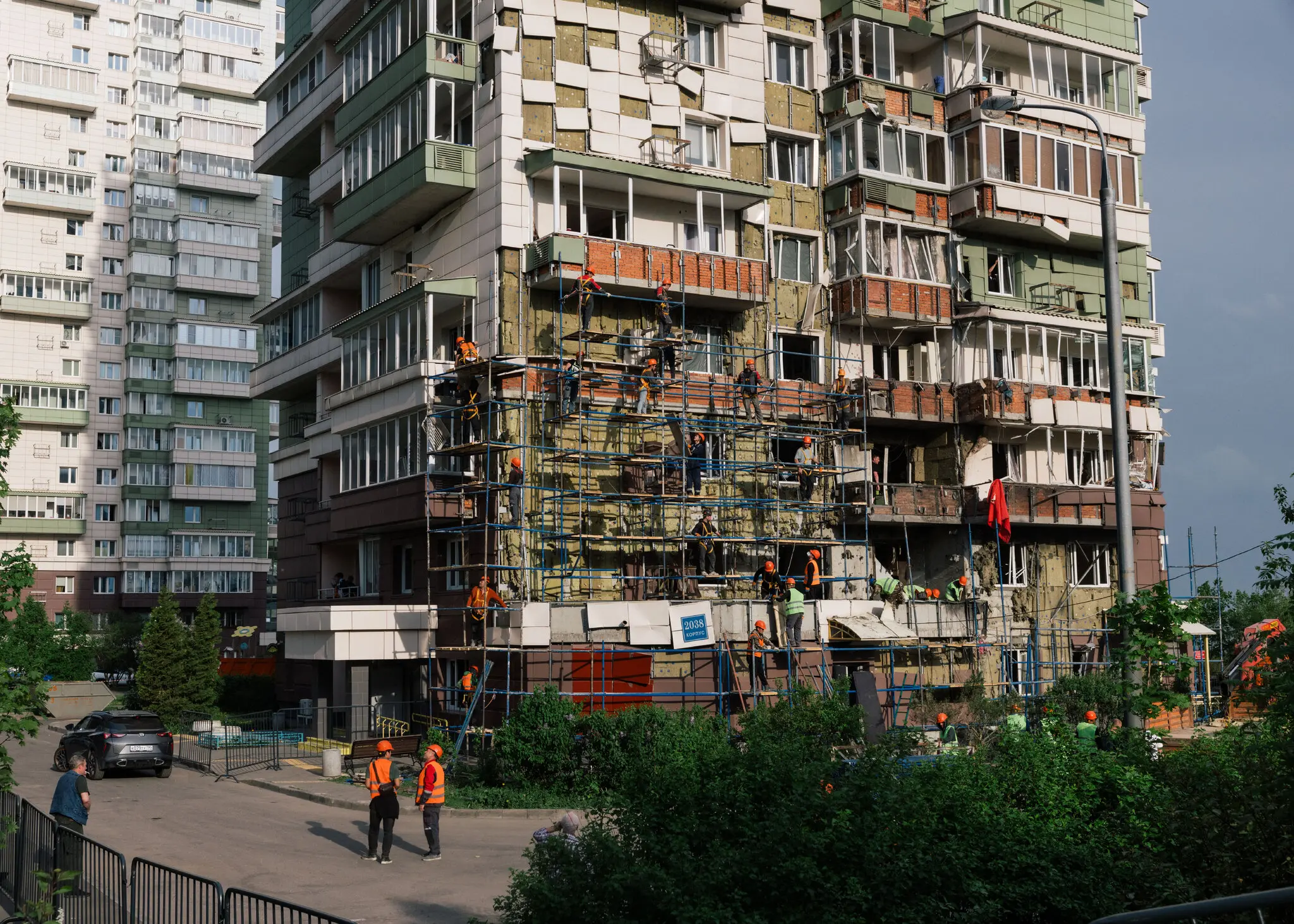
The Moscow plant is a special symbol in this regard. It is not located on a distant periphery, but near the capital, close to the political center of the state. Its shutdown shows that Ukrainian drones are not merely reaching Russian energy infrastructure; they are hitting nodes that support Moscow’s daily normality.
A six-month repair timeline means more than a short pause. It means a prolonged rerouting of flows. Fuel will have to be moved from other regions, supply schedules rewritten, reserves found, prices managed administratively and panic at filling stations prevented.
But reserves have limits. Other Russian refineries are also operating under strike risk; some are undergoing maintenance, while others are being forced to adjust their operating regimes. Every redirection of fuel toward Moscow can create pressure elsewhere. A local shutdown can therefore become a cascading problem.
For Ukraine, the strategic purpose of such strikes is clear. The goal is not only to damage units, tanks or pipelines. It is to raise the cost of the war: repairs, shortages, export restrictions, lost flexibility, more expensive logistics and the diversion of resources to protect rear energy infrastructure.
For Russia, this is a strike at the sensitive intersection of economics and politics. Fuel is not merely a commodity. Through it move food supplies, public transport, construction, industry, agriculture, military logistics and the everyday life of large cities. When it becomes scarce, the state loses part of its usual governability.
The shutdown of the Moscow refinery also deepens the problem of trust. If the largest regional fuel supplier near the capital cannot recover quickly, official assurances of control sound weaker. Even without open protest, a different feeling emerges: the war stops being television background and enters the fuel tank, the price per liter and the queue at the pump.
That is why this attack matters more than another fire at an industrial facility. It shows that Ukraine’s campaign against Russian refining has moved from isolated strikes to pressure on the internal fuel balance. Moscow can still shift resources and take emergency decisions, but it can no longer guarantee that the capital’s market will remain outside the war.
If the Moscow refinery truly remains offline until the end of the year, it will become one of the most visible infrastructure consequences of Ukrainian strikes inside Russia. For the Kremlin, the loss means more than less gasoline and diesel. It means that even the capital’s normality now depends on a front that Moscow can no longer keep far away.