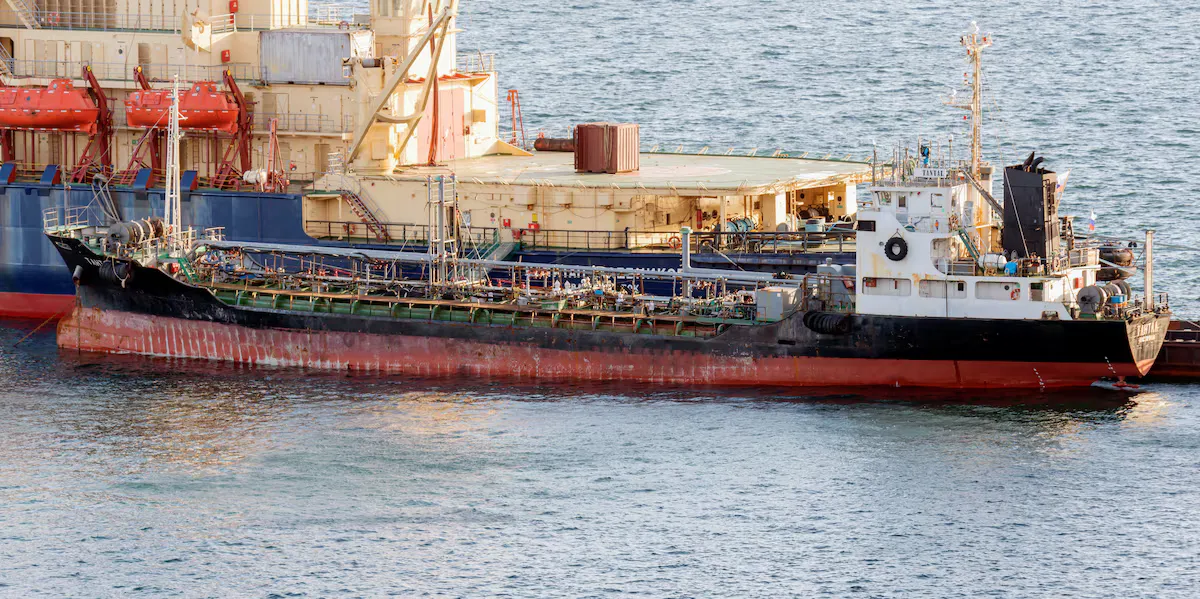






















A decade-old dispute over assets Russia seized in Crimea has reached an Arctic dock. Norwegian authorities have arrested the Russian vessel Professor Molchanov in Svalbard at the request of Ukraine’s state energy group Naftogaz, which is trying to enforce a $4.22 billion arbitration award against Moscow.
The ship was detained in Barentsburg, the Russian mining settlement on the Norwegian archipelago. The Nord-Troms and Senja District Court authorised the seizure on August 31, and the Governor of Svalbard, acting as enforcement authority, carried out the order on September 2.
Professor Molchanov must remain where Norwegian authorities direct until either the governor or the district court decides otherwise. Officials said they would also deal with the crew and passengers in coordination with Trust Arcticugol, the Russian state-linked company operating in Barentsburg.
The ship itself has nothing to do with the original seizure of Naftogaz property in Crimea. It matters because it is Russian-owned property located in a jurisdiction where Naftogaz has already secured recognition of the arbitration award and can therefore seek enforcement against eligible assets.
According to Daycom’s analysis of verified public records, the significance of the Russian ship seized in Norway lies less in its market value than in what it represents. Naftogaz is moving from winning judgments on paper to physically restricting Russian state property abroad when national courts allow it.
The legal story began in 2016, when Naftogaz and several companies in its group initiated arbitration proceedings against Russia under the bilateral investment treaty between Ukraine and Russia. Their claim concerned energy assets taken after Moscow established control over Crimea in 2014.
Those assets were extensive. Naftogaz had been deeply involved in Crimea’s gas industry, with subsoil licences, production and transport infrastructure, pipeline interests, storage rights, equipment and more than 675 million cubic metres of stored gas among the property covered by the dispute.
In 2019, the tribunal found Russia responsible for unlawfully expropriating the Ukrainian investments. A second phase then determined the financial damage. On April 12, 2023, the tribunal ordered Moscow to compensate Naftogaz for losses resulting from the seizure.
The principal amount now cited in the Norwegian enforcement action is approximately $4.22 billion, with interest and costs added separately. Earlier Naftogaz statements commonly described the award as worth roughly $5 billion once accumulated interest and other sums were included.
Russia has not paid voluntarily. That refusal created a second legal battle, distinct from the arbitration itself: Naftogaz must find Russian assets in individual countries, obtain recognition or enforcement orders there and then overcome any immunity or ownership objections attached to specific property.
That is why the Professor Molchanov case is important. Naftogaz says the vessel belongs to the Russian Federation and is used for commercial expedition cruises, including voyages to Svalbard. The distinction between sovereign and commercial use can be critical when courts consider whether state property may be seized.
Foreign state assets are not all treated alike. An embassy, military vessel or property used exclusively for sovereign functions normally enjoys much stronger protection than an asset employed commercially. Whether a particular ship falls within an enforcement exception ultimately depends on the law and courts of the country involved.
Naftogaz’s lawyers had reportedly tracked Professor Molchanov for months before it entered Svalbard. Anticipating its arrival at Barentsburg, they applied to the Norwegian court for an arrest order designed to prevent the vessel from leaving before the enforcement claim could be pursued.
Reuters reported, citing the law firm Covington, that the eventual seizure followed a roughly 24-hour standoff involving the Norwegian Coast Guard. The episode underscored the unusual practical reality of international enforcement: a legal award becomes meaningful only when authorities can stop an asset from moving.
Arrest, however, does not mean that Norway has already sold the ship or transferred its value to Naftogaz. The present measure secures the vessel while further procedures unfold. Russia may challenge the seizure, raise immunity arguments or dispute whether the property can ultimately be sold.
If Norwegian courts allow enforcement to proceed, the vessel could eventually be subject to compulsory sale, with proceeds applied toward the outstanding award. Even then, Professor Molchanov would cover only a small fraction of a multibillion-dollar claim. Its greater importance is as a demonstration that collection can become physical.
Moscow has reacted sharply. A Russian Foreign Ministry spokesperson quoted by state news agency TASS described Norway’s action as “piracy.” Legally, however, the vessel was detained under an order issued by a Norwegian court and implemented by the public authority responsible for enforcement in Svalbard.
The difference is central to the dispute. Russia portrays overseas seizures as illegitimate confiscations of sovereign property. Naftogaz presents them as ordinary enforcement steps against a debtor that has refused to satisfy a binding international award recognised by national courts.
Norway is not acting in isolation. Naftogaz has spent years building a multi-jurisdiction enforcement campaign in countries where Russian property may be found. The strategy extends across Europe and beyond, forcing Moscow to contest not one proceeding but a series of national cases involving different assets and legal systems.
In England and Wales, the High Court recognised the Crimea award in December 2023, including the earlier ruling on jurisdiction and liability. That decision did not itself deliver billions to Naftogaz, but it created the legal foundation for pursuing qualifying Russian assets within the jurisdiction.
Finland became another front in 2024. A Finnish court ordered the freezing of Russian property as security for Naftogaz’s claim, including real estate worth tens of millions of dollars. Russia challenged the action and argued that some of the affected property was diplomatically protected.
France followed. Naftogaz secured recognition and permission to enforce the award there and moved against Russian state assets. The Ukrainian company said it had registered measures against several properties as part of a wider effort to convert the arbitration victory into recoverable value.
In Austria, a Vienna court authorised enforcement against more than 20 Russian-owned properties that Naftogaz valued at over €120 million. The company said those assets could be sold through auction, illustrating how the recovery campaign can progress from recognition to attachment and potentially disposal.
Russia has also attacked the underlying award through Dutch courts. Yet in December 2024, the Supreme Court of the Netherlands dismissed Moscow’s challenge to the tribunal’s partial award on jurisdiction and liability, strengthening Naftogaz’s position as it pursued enforcement elsewhere.
The campaign is deliberately global because no single easily available Russian asset is likely to satisfy the debt. Instead, Naftogaz is effectively assembling compensation piece by piece — one building, account, vessel or other enforceable property at a time, subject to the law of every country involved.
That approach requires more than lawyers. In 2023, Naftogaz brought in asset-tracing specialists from K2 Integrity to help identify Russian commercial property around the world. The purpose was to find assets against which enforcement proceedings could realistically be launched.
A ship presents a particularly unusual challenge because it is mobile. Real estate in Vienna or Paris cannot suddenly leave the jurisdiction. A vessel may remain in port only briefly, meaning lawyers must know its route, secure a court order in advance and ensure enforcement before it sails away.
Professor Molchanov therefore illustrates how sophisticated the asset hunt has become. Its planned arrival in Barentsburg created a narrow legal opportunity: Russian-owned property would be temporarily within reach of a court that had already accepted the enforceability of Naftogaz’s award.
The episode may also affect how Russia manages state-owned property abroad. If commercially used ships or other mobile assets can be arrested whenever they enter favourable enforcement jurisdictions, route planning itself becomes a legal-risk calculation rather than a purely operational decision.
The same is true for ownership structures. Russia has strong incentives to distinguish between property belonging directly to the federation, assets owned by state corporations and property protected by diplomatic or sovereign functions. Those distinctions can determine whether a creditor can reach an asset at all.
For Ukraine, the case carries significance beyond one energy company. It offers a working example of how claims arising from Russian actions since 2014 can move through the entire legal chain: establish responsibility, quantify damages, defend the award against appeals, locate assets and ask national courts to enforce it.
The Naftogaz case should not, however, be confused with the much larger debate over hundreds of billions of dollars in frozen Russian central-bank reserves. Those assets raise different questions of sovereign immunity and government policy. Here there is an identified creditor and a specific arbitration debt.
That narrower legal structure does not make recovery easy. Nearly a decade has passed since the arbitration was launched. Every jurisdiction introduces new litigation, possible appeals and disputes over immunity, beneficial ownership and commercial use. The process can remain expensive and slow even when Naftogaz wins key rulings.
Norway’s action nevertheless changes something tangible. Professor Molchanov is no longer simply a Russian vessel travelling through the Arctic. It is an asset physically prevented from leaving because a Ukrainian company convinced a European court that Russia’s unpaid Crimea liability could be enforced against it.
That is the deeper message for Moscow. Refusing to pay does not erase an arbitration award. It can instead turn the debt into a long-running vulnerability attached to state property whenever that property enters a jurisdiction willing to recognise the creditor’s rights.
For Naftogaz, collecting $4.22 billion will almost certainly remain a long campaign rather than a single spectacular seizure. Professor Molchanov may represent only a small amount of the total, but it demonstrates the method: identify the asset, establish that it can be reached, obtain a court order and keep it from disappearing.
A dispute that began with the seizure of Ukrainian oil and gas property in Crimea in 2014 has therefore travelled all the way to an Arctic quay in Barentsburg. The legal argument has become a physical one: Russia can continue refusing voluntary payment, but some of its overseas assets may increasingly bear the cost of that refusal.