
















Russian Foreign Minister Sergei Lavrov has described cooperation between Moscow and Pyongyang as part of efforts to build a “new and righteous world order.” The phrase appeared in a message to North Korean Foreign Minister Choe Son Hui released on August 18 by the state-run Korean Central News Agency.
Lavrov framed that order around what he called genuine equality and national interests, while promising broader cooperation between the two countries. He also praised North Korean troops who fought in Russia’s Kursk region, presenting their deployment as proof of a military friendship that Moscow and Pyongyang now celebrate openly.
The language comes after the relationship ceased to be primarily diplomatic. During 2024 and 2025, North Korea supplied Russia with large quantities of ammunition and other weapons before sending thousands of soldiers who directly participated in fighting against Ukrainian forces on Russian territory.
Moscow and Pyongyang publicly acknowledged North Korean participation in the Kursk campaign only in April 2025. For months before that, Ukraine, South Korea and Western intelligence agencies had reported the presence of North Korean troops, while Russian officials largely avoided confirming their combat role.
Daycom’s analysis of verified public information indicates that the phrase “new world order” matters because it gives ideological language to a military relationship already operating in practice. The Russia-North Korea alliance now includes weapons transfers, troops, treaty obligations and access to battlefield experience.
The foundation for that shift was the Comprehensive Strategic Partnership Treaty signed by Vladimir Putin and Kim Jong Un in Pyongyang in June 2024. The agreement includes provisions for mutual assistance in the event of external aggression and placed defence cooperation between the two governments on a formal treaty basis.
North Korea later cited that agreement when explaining the deployment of its soldiers to Russia. Kim argued that Pyongyang had exercised its sovereign right to assist a treaty partner. Moscow, meanwhile, publicly thanked North Korea for the role its military personnel played during fighting in the Kursk region.
Ukrainian and South Korean assessments have put the initial North Korean deployment at roughly 14,000 to 15,000 troops. Russia brought them into the Kursk theatre after Ukraine’s 2024 incursion. By early August 2026, Ukrainian officials estimated that about 9,500 North Korean personnel remained in Russia.
For Pyongyang, the deployment has provided unusually extensive exposure to modern warfare. Its troops have encountered a battlefield shaped by drones, electronic warfare, artillery, precision strikes and constant surveillance — experience that North Korea could eventually incorporate into its own military doctrine and training.
Yet troops were only one part of North Korea’s contribution. Pyongyang has also supplied Russia with millions of artillery and mortar rounds, ballistic missiles, long-range artillery pieces and multiple-launch rocket systems. Ukrainian and independent assessments indicate that several of those systems have already been used in the war.
Investigations tracking maritime traffic identified dozens of voyages by Russian cargo vessels between North Korea’s port of Rajin and Russian ports from late 2023 into 2025. Those shipments involved thousands of containers believed to have carried ammunition and other military matériel needed to sustain Russia’s high consumption rate.
Ukrainian military intelligence separately estimated that North Korea had delivered about four million artillery shells by early 2025, excluding mortar ammunition. Kyiv also reported deliveries of more than a hundred KN-23 and KN-24 ballistic missiles, although the exact total remains difficult to verify independently.
By 2026, cooperation appeared to be expanding beyond bulk ammunition. Ukrainian intelligence reported the deployment of a North Korean missile unit in western Russia, numbering roughly 90 personnel and potentially equipped to operate ballistic missiles and several launchers supplied as part of the broader partnership.
Not every detail of that deployment has been independently confirmed. Still, people familiar with Western assessments have indicated that the movement of North Korean missile personnel is being monitored. Kyiv has also said additional batches of ballistic missiles arrived in Russia this year.
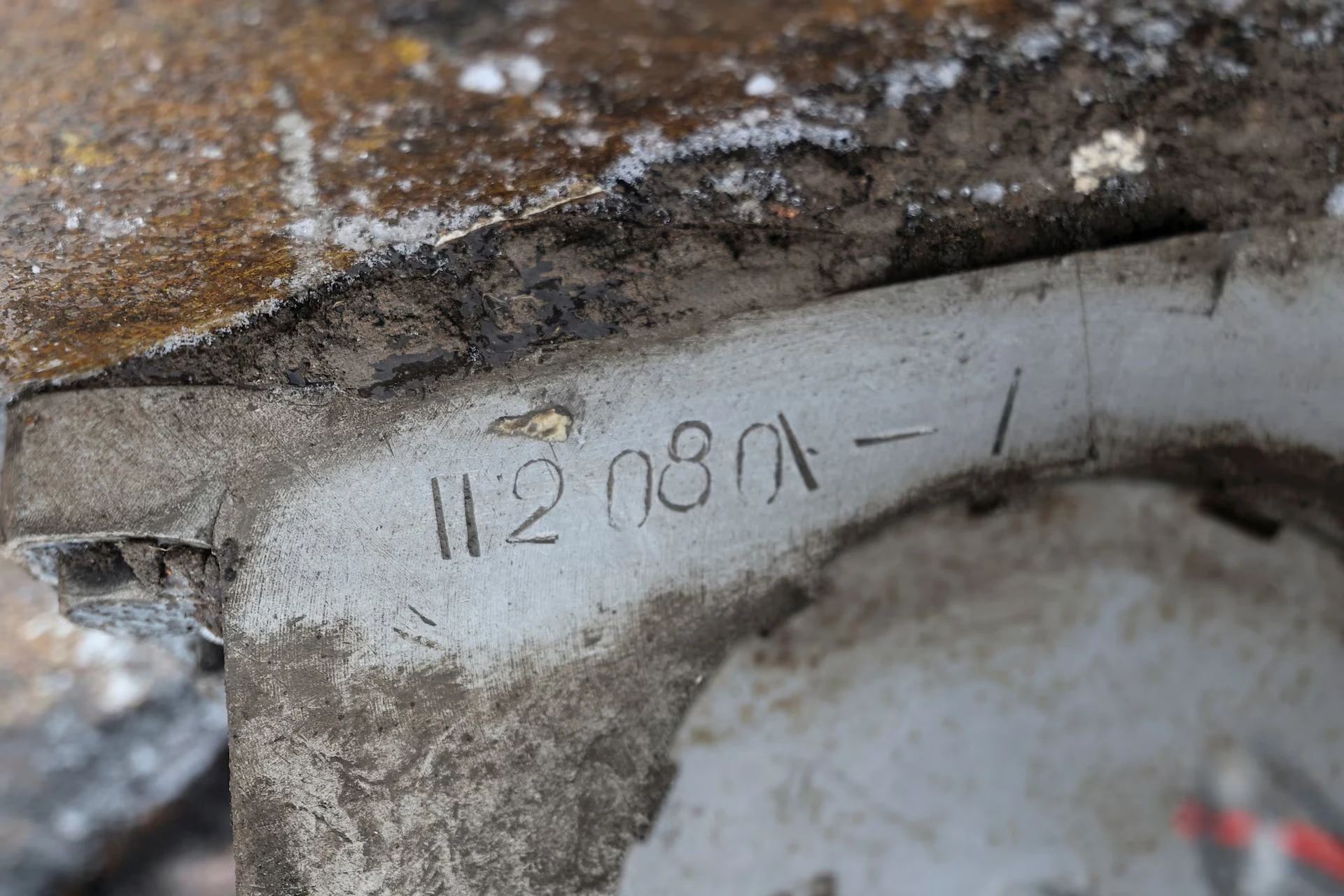
President Volodymyr Zelensky said in August that North Korean ballistic missiles had been used in a Russian strike on Zaporizhzhia. Moscow did not confirm the origin of the weapons involved. Such battlefield attribution requires caution because identifying a missile conclusively can depend on recoverable fragments and technical analysis.
Potentially more consequential is the prospect of another large troop deployment. Zelensky said on August 9 that between 30,000 and 50,000 North Korean soldiers could be sent to Russia. He did not disclose the intelligence behind the estimate, and there has been no independent confirmation that a force of that scale has yet deployed.
The Ukrainian president had previously spoken of preparations to receive about 30,000 additional North Korean troops and identified Russia’s Voronezh region as one possible staging area. If a deployment approaching 50,000 were confirmed, it would represent a major expansion of foreign manpower available to Moscow.
Russia has separately said North Korea would provide about 1,000 military engineers and 5,000 construction personnel for work in the Kursk region. Their stated tasks include mine clearance and reconstruction. How many have arrived and whether all are performing only those functions remains unclear.
For Pyongyang, the relationship offers benefits that may extend well beyond direct payment. Analysts have pointed to possible access to fuel, foreign currency, economic assistance and Russian military expertise. Missile technology, space capabilities and submarine programmes are among the areas watched particularly closely.
That possibility alarms South Korea because the war gives North Korea something difficult to acquire under normal conditions: repeated testing of weapons and personnel in a large-scale modern conflict. Missile launches, artillery performance and battlefield failures can all generate data that may later improve North Korean systems.
Western governments and South Korea also argue that parts of this cooperation violate United Nations Security Council restrictions imposed over North Korea’s nuclear and ballistic missile programmes. Those measures prohibit significant categories of arms transfers and military cooperation involving Pyongyang.
The political contradiction is striking because Russia is a permanent member of the Security Council and previously supported sanctions on North Korea. In March 2024, Moscow vetoed renewal of the UN panel of experts responsible for monitoring implementation of the North Korean sanctions regime.
The Russia-North Korea alliance therefore affects more than the battlefield in Ukraine. North Korean ammunition helps Moscow sustain its war effort, while Pyongyang gains combat experience and a closer strategic relationship with a major nuclear power that can offer political, economic and possibly technological support.
The two governments have also brought their political language into closer alignment. Choe Son Hui and Lavrov have repeatedly described their positions as increasingly coordinated, while North Korea supports Moscow’s account of the war and Russia endorses Pyongyang’s security policies and confrontation with Washington’s regional alliances.
At leadership level, the same message has been reinforced by Putin and Kim. Their exchanges increasingly invoke historical “combat friendship” and mutual sacrifice, linking Soviet support for Korea’s liberation from Japanese rule with the present-day participation of North Korean troops in Russia’s war against Ukraine.
Lavrov’s latest message also repeated Moscow’s description of Ukraine’s government as “Nazi.” Russia has used that claim throughout the invasion as a political justification for the war. Ukraine and its partners reject the label as propaganda rather than an accurate description of the Ukrainian state or its elected leadership.
The phrase “righteous world order” therefore requires similar attribution. For Moscow and Pyongyang, it describes a system less constrained by Western influence and institutions. For their critics, the emerging partnership illustrates military cooperation between two heavily sanctioned states willing to challenge existing international rules.
The central transformation is practical rather than rhetorical. Only a few years ago, Russia-North Korea relations could largely be discussed in terms of diplomatic support and limited trade. They now include artillery shipments, ballistic missiles, deployed troops, military specialists and a treaty promising mutual assistance.
For Ukraine, that provides Russia with another source of military endurance. For South Korea and Japan, it raises a different risk: that battlefield knowledge and technology acquired through the European war could return to Northeast Asia in the form of better-trained troops, more capable missiles and revised military doctrine.
If reports of tens of thousands of additional North Korean troops are eventually confirmed, the Russia-North Korea alliance will enter another phase. Lavrov’s language about a “new world order” would then look less like diplomatic theatre and more like the ideological description of a partnership already reshaping the war in Europe.