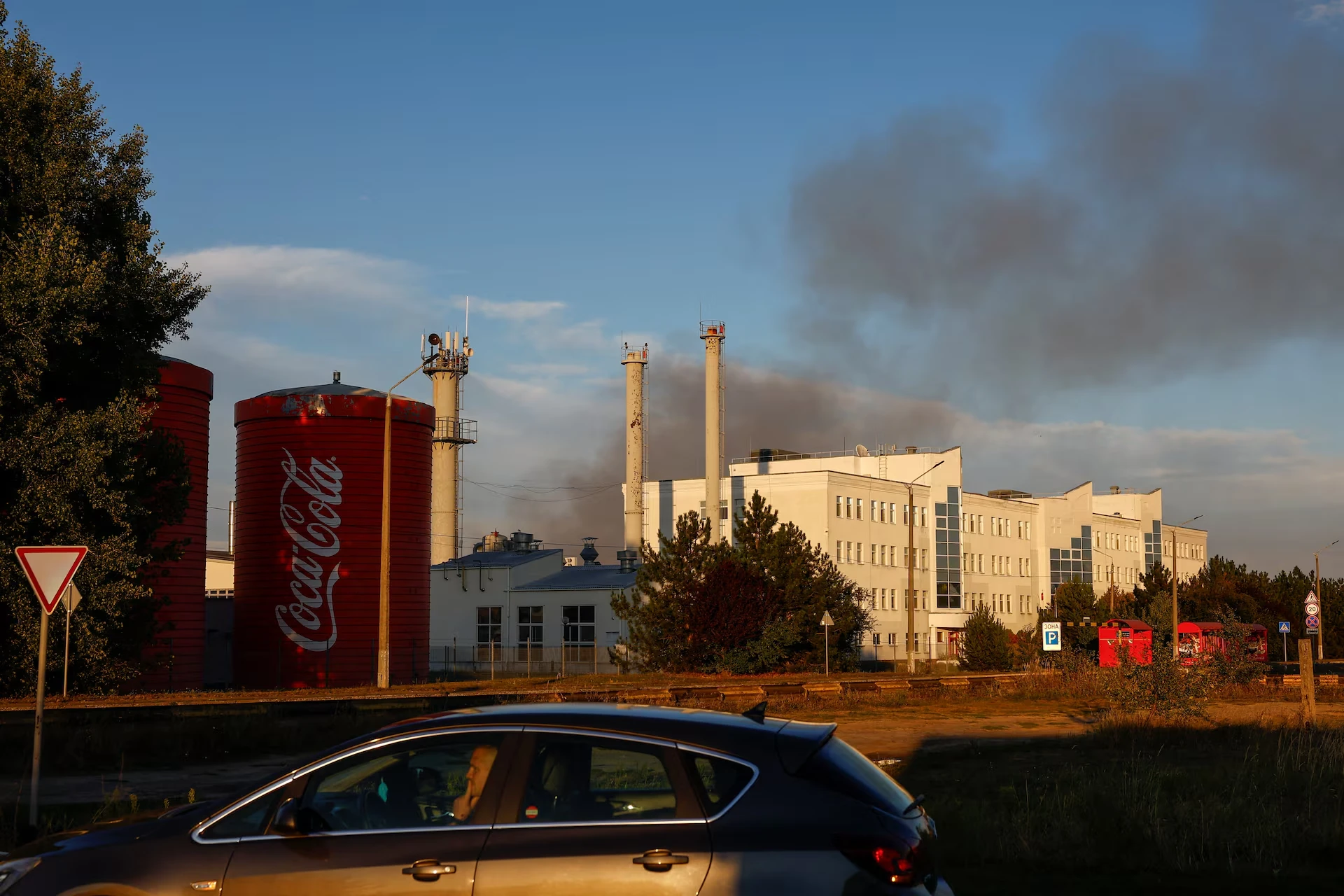






















On September 3, a Russian drone struck a Coca-Cola plant in the Brovary District of Kyiv Oblast, damaging the facility and causing a fire. No employees were injured. Footage from Reuters showed rescue workers near the production complex and smoke rising above the plant grounds and surrounding fields.
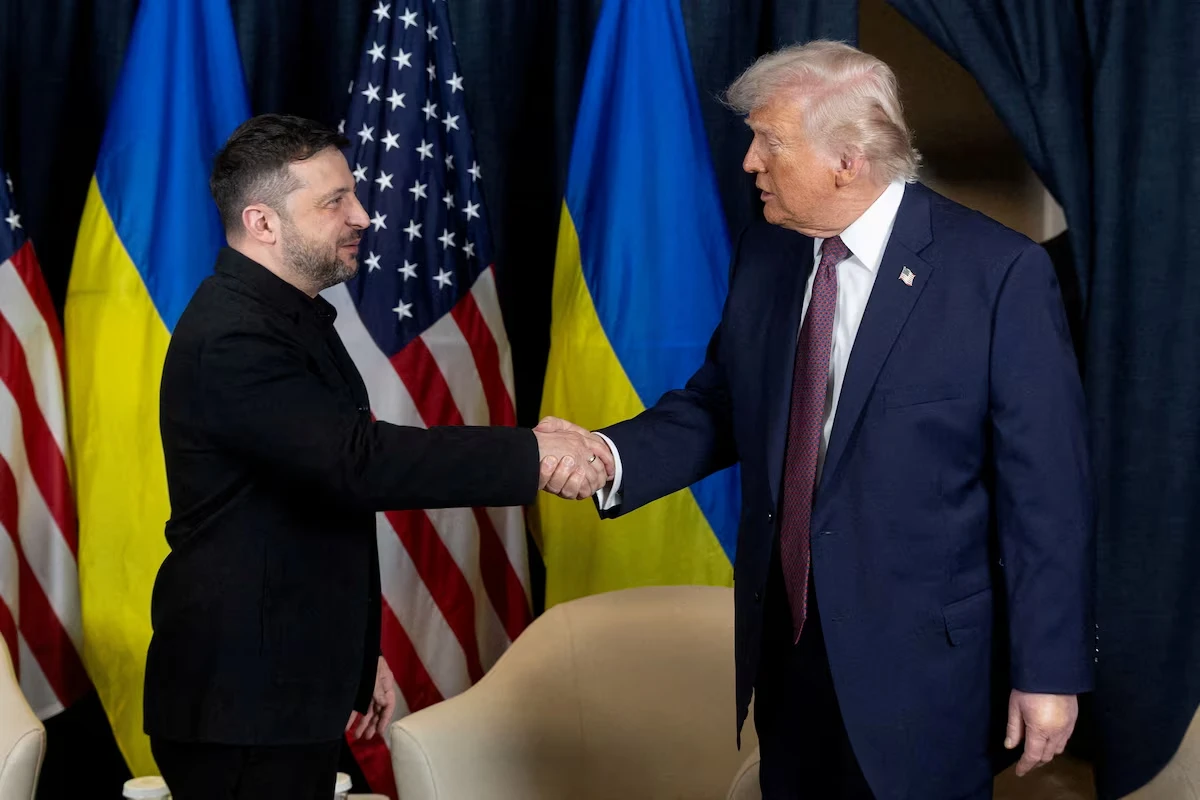
Volodymyr Zelenskyy used the attack as a political message to Washington. In an evening address, he ironically called Coca-Cola such a dangerous “enemy” to Russia that the plant had to be attacked by a Shahed drone, and stated that Moscow could not have been unaware of the global brand’s American origins.
However, the claim that the plant was deliberately targeted precisely because of its ties to the U.S. remains the Ukrainian president’s interpretation. As of September 4, no public data on Russian targeting criteria or evidence that Coca-Cola’s symbolic status was the motive for the strike had been released.
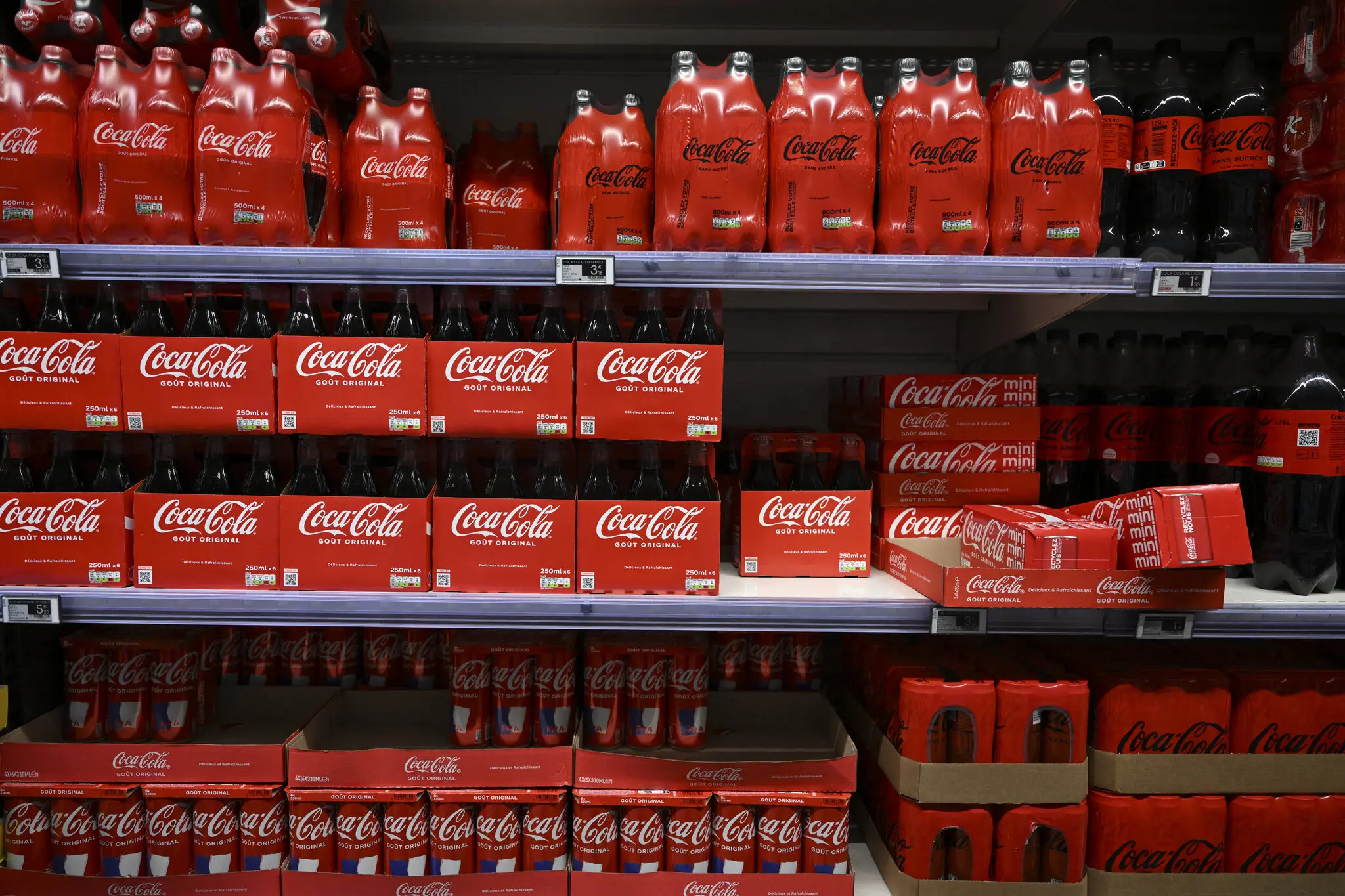
There is also a corporate detail that complicates the picture. The Ukrainian production facility is part of the Coca-Cola system, but its operator, Coca-Cola Beverages Ukraine, is a subsidiary of Coca-Cola HBC—an international group headquartered in Switzerland that serves as a strategic bottling partner of the American company The Coca-Cola Company.
According to “Deikom’s” analysis of publicly available and verified sources, the strike on the Coca-Cola plant near Kyiv is more significant than the debate over a symbolic “message to America.” It demonstrates that large civilian production facilities of international companies are becoming increasingly embedded in Ukraine’s military risk landscape.
The facility is located in Velyka Dymerka, Brovary District. Coca-Cola has been operating in Ukraine since the early 1990s, and this production complex reached full capacity as early as 1998. Following the Russian invasion, the plant had already sustained damage and resumed beverage production in May 2022.
Therefore, the 2026 attack did not target an abstract asset of a foreign corporation, but rather a production facility that had already rebuilt its operations once following hostilities. In 2022, the company repaired significant damage to the facility, retained its staff, and maintained supplies through regional warehouses and neighboring countries.
It is precisely the recurrence of such experiences that is gradually changing the concept of “investment risk” in Ukraine. It is no longer enough for a company to assess demand, taxes, the regulatory environment, or labor costs. The financial model now must account for shelters, backup power, war insurance, and the possibility of physical loss of assets.
This applies to far more than just Coca-Cola. According to a survey by the American Chamber of Commerce and Citi, released in June 2026, 47% of responding companies reported that their factories, offices, warehouses, or other assets had been damaged during the full-scale war.
At the same time, 92% of the surveyed companies remained fully operational, and 87% continued to invest in Ukraine. These two figures illustrate the paradox of the war economy more accurately than any statement: physical risk has become widespread, but for a significant portion of international business, it does not yet mean leaving the country.
For Coca-Cola, this choice has a significant local impact. According to the company’s own research, its operations in 2024 contributed 19.1 billion hryvnias to value creation in the Ukrainian economy, and 72% of its procurement budget was directed to Ukrainian suppliers.
Thus, the damage to a large plant does not end at its fence. Surrounding the production facility are transporters, packaging providers, raw material suppliers, retail chains, repair companies, and hundreds of other contractors. Even a brief shutdown can ripple through the supply chain far beyond the immediate blast zone.
That is precisely why the impact assessment that Coca-Cola is conducting in collaboration with the relevant authorities is more important than photographs of the fire. Andy Gunder, President of the American Chamber of Commerce in Ukraine, confirmed that all employees were unharmed, but the company was still assessing the extent of the property damage.
The absence of casualties also demonstrates just how much corporate safety procedures have become part of everyday operations in Ukraine. Companies regularly suspend operations during air raid alerts, move staff to shelters, and structure their production schedules around the possibility of an airstrike—something that was unthinkable before 2022.
However, even effective shelters do not protect the capital itself. It is impossible to move a bottling line, a finished goods warehouse, power equipment, or a building underground every time. A company can almost completely eliminate the risk to its employees while remaining vulnerable to multimillion-dollar material losses.
This is where war risk insurance becomes crucial. The Ukrainian market already has examples of compensation for damage to production facilities caused by drones and for cargo destroyed during shelling of port infrastructure. Insurance coverage partially restores predictability in an environment where physical security cannot be guaranteed.
But insurance does not eliminate the risk itself—it merely spreads the financial burden. The more frequently businesses are damaged, the more expensive premiums may become and the stricter the coverage terms may get. For investors, this gradually translates into an additional cost for every factory, warehouse, or piece of new equipment in Ukraine.
The Coca-Cola incident also occurred amid a broader wave of Russian attacks on the Kyiv region. In late August and early September, Kyiv and the surrounding region endured several consecutive days of strikes that damaged residential buildings, warehouses, transportation infrastructure, and other facilities.
The following night, one of the World Health Organization’s main warehouses in the Kyiv region, containing humanitarian medical supplies, came under attack. The WHO reported that it was assessing the losses; this was yet another damaged facility in its logistics network in Ukraine.
It would be wrong to link these incidents to a single deliberate campaign without evidence. But for businesses, the difference between a strike on a specifically targeted factory and damage sustained during a broader attack does not always change the financial outcome: production facilities still need to be repaired and protected.
This is one of the most complex aspects of the current phase of the war. Russian long-range drones make it possible to inflict economic losses far from the front lines, where, just a few years ago, companies could locate their main production and warehousing facilities, counting on a relatively safe rear.
The Kyiv region was a natural hub for this type of business. It offers a large consumer market, highways, a workforce, logistics infrastructure, and proximity to the capital. But it is precisely this concentration of economic activity that makes the region particularly vulnerable to prolonged waves of airstrikes.
For an international investor, this creates a different model for Ukraine’s recovery. It is not enough to simply build a new plant; it must be a plant with a backup power supply, protected zones, redundant communication channels, decentralized warehouses, and a contingency plan in case of physical damage to the main site.
The cost of such a project is naturally higher. But the experience of recent years shows another side: companies are learning to recover faster than is usually possible after a traditional disaster. Some businesses whose assets were damaged have already fully or partially repaired them.
As early as February, the American Chamber of Commerce reported to U.S. senators that 47% of its member companies had suffered damage or the complete destruction of their factories, offices, and other facilities. The Chamber explicitly cites these cases as evidence that the war is affecting American economic interests in Ukraine.
The most high-profile previous example was the 2025 attack on a plant belonging to the American electronics company Flex in Mukachevo. The American Chamber stated at the time that two missiles struck the facility during the night shift, when about 600 people were working there; thanks to safety measures, there were no fatalities.
This experience is important for understanding Zelenskyy’s reaction to Coca-Cola. Kyiv is attempting to frame attacks on enterprises with international capital not only as Ukrainian economic losses, but as damage to the assets of companies in countries on which Ukraine depends for political and military support.
This line of reasoning has a clear diplomatic purpose, but it requires precision. The presence of an American brand does not prove that a Russian drone operator chose the plant specifically because of the U.S. Similarly, foreign ownership alone does not make every strike an international political message.
At the same time, for Washington, the origin of a specific target is not the only issue. If businesses linked to American capital and brands systematically suffer losses in Ukraine, the war gradually takes on direct costs for the American private sector as well—even without an attack on U.S. territory.
This could influence the discussion on post-war investment guarantees. Ukraine needs not only capital for reconstruction but also a mechanism that will allow investors to understand who will compensate for the loss of a factory if war risks persist even after the possible cessation of large-scale hostilities.
That is precisely why insurance programs, guarantees from international financial institutions, and the sharing of war risk may be no less important for recovery than tax incentives. An investor is willing to accept high risk if it can be assessed, insured, and factored into a financial model.
Ukrainian businesses are already effectively operating according to this logic. AmCham data reveals both the enormous scale of material losses and the reluctance of most large companies to suspend operations. This is not a lack of fear of war, but rather the ability to transform risk into a routine management procedure.
For Coca-Cola, this procedure will now once again involve assessing the damage and deciding on a recovery plan. As of September 4, there is no public information regarding the duration of a potential shutdown, lost production volume, or financial losses, so it is still too early to quantify the economic impact.
However, the symbolic power of this episode is already evident. Coca-Cola is one of the most recognizable global brands, and images of smoke rising above its Ukrainian plant make the risks of war clear far beyond the confines of financial reports, where damage is typically categorized simply as a loss of assets.
For Russia, a large-scale air campaign creates an opportunity to wear down the Ukrainian economy not only by destroying strategic facilities. Every damaged factory requires repairs, every shut-down warehouse disrupts supplies, and every additional security system increases the cost of normal business operations.
For Ukraine, the answer lies in the “resilience economy.” Its competitiveness increasingly depends on how quickly a company can get people back to work after an attack, restore production lines, find a backup warehouse, and convince headquarters that the next investment is still worth making.
The strike on the Coca-Cola plant near Kyiv did not prove that Moscow is deliberately targeting American brands, nor did it halt international business in Ukraine. It revealed something else: the line between war and ordinary economic activity has all but disappeared, even for a soft-drink manufacturer.
That is precisely why the true measure of the consequences will not be limited to the amount of damage caused by the fire. What will be more important is how quickly the plant resumes normal operations—and whether companies witnessing such scenes will remain willing to invest another dollar in Ukrainian production, knowing that the risk of a drone attack is already factored into its base cost.