





















The U.S. war against Iran has exposed a weakness long obscured by America’s technological military superiority: precision weapons can be consumed far faster than even the world’s largest defense industry can replace them. After months of fighting, that gap is no longer a matter of inventory management. It is becoming a strategic liability.
Strikes on Iran and the defense against Iranian retaliation have consumed thousands of expensive missiles. Many rely on precision components produced through complex international supply chains, while full production cycles can stretch over years. Air- and missile-defense interceptors have emerged as one of the most acute pressure points.
At the same time, the Pentagon has shifted ships, aircraft, surveillance assets and air-defense units from Europe and the Indo-Pacific to the Middle East. A campaign that Washington expected to end quickly has begun to reduce American military capacity in precisely the regions where Russia, China and North Korea remain the most serious long-term challengers.
As Daycom has previously assessed, the problem is not that the United States is close to running out of weapons altogether. Its arsenal remains vast. The danger is that the weapons being depleted fastest are also among the ones most essential in a conflict against an adversary with advanced air defenses and a large missile force.
The Patriot system illustrates the problem most clearly. More than 1,500 Patriot interceptors have been used during the Iran war, while the current U.S. inventory is estimated at fewer than 1,700 missiles. Even with accelerated production, replacing what has already been expended could take more than two years.
That does not mean the United States has lost the ability to defend its own forces. But modern warfare is not determined by the total number of weapons sitting in national stockpiles. What matters is whether the right interceptor, cruise missile or precision weapon is available in the right theater at the right moment.
The consequences are already visible in Ukraine. In 2026, the number of Western air-defense missiles reaching Kyiv has fallen by roughly two-thirds compared with the previous year. At the same time, Russia has increased its use of ballistic missiles, widening the gap between the volume of incoming threats and Ukraine’s ability to intercept them.
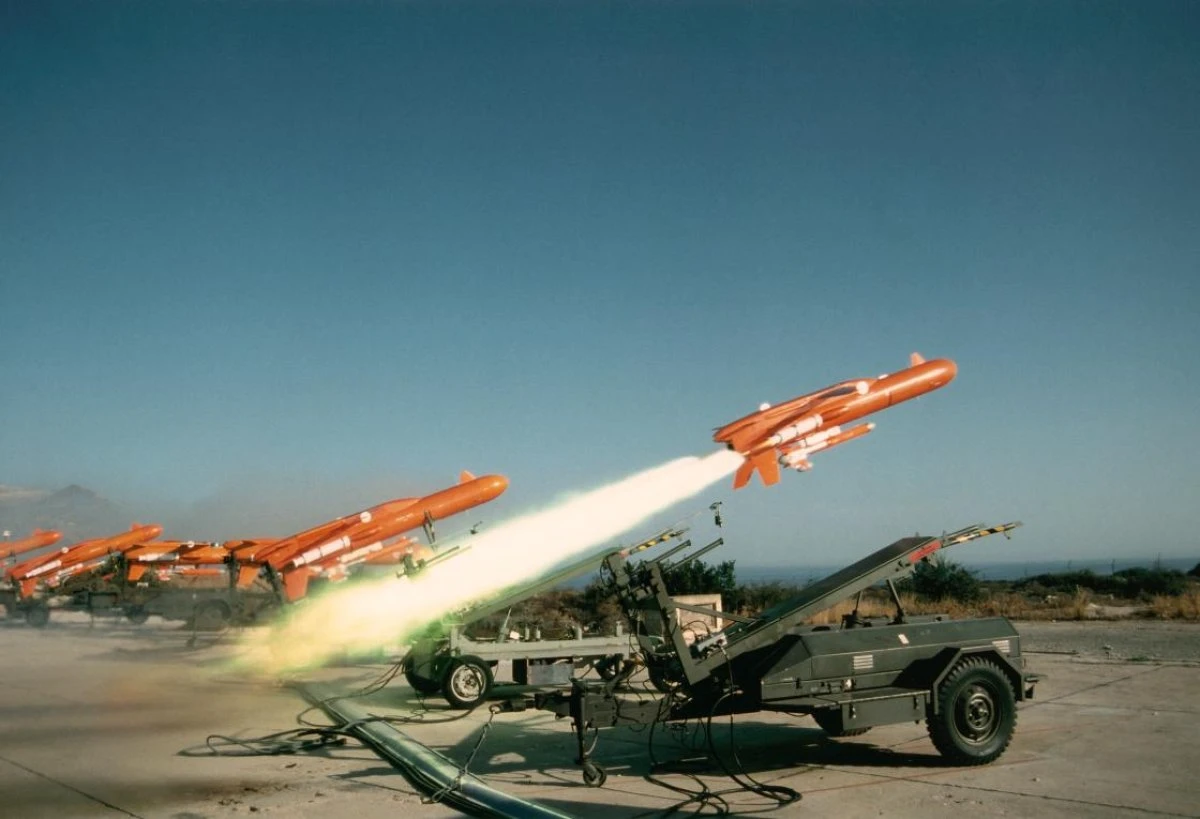
The shortage extends beyond Patriot. During the Iran campaign, U.S. forces have drawn down stocks of several categories of long-range precision weapons, including ATACMS and Precision Strike Missiles. Such systems allow militaries to hit targets from long distances without sending crewed aircraft deep into sophisticated enemy air defenses.
The United States still holds enormous stocks of guided aerial bombs. The problem is that many must be released relatively close to their targets, exposing aircraft to greater risk. Against Iran, that distinction already matters. In a potential war with Russia or China, both of which possess far more capable layered air-defense systems, it could become decisive.
That is why Moscow and Beijing are watching not only the battlefield in Iran but the logistics behind it. Deterrence works when an adversary believes that aggression will bring an unacceptable response. If that adversary begins to doubt the speed, scale or sustainability of the American response, the underlying calculation of risk begins to change.
For Russia, the effect is particularly important because of the war in Ukraine. Every Patriot interceptor sent to the Middle East is one that cannot simultaneously defend Kyiv, Kharkiv, Dnipro or another Ukrainian city. The longer the Iran conflict continues, the harder it becomes for Washington to sustain several theaters at the same intensity.
Russia has already expanded missile production faster than Western industry has increased interceptor output. The Iran war did not create that imbalance, but it has made it significantly worse. Moscow does not need to surpass the United States technologically if Western inventories continue falling faster than they can be restored.
An equally serious problem is developing in Asia. Tomahawks and other long-range weapons have been transferred to the Middle East from Indo-Pacific stocks. Advanced interceptors, naval vessels and other high-end assets have also been redirected from a region where they would be central to any conflict over Taiwan.
For China, this creates an opportunity to study the actual depth of American reserves. Beijing does not need the precise inventory of every missile. Congressional budgets, defense contracts, production announcements, satellite surveillance and the movement of military units can reveal enough to estimate how long the United States could sustain an intense high-technology war on multiple fronts.
At that point, munitions shortages cease to be an internal Pentagon problem and become a question for the entire American alliance system. If Japan or South Korea begins to doubt Washington’s ability to protect them with conventional forces, arguments for independent nuclear deterrence could become more politically powerful.
Europe faces a different version of the same dilemma. Waiting lists for U.S.-made air-defense systems and interceptors are growing, production remains constrained, and multiple wars are competing for the same limited output. European governments are therefore investing more heavily in domestic defense production and looking for alternative suppliers.
Washington is trying to accelerate manufacturing. Defense companies are expanding plants, new contracts are being signed and billions of dollars are flowing into missiles, ammunition and missile defense. But defense production operates on a different clock from war. A factory cannot double output simply because political leaders decide the requirement is urgent.
For decades, the U.S. procurement system was built around relatively predictable demand. After the Cold War, stockpiles were reduced, production lines were closed and companies had little incentive to maintain expensive excess capacity that might sit unused for years. The United States is now trying to rearm itself, supply allies and sustain a major military campaign at the same time.
Duration is what makes the Iran war especially dangerous. A short strike campaign could have been costly but manageable. Months of repeated precision-weapons use represent a different kind of conflict. Every additional month increases not only immediate expenditure but also the amount of time required to rebuild the arsenal afterward.
This is how a window of vulnerability emerges. It does not mean Russia or China will necessarily try to exploit it. But deterrence depends less on what the White House says about American strength than on what potential adversaries believe the United States can actually sustain.
The biggest danger, therefore, is not literally empty warehouses. It is a shift in perception. If Russian or Chinese military planners conclude that U.S. industry cannot rapidly replace high-end losses, they may begin to reassess the balance of power in ways Washington would prefer to avoid.
For Ukraine, that shift already carries an immediate cost. In a global scramble for Patriot interceptors, Kyiv is no longer competing only with other allies. American bases, the Iran war, commitments in Asia and the Pentagon’s own reserve requirements are all competing for the same weapons.
That is the strategic paradox of the current U.S. campaign. A war intended to demonstrate American power in the Middle East is simultaneously making the limits of that power more visible elsewhere.
Russia and China do not need the United States to lose in Iran. They only need the war to continue. Every additional missile fired in the Middle East adds pressure to production lines, reduces reserves and makes the global American deterrence system more expensive and less flexible.
In the twenty-first century, military superiority is increasingly determined not by how many weapons a country possesses on the first day of a war, but by how quickly it can replace what it has already used. That race between consumption and production may now shape the balance of power far beyond Iran.