









.jpg)














One day before Donald Trump and Volodymyr Zelensky are due to meet in Washington, the Kremlin says it has received no specific new proposal for ending the war. Moscow insists that everything discussed publicly so far remains little more than speculation.
The response followed reports of a possible American-Ukrainian initiative to halt aerial strikes. Such an arrangement could become a limited first step toward de-escalation without attempting to resolve the territorial and political disputes at the heart of the war.
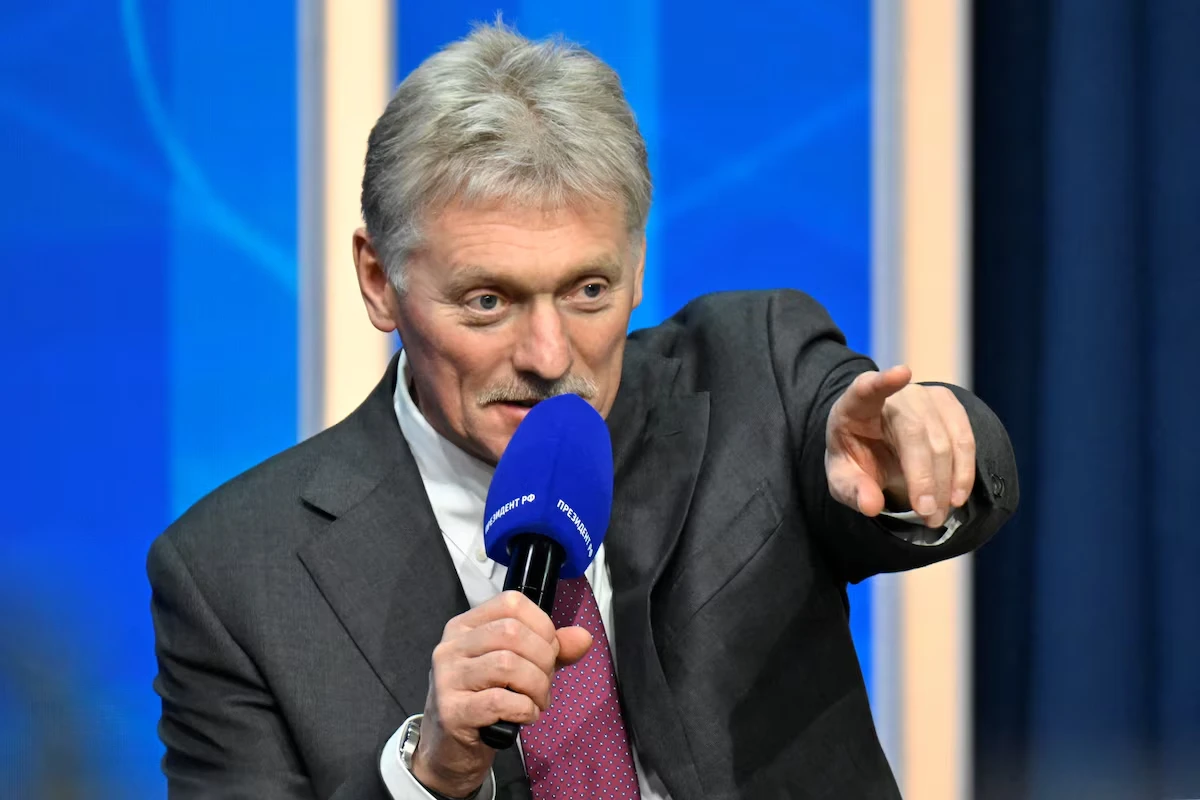
Kremlin spokesman Dmitry Peskov did not reject the idea itself. Instead, he emphasized the absence of detail. That formulation allows Moscow to avoid an outright refusal while accepting no obligations before a politically important meeting from which Russia is formally absent.
In Daycom’s assessment, the Kremlin is preserving diplomatic ambiguity as a political asset. Until a proposal is formally presented, Moscow can claim to support peace while declining to discuss any actual mechanism for achieving it.
The tactic provides several advantages. It prevents Washington and Kyiv from defining the agenda unilaterally, shields the Kremlin from immediate responsibility for a possible failure and allows Vladimir Putin to declare any future offer insufficient.
The timing is especially important. Trump and Zelensky are expected to meet on July 28, meaning Moscow is trying to establish the boundaries of a conversation before its participants sit down. The Kremlin wants influence over negotiations in which it will not initially take part.
A possible aerial ceasefire could apply to missile and drone attacks on cities, energy infrastructure, ports and other targets deep inside national territory. For Ukraine, such an arrangement could reduce pressure on civilians and preserve scarce air-defense interceptors.
For Russia, the calculation would be more difficult. Long-range strikes have become one of its principal tools of war. They exhaust Ukrainian air defenses, damage the economy, impose psychological pressure and allow Moscow to reach far beyond the front line.
Even a narrow moratorium would therefore remove part of Russia’s strategic advantage. The Kremlin would have to suspend a method of steadily raising the cost of war for Ukraine without making significant territorial gains.
An aerial ceasefire would not, however, benefit only Kyiv. Ukraine also conducts long-range attacks on Russian military logistics, oil refineries, depots, airfields and vessels connected to the war effort.
Any agreement would need to define precisely which targets and weapons fall under the ban. Without such clarity, Russia could demand an end to Ukrainian strikes on its military economy while preserving the right to attack anything it labels a military objective.
Technical provisions would determine whether the initiative could survive. The parties would need monitoring rules, channels for exchanging information, methods for documenting violations and predetermined consequences for breaking the agreement.
The categories of weapons would also matter. Would the moratorium cover ballistic and cruise missiles, attack drones, guided aerial bombs, naval drones and strikes on military vessels? Without a detailed answer, the arrangement could quickly dissolve into competing accusations.
The Kremlin has previously used negotiations to create operational pauses without abandoning broader strategic goals. Ukraine therefore has reason to fear that a limited halt could give Russia time to accumulate missiles, repair aircraft and prepare another campaign.
The lack of public detail may simply mean that Washington and Kyiv are still shaping a common position. Yet it also gives Moscow room for an information strategy: demand specifics now, then argue later that the proposed format does not account for Russian interests.
The discussion can then be shifted from stopping attacks to identifying concessions Ukraine is expected to make. Moscow has repeatedly tried to connect any negotiations to occupied territories, sanctions, Ukrainian armament and Kyiv’s relations with Western allies.
For Trump, the meeting with Zelensky will test whether a political promise of rapid peace can be translated into a realistic framework. A limited ceasefire may appear more achievable than an immediate attempt to settle the entire war.
Even a narrow agreement, however, would require more than American mediation. It would require a credible enforcement mechanism. Moscow is unlikely to accept restrictions unless it sees a political, economic or military benefit.
Ukraine cannot accept a framework that limits its long-range capabilities without reliably ending Russian attacks. An asymmetric ceasefire would merely weaken Kyiv’s ability to strike the rear infrastructure supporting future offensives.
The immediate result of the Washington talks may therefore be a set of shared principles rather than a finished proposal for Moscow. The United States and Ukraine must decide what they are prepared to restrict, how compliance would be verified and what would follow the first violation.
Peskov’s statement already suggests that Russia will dispute not only the substance of the initiative, but its diplomatic status. The Kremlin may demand a formal document, a direct negotiating channel and advance recognition of Russian conditions before entering a substantive discussion.
At the same time, Moscow declined to address Zelensky’s claim that Russia could be preparing to receive 30,000 North Korean troops in the Voronezh region. Peskov said it was not for the Ukrainian president to speak about Russian plans.
That response was notably different from a denial. The Kremlin neither confirmed preparations nor said that no such plan existed. In wartime communication, a refusal to clarify can itself become part of the signal.
The Voronezh region is an important logistical area for Russian operations against Ukraine. A large foreign contingent stationed there could be undergoing training, guarding rear facilities or preparing for deployment closer to the battlefield.
For Russia, North Korean troops could provide additional manpower without immediately expanding domestic mobilization. The Kremlin would gain military resources while shifting much of the political cost of casualties beyond Russian society.
For Pyongyang, participation could bring money, technology, energy support and battlefield experience. The war offers North Korean forces exposure to modern drones, artillery, electronic warfare and the coordination of large formations.
This is why the issue of a possible foreign contingent is directly connected to Moscow’s peace rhetoric. If Russia is preparing for negotiations while simultaneously increasing its manpower reserves, it is not choosing between diplomacy and war. It is using both in parallel.
The Kremlin can discuss a halt to certain strikes while continuing preparations for new operations. Negotiations are not necessarily an alternative to force in Moscow’s strategy; they can be another instrument for improving its military and political position.
That creates a difficult test for Washington. Any Russian consent must be judged not only by language, but by behavior: troop movements, missile production, drone stockpiles and the pattern of attacks.
Likewise, the absence of an immediate response does not mean Moscow has no interest in talks. The Kremlin may simply be waiting for the United States and Ukraine to reveal their position before selecting the most advantageous reaction.
For Zelensky, the Washington meeting is also about ensuring that Ukraine remains a co-author of any settlement framework. A plan designed without regard for its defense needs might reduce some attacks while weakening the country’s ability to deter renewed escalation.
An aerial ceasefire would make sense as a first step only if it increased security rather than merely changing the form of the war. It cannot prevent Ukraine from defending its airspace, striking the systems preparing future attacks or receiving the weapons it requires.
The Kremlin’s statement should therefore not be read as a neutral complaint about missing information. It is an attempt to occupy the most convenient position: not to reject peace, not to accept specifics and to leave the other side responsible for making the first move.
Moscow wants every initiative to begin with its right to decide whether the terms are sufficiently favorable. The task for Ukraine and the United States is the opposite—to create a structure in which rejection or violation costs the Kremlin more than compliance.
The Trump–Zelensky meeting may open another diplomatic cycle. Peskov’s response has already revealed its central difficulty: Russia wants to remain the state that wages the war, evaluates the peace proposals and decides when they have become sufficiently “concrete” to discuss.