




















Donald Trump gave an unusually categorical answer on August 27 to one of Europe’s most consequential security questions. The U.S. president said Vladimir Putin would not attack NATO territory and rejected suggestions that CIA Director John Ratcliffe’s secret trip to Moscow had been a special mission to warn the Kremlin against doing so.
Speaking to reporters in the Oval Office, Trump said the Russian president was “not going to attack a NATO territory.” Earlier the same day, he told Axios that he was not worried about such a scenario and portrayed the prospect as something that did not require an extraordinary American warning to Moscow.
Ratcliffe, in Trump’s account, had carried no special presidential message. The president described contacts between the CIA chief and his Russian counterparts as routine, saying Ratcliffe sees his opposite number roughly every six months or once a year and that the two maintain a good working relationship.
The complication is that Reuters reporting presents a more nuanced picture. Two people familiar with the discussions said Ratcliffe did raise the possibility of a Russian operation against a NATO member during his meetings in Moscow. Neither source said that was necessarily the sole or even the principal purpose of the trip.
Daycom’s analysis indicates that these accounts are not necessarily mutually exclusive. The White House can publicly play down the risk of a Russian attack on NATO while U.S. intelligence simultaneously examines worst-case scenarios and communicates privately with Moscow without defining the meeting as a formal warning mission.
Ratcliffe travelled to Moscow on August 25 and met Sergei Naryshkin, head of Russia’s Foreign Intelligence Service, as well as other Russian intelligence officials. Naryshkin later confirmed what he called a “working meeting” but declined to disclose its substance, saying only that sensitive matters within the remit of the two services had been discussed.
The Kremlin also confirmed that Ratcliffe did not meet Putin personally. The Russian president was nevertheless briefed on the outcome, meaning whatever assessments or messages emerged from the intelligence talks reached the highest level of Russia’s decision-making system.
The new Reuters reporting also clarifies earlier accounts in the American press. The Wall Street Journal had reported that Ratcliffe went to Moscow to warn Russia against attacking a NATO state. Trump disputes that characterisation, but Reuters sources confirm that the scenario was at least raised in the conversation.
One source said the talks covered several other issues, including Russia’s support for Iran, which has become a source of friction with Washington. That detail makes the trip look less like a single-purpose warning mission and more like a broad strategic exchange between intelligence chiefs amid several overlapping international crises.
Trump’s insistence that there was “no message” therefore does not automatically contradict reports that NATO was discussed. At this level, a sensitive security issue can form part of a wider agenda without being presented formally as an ultimatum from the U.S. president to the Kremlin.
The political significance of the distinction is considerable. By describing the trip as routine, the White House avoids creating the impression that Washington believes a confrontation with Russia is imminent or that it has identified a specific threat requiring an emergency warning.
European governments face a different calculation. Their concern is not limited to the classic scenario of Russian armour crossing the border of a NATO member. A more difficult challenge would be a limited provocation, sabotage operation or deniable attack designed to obscure Moscow’s responsibility.
U.S. and European intelligence services have spent years monitoring Russian sabotage and other so-called grey-zone activity across Europe. Western officials assess that such operations can be intended to weaken NATO cohesion and reduce member states’ willingness to continue supporting Ukraine.
NATO’s own public assessments describe a similar threat environment. The alliance identifies Russia as its most significant and direct security threat and has pointed to sabotage, cyberattacks, interference with critical infrastructure, electronic disruption, disinformation and other hostile activity below the level of open war.
The North Atlantic Council has repeatedly condemned Russian cyber activity directed against allied and partner countries. NATO has said it is prepared to use the full range of its capabilities to deter and counter such operations, without suggesting that every cyber incident automatically constitutes a conventional military attack.
Tensions have also been sharpened by repeated airspace incidents on NATO’s eastern flank. Drone incursions and other violations have forced allies to consider not only whether an incident was deliberate, but how quickly responsibility can be established and what level of response would be proportionate.
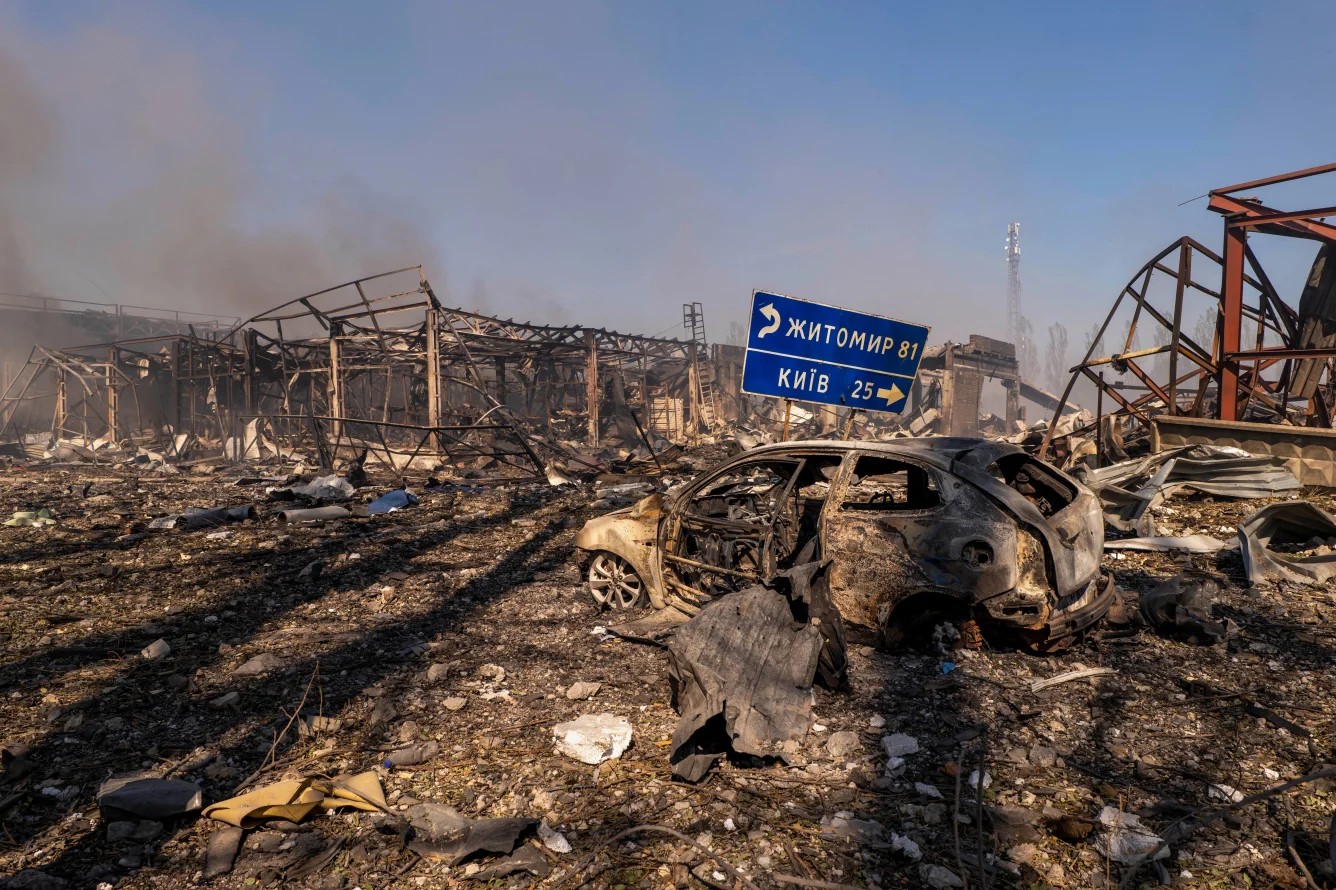
It is in that environment that Western intelligence agencies have examined especially difficult false-flag scenarios. Reuters reported that one possibility being monitored is Russia using a Ukrainian drone to strike a country in eastern or northeastern Europe while attempting to conceal Moscow’s authorship.
That remains a risk scenario, not evidence of an approved Russian operation. There is no public proof that the Kremlin has decided to carry out such an attack. But the possibility illustrates why the question “Will Putin attack NATO?” is more complicated than a choice between full-scale invasion and complete absence of danger.
Grey-zone operations are designed precisely to create uncertainty over attribution. If an explosion, cyberattack or drone strike occurs without an immediately identifiable perpetrator, allies must first determine who was responsible before deciding whether the incident requires a collective response.
Article 5 of the North Atlantic Treaty establishes that an armed attack against one member is considered an attack against all. It does not, however, trigger one predetermined military response: each ally takes whatever action it considers necessary, potentially including the use of armed force.
NATO has also made clear that a major cyberattack or other hybrid operation could, under certain circumstances, be considered an armed attack. Such a judgment would depend on the scale, consequences and nature of the incident rather than simply on the type of weapon or technology involved.
That makes action below an unmistakable Article 5 threshold potentially attractive to an adversary. The objective would not necessarily be to defeat NATO militarily, but to test the alliance’s speed, political unity and willingness to respond collectively to an ambiguous provocation.
Trump’s confidence therefore has a dual effect. On one level, his statement may reassure allies and signal that Washington does not regard direct war with Moscow as inevitable. On another, a categorical presidential prediction is not itself an intelligence assessment and cannot eliminate the need to prepare for less obvious contingencies.
The issue is especially sensitive because the Trump administration is simultaneously reassessing the U.S. military role in Europe. Washington has pressed European allies to assume more responsibility for the continent’s conventional defence while the Pentagon considers how American forces should be deployed in the longer term.
That does not mean the United States is abandoning NATO. But European governments are hearing two messages at once: the U.S. president says Russia will not attack, while Washington is also telling Europe that it must carry more of the burden for its own defence.
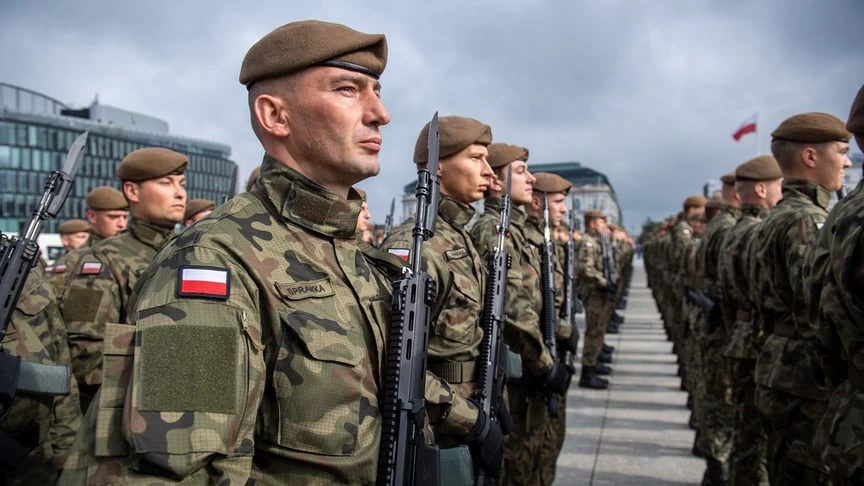
NATO has significantly reinforced its eastern flank over the past decade, from the Baltic region to the Black Sea. The alliance links that buildup directly to Russia’s annexation of Crimea, the full-scale invasion of Ukraine, airspace violations and the expansion of Russian hybrid and sabotage activity.
For Moscow, the strategic appeal of ambiguous operations is the possibility of testing that system without formally declaring war. For NATO, the challenge is to ensure that Russia cannot assume political paralysis simply because a particular incident does not resemble a conventional military assault.
That helps explain the possible value of Ratcliffe’s mission. A CIA director does not need to issue a public threat in order to communicate a significant warning. A private intelligence channel allows Washington to discuss scenarios that the administration may regard as unlikely but would be dangerous to leave unaddressed.
Such channels serve another purpose as well: reducing the risk of miscalculation. If Washington considers certain Russian actions unacceptable but Moscow is uncertain about where the threshold for an American response lies, private communication can sometimes be more effective than public rhetoric.
None of that means the Moscow meeting produced an agreement. Naryshkin described the conversation as normal working contact, Trump minimised its significance, and the Kremlin announced no new understanding on NATO, Ukraine or Iran. There is also no public evidence that Russian behaviour changed because of the visit.
Nor does the trip prove that U.S. intelligence expects an imminent Russian attack on NATO. Reuters reported only that the possibility of such an operation was discussed and that Western agencies continue to monitor relevant scenarios. That is an important but much narrower conclusion.
It would be equally misleading to infer from Trump’s statement that NATO no longer regards Russia as a threat. The alliance’s formal strategic position remains the opposite: Russia is treated as a direct security challenge, while eastern-flank defences and air and missile protection continue to be strengthened.
The difference lies partly in the time horizon and partly in the type of risk being discussed. Trump is expressing a political judgment about Putin’s intentions. Military and intelligence institutions are required to plan for scenarios that a president may consider unlikely, particularly when the cost of being wrong could involve a test of Article 5.
Moscow understands that distinction. NATO deterrence does not depend on every allied leader believing an attack will happen. It depends on convincing a potential attacker that the cost of any serious attempt to test the alliance would exceed the possible gain.
That is why military preparedness and private warnings are not inconsistent with a political desire to avoid escalation. They are part of the machinery intended to make the president’s optimistic prediction more likely to remain true.
After Ratcliffe’s Moscow visit, the central question is therefore not which one-sentence description is more accurate — Trump’s, the American press’s or Reuters’ sources’. Enough is known to see two levels of U.S. policy operating at the same time: public reassurance and private management of strategic risk.
Trump may genuinely believe that Putin will not order a direct Russian attack on NATO. But Washington, judging by the intelligence contacts surrounding Ratcliffe’s trip, is not prepared to build European security on that belief alone. The gap between a president’s political forecast and a state’s obligation to prepare for the worst is the real story behind the Moscow mission.