
















Five years into the full-scale war, Russia’s position is clearly more difficult than it was a year ago. Its advance has slowed, Ukrainian strikes are reaching deeper into the rear, the federal budget is running a large deficit and fuel disruptions have become more visible. Yet there is still little sign that Vladimir Putin considers the cost of continuing the war unacceptable.
On the battlefield, Moscow has lost much of the momentum it enjoyed in 2025. Russian forces gained only a small amount of territory in July compared with the same period a year earlier. The spring and summer campaign has so far failed to produce an operational breakthrough despite sustained pressure on some of Ukraine’s most heavily fortified positions.
The economic environment has also deteriorated. Russia’s central bank has cut its 2026 growth forecast to a range of 0% to 1%, raised its inflation projection to 6% to 7% and kept interest rates high. Investment is weakening outside sectors supported directly or indirectly by state spending.
Public opinion, however, does not resemble a pre-revolutionary crisis. In July, 62% of Russians surveyed said they supported a move toward peace talks, while 66% still backed the actions of the Russian military and 56% supported intensified strikes on Ukraine. That combination gives the Kremlin substantial room to keep fighting.
Daycom’s analysis indicates that the answer to why Putin keeps fighting does not depend on whether Russia is doing well. What matters more to the Kremlin is whether Ukraine is deteriorating faster. As long as Putin believes it is, Russia’s domestic problems remain costs to absorb rather than reasons to stop.
This is a strategy of relative attrition. Moscow does not necessarily need rapid territorial victories if it believes it can replenish troops for longer, produce more missiles, sustain military expenditure and wait until Ukraine faces a more severe shortage of manpower, money and air-defence interceptors.
Alexander Gabuev, director of the Carnegie Russia Eurasia Center, describes the underlying calculation as a belief that Russia merely has to outlast Ukraine. Putin has repeatedly underestimated Kyiv’s ability to adapt, but those earlier mistakes have not yet persuaded him to abandon the broader assumption that time can still work in Moscow’s favour.
Missile warfare is one of the strongest arguments supporting that belief. Russia continues serial production of ballistic and cruise missiles, while Ukraine remains heavily dependent on limited Western interceptor stocks. That imbalance makes the coming winter potentially central to the Kremlin’s strategy.
Russian industry has continued prioritising weapons that are particularly difficult to intercept. Ukrainian military intelligence estimates that combined production of cruise and ballistic missiles now exceeds 200 a month, with output of some types during the summer running above earlier planned levels.
That gives Putin reason to believe that a slow land offensive can be supplemented by attacks on energy infrastructure, defence production, logistics and cities. If Ukraine has fewer expensive interceptors available, every additional ballistic strike can impose a progressively more favourable cost exchange for Moscow.
The shortage of Patriot interceptors is especially important. Ukrainian officials have said supplies in 2026 have fallen sharply from the previous year, while Russia has expanded its use of ballistic missiles against which most other Ukrainian air-defence systems have only limited effectiveness.
The Kremlin may therefore see winter not merely as another season of fighting, but as a window for intensified coercion. Sustained strikes on power networks, industry and transport could simultaneously increase the economic burden of the war, worsen civilian conditions and consume scarce air-defence ammunition.
Russia’s own economy, however, is showing clearer limits to the wartime model. Preliminary Finance Ministry figures put the federal budget deficit for January through July at about 6.46 trillion rubles, while oil and gas revenues fell by roughly 17% from the same period a year earlier.
A large deficit does not by itself amount to a financial crisis. The state can borrow domestically, raise taxes, cut lower-priority programmes and use reserves. But the figures show how much more expensive it has become to finance the war, social commitments and the normal functioning of the civilian economy at the same time.
The central bank has also made clear that the scope for rapid interest-rate cuts remains limited. Expensive borrowing is increasingly weighing on investment outside the defence and state-supported sectors, while private businesses are operating in an environment of weak growth and high financing costs.
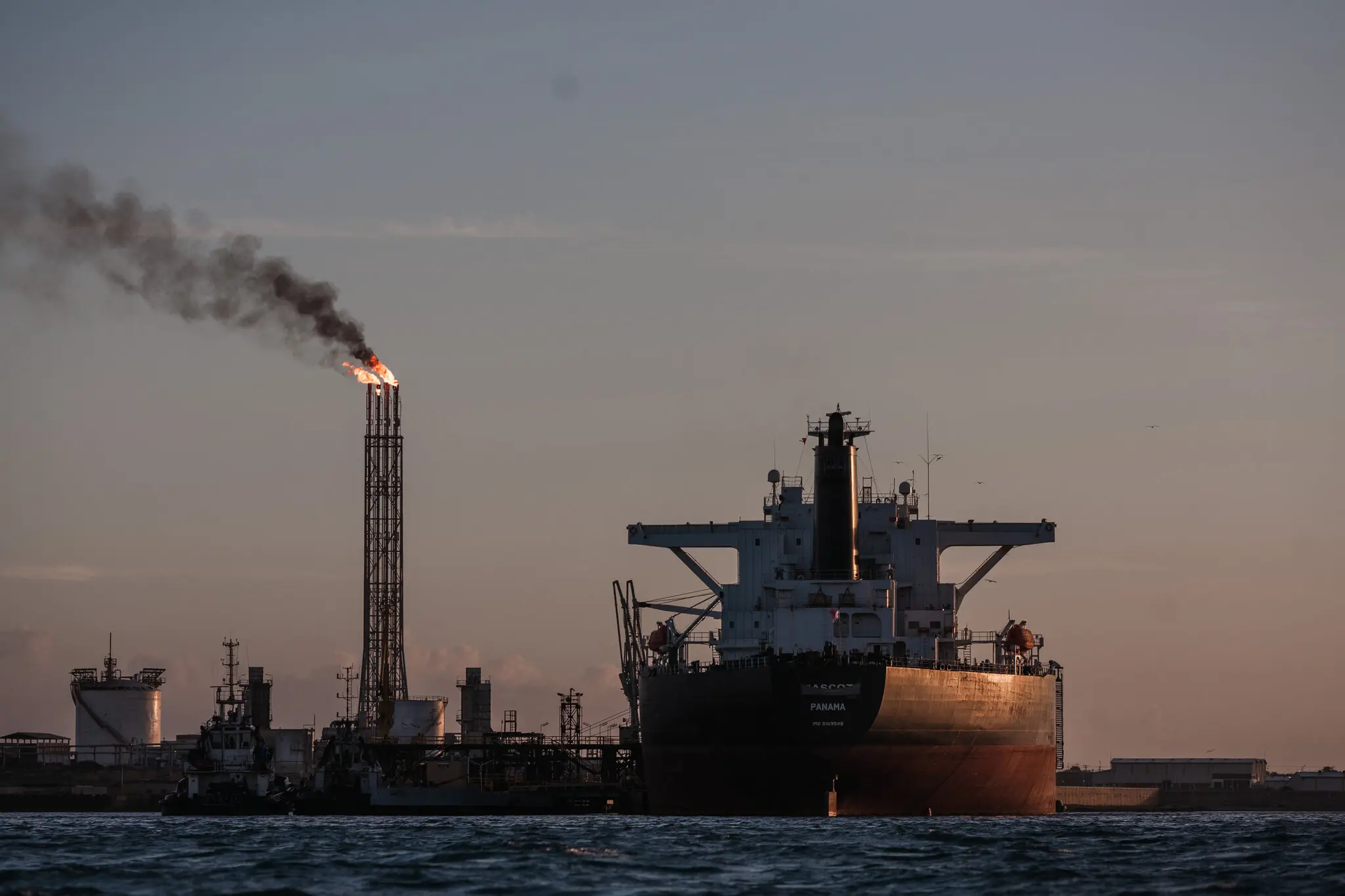
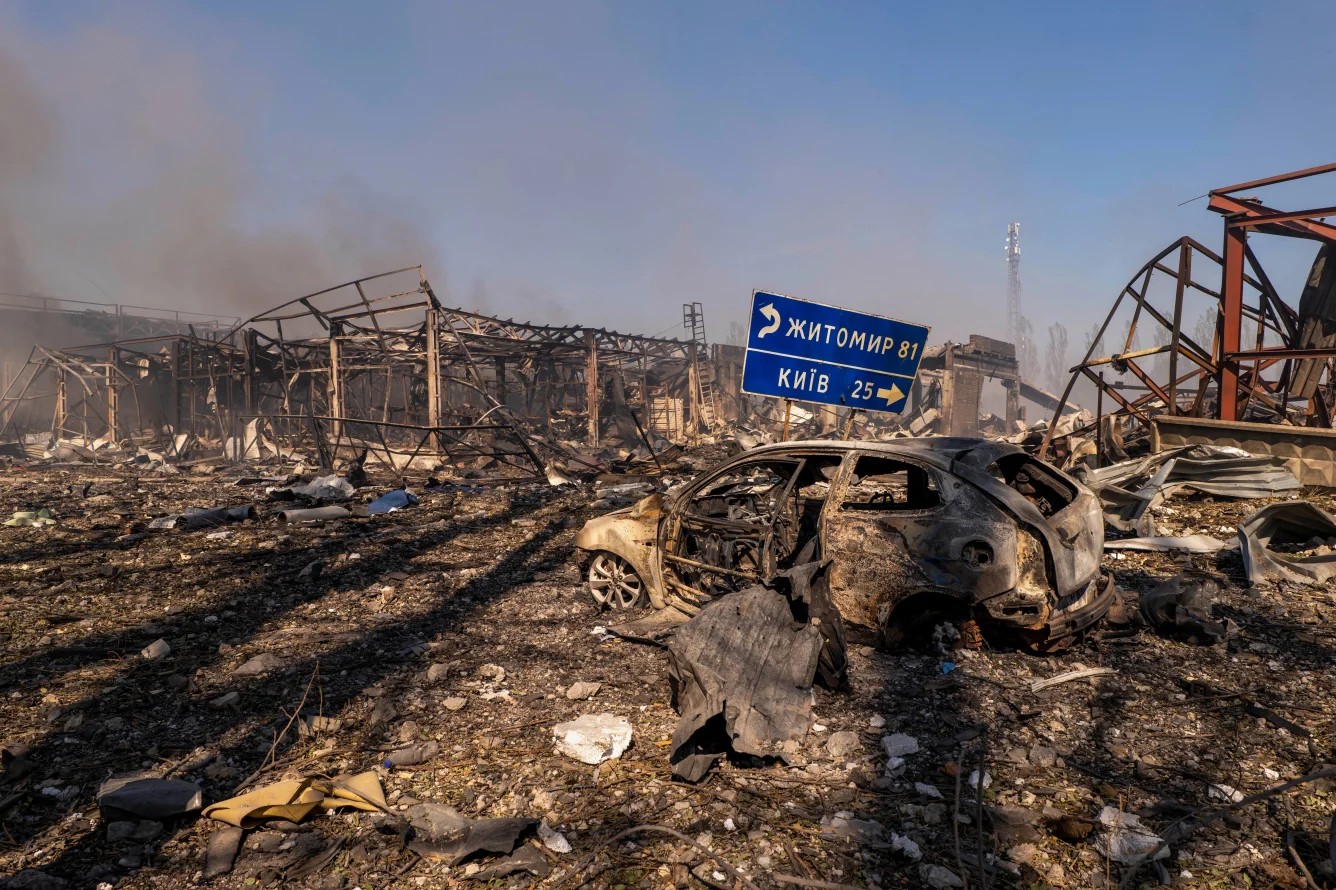
Ukrainian strikes on oil refineries have added another layer of pressure. Fires and temporary shutdowns at processing facilities have coincided with higher fuel prices and shortages at some filling stations. Russian monetary authorities have already identified fuel costs as one factor contributing to summer inflation.
The government has responded with export restrictions designed to keep more fuel inside the domestic market. Such measures may stabilise supply, but their use shows that attacks on refining capacity are no longer only a military statistic. They have become a tangible economic problem.
Ukraine’s long-range campaign has also expanded beyond energy. Major warehouses belonging to Wildberries and Ozon, industrial facilities and other logistics sites have come under attack. For more Russians, the war is increasingly experienced not through a television map, but through fires, queues and disrupted services.
Polling reflects that shift. Among the events Russians remembered most clearly from July were drone attacks on refineries and warehouses, along with the fuel crisis. A war the authorities had long tried to keep geographically distant from most citizens is becoming increasingly visible in daily life.
Broader assessments of the country have also worsened. A majority of respondents described the political situation as tense, while a smaller but notable share called it critical or explosive. They cited the war, drone attacks, anxiety about the future, economic problems, expensive fuel and communications disruptions.
Yet public fatigue does not automatically translate into support for capitulation or territorial concessions. Only about a quarter of those surveyed favoured significant concessions to Ukraine and the West in exchange for peace. More than half simultaneously wanted negotiations and supported stronger Russian attacks.
That combination allows the Kremlin to interpret demand for talks not as a desire to end the war at any cost, but as a wish to end it on Russian terms. As long as most citizens are unwilling to endorse territorial concessions, Putin can argue that continued military pressure remains consistent with public expectations.
His personal approval also remains high. Around three-quarters of Russians surveyed in August approved of Putin’s performance, while a majority still said the country was moving in the right direction. This is not the profile of a government facing an immediate political threat from war fatigue.
In an authoritarian system, even much deeper dissatisfaction does not necessarily translate quickly into strategic change. The Kremlin does not need to win a genuinely competitive election on the basis of its war policy, while organised antiwar politics remains under sustained pressure from the state.
At the same time, senior figures inside the Russian establishment are speaking more openly about the limits of mobilisation economics. Sberbank chief Herman Gref has warned about excessive economic cooling and has spoken about the public desire to see the fighting end sooner rather than later.
Moscow Mayor Sergei Sobyanin has also pushed back against calls to place the entire economy on a full war footing. His argument is straightforward: destroying the civilian economy would eventually erode the tax base, household incomes and the state’s own ability to finance a prolonged conflict.
Those statements matter not because Gref or Sobyanin have become Putin’s opponents. They remain part of the system. Their warnings instead show that the internal debate has shifted from whether the war carries an economic cost to where the limit lies beyond which that cost begins to weaken Russia’s capacity to sustain the war itself.
Putin nevertheless has reasons to believe that Russia has not yet reached that limit. The economy is barely growing, but it is not collapsing. The state still receives substantial revenue, banks continue functioning, salaries are being paid and defence factories maintain high production rates.
The same is true on the battlefield. Russia’s advance has slowed sharply, but Moscow continues to pressure heavily fortified parts of the Donetsk region and can still impose costly defensive battles on Ukraine. Even small territorial gains may remain acceptable to the Kremlin if they gradually worsen Kyiv’s position.
Putin is effectively fighting not for speed but for the opponent’s endurance threshold. He can tolerate a month without major territorial advances if he believes Ukraine has lost more soldiers, air-defence missiles, energy equipment or financial resources during the same period.
That also explains his response to Ukrainian strikes inside Russia. Rather than present them as evidence of Russian vulnerability, Putin uses them to justify further escalation and to reinforce his claim that Kyiv is becoming more desperate as pressure on the Ukrainian front increases.
This interpretation serves an important psychological function. If every deterioration inside Russia can be explained as evidence that the enemy is lashing out because Moscow is succeeding, negative developments do not necessarily force the Kremlin to reconsider its strategy. They can instead be incorporated into the argument for continuing it.
Diplomacy has so far failed to alter that calculation. After recent contacts between Moscow and Washington, Kremlin spokesman Dmitry Peskov said the negotiating process over Ukraine was effectively on a deep pause and that there were no new ideas capable of producing a breakthrough.
Russia’s terms remain maximalist. Moscow continues to demand that Ukraine withdraw from parts of the Donetsk region still under Kyiv’s control — territory Russian forces have not been able to seize militarily. For Ukraine, that would mean surrendering fortified cities without a fight and remains unacceptable.
Deterioration in the Russian economy therefore does not guarantee softer Kremlin demands. Putin’s position is likely to change only if he stops believing that Russia’s relative position can improve. He would have to conclude not simply that the war is expensive, but that continuing it is becoming more dangerous than compromise.
That is the logic behind Ukraine’s long-range strike campaign. Attacks on refineries, fuel logistics, warehouses and industrial sites are intended to erode the sense of a secure Russian rear and force Moscow to spend more on repairs, air defence, alternative routes and support for the domestic market.
The effect, however, is cumulative rather than immediate. A queue at a petrol station or a destroyed warehouse will not by itself change Kremlin policy. Their strategic significance grows only if individual disruptions develop into a prolonged decline in revenues, production, logistics resilience and public confidence.
Putin therefore enters the coming winter with many more problems than he faced a year ago, but not necessarily with less willingness to continue the war. He may instead see the next few months as the point at which Ukraine’s accumulated weaknesses can finally be converted into a political result.
That is the central reason Putin keeps fighting. He does not need to prove that Russia is prospering or that its army is winning quickly. He only needs to believe that time is still working against Ukraine and that the Russian system can absorb its own losses longer than the Ukrainian one.
Until that calculation changes, the budget deficit, weak growth, fuel disruptions, a slower offensive and public fatigue will remain costs for the Kremlin rather than reasons to stop. The real turning point will come only when continuing the war begins to look more dangerous to Putin than accepting a compromise.